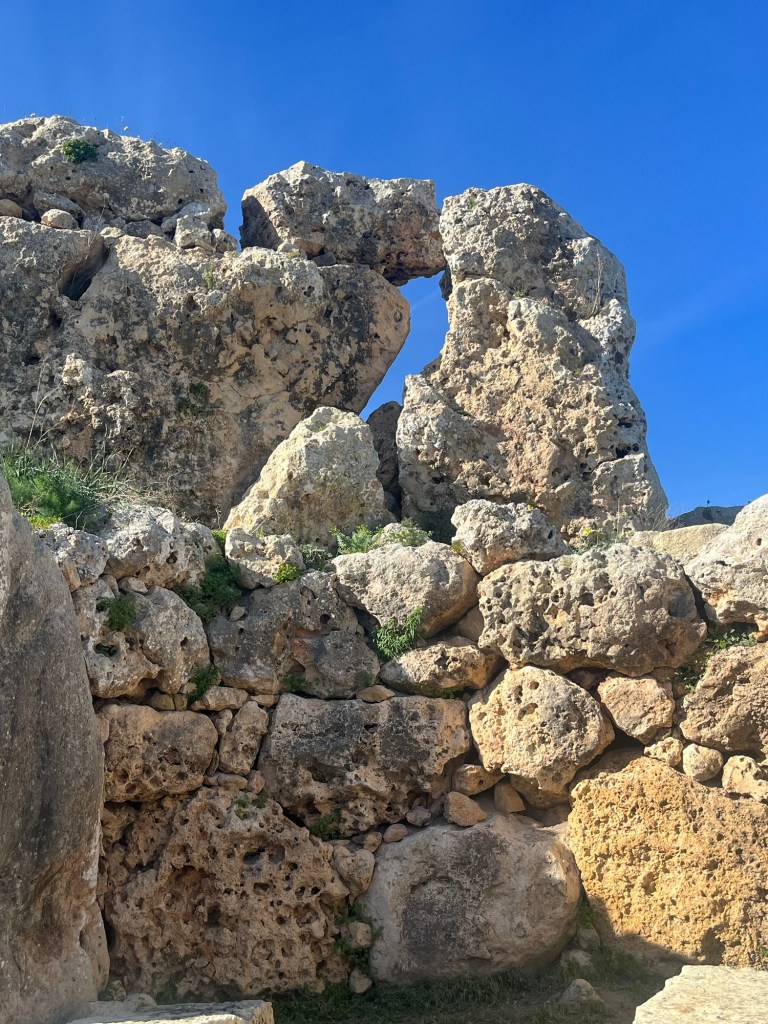
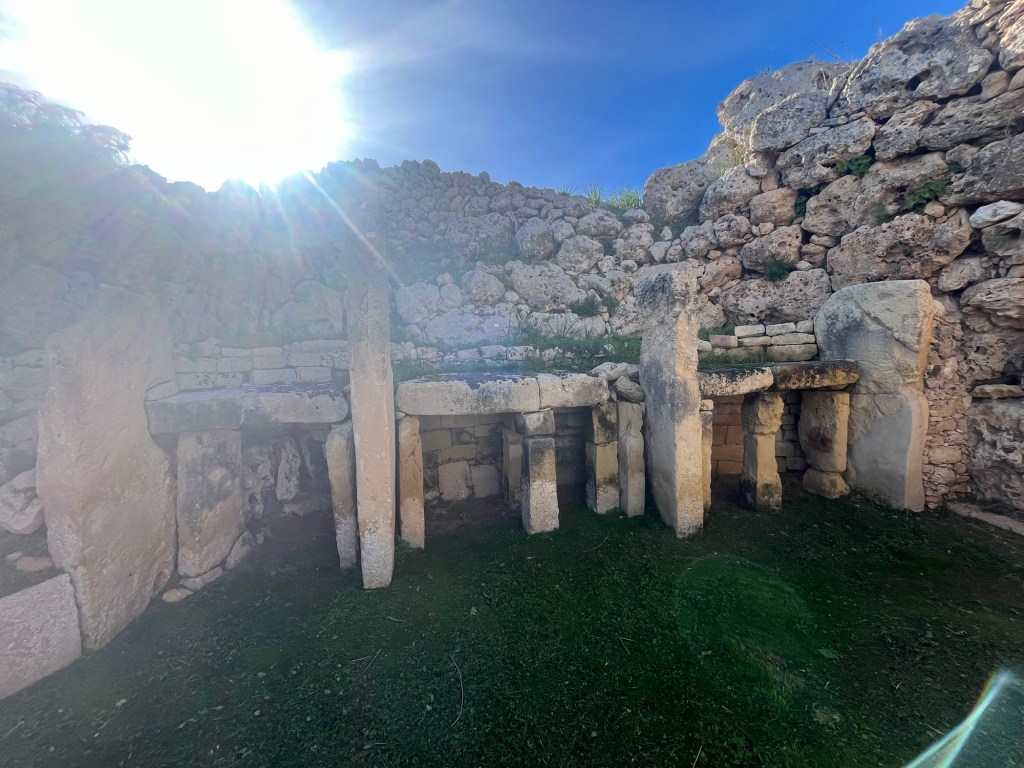
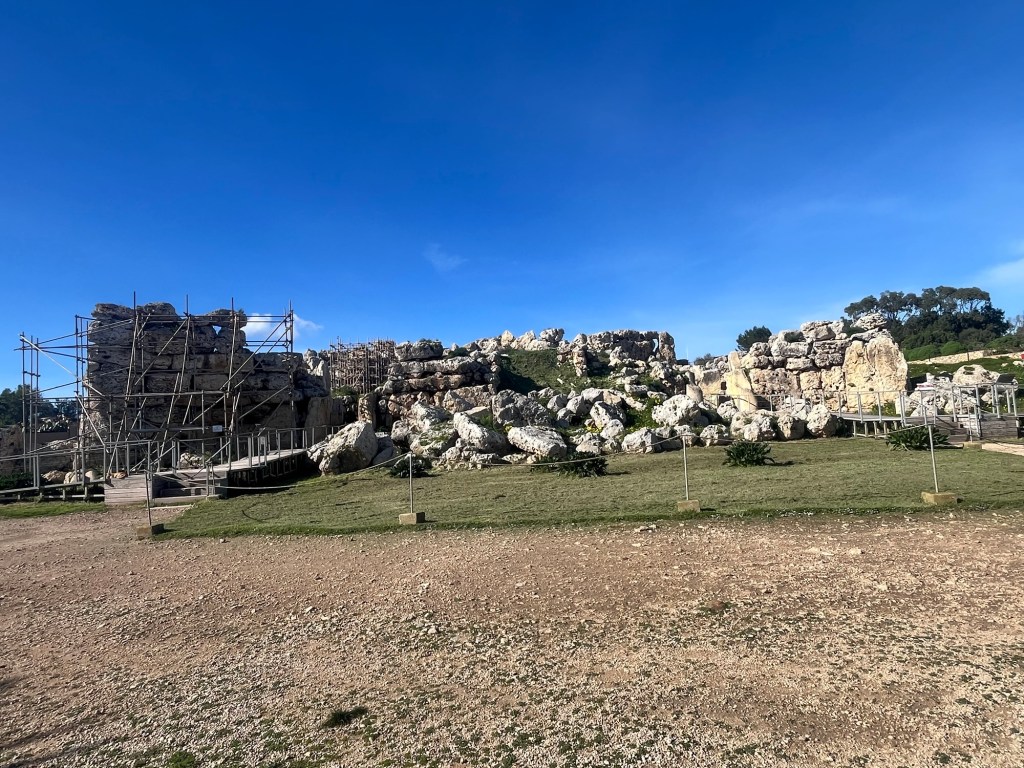
How to Make Kenny Happy in One Easy Step

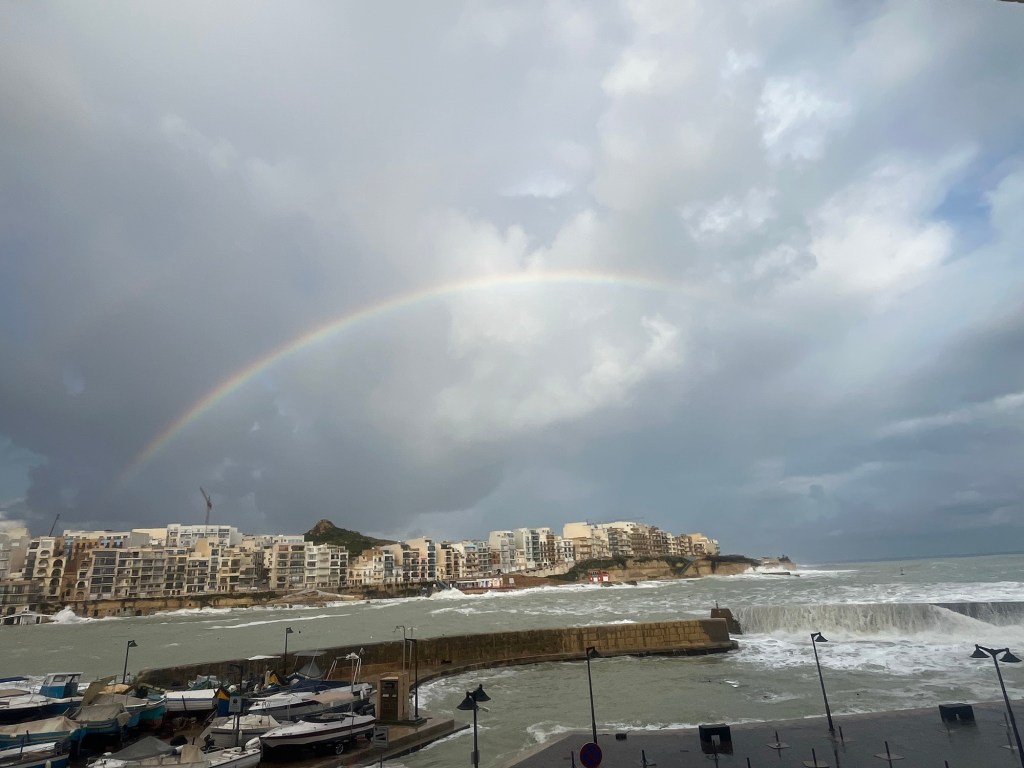
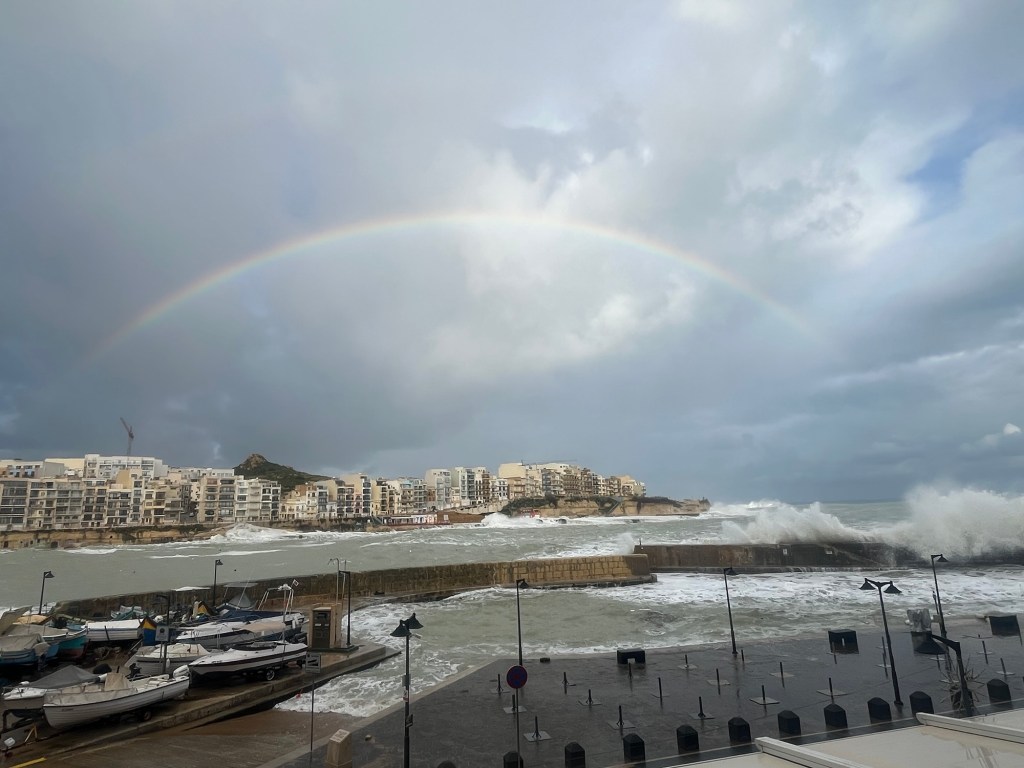
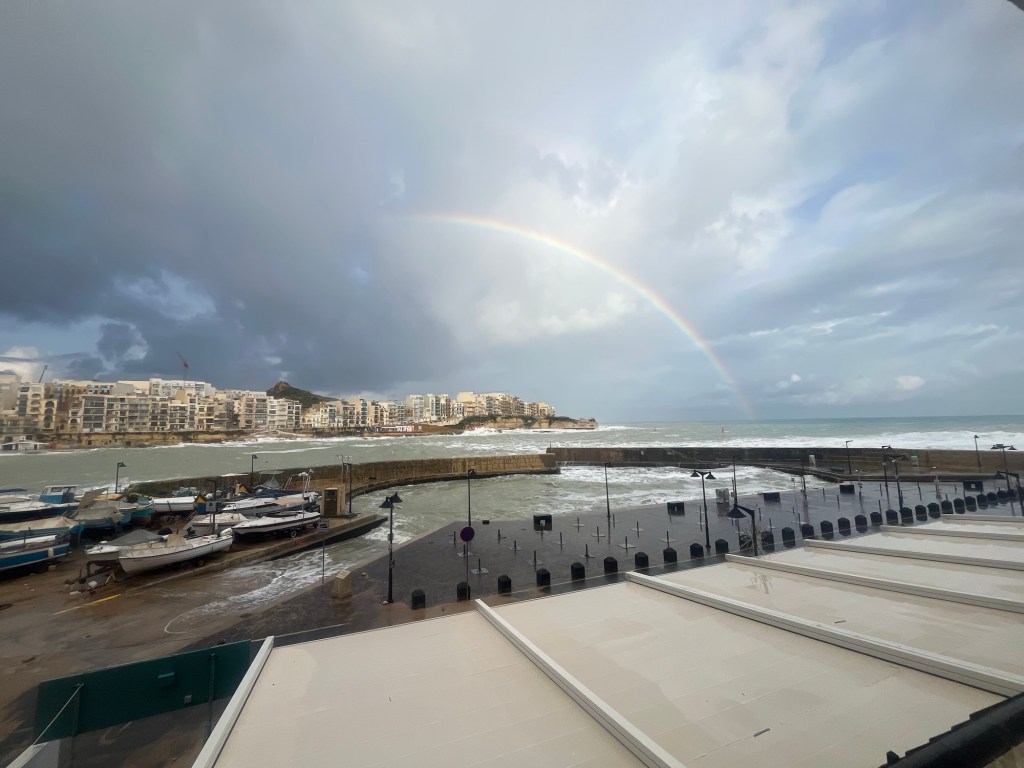
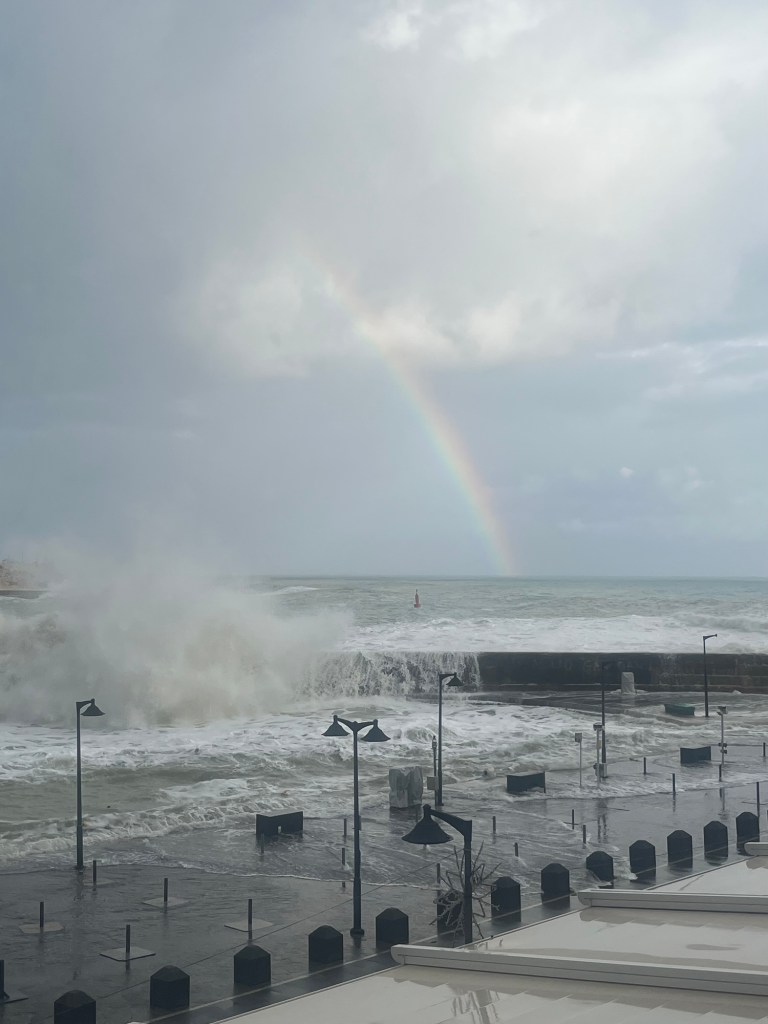
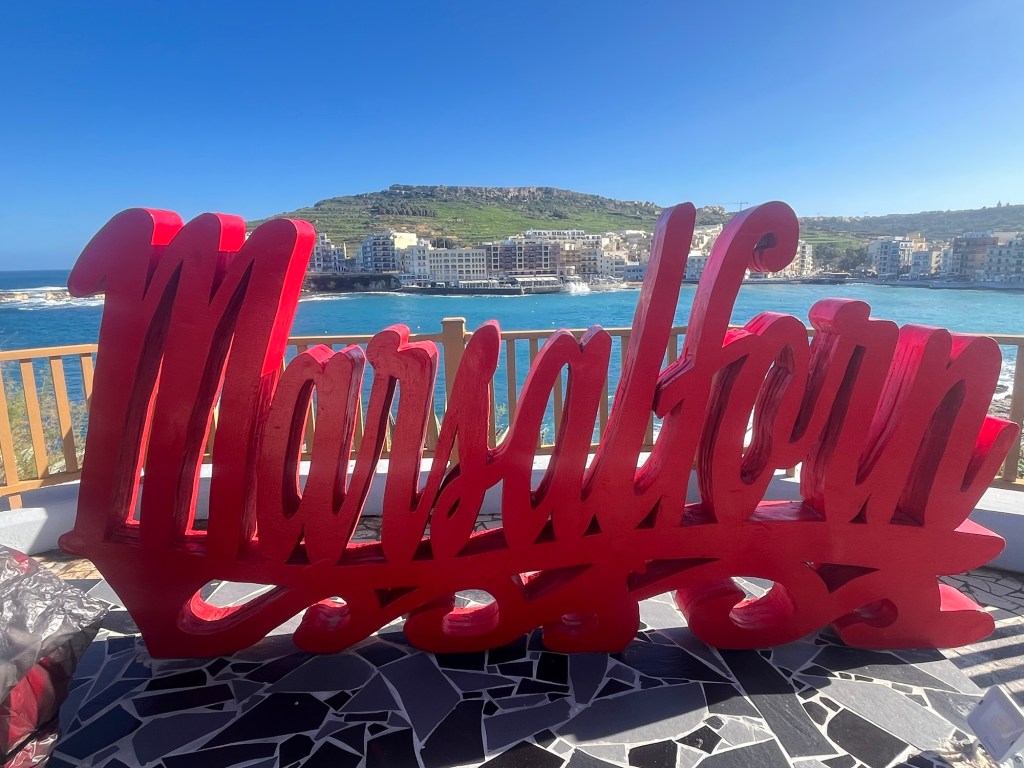
First, a refresher: We are in Marsaxlokk Malta. Regardless of what you might think from the spelling, Marsaxlokk is pronounced marsa-schlock.

We are here because we wanted to escape the New England cold, and since we are not Florida types, our idea of a good escape is to go someplace we’ve never been where we might have a good adventure or two. This year, we decided on southern Europe, where it is warm for us but off-season to the rest of the world.

We did not know the first thing about Malta … except its weird location in the middle of the Mediterranean between Tunisia and Sicily. I Googled “quaint fishing villages in Malta.” Marsaxlokk popped up, so I Googled how to pronounce it.

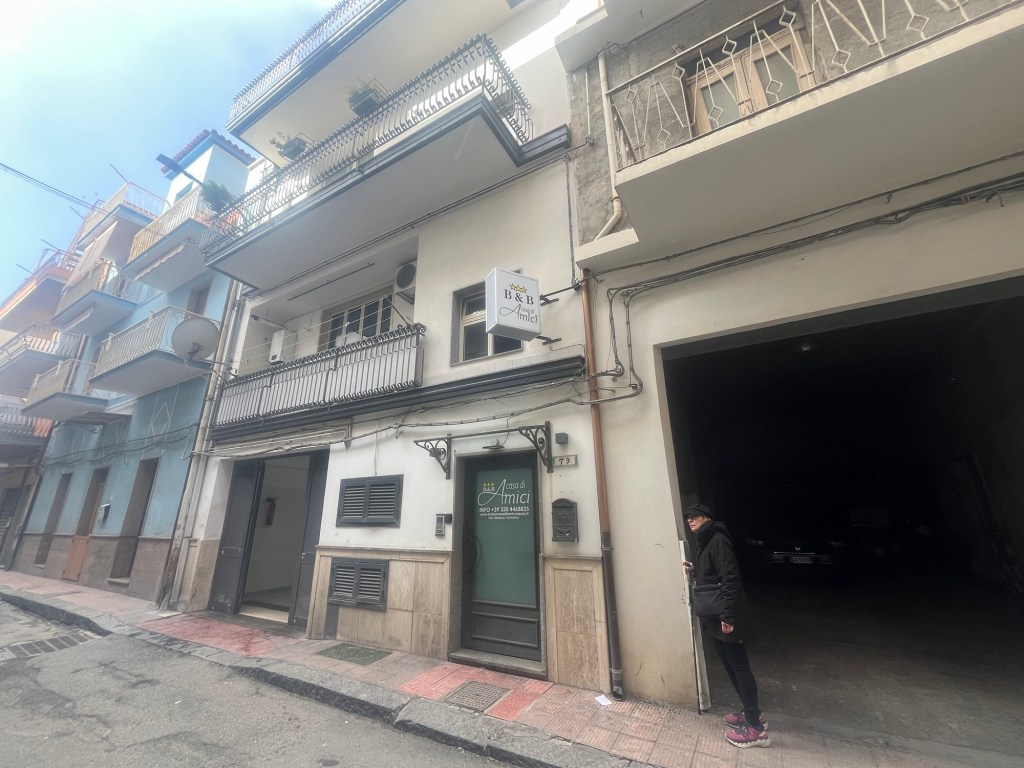
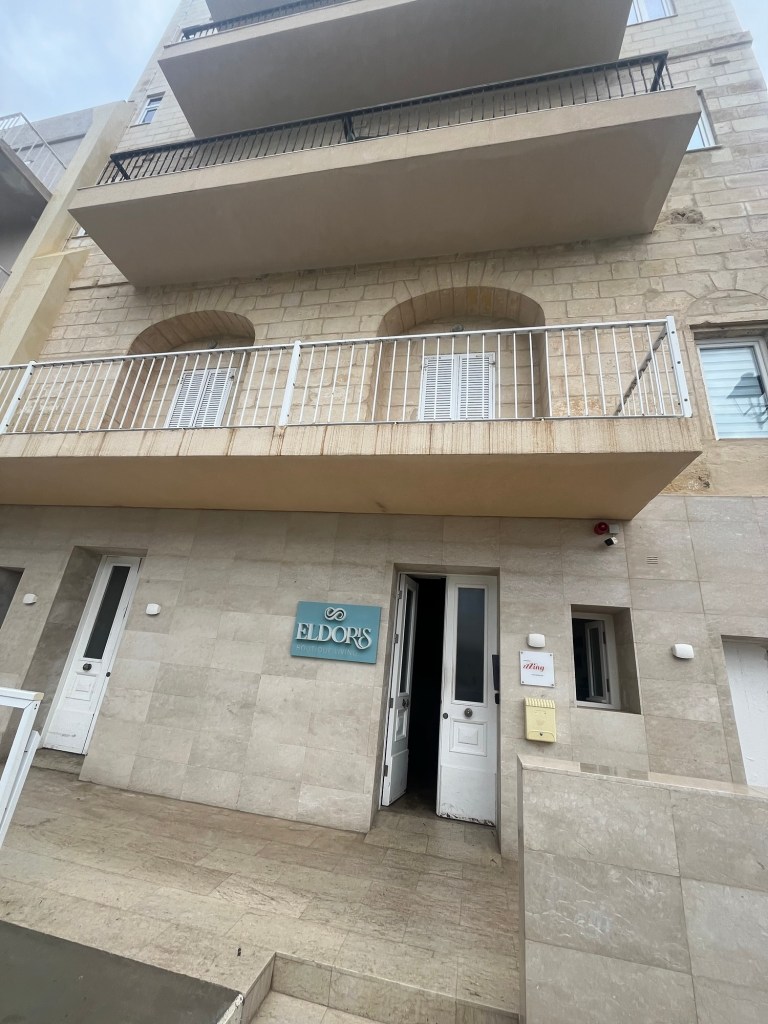
I learned that Marsaxlokk is famous for its Sunday open air fish market. We reserved a room in a guest house right at the site of the market and left home on a Wednesday (12/31) so we would have ample time to deal with travel delays and getting acclimated before Sunday. It was one of very few planned destinations.

So now: How to make Kenny happy in one step? Answer: Set him loose in an open-air fish market in a Mediterranean fishing village on a Sunday morning.

Today is Sunday. Last night, I told Rebecca that I wanted to be in bed before 9:00 and wanted to set an alarm for 6:00. She asked if I was crazy. I asked if she wanted to join me for a very early morning stroll as the fish mongers were setting up. She declined. I compromised and set the alarm for 6:30. She slept.

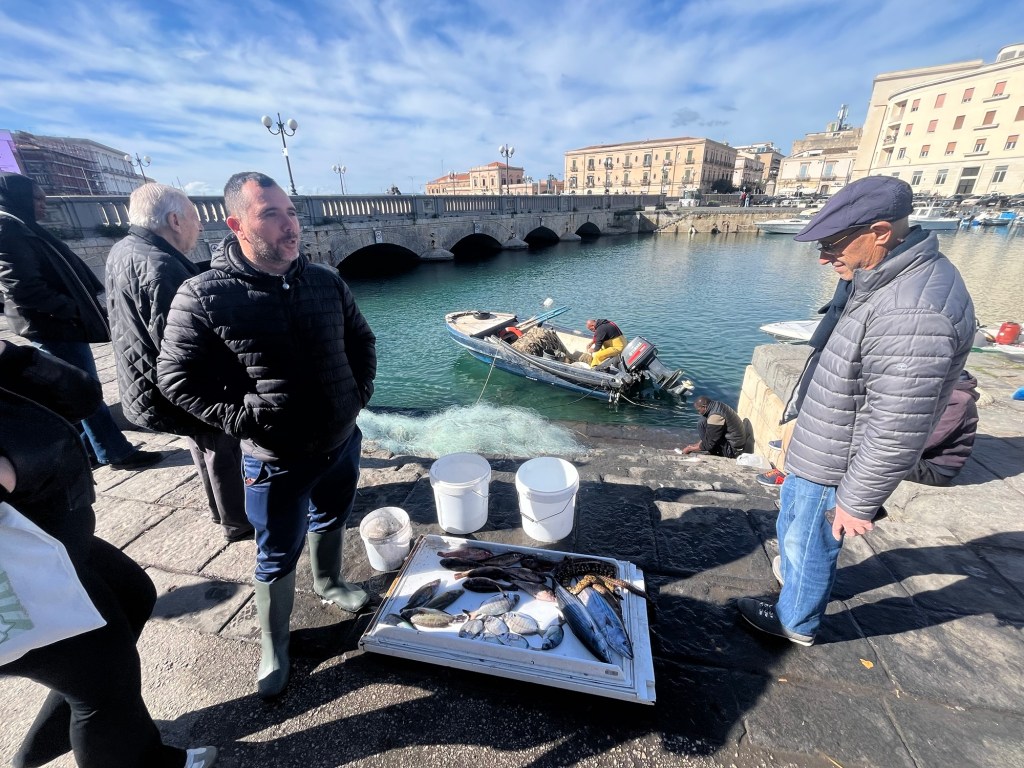
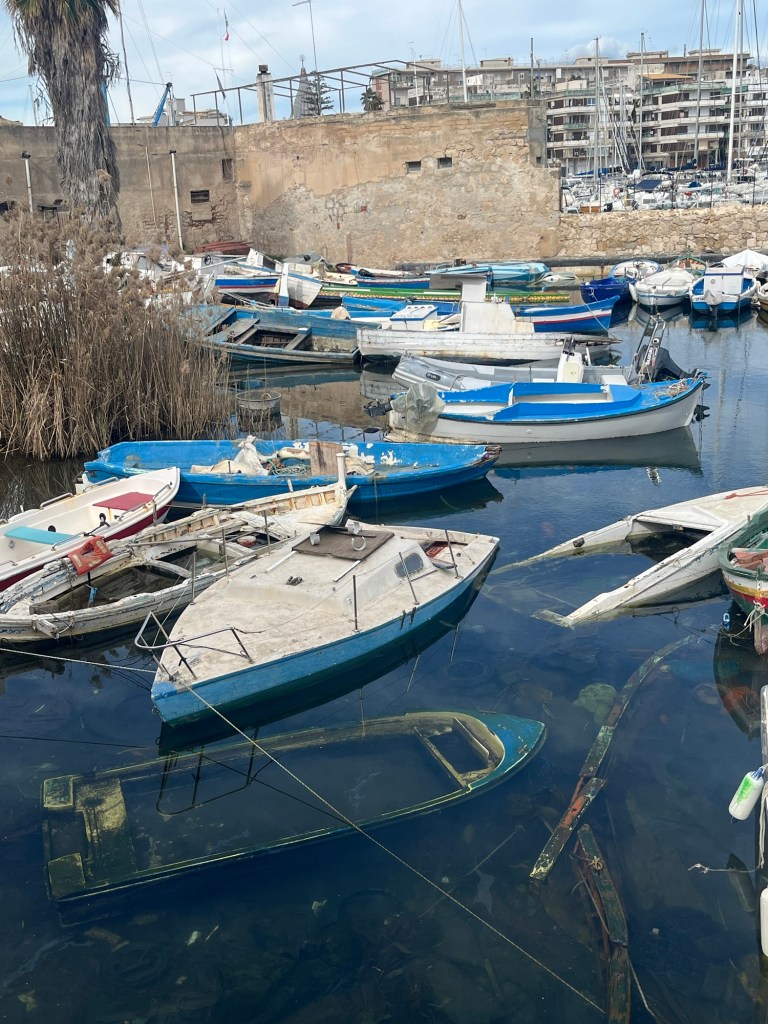
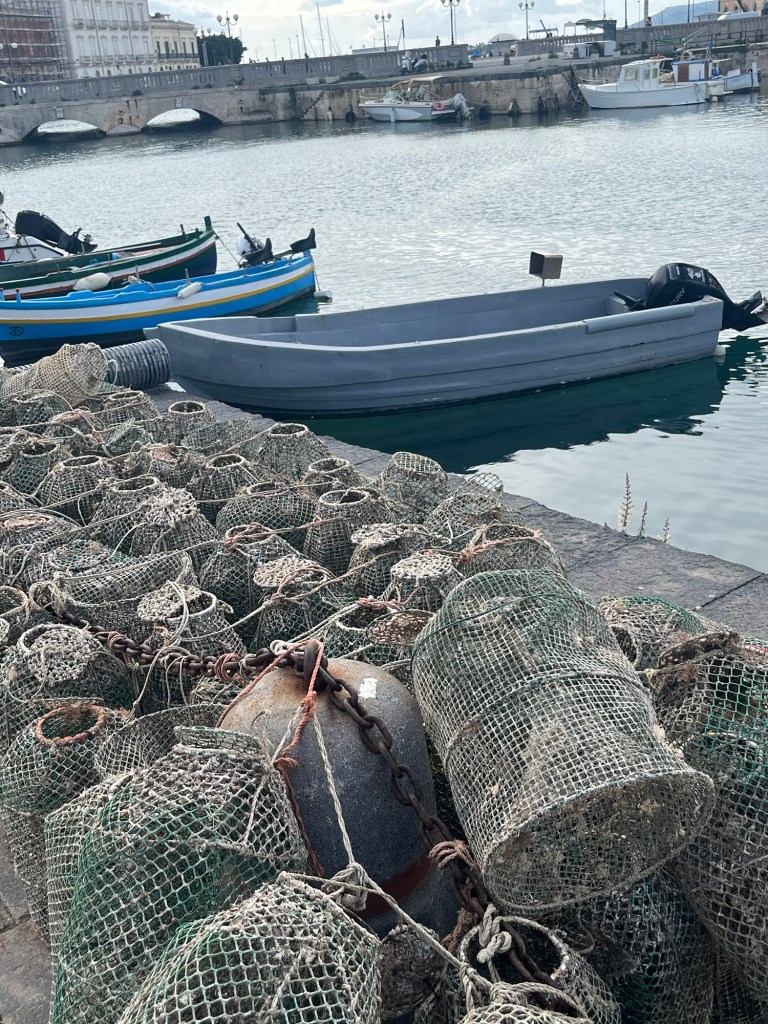
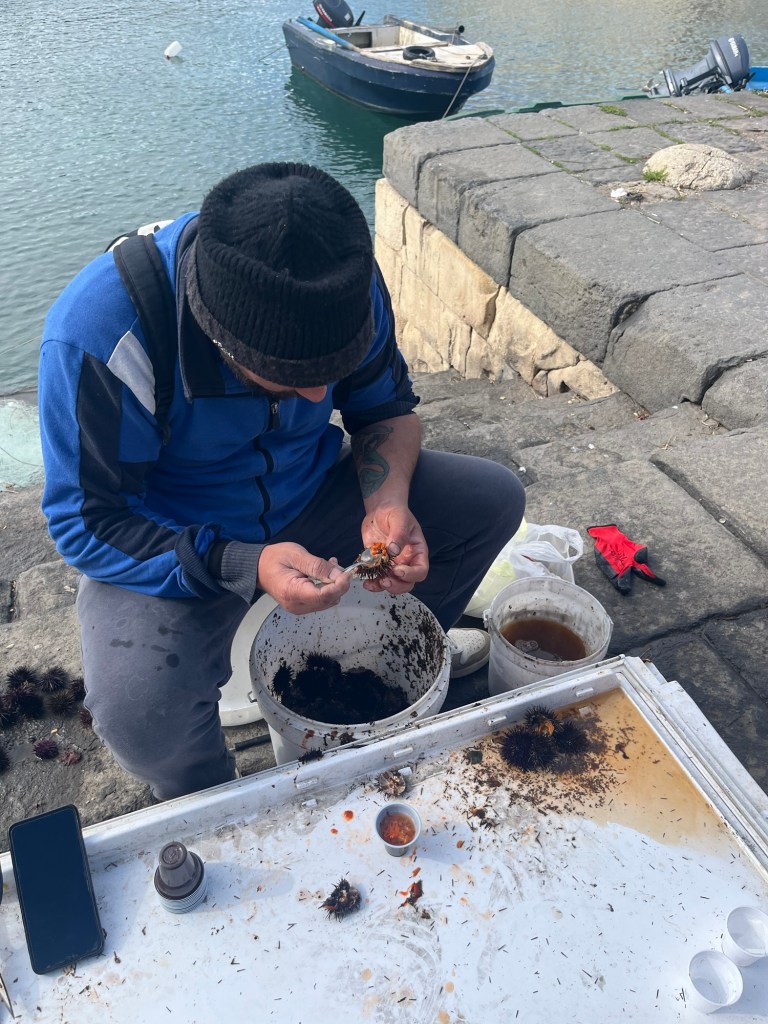
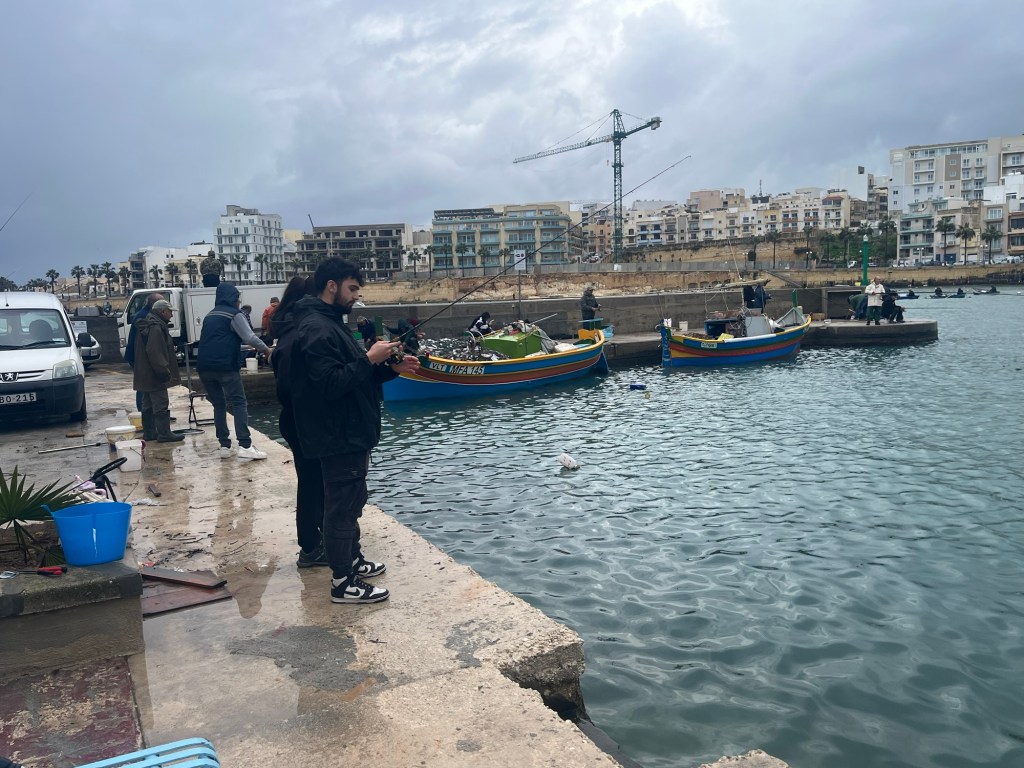
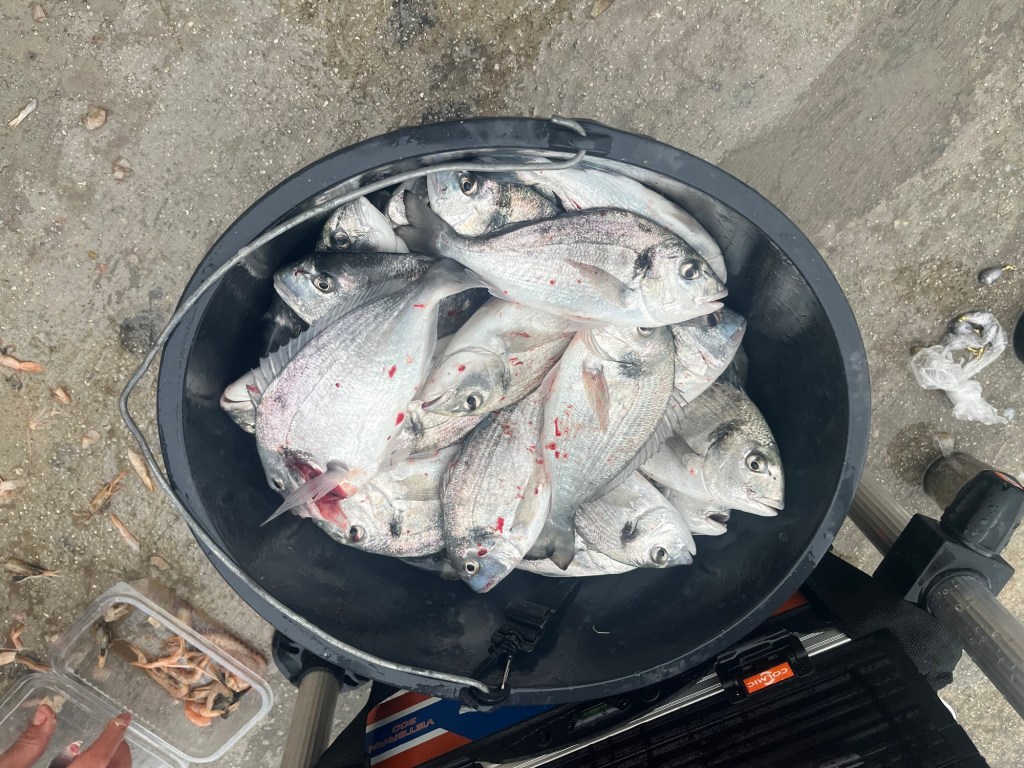
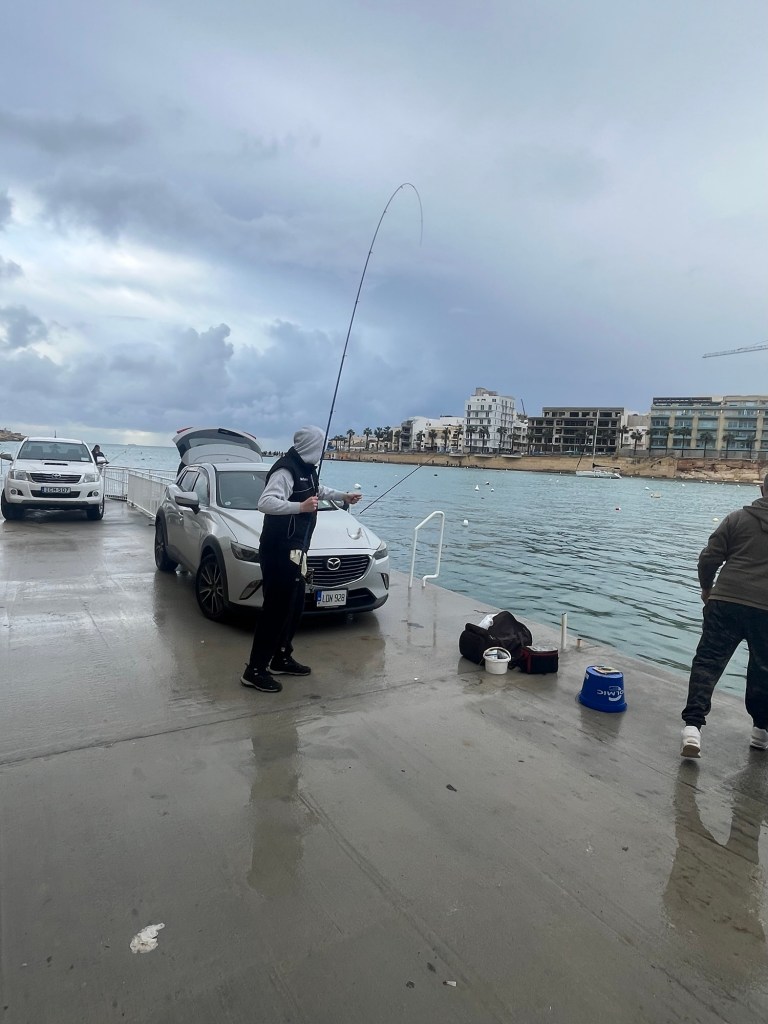
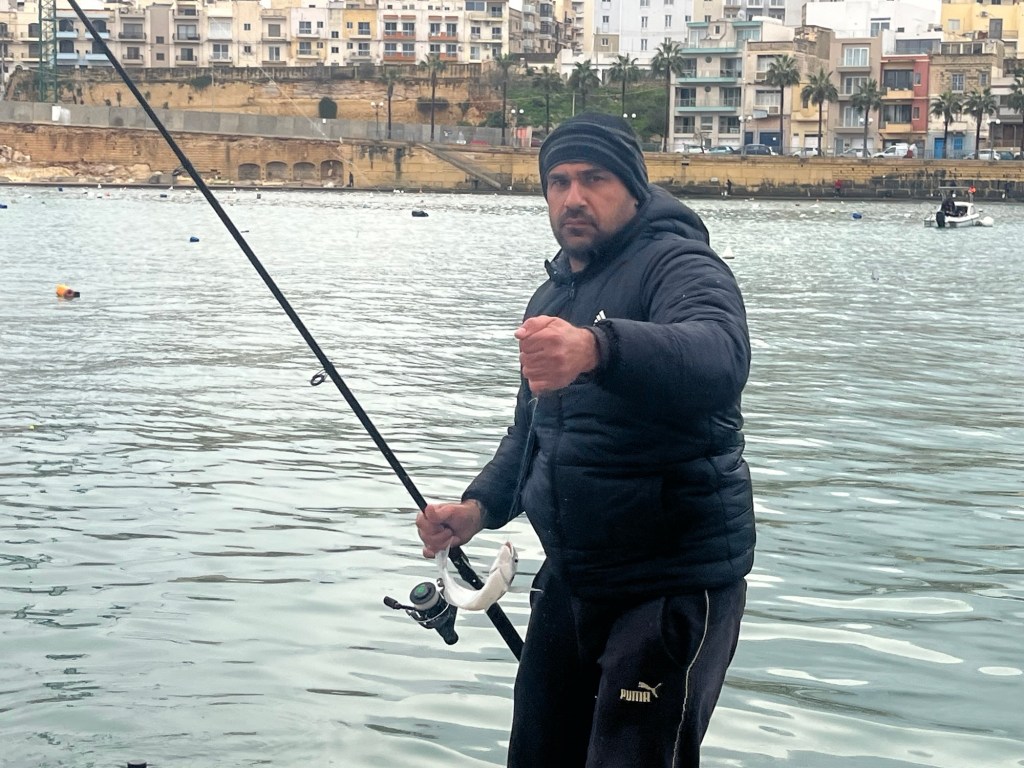
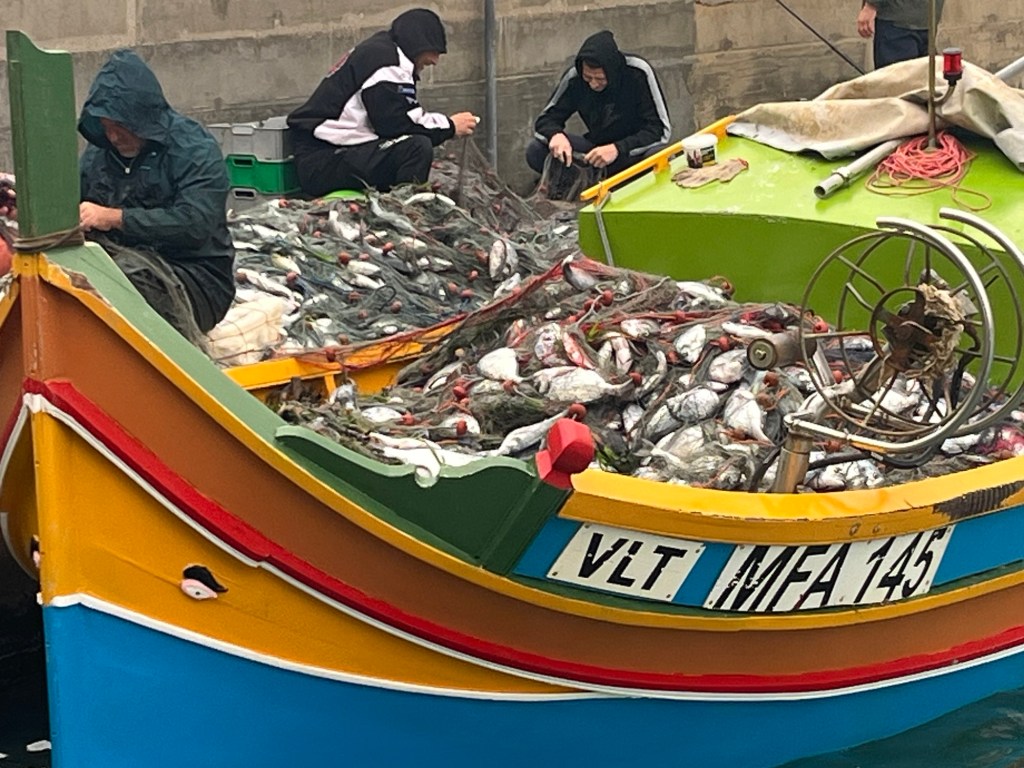
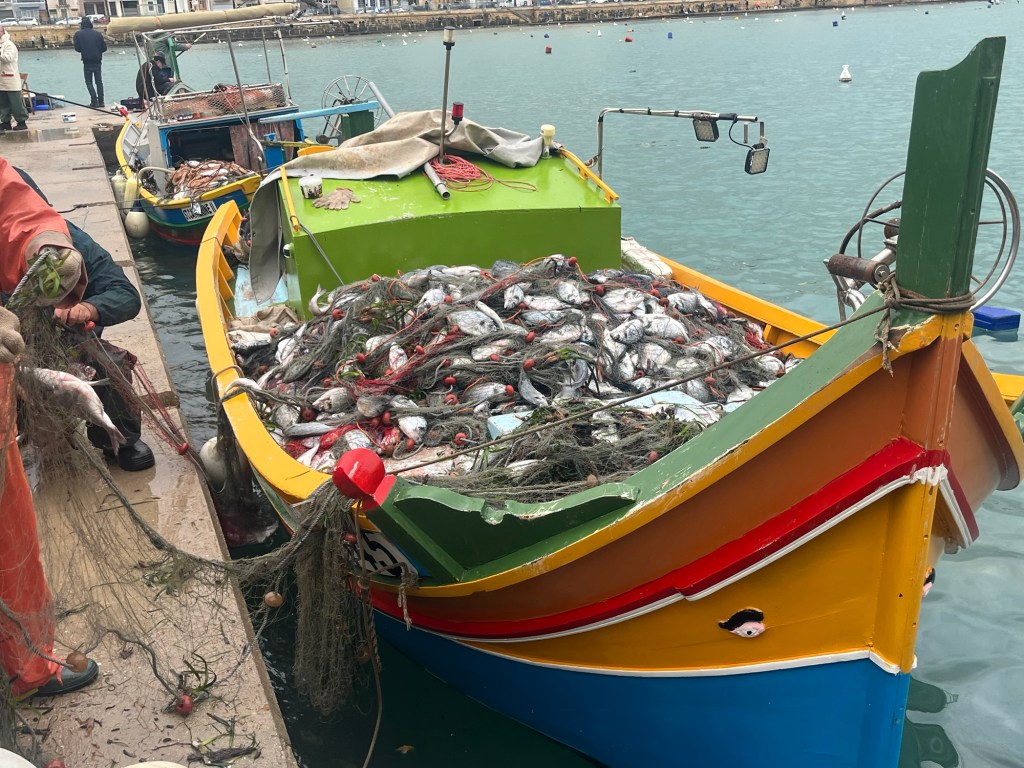
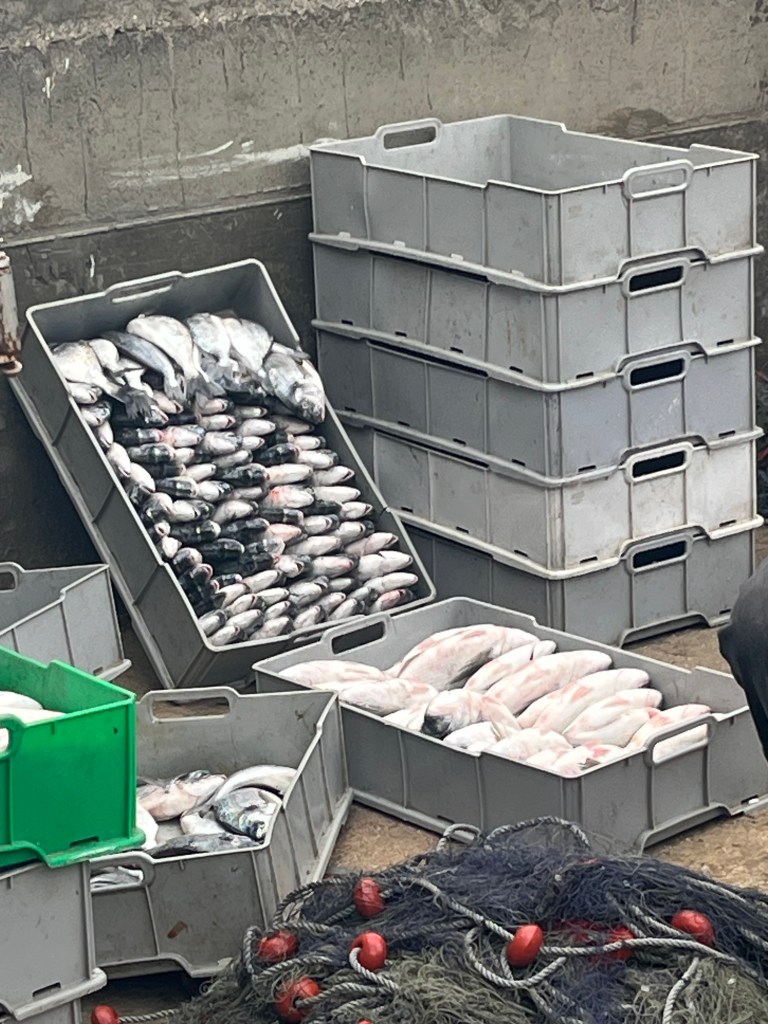
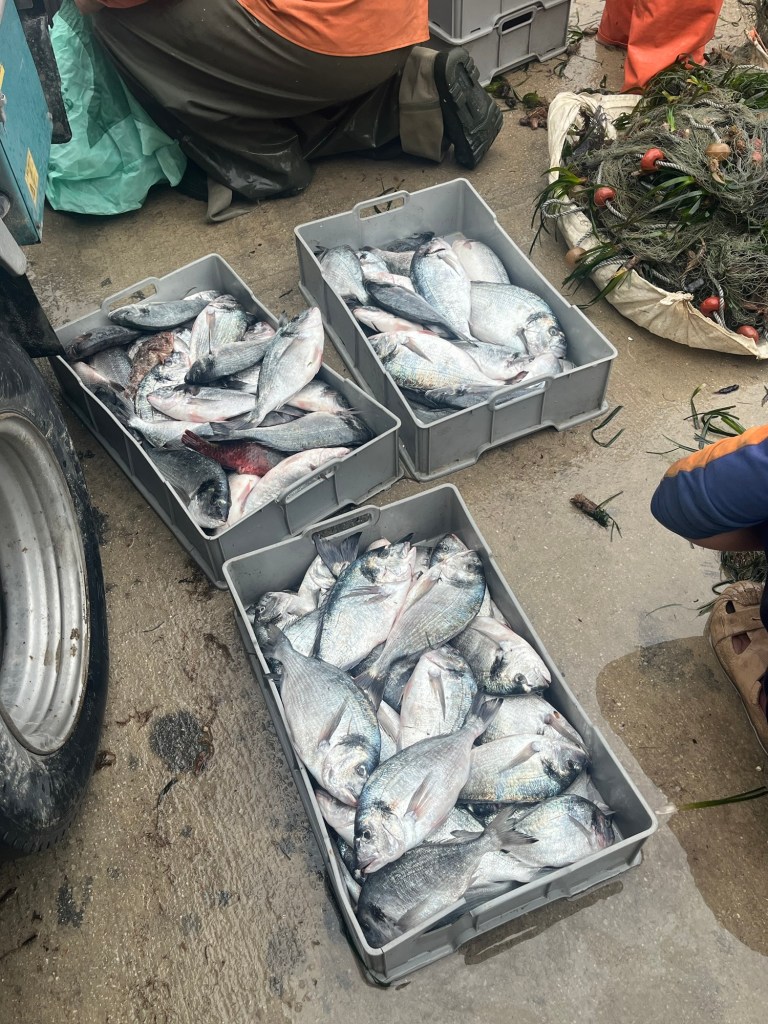
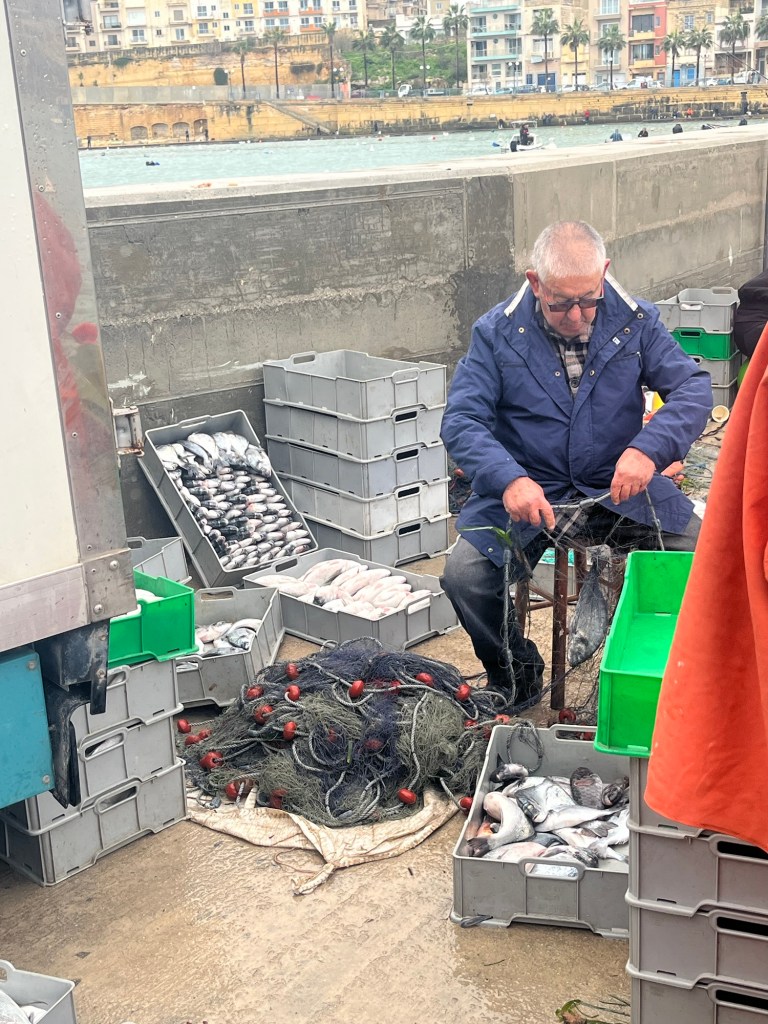
It was all I hoped! At 6:40 this morning, the fish mongers were in place, probably 20 different stalls. Some of the fish were frozen, like most of the octopus, and some was imported, like the swordfish and Norwegian salmon. But most of it – sea bass, eels, shrimp, mollusks, lampuki, (mahi mahi), sardines, mazzola (dog fish), crabs, etc., etc., etc. – were fresh out of the water. Fishing boats lined the wharf along the harbor.

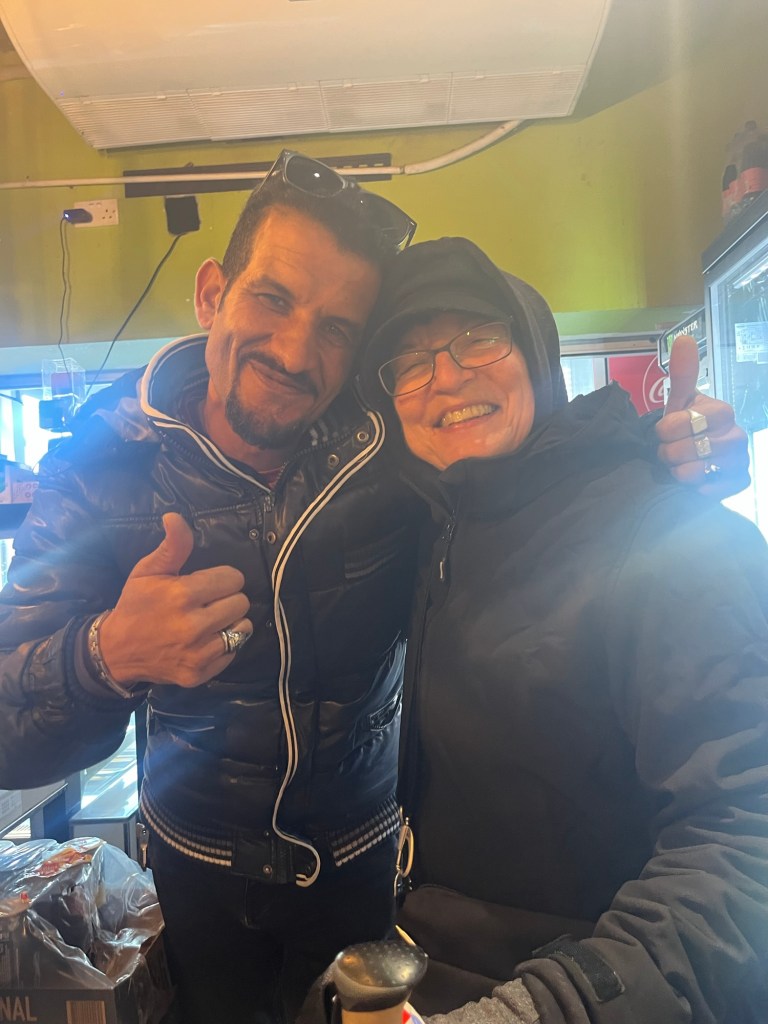
Like everyone else in Malta, the fish mongers could not have been nicer. I watched a monger named Mike skin and prepare mazzola. Later I met his wife, Rumina, who is the primary fish cleaner, and his lovely daughter Mariah, who is a talented graphic designer (who happens to hate fish but helps out her parents at the market every Sunday … and I know she is talented because she showed me pictures of her work). If they hadn’t been so busy, I could have spent the morning with them, but their hands never stopped moving. I plan to stay in touch!

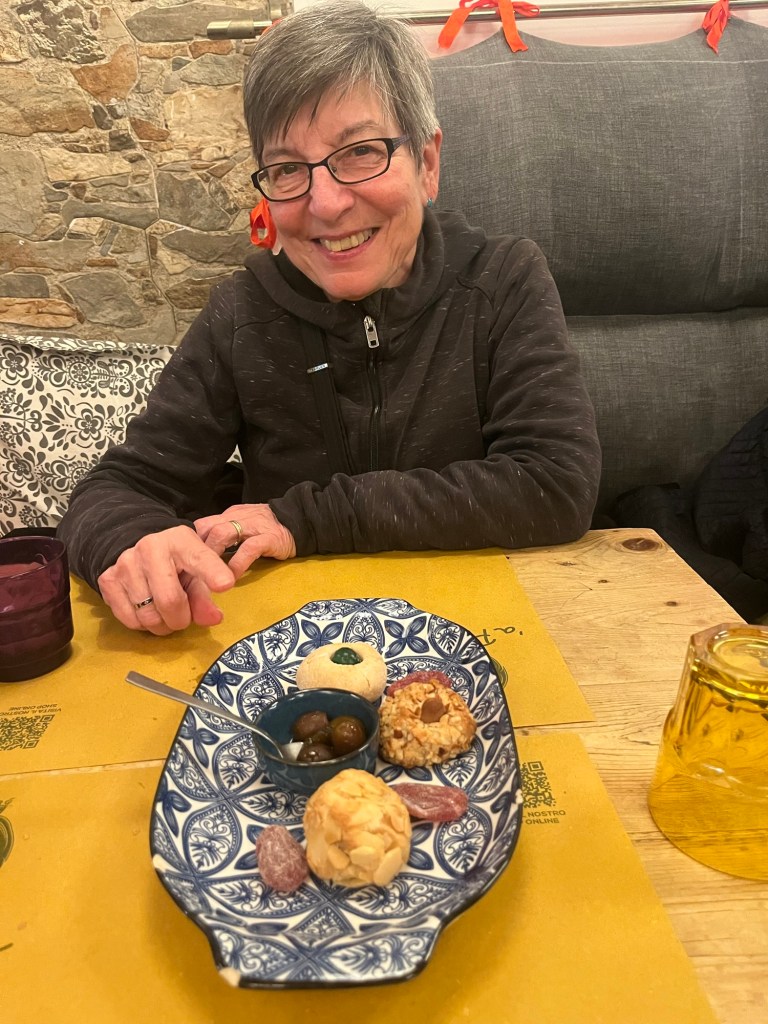
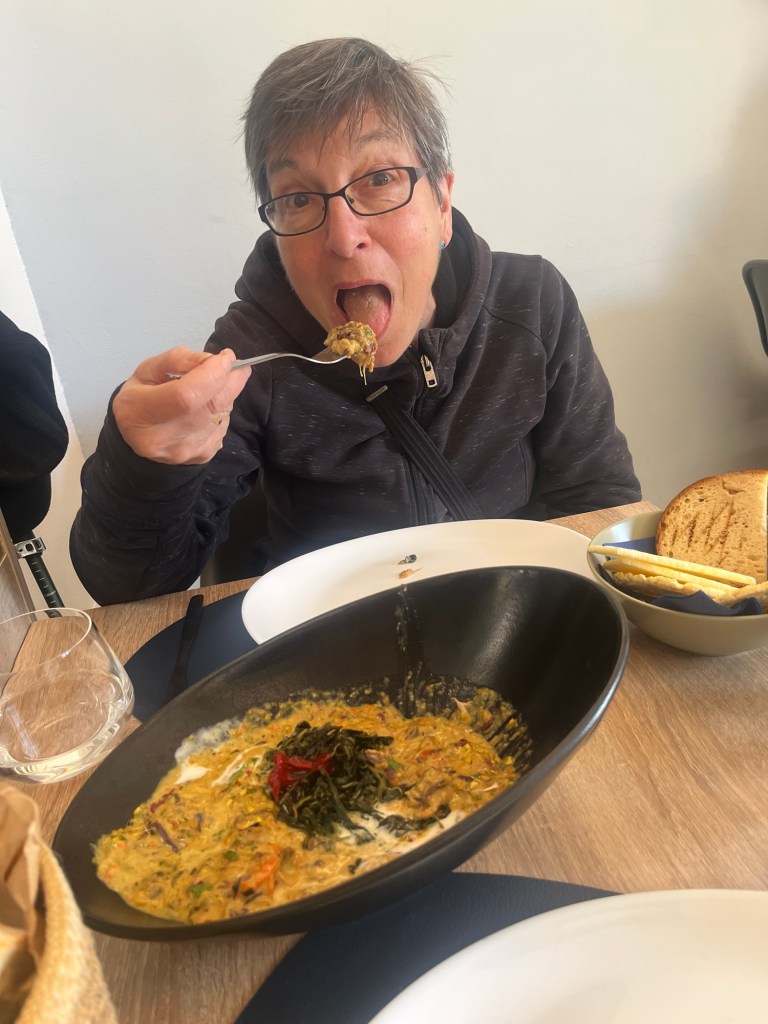
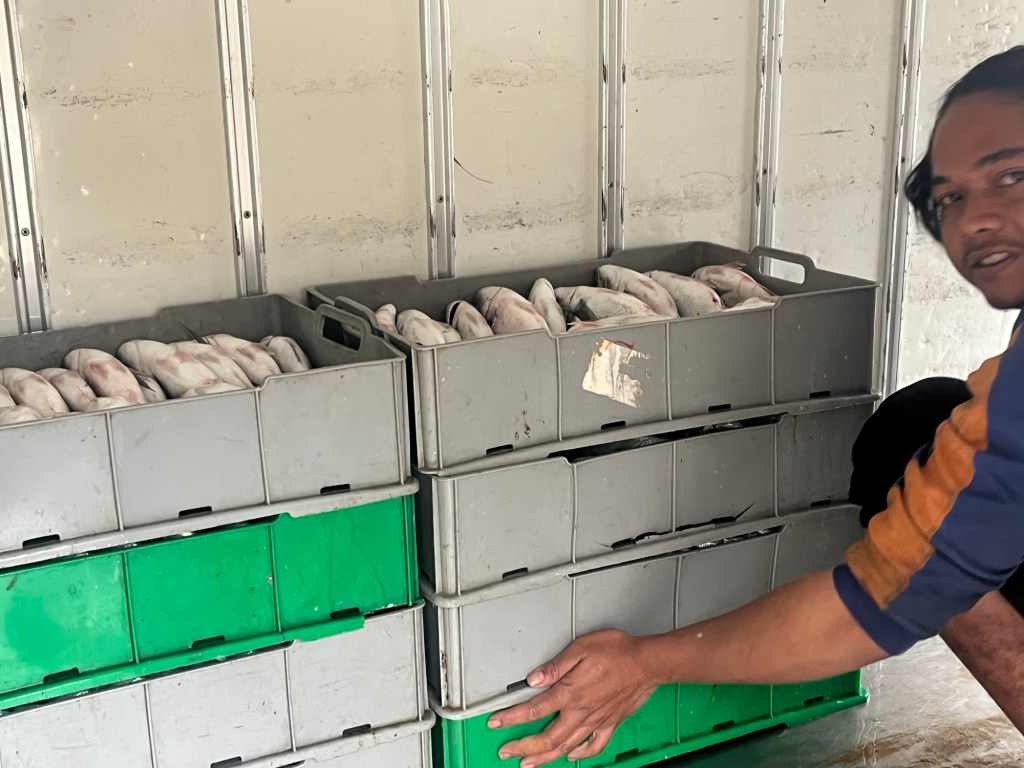
I am sorry we have no cooking facilities in our guest house. I wanted to cook and eat everything …. just like the young Nepalese man standing next to me at one of the stalls who was buying a kilo of this, and kilo of that, and a few kilos of other fishes. I asked if he owned a restaurant. He doesn’t. He just loves fish curry and stocks up every Sunday.

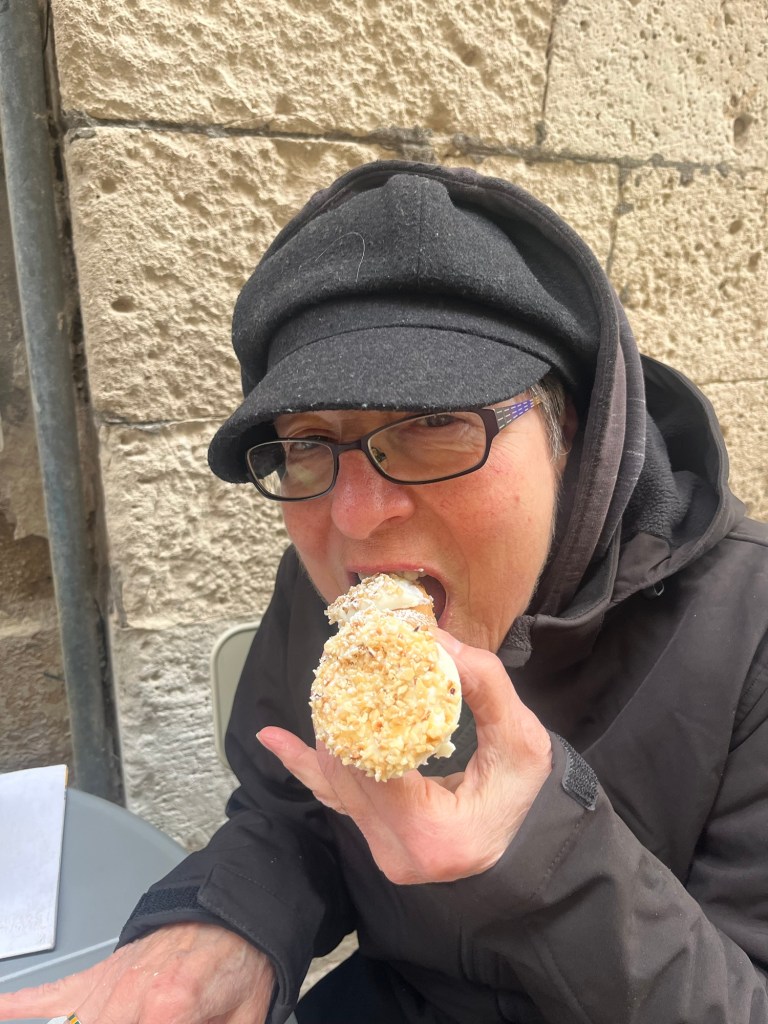
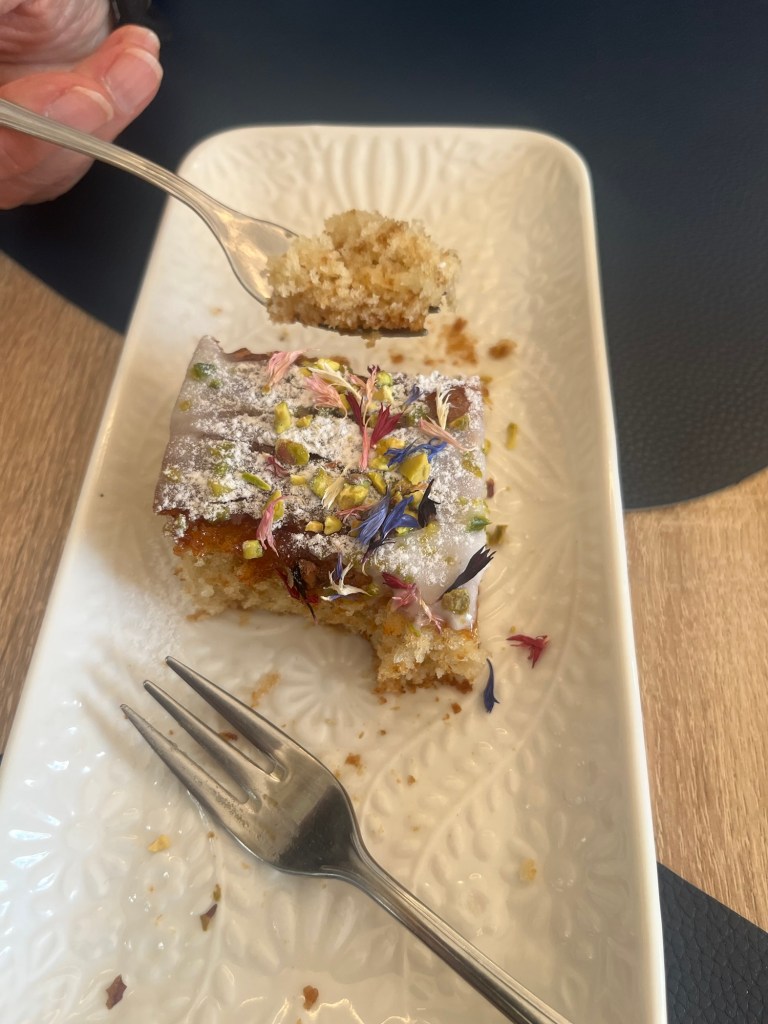
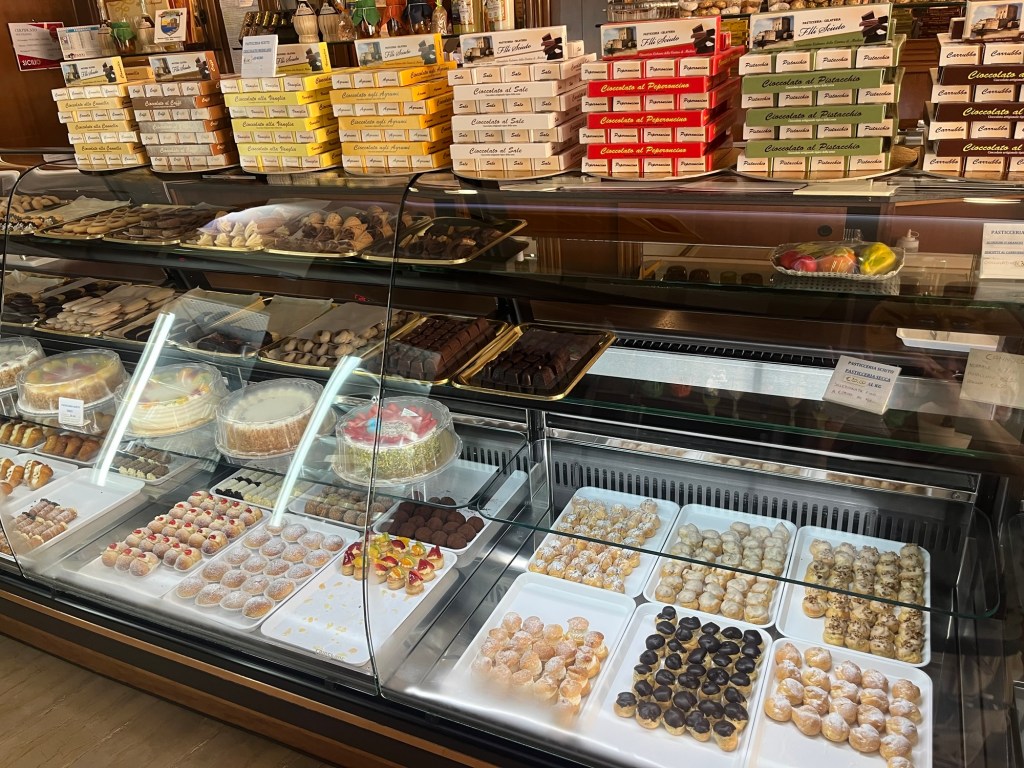
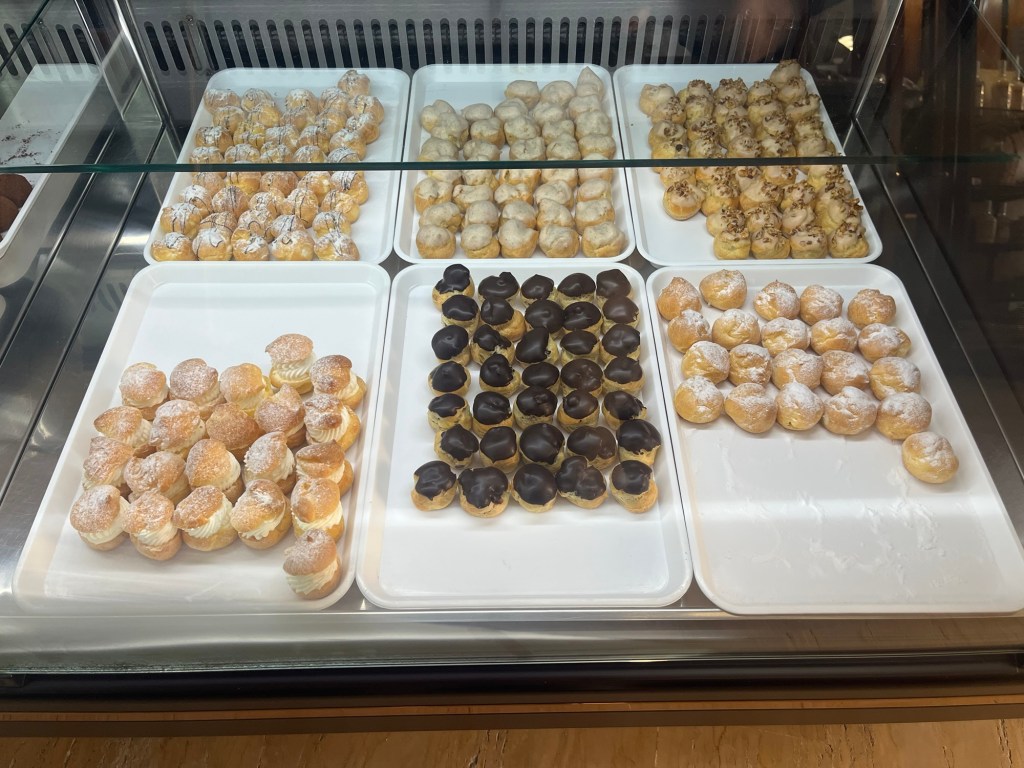
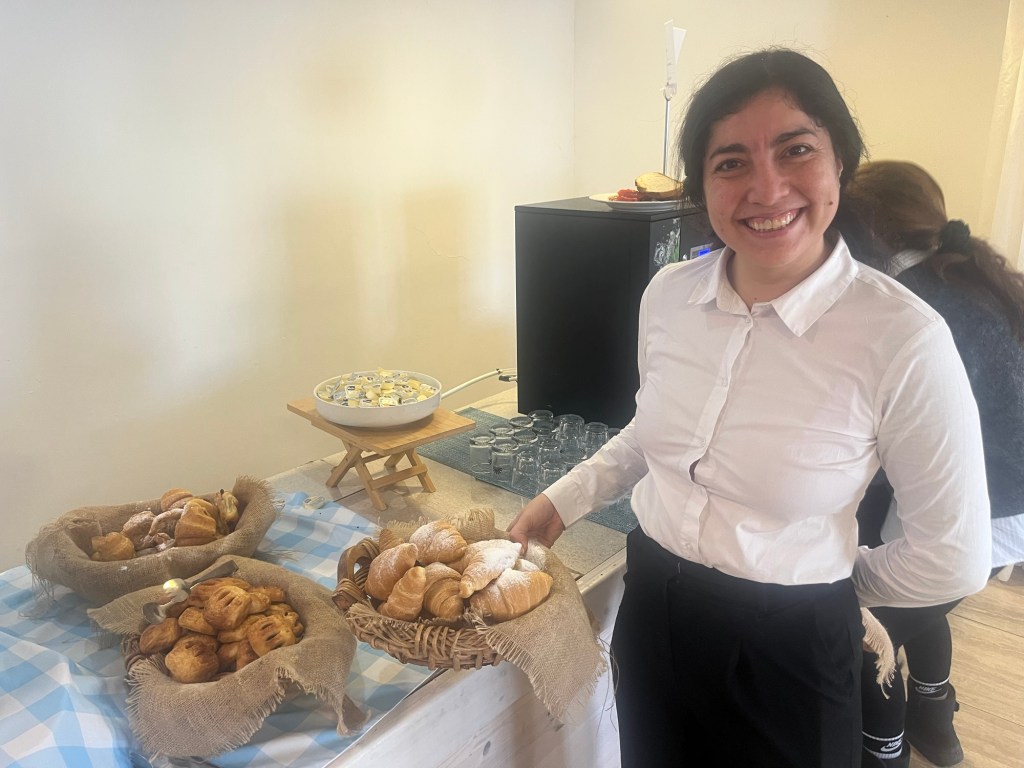
By 7:30 or so, the market was getting crowded. The beautiful displays of fresh fish had been picked over. Every surface had some sort of sign of fish entrails. The crowd of visitors was growing quickly. By 9:00, the crowd was thick. Other vendors hawked every sort of tchotchke you can imagine, from playing cards to underwear. The baked goods were unbelievable. It is now 12:40. I am headed back out to experience the end of the market. 1:20: One stall has a few fish left; the others have either vacated or are washing the last of their containers. The crowd remains thick. I think some of the tchotchke merchants are still arriving and setting up.

All-in-all, a splendid morning. Enjoy the photos….


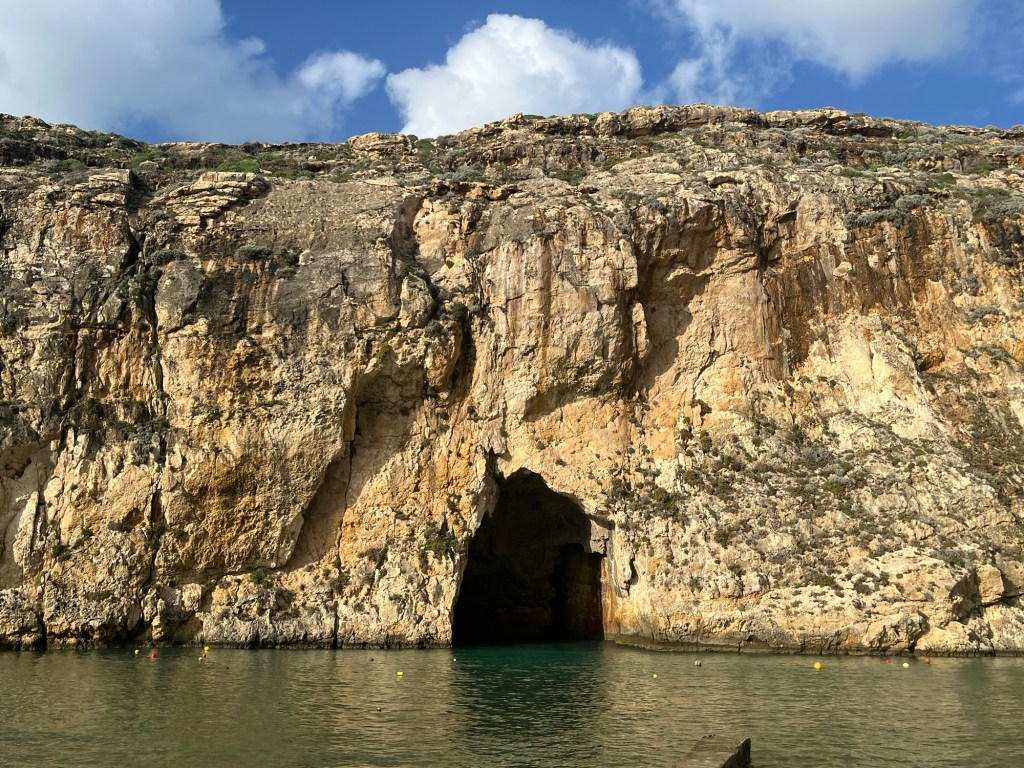
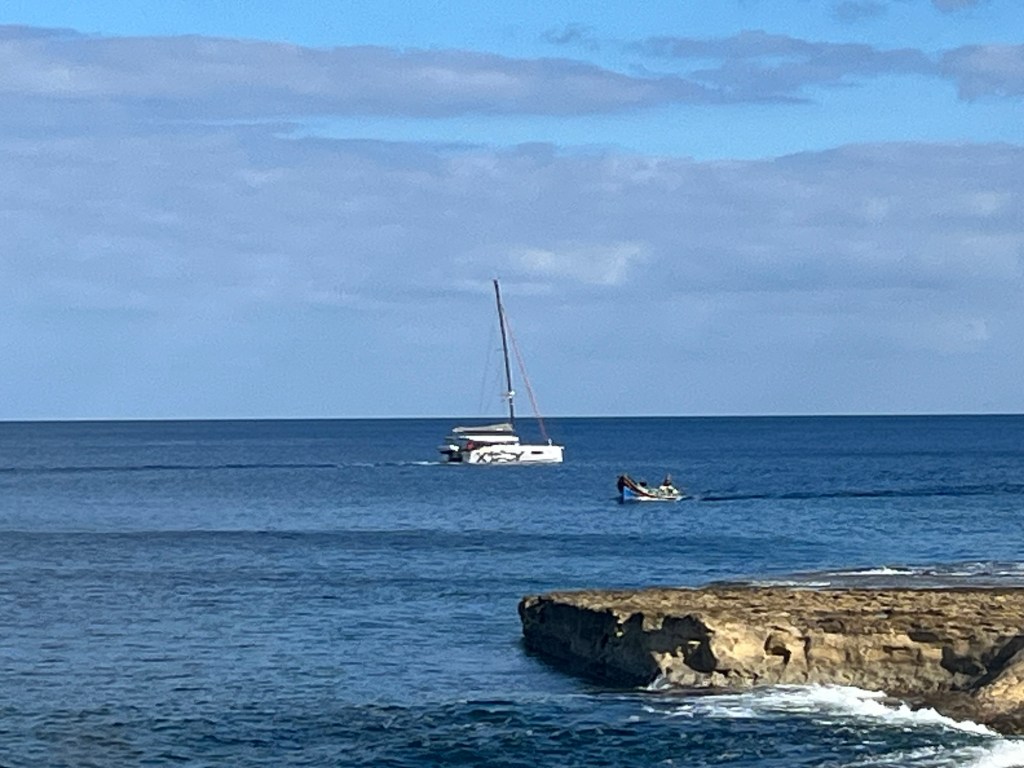
Dawn breaks over the Marsaxlokk Sunday market….


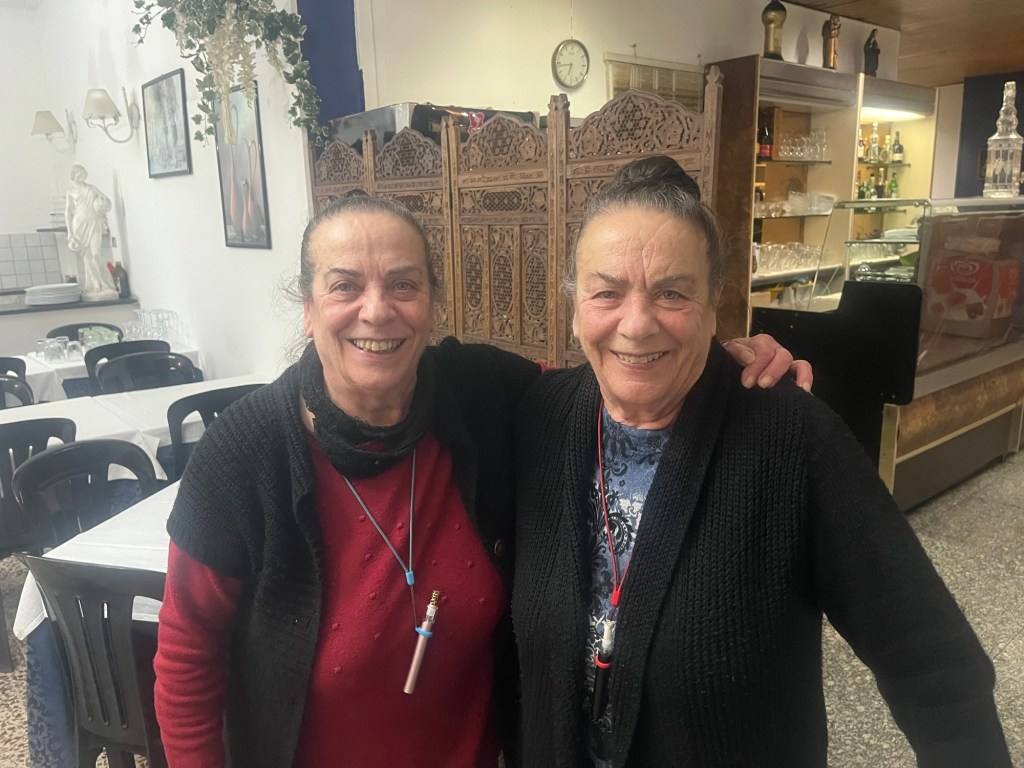
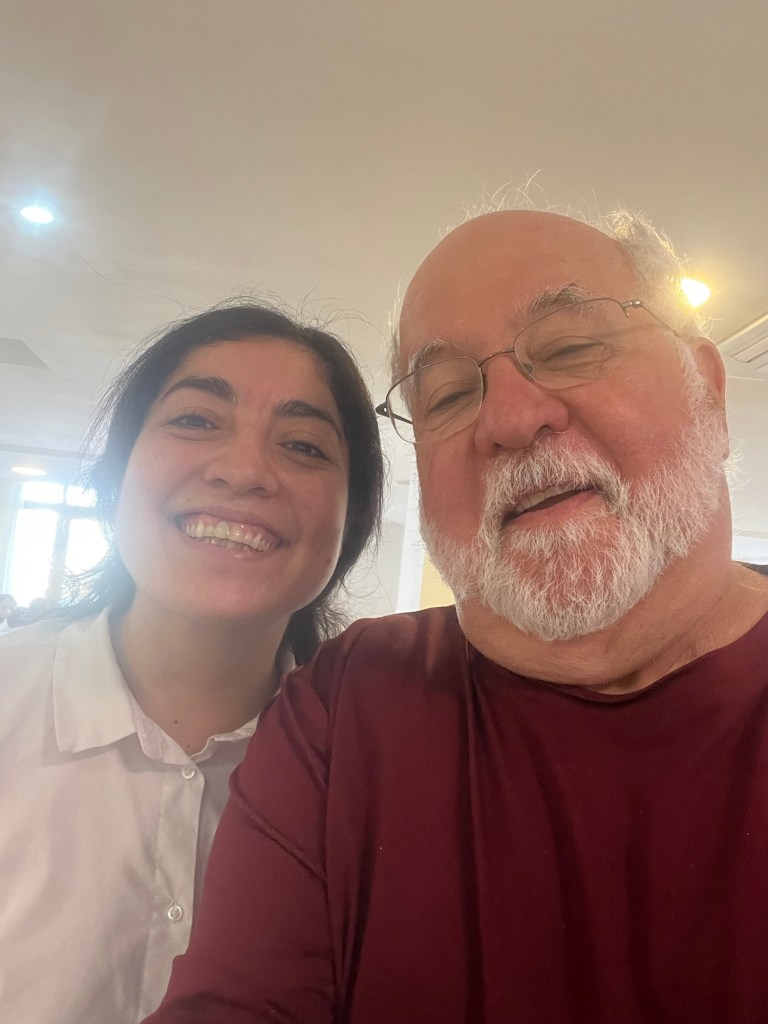
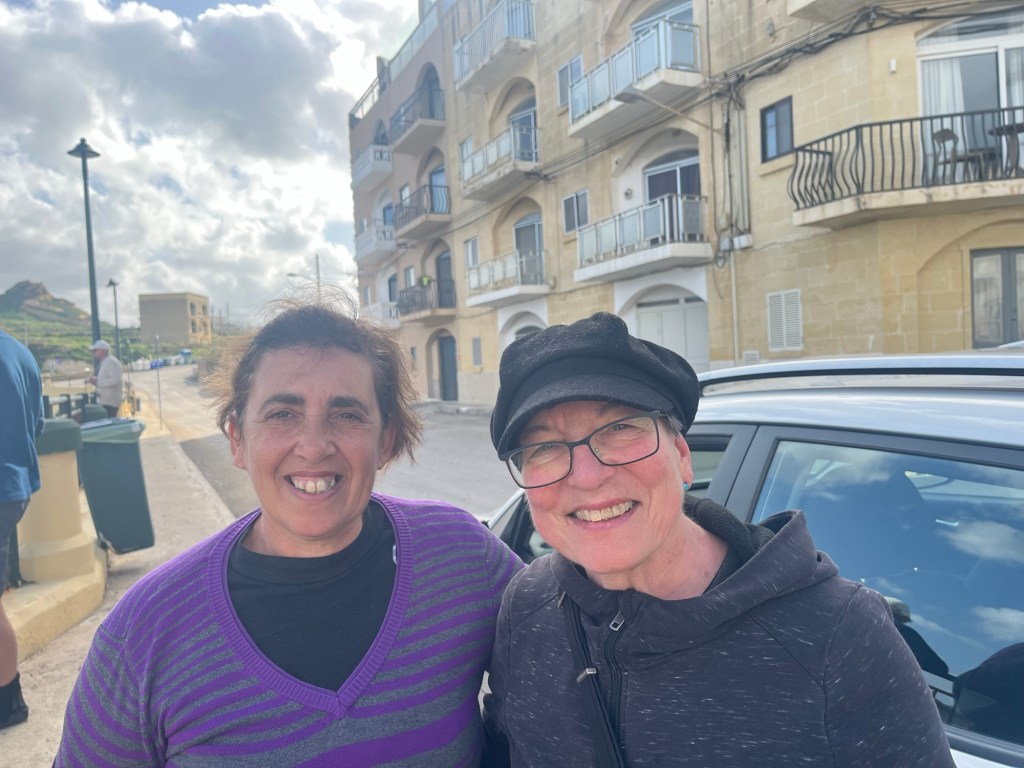
My new friends … Mike, Rumani, and Mariah Grech…


By 12:30, the fish mongers are cleaning up and disappearing…


But even after the mongers are gone, you can still buy every imaginable kind of tchotchke, from underwear to clothing to accessories to toys to magnets to Maltese knights to fans to socks to more underwear to soap to bedding to Christmas tablecloths to shopping bags to aprons to cosmetics to Chinese vases to Maltese Cross silks to honey to baked goods to more underwear to lizards to post cards to jewelry and even a 4-in-one survival bracelet with a fire starter, a knife, a compass, and a whistle (which I damn-near bought)
.


That’s All Folks. See you again when the next story rears its head.

Shalom Y’all!

Marsaxlokk Malta

Part 1: Getting Here

Traveling for 18 hours is hard work. Airplane seat designers must delight in demonic sadism, creating seats that are as unsuited as possible for sleeping … and we upgraded to the just-short-of-first-class seats. Like the seats, the so-called “pillows” were designed for maximum discomfort, and the “blankets” not only provided no warmth, they were also too small and kept sliding off. Fortunately for us, the “economy plus” section was empty, so we had plenty of horrible pillows and inadequate blankets to plow through. I think we opened six of those silly bags they give you with pillows and blankets and a bunch of other supposedly helpful stuff like lotions, cloths for cleaning glasses, and lip balm … just the comforts you are longing for when trying to grab, at best, 5 or 6 hours of sleep. Plus, we shared a cabin with the obligatory guy with apnea who kept making desperate vomiting-like sounds before drifting off again. On the glass-is-half-full side, we had no crying babies or unexpected health emergencies, both of which are standard fare for those of us who have flown way-too-many red-eyes. And the sad thing is that it was probably as good as we could have hoped for. Unlike leisurely road tripping and long trips by rail, overnight airplane travel is never about the journey; it is only about the destination.
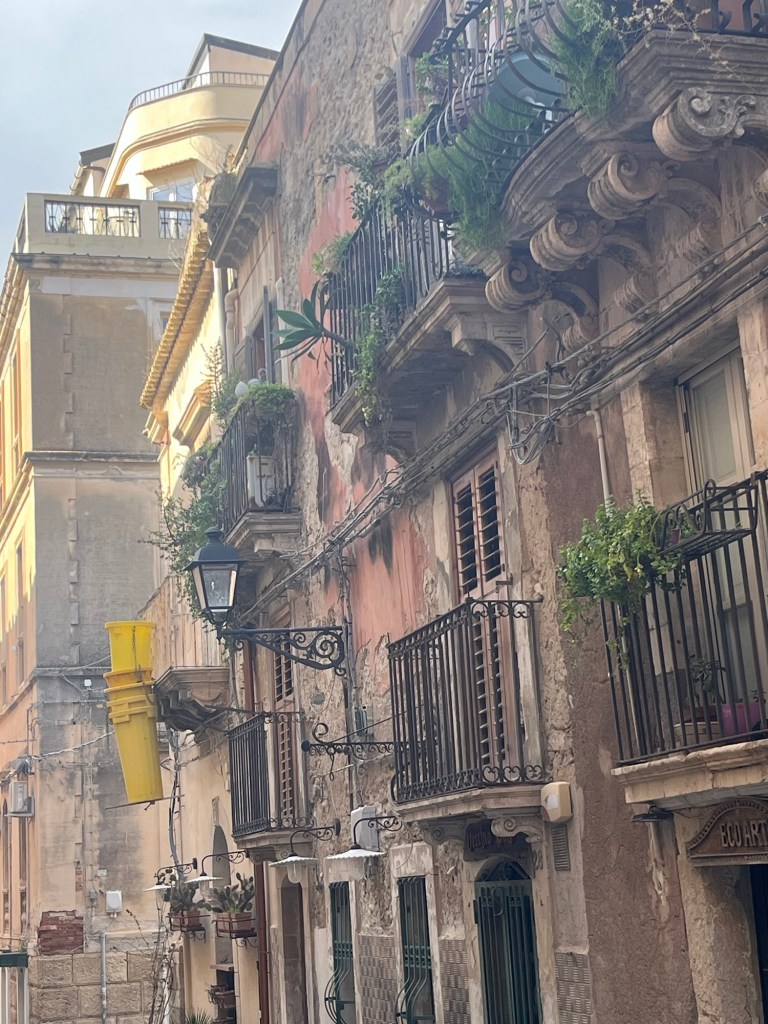
Now that we have been here for almost a day, 11 hours of which we spent sleeping, it seems that the destination is making the travel miseries worth it. From all initial impressions, Malta is a pretty cool place, and our choice of starting the adventure in Marsaxlokk was a good one. (Time will tell, of course.) And in case you are wondering, Marsaxlokk is pronounced Marsa-schlock.

Part 2: Being Here

I have planned this trip for months … which is amazing since we have nothing really planned except our first four nights in a guest house. (And they have welcomed us to stay longer, which we’ll probably do.) We don’t know how long we’ll stay or where we’ll go from here. We do know that we plan to limit our travels to Malta, Sicily, and southern Italy … unless we don’t, which we will know as soon as it happens.

My first thoughts for winter travel were to spend the winter in Crete. The idea never resonated with Rebecca. For some inexplicable reason, however, Malta did. Check out Malta on a map. It is in a holy-crap-that-is-really-the-middle-of-nowhere location, in the Mediterranean between Sicily and Tunisia. It is one of the smallest countries in the world by both population (575,000) and land area (319 square kilometers), but it is the ninth most densely populated country in the world. By contrast, Grand Isle County Vermont, where we spend most of our time, is larger by land area by almost 50% (515 square kilometers), but has just over 1% of the population, at 7,500 people. For 150 years, from 1814 to 1964, Malta was a British colony, so English is one of its two official languages (along with Maltese) and people drive on the wrong side of the road. Plus, it is a wealthy and safe place where people take great pride in being nice. As countries go, it is proving to be incredibly easy to be in.
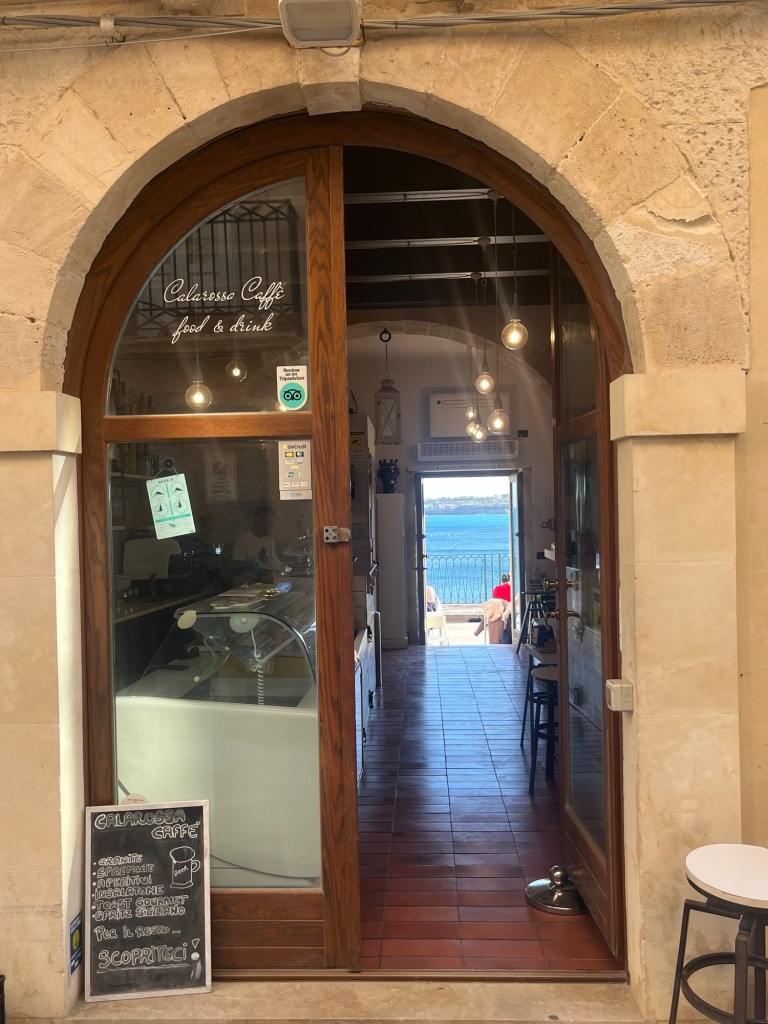
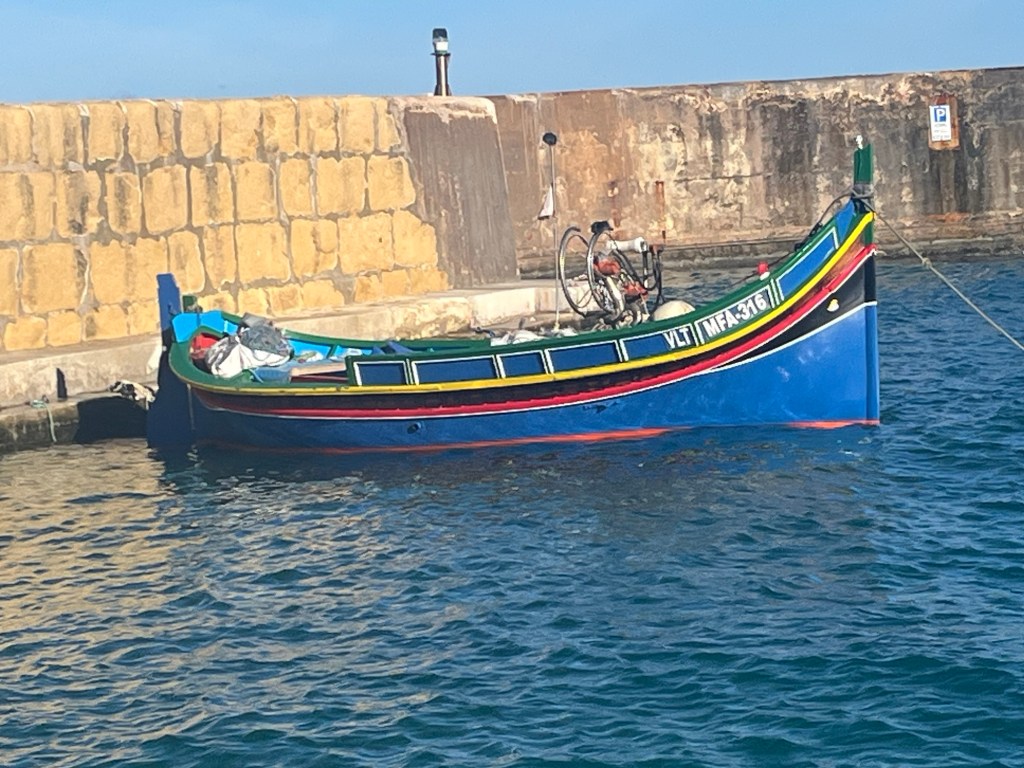
Once we agreed on a place, I Googled “quaint fishing villages in Malta.” Marsaxlokk topped the list. (Then I Googled how to pronounce Marsaxlokk since the spelling provided no hint whatsoever.) I learned that Marsaxlokk is not only known for its traditional Maltese fishing boats, called “luzzus,” but also that it has a year-round open air fish market every Sunday throughout the year. Stay tuned. Today is Friday; we still have a bit of a wait to experience the fish market.

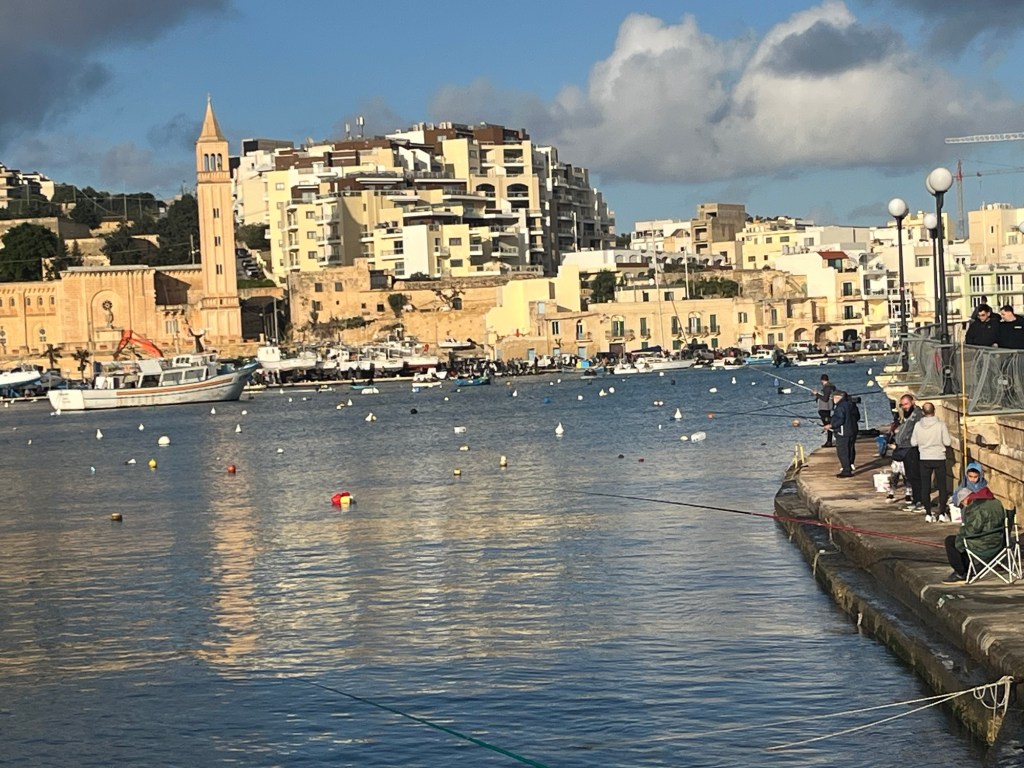
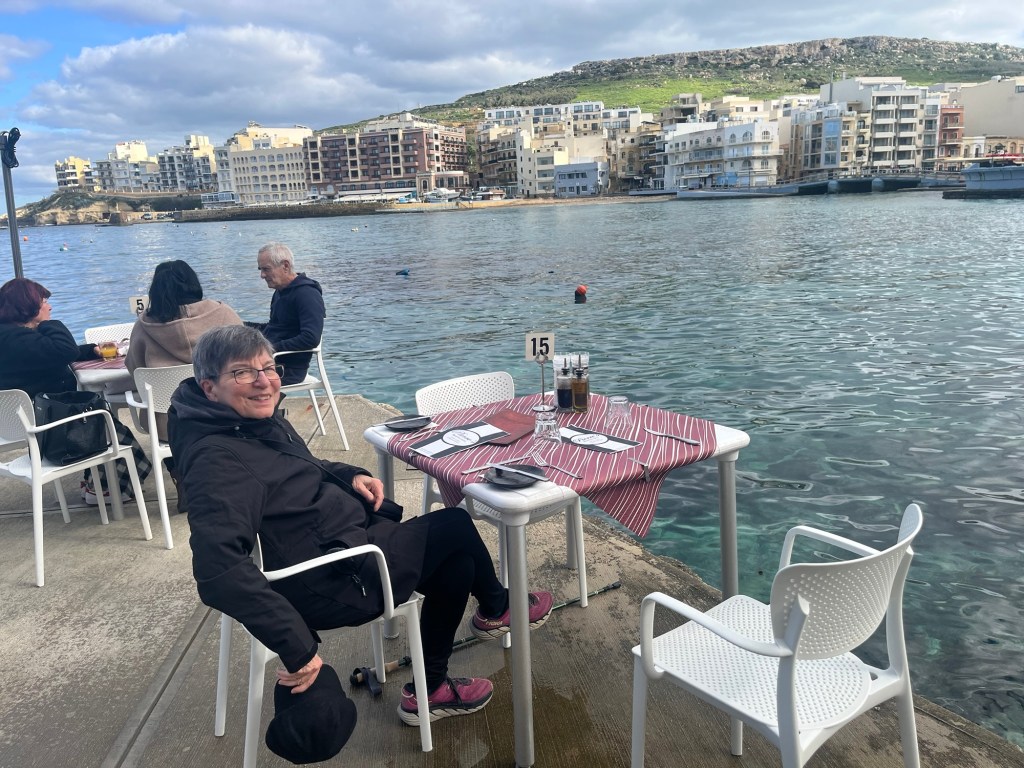
Yesterday, we marveled at the harbor and ate an amazing meal along the waterfront. Today, we wandered the waterfront and took pictures. The jury seems to be pretty clear: Marsaxlokk was a perfect choice! It is everything we had hoped it would be. Enjoy our first morning of photos!

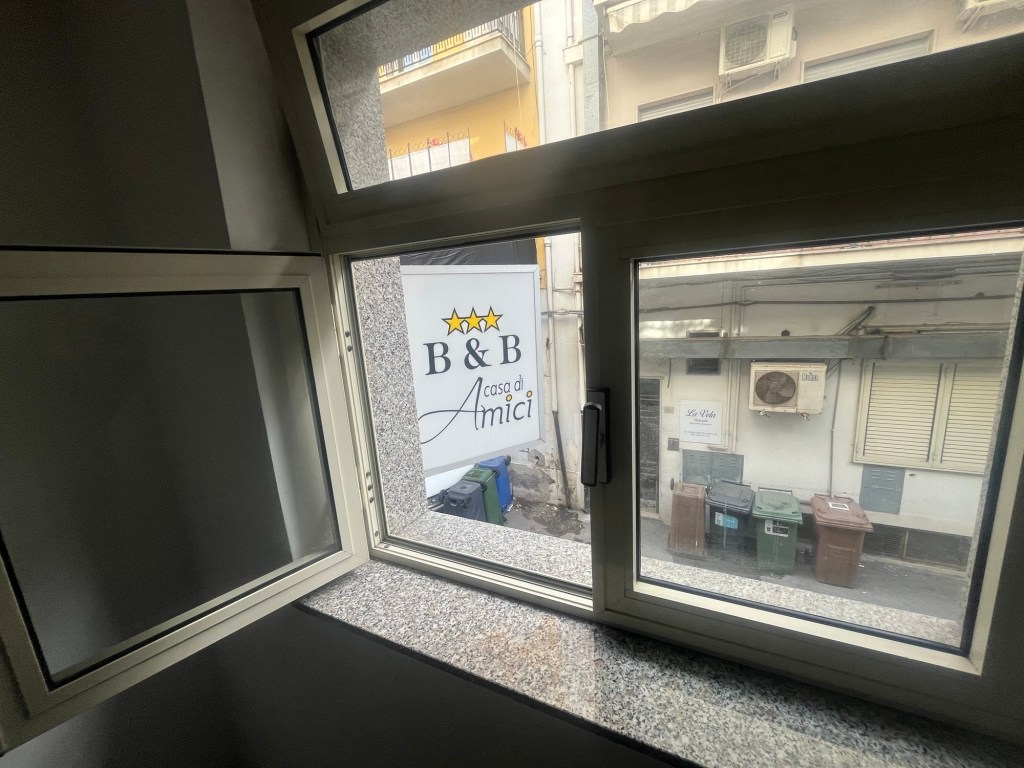
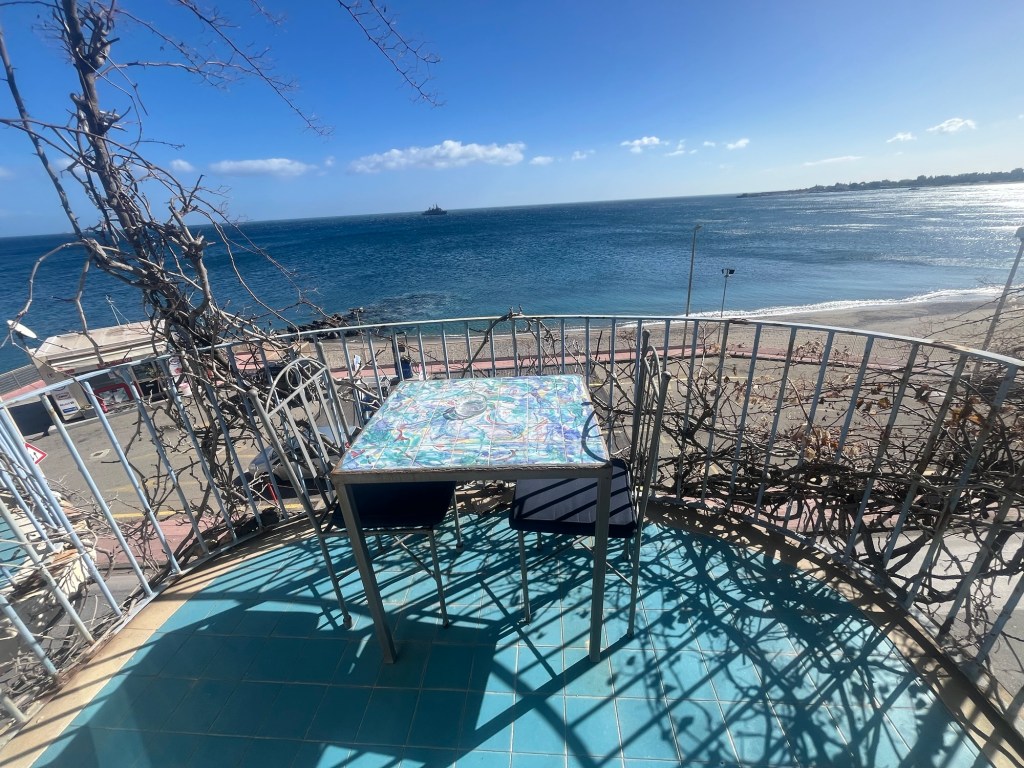
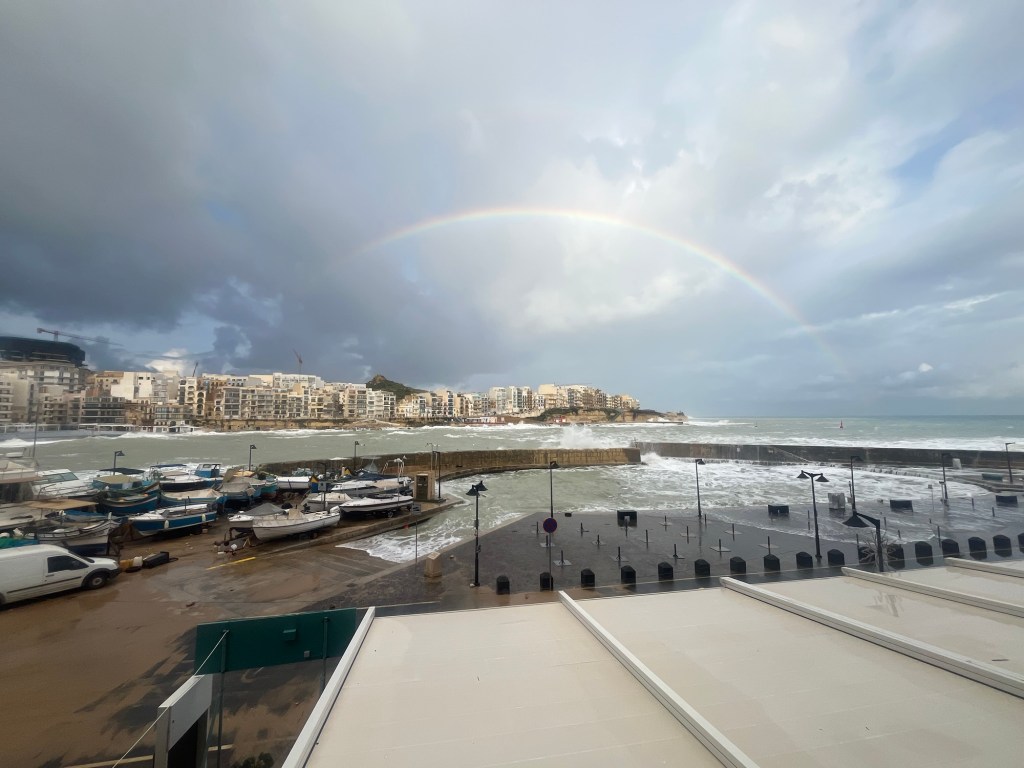
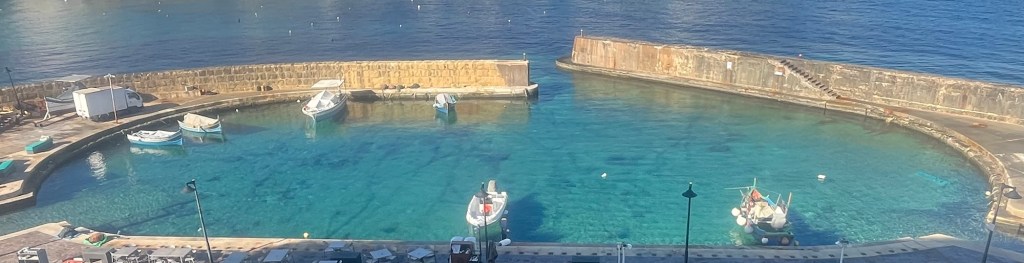
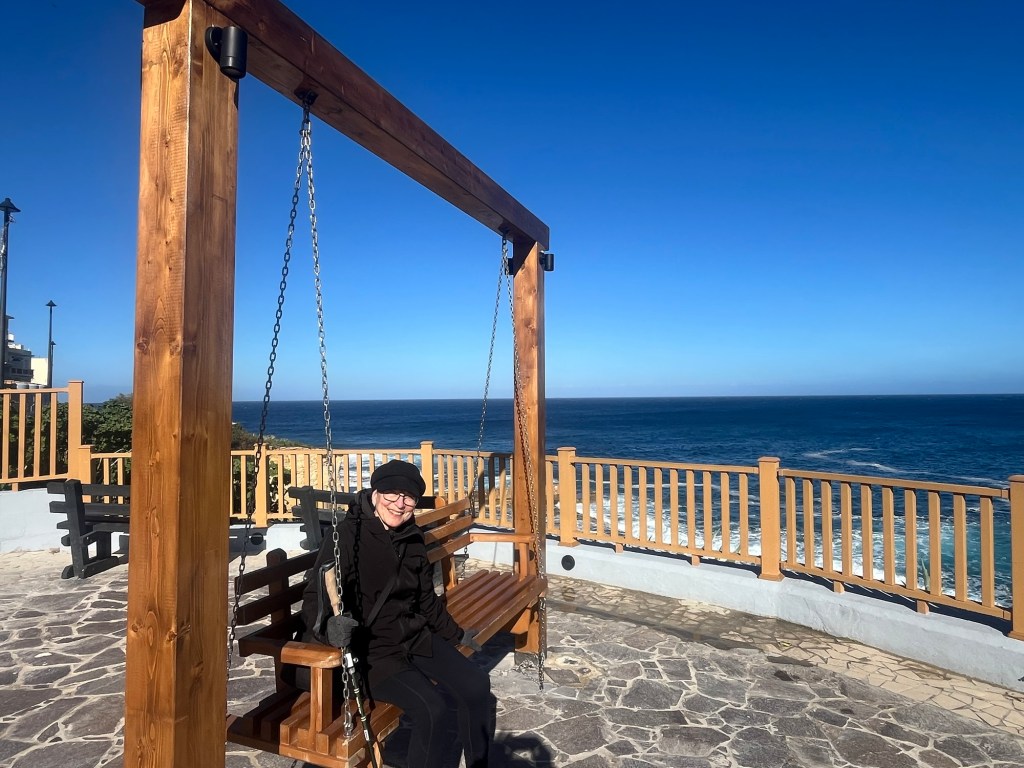
The view from our room

Traditional Maltese luzzus and Noah, a 3rd-generation fisherman

Maltese fishermen repairing a luzzu.

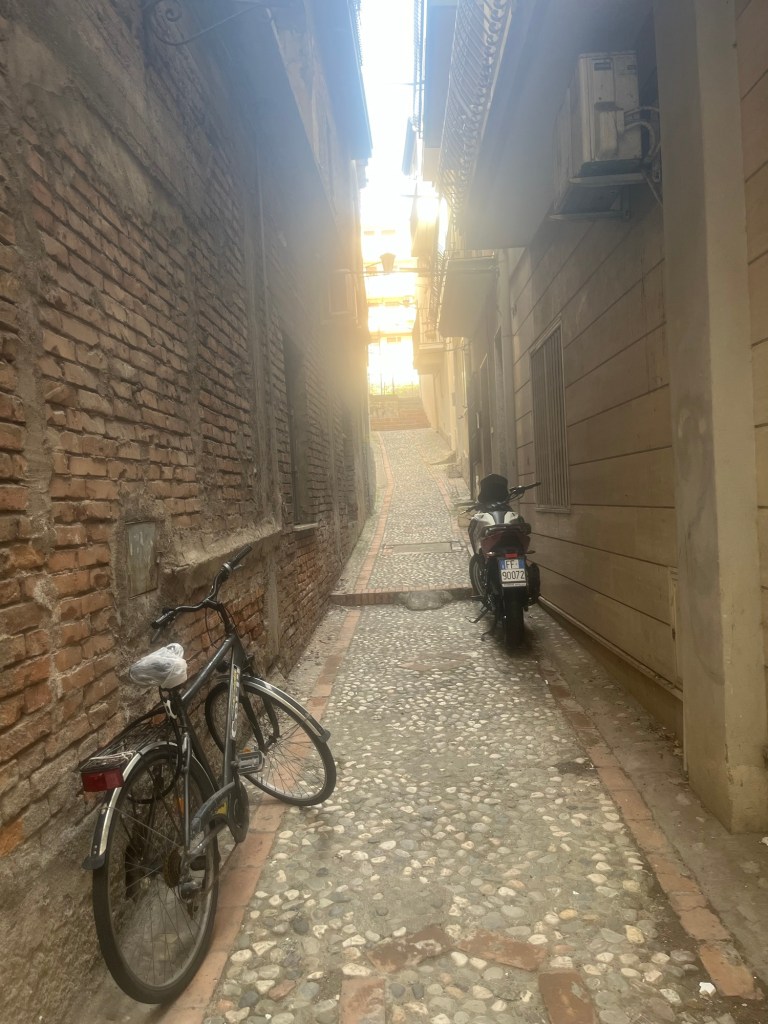
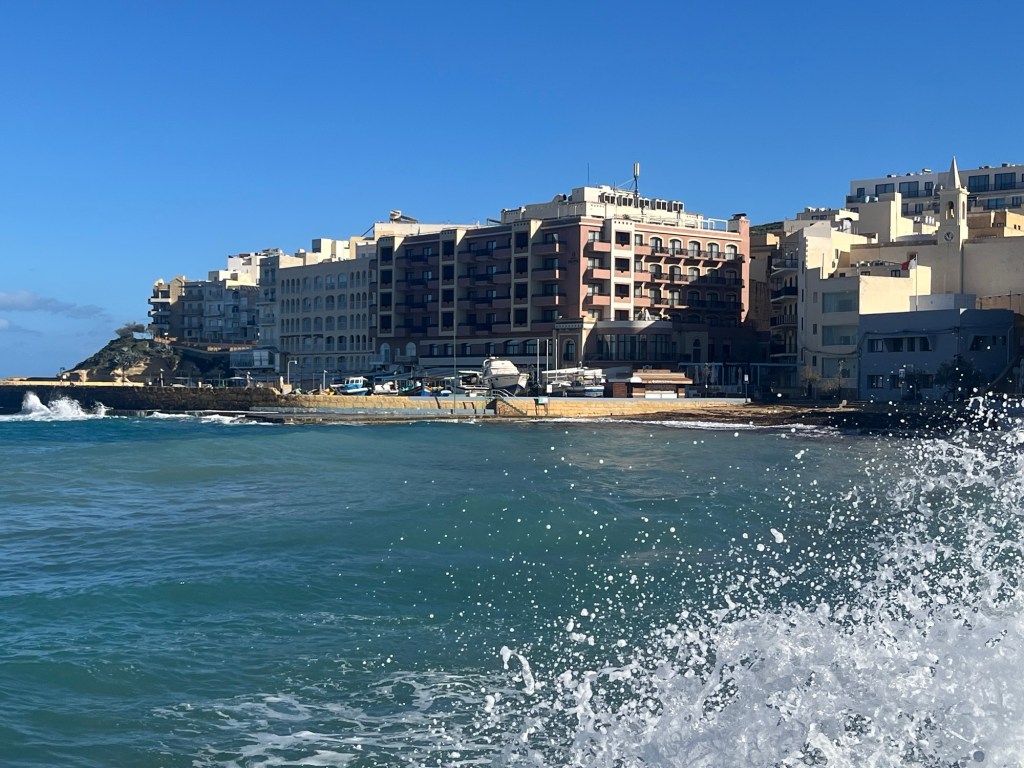
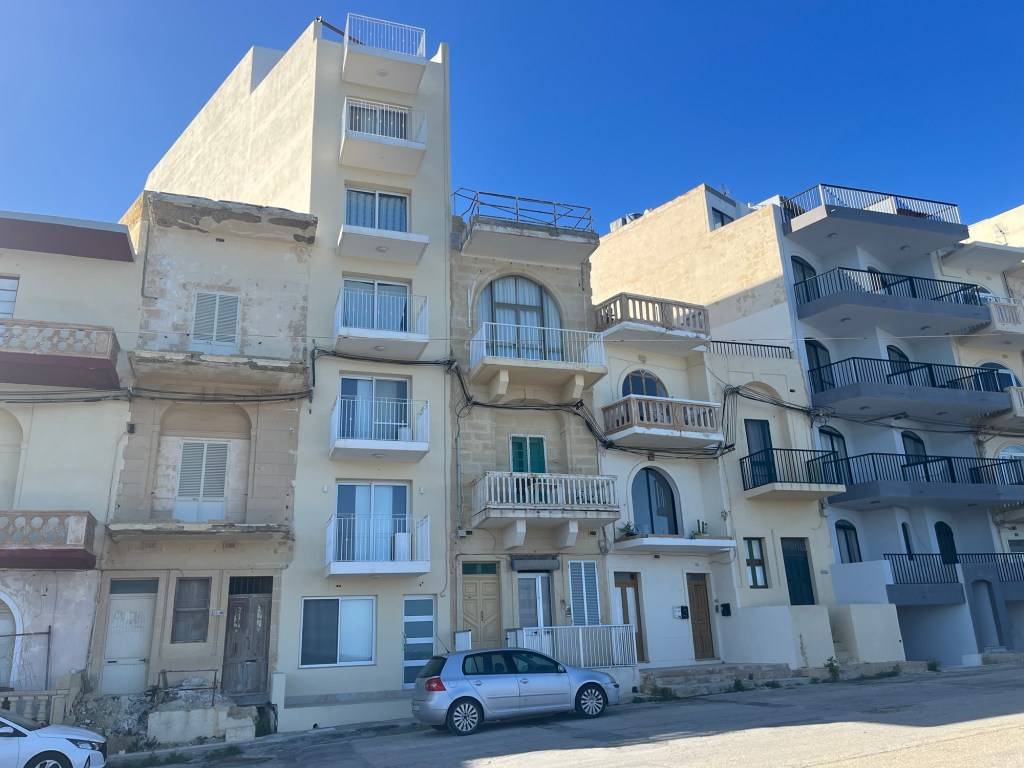
Marsaxlokk street scenes

AGE: 76 GOAL: Learn to Ride a 2-Wheel Bicycle

I have spent about 30 minutes each day for the past week trying to learn to ride a bike. I have fallen a couple of times; weaved all over the road; run totally out of steam going uphill; and wondered if I will ever master the damn thing.

It’s not just any bike. It’s a BikeE (that is a manufacturer, not an E-bike) LWB OSS recumbent. “LWB OSS” is recumbent bike-speak for Long Wheel Base, Over Seat Steering. “Long Wheel Base” means that the pedals are behind the front wheel rather than in front of it. “Over Seat Steering” means that the bike has handlebars like a conventional bike rather than a steering mechanism below the seat. My new baby has a 16-inch front tire, a 20-inch rear tire, and 27 gears.

My test rides of a few USS bikes – under seat steering – were a joke. Since there’s nothing to hang on to, I couldn’t even get on the bike, much less ride it with any semblance of control. The bike with conventional handlebars at least gave me a sense that this adventure had a chance … even if only roughly equivalent to that of a snowball in hell.

Here’s how I got to this point. A few years ago, I did a fair amount of bicycling. Two things got in the way: 1) the headwinds were sometimes so strong that I had to pedal to go downhill. 2) a neighborhood dog loved chasing me and nipping at my ankles. (I hate the f-er!) The idea of falling off a bike in my 70s held no appeal whatsoever. All I could think was, “That would REALLY hurt!”

The thought of a recumbent tricycle intrigued me. I couldn’t fall off, and the aerodynamics might help to counteract the headwinds. I was right on both counts, and I loved my recumbent three-wheeler. I rode with dog mace to prevent the nipping (though fortunately, I never had to use it) and cruised for hours on the desolate, scenic back roads of my little Lake Champlain island. Then the downsides started to appear. The bike was heavy and slow, which was a nuisance, but not necessarily terminal. 

The riding angle of the bike proved to be its fatal flaw. Country roads in northern Vermont are well crowned ­– high in the middle and low on the shoulders ­– to help rain water flow, prevent ice build-up, and assist plowing. On a two-wheel bike, when the road bed has a side angle, you just adjust the angle of the bike and you are always sitting straight up. On a trike, you ride at the angle of the road. That is great on a flat road or a bike trail, but not on a crowned country road. Regardless of your direction of travel, your weight is always on your right buttock. After about three years of riding, my butt screamed, “ENOUGH!!!!” I gave myself a case of sciatica that lasted all summer long. Alas, I have not ridden the trike since.

But bicycle riding is just too good an activity to give up easily. After 76 years of reasonably strenuous living, there’s not a part of my body that doesn’t have the capacity to rear its head and reveal types of pain that I never knew existed. Biking is the one physical activity I can do that never hurts (except for one case of sciatica, that is). 

Plus, when I told my cardiologist that I walked a lot, he said, “Not good enough. Get an exercise bike.” So I bought a recumbent Schwin. I ride that bike for an hour or more – 15-20 miles – damn near every day and have done so for years. After a few years of basement pedaling, I am growing tired of the scenery … and too much news in the age of Trump can be nauseating.
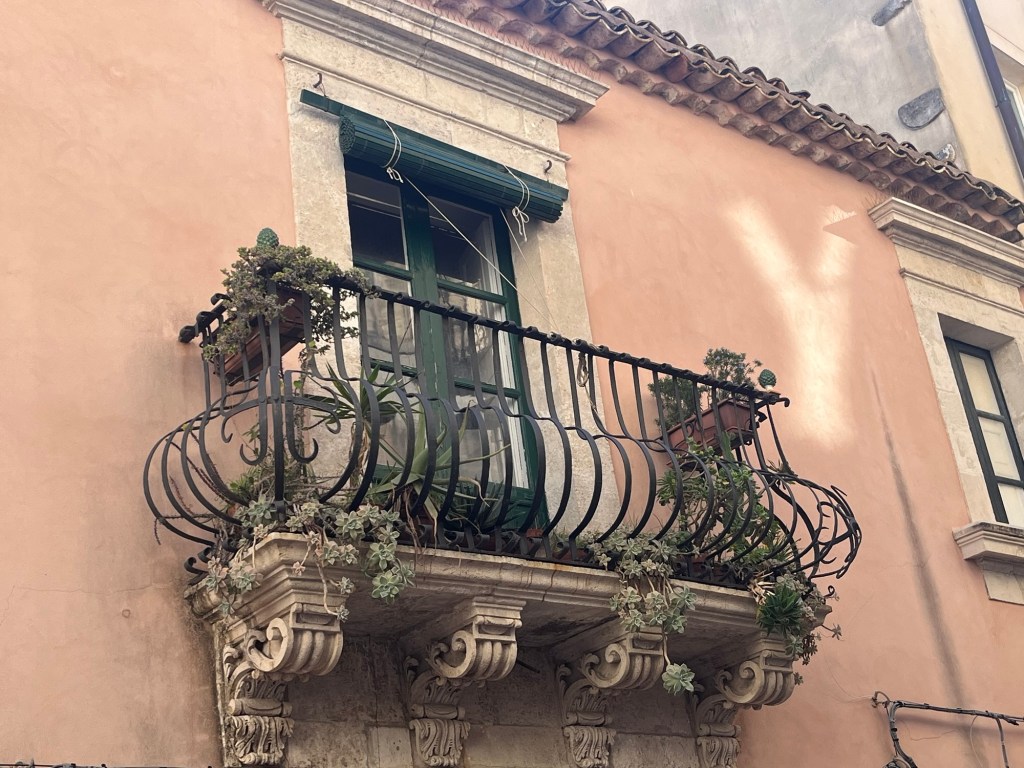
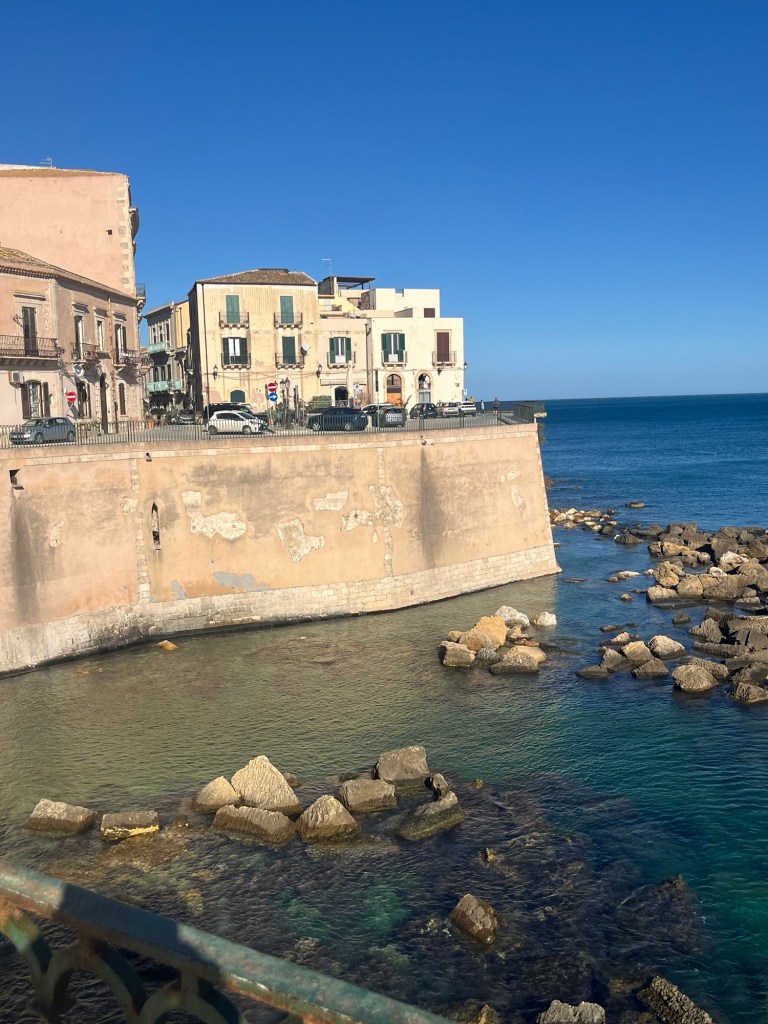
Time for another change. I can ride the recumbent exercise bike forever (and have done a bunch of 50-mile rides and one full century). Why not try a two-wheel recumbent? It’s low to the ground with a comfortable pedaling position. I can keep myself upright and not worry about sciatica.

I started going to bike shops to learn about recumbents and maybe take some test rides. I didn’t go to just any bike shops, but big, well-stocked, totally knowledgeable bike shops. Nothing! Not a recumbent in stock, and not a sales person or tech who could give me a real information. I was shocked.

I had an ace up my sleeve. My old high school good buddy from Atlanta, Myron Skott, had contacted me a couple of decades ago. He was biking down the east coast from Maine to Key West along the then-new East Coast Greenway in 2004, and he stayed with us as they passed through Boston. He rode a really nifty recumbent and loved it. In fact, he has been riding the same bike for 21 years!

Myron has become my recumbent bike guru. I learned that there are two bike shops in the northeast that specialize in recumbents: The Bicycle Man in Alfred Station, NY, and Mt. Airy Bicycles in Mt. Airy, MD. One is a 7-hour drive away; the other, a 10-hour drive. Off to Alfred I went.

The Bicycle Man was everything you want a bike shop to be: lots of information, plenty of bikes to test ride, utterly passionate, knowledgeable, and low-pressure sales folks. I arrived at 3:00. They close at 6:00. I left with a new (used) bike in the back of the car at 6:15. Had I arrived at 10:00 or noon, I expect I still would have stayed until their 6:00 closing. I am a pretty good talker and have way more than my share of questions. Lee and Stewart were every bit my equal. You guys were great!!!!!

And that brings me back to now. I am riding my new bike every day. After a half-hour or so, I’m spent. There’s just no gas left in the tank. I can now mount the bike on the first try about 75% of the time, and I can almost ride it in a straight line. I am nowhere close to being able to make a short-radius 180˚ turn. There are 4 little hills in my immediate neighborhood (and virtually no cars since most of my neighbors have made their seasonal move south). I can now handle two of the hills most of the time. Yesterday, I made to within about 20 feet of the top of one of the bigger hills. (The day before, I only made it about halfway up.) Today, I made it to the top with ease!. Now I have the 4th hill to conquer: longer and steeper. 

Once I master my immediate neighborhood, I’ll hit more back roads. A mind-blowing vista sits atop a good-sized hill two miles from my house. On most days, I should be able to make the ride without passing a car. I hope to make it to the top of that hill and take in the view before the snow flies. Then I’ll wait for spring. There are miles and miles of bikeways and rail trails around me. I hope to explore every mile of all of them.

If only I can learn to ride the damn thing! 

Lee The Bicycle Man in Alfred Station, NY with my new toy

Two Backpacks, One Roller Bag, and a One-way Ticket

Labor Day has passed and some of the maples are starting to turn. Fall officially arrives in a couple of weeks. Soon, it’ll be winter. Rebecca and I are busy planning our cold weather escape.

I’ve always wanted to spend a month in Crete. Rebecca never got keen on the idea. So we moved a tad west and north and have settled on Malta, Sicily, and the boot of Italy. Not only have we never been there, we know precious few people who have. Here is what I know: the villages look magnificent. The off-season hotels are luxurious, readily available, and a fraction of their peak-season price. The two official languages of Malta are Maltese and English. We can fly directly to Luqa Malta, and from the airport, no place is more than about 30-minutes away by bus. 

Malta, Sicily, and the toe of the boot of Italy

My good friends Peter and his wife Jody are ridiculous world travelers; they know and love Malta and Sicily but have never been to far southern Italy. My cousin Cooper and his wife Lucy spent a month in Sicily and adored it. Other than my father serving in Foggia in WWII, I don’t know anyone who has visited the far southern boot of Italy. Naples will be way north of our travel range. We’ll go there to fly home and spend a day or two visiting Pompeii … and my father’s time there was not exactly a “visit.”

Malta is the world’s tenth smallest country. Its population of 575,000 is slightly larger than that of the Maldives and slightly smaller than Montenegro. Its land area is 122 square miles. (By contract, Grand Isle County, Vermont covers 195 square miles; from our house, no place in the county is more than about a half-hour away.) It was a British colony from 1813 until 1964, when it gained its independence. Its two official languages are Maltese and English. Language will not be a problem there; too bad they still drive on the damn wrong side of the road!

Early in this decade, conservation efforts successfully re-introduced peregrine falcons to the island. If we are lucky, we may catch a glimpse of a bona fide Maltese Falcon. But, I recently learned, if we want to go in search of falcons, we’d be much better off in New York City. It lays claim to having the largest urban peregrine falcon population in the world. (What better way to manage pigeons, I guess.)

Our first stop will be Marsaxlokk (pronounced marsa-schlock), a very old traditional fishing village with a vibrant year-round Sunday open air market. That will be the only reservation we’ll have when we leave the states. We plan to be “slow travelers,” moving to a new destination when we feel like it, sleeping in guest houses instead of hotels, staying for as long as we want, and meeting as many local folks as we can. The people we meet will be our tour guides, telling us what to visit and helping us plan the next leg of our journey, whatever that might be. We’ll come home at the exact moment we feel like it.

If you happen to be one of the few who knows a bit about Malta, Sicily, the Aeolian Islands, and Italy south of Naples, please be in touch. We really want to pick your brain!

Stock photo of Marsaxlokk harbor. Our room will have a view.

Shipboard Dining Lives Up to Its Reputation

A fish lover’s perfect breakfast

An opening digression: Foodie vs Gourmet vs Gourmand
I’ve spent some time thinking about blogging about the ship’s food … which, by the way, is superb.

I love food and eating, so being on a ship with great food is a treat. But I wanted to frame the experience in some uniquely personal way. I’m a “foodie,” I thought. But I balked. I am not sure what a “foodie” is. I like to drink, but that doesn’t make me an alky; I like to drink in moderation, and some alcoholic drinks, like hard lemonade, make no sense to me at all. I like wine, but that doesn’t make me either a connoisseur or a wino; I like drinking wine regardless of whether or not it is very good, and drinking too much of it makes me feel like crap. I like really good, well-prepared food, but flavor always wins out over other variables, like quality; the best meal we ate in Bergen was a grilled sausage from a street vendor. I just like food and flavors and the experience of eating. I love cooking, but I think that is mostly because I love eating. So, does any of that make me a “foodie”?

I went to the expert: Google. I am definitely not a “gourmet” because the foods I love do not have to be of any particular quality or prepared in any certain way, and I certainly do not have a discerning palate. (I know people who can distinguish between types of salt. Not me!!!) Just because something doesn’t taste the way a particular dish is supposed to taste doesn’t mean it is not delicious.

That leaves a choice between “gourmand” or “foodie.” Gourmands, I learned, love food and eating, but err on the side of gluttony. While I assuredly have the capacity to overeat, being a glutton just doesn’t resonate. I guess that leaves “foodie.”

The best Google definition I found describes a foodie as “an amateur who loves food for consumption, study, preparation, and news.” (Like my daughters, I love reading cookbooks!) I’m going with “foodie,” so this description of shipboard food is from the perspective of a foodie, not a gourmet or a gourmand (even though the quantities can be obscene at times.)

Shipboard Fish Feasting
The least interesting, least fun meal of the day on the MS Nordkapp is the evening meal … which (sorry to be boring) leads to yet another semantic distinction. “Dinner” is the big meal of the day, regardless of whether it happens in the evening or midday. “Supper” is a lighter meal than “dinner.” So, the least interesting, least fun meal of the day on board is “supper.” Breakfast and lunch kick butt!

“Supper” on the ship is a sit-down experience with a waiter and a choice of three starters, three entrees, and three desserts. Our waiter, Elias, quickly learned that I always asked for two entrees, not because I am interested in the quantity, but because I cannot pass up an available taste!

The food at supper is just fine, but nothing exciting. What makes breakfast and lunch exciting is the variety! Fresh fruit, cured meats, pate, cheeses, breads, pastries, eggs, bacon, side dishes, desserts, all abound. Some of that selection, like the cheeses, excites me; the breads, pastries, and desserts spark little to no interest (though I do suffer through an occasional bowl of custard smothered in fruit compote). But the high point of breakfast and lunch is the superabundance of seafood!

Before this trip, I knew I loved seafood. I had no clue I loved it as much as I do. With almost every meal, we have a couple of kinds of baked salmon, 3 or 4 kinds of smoked salmon, 3 kinds of sprat (a sardine-like Norwegian fish), 4 different kinds of herring, a few different mackerel, occasional platters of cod, haddock, or halibut, and intermittent crab, shrimp, mussels, and fish cakes. A fish lover’s paradise!

I find myself thinking of my maternal grandfather, a man who died when I was one and who I never knew. My mother told me many stories of his love of fish for breakfast, especially eggs and smoked kippered herring. I remember my “smoked kippers phase” and my “sardine phase” as a child. I couldn’t get enough of them; my mother indulged me and had a chance to re-experience the appetites of her father.

Hey Grandpa Joe, I am sorry I never knew you, but I am so happy I inherited your seafood-loving gene. And I am so happy to be on this ship where I can exercise those muscles like they have never been exercised before!

An Appreciation of the Staff
The Nordkapp began its journey north from Bergen at 8:30 p.m. (20:30 in European time). We boarded mid-afternoon and settled into our cabin. Dinner the first night was a buffet (my favorite).

A bearded young man in a chef’s hat managed the buffet’s serving area. “Are you the chef?” I asked. “I am one of them,” he replied. “Do you think I can tour the kitchen area,” I countered. “Maybe so,” he replied, “I’ll ask my boss.” 

Alas, the boss said “no” because of concerns about hygiene, but a terrific on-board friendship emerged. We’ve giggled, told stories, teased each other, spent part of an afternoon talking about things to do in Oslo, and become friends. Most importantly, Paul has not been just a fun shipmate. He became a bit of a savior.

This adventure has been spectacular in every way except one. The ship line’s IT provider has decided that my personal website and email URL – TheWritingCo.com – is suspected malware, so I cannot use email in my usual ways, and I cannot transfer pictures from my iphone to my computer without going through a long, tedious process. The IT provider has been 100% unresponsive. I’m pissed!!!

Paul volunteered a brilliant solution. He has a personal hotspot connected to his cell phone. I can sign onto wifi through his hotspot, and everything works perfectly. Without Paul, this blog entry would never have been posted. What a good guy!

Having fun with kitchen staff is not limited to Paul. The entire staff has been great. The servers, the table cleaners, the cooks all keep the ship lively, and they have wonderfully diverse personalities. Anna, one of the breakfast buffet tenders, greets me every morning with a sincere “Good morning” and a melt-all-of-your-defenses-away smile. Elias, our evening table server, is a super-nice young man who triggers my inner teacher, coach, and mentor. He just isn’t sure what he wants to do with his life, and he isn’t terribly keen on the idea of higher ed. Henrik is an old pro who ensures that the dining room has been vacated when it’s time for passengers to leave so the crew can finish their work. At first glance, he appears to be serious and no nonsense … then he pulls out his yellow card and red card á la soccer officials to inform passengers about the severity of their infractions. He is a no-nonsense sort who is totally hilarious and super friendly. The list goes on. There’s Jonathan, the French chef who delights in being around food; Marcel, who is insanely pleasant; and Lisbeth, the dining room manager who, like Henrik, manages to combine an aura of super seriousness with an ability to be insanely friendly, pleasant, and authentic.

It is amazing how much attentive professionals can enhance the quality of a dining experience! Thank you all!

Lisbeth, the dining room big boss

Elias, our server and all-around good guy

Reindeer and Cod. More perfection

Jonathan, the aspiring (and super nice) French chef

Henrik, waving his warning card

Sampling delicious blue mussels on deck, well above the Arctic Circle

Paul. THE BEST!!!!!! And someone I hope we stay in touch with for the duration.

An Homage to Dirty Laundry

Northern Lights through an iPhone


Background
I am writing this post from cabin #321 aboard the MS Nordkapp, one of the Hurtigruten Line’s Coastal Express ships that sails from Bergen, Norway to Kirkenes, at the Russian border, and back to Bergen. A few important things happen on the journey: we cross the Arctic Circle and sail past “Nordkapp,” the North Cape, just north Honningsvag, the northernmost city in Europe. (Last year, FYI, we went to Sandy Hook, the northernmost point in New Jersey. We also went to Key West, the southernmost point in the continental US, and we’ve been to Anchor Point Alaska, the westernmost highway in the U.S. But now I am just bragging. Those places have nothing to do with Norway or dirty laundry.)

To escape the frigid cold of the northeast, we wanted to do something new. Rebecca had taken a cruise before and was lukewarm on the experience. I had never been on a cruise ship and had little desire. So, we did the only logical thing, we booked a cruise to sail to the Arctic in search of Aurora Borealis, the Northern Lights. (Stay tuned. I am rapidly falling in love with my iphone camera!)

Back to Dirty Laundry
We have so many reasons to be close to home, not the least of which is that grandson Elliott celebrated his 7th birthday in our absence. We missed celebrating with him. Plus, when we arrived at the ship, they gave everyone a wifi password and ID. Everything worked except my personal email. I hope to get this post announced as we travel. We’ll see.

We are cruising on a ship, but Hurtigruten ain’t Carnival! Instead of casinos and entertainment centers, our ship is more of a coastal Norwegian ferry, carrying cargo and cars and passengers making their way up the coast. We have lectures about the local culture and sights and tastings of local food. Nature provides most of our entertainment. Instead of a few thousand people on board, we have a few hundred. The crew lets us know of a Northern Lights sighting, but it’s up to us to get clad for winter weather and onto deck to see it.

Being a little homesick on a trip like this doesn’t feel too weird. We are a long way from anything familiar. It’s really cold out. When we make our turn to head back south, we will be three kilometers from the Russian border at the northernmost tip of Europe. We are north of any Norwegian train lines. We don’t know a soul. We don’t know the language. The mountains are stark. The sea is treacherous.

Thank goodness for dirty laundry.

We planned all of our packing around doing laundry. We’re gone for 20 days. We started the trip with a day of travel and three days in Bergen; we end the trip with three days in Oslo and another day of travel. If we did laundry on the first full day of cruising, we would need 5 sets of shirts and underwear. (Trousers can go a lot longer between washings.) If we wash on the first day of our cruise, sometime in the middle, and on the last day, we have clean clothes the entire time. I checked with Hurtigruten about on-board laundry. They have five or six washers and dryers for passengers. (That is about as up-scale as Hurtigruten gets. We stop in 33 different ports, once going north and once going south for a total of 65 stops, most of them lasting for 10 or 15 minutes; we get off and wander once a day … on most days. This is a work-horse of a ship. Thank goodness we can wash our own clothes for just $3 a load … and they provide the soap!)

Yesterday was laundry day #1. Rebecca did not feel 100%, so I did the washing, drying, and folding. It was unbelievably satisfying. Washing our clothes helped me realize that even though we are almost 4,000 miles from home in a strange land with a hostile climate, we have the anchor of OUR clothes still needing to be washed and folded. Doing the laundry gave me a sense of stability and predictability. It provided a moment of knowing that despite all that is different, things are really pretty much the same.

Summing Things Up: A Whole Bunch of Ideas, Experiences, and Lessons Learned

For everyday driving, I cannot really imagine a better mode of travel. On the road, the cost of charging was about 3/4 the cost of gasoline ($450 versus ~$575) … and Mo does not need any oil changes. At home, the cost is about ½ the cost of gasoline. As long as the travel day is less than 200 miles, one charge is good for the day. The at-home charger works all night and is done by morning. The deal with my electric company is that as long as I don’t charge during peak demand hours – 5:00 PM to 10 PM – I get $100 a year knocked off my bill, bringing the price down a little more. On those rare days when driving distance might exceed 200 miles, like Boston to Vermont, finding a charger is pretty easy, and 30 minutes is ample for a charge of 85% capacity or more.

The at-home charging apps are totally intuitive and easy. If you pay a time-of-day rate, you just program the app to charge only when rates are at their lowest. Easy Peasy.

Here are a few things I would like to know, have available, or understand better … and few ideas I have for making the experience easier…

Charging Speed and Battery Capacity

The Ariya has a battery capacity of 87 kilowatt-hours. It is rated to get over 3 miles per kilowatt-hour. In winter, it got about 2.5. High speed chargers are generally rated at either 150 kilowatts or 350 kilowatts. That is where my practical understanding stops.

I do not understand why some vehicles seem to charge faster than others at otherwise identical chargers, and I did not experience a big difference in actual charging speeds, though I always tried to charge at 350-kW chargers. At a Walmart in Erie, PA, I watched 3 different vehicles plugged into identical chargers get charged at dramatically different rates. I don’t get it.

Also, I have been told … and many of the chargers state … that charging slows down at 85% capacity, so the charge rate from 20% to 85% is faster than the charge rate from 85% to 100%. I did not experience the slow down, though I did try to space-out charging stations so I never worried about getting that last 10%, from 90% to 100%. I was usually antsy to re-hit the road, so I quit when I knew we had ample capacity.

Finding Charging Stations and Motels

On the one hand, there is an amazing amount of information about EV charging on the web. On the other hand, it is a pain to use. Plus, the number of charging stations is changing at warp speed. Keeping up with the changes would be nearly impossible.

All of the motel chain websites plus Hotels.com, Expedia, AAA, etc. have “EV Charging Station” filters as part of their search. Too bad the lists are not always up-to-date or complete; they often have no information or incorrect information about the plug (Tesla versus other … and lazy/cheapskate me never bought the adapter), and they certainly never have information about either the working condition of the charger or the number of cars needing a charge. From my experience, all of the public chargers everywhere are on a first-come, first-serve basis, and the only control to keep things moving is idle fees. “StayN’Charge” is an app that supposedly shows motels with chargers, but it is grossly lacking in data. We learned of a fantastic motel in Omaha through it, but other than that it never lived up to its potential.

There’s a mess of resources for finding chargers. “Plug Share” is an app that consolidates information from other charging sites. It’s pretty good, but nowhere near 100%. Google Maps is also pretty good and nowhere near 100%. With Google Maps, you can ask it to find EV Chargers near a specific locale, or you plot a route and then (on the computer but not a cell phone) hit the EV Charger filter. With a little more digging, you can learn the charging speed (Level 2 or High Speed), the charging capacity (150 kW or 350 kW), and the connector (CCS vs CHAdeMO vs Tesla). No doubt, these resources will improve over time.

Each of the chargers is operated by an independent business. (Think “Shell,” “Exxon,” “Mobil,” etc.). So, on my phone, I have apps for “EVGo,” “Chargepoint,” “Vialynk,” “ChargeHubEV,” “Flo,” “ChargeFinder,” “EVConnect,” “Envirospark,” “CircleKCharge,” “ShellRecharge,” and “BlinkCharging.” They are terrible for locating chargers, but once at a charger, they either make the charging easier or possible, and after-the-fact, they provide a great paper trail of where you charged, how much electricity you used, and the cost. For some, you need a credit card only and no account; for others, you need an account and payment method, so you charge with the swipe of a QR code. They are all different, so once again, patience!

In Ohio, we ran into a weird problem finding chargers. The chargers we found on the map were at dedicated service plazas on the Interstate, but the map did not tell us that, and we stay off of Interstates. We arrived at the back side of a Service Plaza; we could see it, but we couldn’t get into it. We had to drive 20+ miles out of the way to get onto the Interstate and then to the Plaza. Fortunately, we had learned our lesson about letting the capacity get too low, so we had plenty of battery for the wild goose chase. It was a non-event.

A Vision of the Future: Battery Swapping

I expect we will have a pretty robust infrastructure of charging stations in the coming years. But I also expect that battery capacity and vehicle range will increase dramatically too. With increased capacity and range, charging times will take longer and longer, and with more widespread adoption of EVs, lines will become longer and more frustrating. 

My hope is that a new industry will successfully emerge. Think propane tanks! Back in the day, everyone with a gas grill had to find a re-filling station for the propane tank. Then miraculously, a decade or two ago, tank exchanges popped up everywhere. The tanks are all uniform and meet a strict standard of safety. Users drop off an old tank and pick up a new one. Tank ownership becomes blurry. (Users own a tank, but not necessarily the tank they are using.) The whole process is as easy as buying a quart of milk. 

The same deal is happening with EV batteries … successfully in China, and as a start-up in the Bay Area. When it’s time for a re-juicing, you pull into a robotic battery center, the robot slides the battery pack from your car and installs a fresh, fully charged one. The provider recharges your old battery so it’s ready for re-use. You drive out fully charged in less time than it takes to fill a tank with gas. Get to work you entrepreneurs. Time is of the essence!!

Ease of Handling the Cables

EV chargers look like gas pumps, and the electrical cable looks a lot like the hose on a gas pump. But don’t be fooled. Those cables are filled with conductive wire. They are heavy and stiff, especially in the cold. And the plugs themselves are not forgiving. They must be lined up perfectly to attach to the car. In the blowing cold, hooking up the charger is really hard work. Over time, I expect to see increasingly lighter weight and more flexible materials, so the act of getting a charge does not require as much brawn.

Location of Charging Ports

Mo’s charging port is on the right side, just in front of the passenger door. If I don’t pull up to a charger perfectly, the cable will not reach, and I cannot plug in. If there are multiple cars using chargers, I may not be able to maneuver the car so the cable fits. Charging ports on other cars are everywhere: left, right, front, and back. If manufacturers put them in similar places, it’d be a lot easier to design chargers that will work on all cars.

It’s time to bury the Westinghouse / Edison hatchet. Make this stuff uniform so we can all enjoy the benefits of going EV without fighting the hubris of infantile design engineers!

Starting to Fall in Love After a Rough Start

Lipton introduced canned iced tea to the world in 1972. I was in grad school in Georgia (a place where we know a thing or two about iced tea). It was a foul swill that bore no resemblance to actual iced tea. Then, a friend offered a new perspective. “Stop thinking of it as iced tea,” he said. “If you just think of it as a canned drink, it’s not bad. It’s only bad if you think it should taste like iced tea.”

The experience of driving 4,200 rural, back-road miles in an EV followed a similar trajectory. 

At first, I leaned into an early life of road tripping experience: Get in the car in the morning; drive til you need gas; fill up; keep driving; make pit stops only when necessary; buy easy-to-eat-in-the-car road grub; drive til you’re tired; sleep a few hours; repeat. You could cover a lot of miles that way, and if the few hours of sleep included camping, you could even have some really good fun.

Then aging set in. Children in the car required more stops and less marathon driving. Retirement brought a new freedom: The journey became the priority instead of the destination.

Then we dared to change machines, from internal combustion to electric, at a time when we knew the infrastructure for on-the-road charging was still nascent.

The first week or so was overwhelming. Would we find the chargers we needed? Would we wait for hours while a Level 2 charger juiced us up? Would we have to spend days waiting for a charge on a 110-volt circuit? (I brought a 100-foot extension cord along just in case.)

Very quickly, we learned that the mileage capacity that showed on the dash at 100% had little or nothing to do with reality. We also learned that the 272-mile range the Ariya was supposed to have was fiction … and that the stories we had read of high speed, mountains, and cold weather affecting performance were totally true. (According to the car’s computer, our lowest range at 100% capacity was 191 miles; our highest was 246. Actual experience might have been even more variable. I expect to see well over 300 in summer.)

Two experiences taught us the importance of being conservative and careful. The first was our very first road trip when we left Albany, NY with what appeared to be 100 miles of extra capacity (a seemingly comfortable cushion) and drove north through the Adirondack Mountains at Interstate speeds of 80-ish on a very cold evening. By the time we reached our Grand Isle, Vermont destination, that 100 miles of extra capacity had miraculously become 20 miles. We made it, but I was neither happy nor chill.

The second was on our journey west in Lafayette, Indiana late on a Saturday afternoon. Wisely or not, I had made the assumption that college towns would be more likely have chargers than other places. I still have no idea if that assumption is totally true. The best bet for finding a high-speed charger is a place with a bunch of car dealerships … but dealer-provided juice might cost an arm and a leg.

In Lafayette, we had reserved a room at a motel with a charger, so we didn’t worry when our capacity started to get low. By the time we arrived, we had 50 miles of range remaining. When I made the reservation at The Best Western, I had asked the clerk every question I could think of, but silly me had neglected to ask one more essential question: Did their charger work! The clerk was utterly non-plussed when we asked. “Yes,” he said, “we have a charger. But it is not working right now.” Lesson learned. Take nothing for granted. 

So I called the local Nissan dealer. The nice guy on the phone assured me they had a high-speed charger we could use. It not only worked fine, he said, but the guys at the dealership would provide the charge for free. But the guy on the phone was not the guy at the dealership … and the guys at the dealership were jerks. Their high-speed charger, we were told, was for their cars only. We could use their Level 2 charger for the 2 hours they were still open, which might get us 20 miles, but then we were on our own until Monday. Like I said, take nothing for granted.

Fortunately, we found a Doubletree with a free Level-2 working charger. We paid more than we wanted for the room, but left in the morning well rested and with a full charge.

Lesson: Plan to charge with at least 100 miles of range remaining. Misinformation, broken chargers, and long waiting lines (especially at Walmart chargers) are commonplace.

By this point in the trip, I had reached a nadir: Road tripping in an EV sucks, and I never want to do it again. I told my family back east that the experience had earned an “F,” and it would be a while before we tried a stunt like this again.
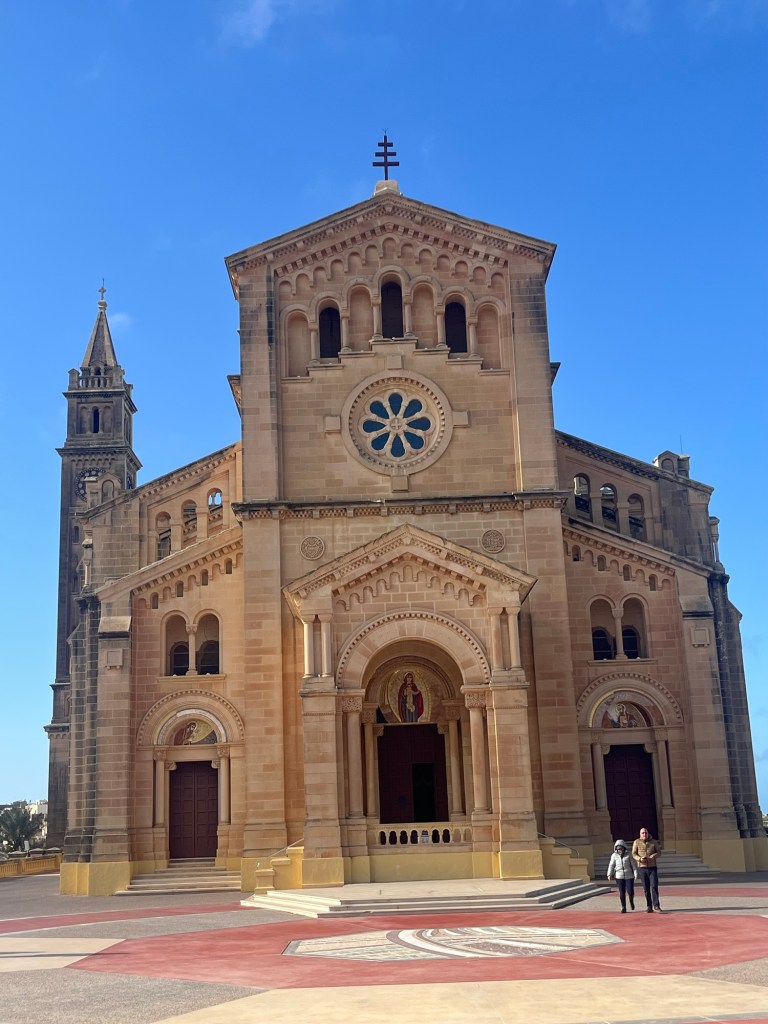
From the Depths

That is when the attitude shift started to set in … when, like with the Lipton canned iced tea, I stopped thinking of this experience as just another road trip, but rather as a road trip in an EV, with its own pace of travel and its own opportunity for really fun, cool experiences. I have come to embrace EV travel. I never did learn to like bottled iced tea.

The trip home in Mo was slower than I had anticipated, and it required a lot more planning and flexibility, but the experience was well worth it. Plus, we gave ourselves some time to just have fun. We dawdled before leaving Omaha, enjoyed an afternoon along the Mississippi, spent a full day at the Rock and Roll Hall of Fame, and hung with really good friends in Syracuse.
Wintertime is assuredly the wrong time of year to learn the EV ropes. The days are short, and the battery life stinks. Plus, we are slow-moving old folk who had a hard time hitting the road before 9:00, who wanted to stop before dark (just because), and who wanted to avoid Interstates (because we love the quiet, beautiful, truck-less solitude of back-road driving). Speed was not a priority.

In summer, with warm temps and lots of daylight, I expect to be able to cover 600 miles a day. On this trip, with our traveling days limited to 7-ish hours (9-4), average speeds of about 50, and 2 charging stops, we aimed for about 250 slow, leisurely miles, and we succeeded. The rhythm of the day became a fun part of the trip. Planning the route around reliable chargers … which required a lot of apps and phone calls (to be sure they were available and working) … and motels with chargers (usually free Level 2 that take all night to charge) became a daily ritual.

Is it like driving a gas-powered car? Yes and no. You still climb into a car, start it, put it in drive, punch the accelerator, and cuss at the horrible, rude drivers or cut you off, speed and weave, tailgate, or don’t let you change lanes. But it is also the smoothest, quietest ride I have ever imagined. The acceleration is from a different planet. The internal climate control (because it does not depend on heat from the engine) is totally comfortable all the time … and it is easy to heat the seats, steering wheel, and back seats. Most importantly, in 4,200 miles, we did not burn a single drop of gasoline!

My jury is still out on long, destination-focused road trips.  But for everyday driving, there is no choice: The EV wins hands down.

Near the Halfway Point

By the time we made it to Kearney, Nebraska and Granddaughter Ella’s senior art show, we had driven about 2,000 miles.

Planning the trip west was exciting. We had no idea if it could be done or how much hassle it would be. We had no clue how the cost would compare to gasoline. 

By Kearney, we knew some of the answers: Yes, it could be done. Driving an EV through the rural Midwest and high plains is a hassle. We won’t know the cost until the trip is complete.

Unlike past trips, we could not just take whatever route we wanted. We had to study maps and apps and find day-time routes with high-speed chargers spaced at roughly 100-mile intervals. We had to work to find motels with Level 2 chargers, so we could charge overnight, hopefully – but not always – for free.

We could not haul ass. In past trips, we had to stop for two things: peeing and getting gas, both of which take 5 or 10 minutes. Peeing happens in roughly 2-hour intervals; gassing up in roughly 4-hour intervals. With the EV, peeing and needing to charge happen at roughly the same 2-hour interval. Peeing still requires just a few minutes, but charging takes 30 minutes or more … unless you have to wait for a charger, which fortunately happened rarely. We had to spend roughly 25% of our time charging. That down time provided a perfect opportunity to confirm or pinpoint our next charging destination, and if we were lucky, get in a half game of cribbage. We could make a beeline between chargers, but not between points, and stopping at motels with a charger might take us 10 or 20 miles out of the way, so we could not possibly minimize the miles we had to drive.

That is exactly the work and hassle we had anticipated. It changed the fabric of road tripping. It was hard and somewhat frustrating, but we learned that EV travel can be done.

In Kearney, I wondered why we had ever embarked on such a whacko adventure. By the time we re-crossed the Mississippi, I had a much better idea of the answers and had become a convert. Except for the rare I-gotta-get-there car trips, EVs it will be!

Inspired by the Marx Brothers

I am not one of those people who can recite great comedy routines from memory. I do not know every bit of Monty Python’s hilarity. I almost never reference comics. But I do love good humor, especially when it perfectly captures reality.

In the email introducing my last entry, I gave a shout-out to Tom Papa’s “Well, I have” schtick. Now we have two in a row! For my money, the Marx Brothers were the funniest siblings ever on earth!

In Animal Crackers, Groucho plays Captain Spalding, the bumbling African explorer who once tried to shoot an elephant in his pajamas. (“Of course, in Alabama, the Tuscaloosa.”) Chico plays Emanuel Ravelli, a huckster musician who shows up to play at a fete hosted by the socialite Mrs. Rittenhouse (Margaret Dumont) one day before he was due.

The dialogue goes like this:

Mrs. Rittenhouse: You are one of the musicians? But you were not due until tomorrow.

Ravelli: Couldn’t come tomorrow. That’s too quick.

Captain Spalding: You’re lucky they didn’t come yesterday.

Ravelli: We were busy yesterday, but we charge just the same.

Captain Spalding: This is better than exploring! What do you fellows get an hour?

Ravelli: For playing, we get $10 an hour.

Captain Spalding: I see. What do you get for not playing?

Ravelli: $12 an hour.

Captain Spalding: Clip me off a piece of that.

Ravelli: Now, for rehearsing, we make a special rate. Thatsa $15 an hour.

Captain Spalding: That’s for rehearsing?

Ravelli: Thatsa for rehearsing.

Captain Spalding: And what do you get for not rehearsing?

Ravelli: You couldn’t afford it. You see, if we don’t rehearse, we don’t play, and if we don’t play, that runs into money.

That has been one of my favorite comedy routines for about sixty years. Thanks to this EV adventure, I finally understand the logic, and it is brilliant!

We stopped at a charger the other day owned by the City of Kearney, Nebraska. I plugged in, went through the App/Apple Pay abracadabra, and then sat back to grab a few quick kilowatts. The text message from the charger that came to my phone went something like this: The time you spend charging will cost $0.00 per hour. Once you are fully charged, the time you stay hooked up will cost $3.00 per hour.

There it is! The Marx Brothers in real life: For charging, you pay little to nothing. But for not charging … you can’t afford it! (BTW, I did pay for the electricity, but at a very reasonable rate.)

One of my biggest fears on this EV-charging adventure is that we will arrive at a charger. Some inconsiderate SOB will have a car hooked up and fully charged, but I cannot get to the charger. High “idle-time fees” are the answer. Charge a minimal break-even amount for the charging itself, and then break the bank for bogarting the charger once its work is done.

I expect we have a new Marx-Brothers-inspired business model here: provide an essential product for free and charge exorbitant rates for not using it. I am smelling fame and fortune with this one. Anybody interested in investing?