Taormina: There’s Always New Stuff to Learn

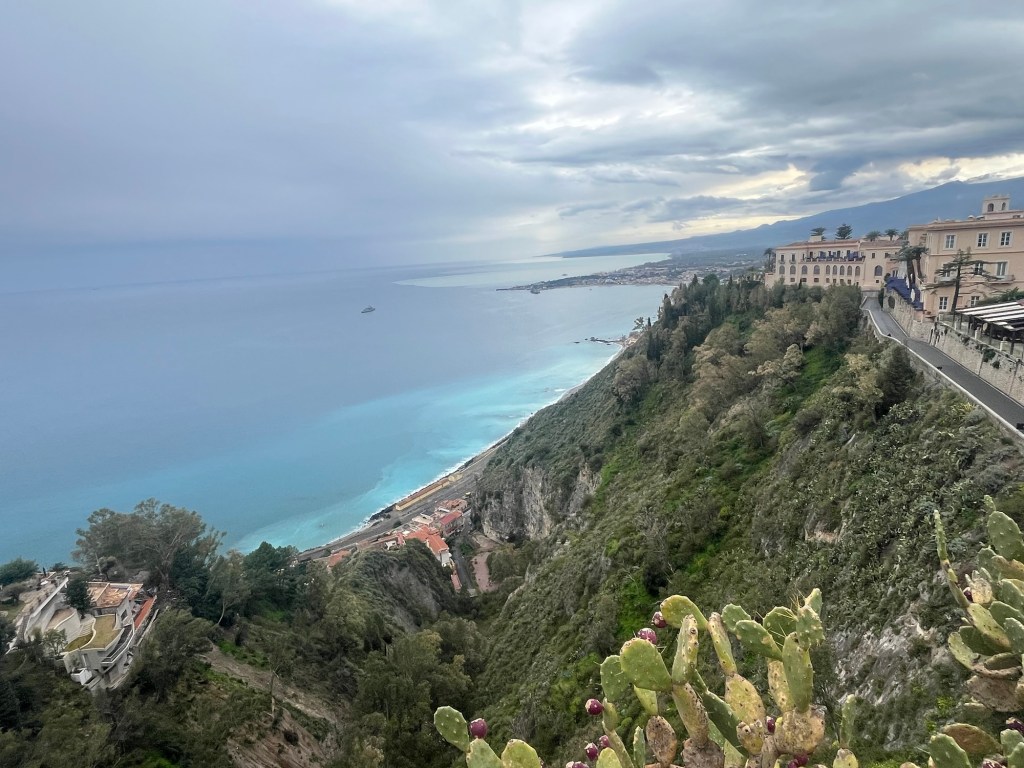
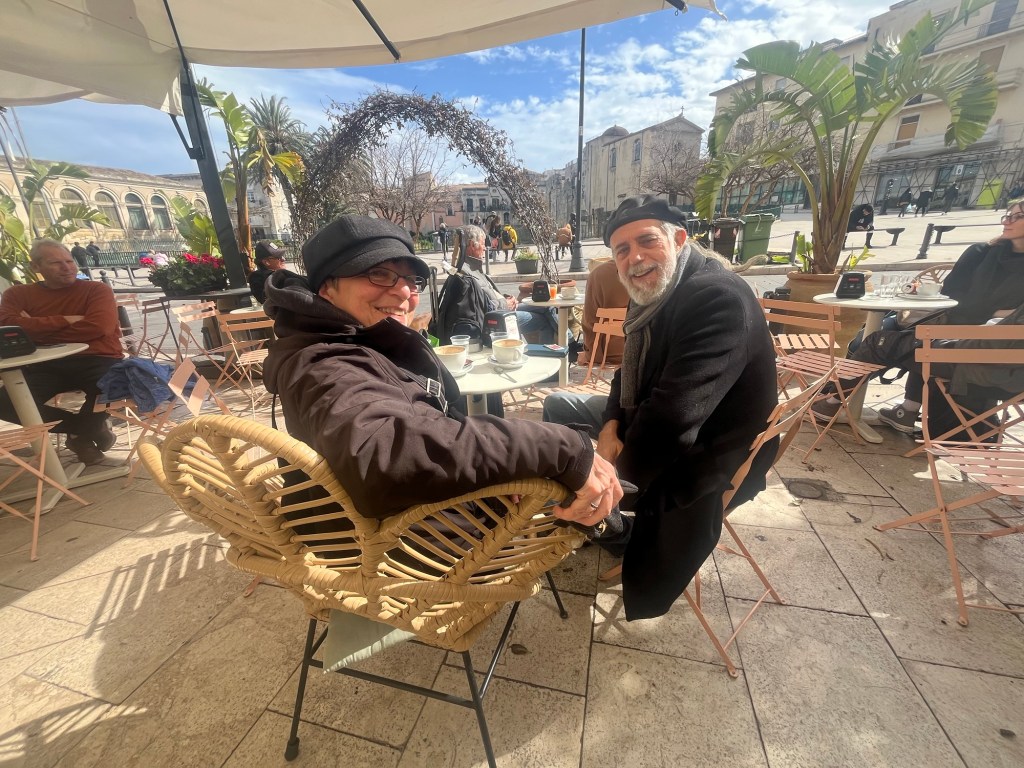
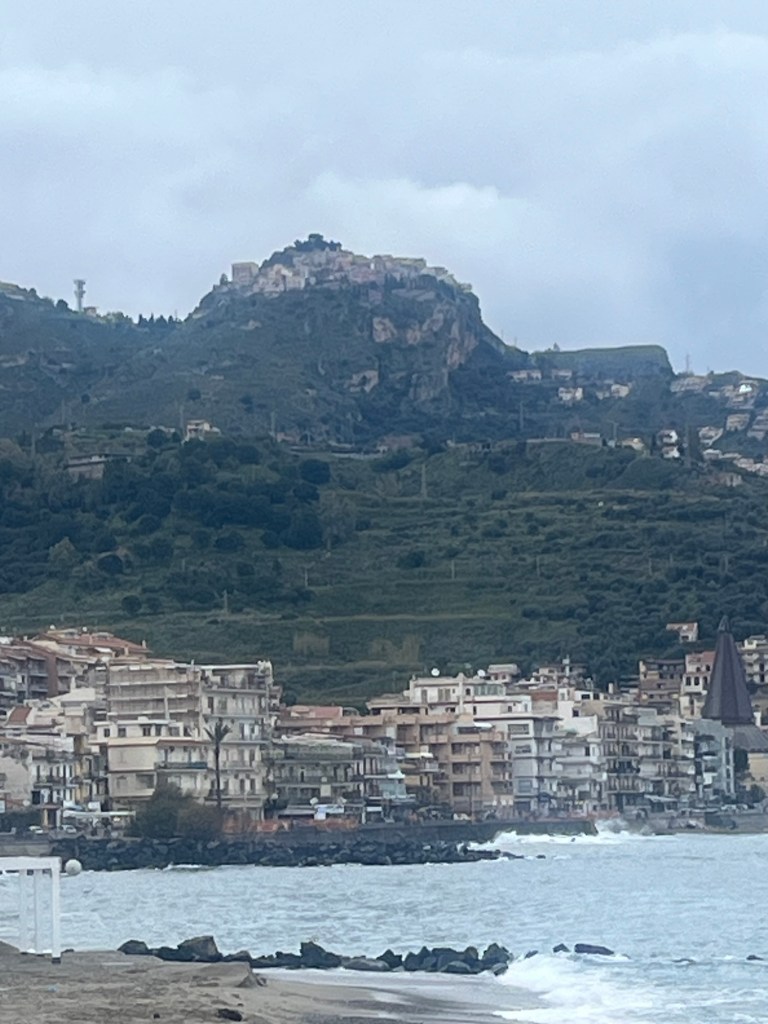
I had done a little reading about Taormina, so I knew it was a historically rich mountaintop town in eastern Sicily with a cool old Greco Roman amphitheater and a great view of Mount Etna. I knew it had been a tourist hub for a few centuries, and ChatGPT had told me it was very, very steep with uneven sidewalks and roadways, which is not a good combination for Rebecca. So we stayed on the seashore at the bottom of the mountain in a funky little beach town, Giardini Naxos, that sort-of reminds me of parts of the Jersey Shore, and we made a full day-trip to Taormina. It was the right choice.

Shortly before arriving in the area, I received an email from my friend Rene in Grand Isle. (Don’t fret. You’ll learn more about Rene in a second.) It read: “Did you get a chance to visit Baron Von Gloedens’ villa while in Taormina? Supposedly, he left it to his boyfriend.”

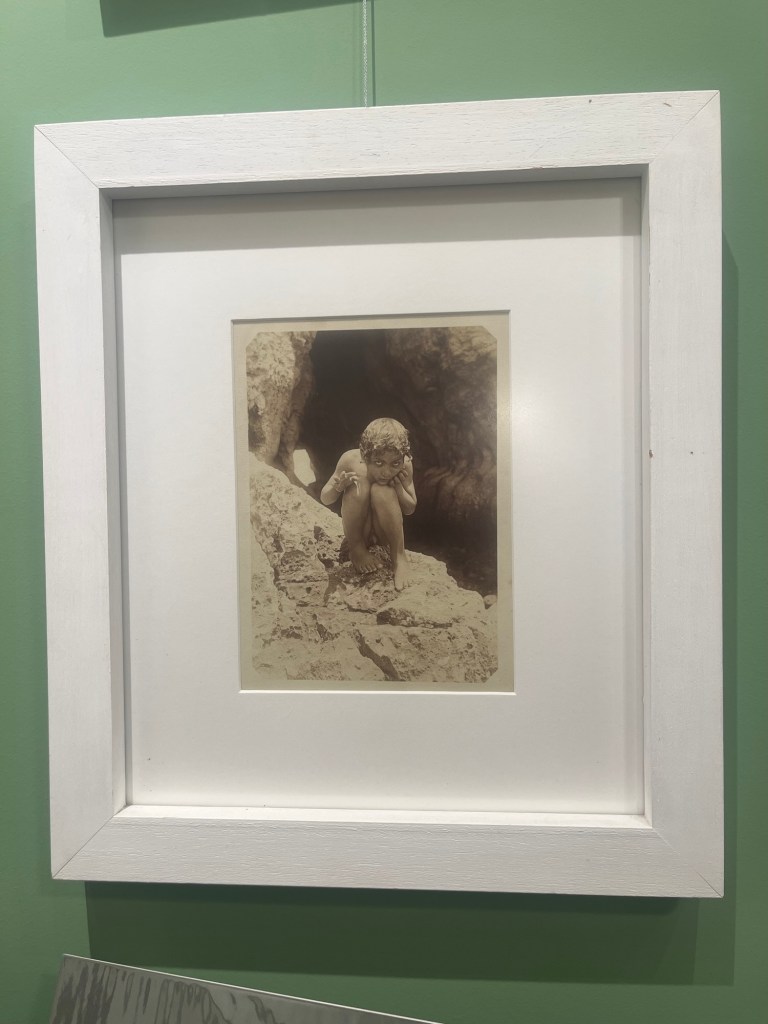
I had no clue what in the world he might be talking about, so I did a little Google searching and learned from Wikipedia that “Baron Wilhelm von Gloeden (1856–1931) was a German photographer famous for his romanticized, often homoerotic, portraits of nude Sicilian youths and idyllic landscapes in Taormina, Sicily. Working from the 1890s, he blended photography with classical aesthetics, creating a ‘Magna Grecia’ vision that made Taormina a renowned artistic spot.”

Hmmm. I guess there was more to Taormina than first met the eye.

So who’s Rene? Sorry for the digression, but it is just not an easy question to answer. It could be easy. I could just say that he is a friend and neighbor from Grand Isle. But that would not do justice to either Rene or the question.

Rene is a total piece of work. Rene still owns (but only very rarely runs) the “Den of Antiquity,” an antiques emporium that I have always believed is the antique store upon which all other antique stores should be measured. He mostly leaves it locked up these days because running it is just too much effort.

Early in my days of knowing Rene, my daughters were very young. I will always remember Rene proudly showing them the mounted head on the wall … not the head of a young cow, but rather a mounting of a young cow with two heads. Yes. A stuffed two-headed calf. At some point before we met, Rene actually acquired the damn thing … and then he managed to sell it. Allie and Joanna are still a bit traumatized.

The first time Rene came to our house to visit, he drove his Rolls Royce … in Grand Isle, mind you. Remember, he owned the “Den of Antiquity.” The Rolls sported a vanity license plate that read “DOA.” I think I remember Rene telling me recently that the state made him remove it.

Then Rene and my mother met. Mom always appreciated people a tad out of the mainstream, and Rene adored my mother, deep southern accent and all. Nothing made him happier than running the fantasy of marrying that white-haired woman from “Buck-hay-ed” in Atlanta. Whenever she came to visit, we spent time with Rene. One year, he decided it was time to propose, so he brought a giant carton (or maybe it was a suitcase) of costume-jewelry rings, all with very large, gaudy, pretentious faux-stones. He got down on one knee with my mother on a stool at our kitchen island, and proceeded to pull out one ring after another, proposing with each one, hoping that one of them would bring her to a “yes.” We laughed until we hurt. At her 95th birthday party in Grand Isle, she insisted that Rene sit next to her at the restaurant; they giggled and mis-behaved the entire time.

Rene is also one of, shall we say, some degree of sexual fluidity. He no more wants to call himself heterosexual as he wants to call himself gay. He has never married. I have no clue if he has ever had a long-term relationship, but I am quite certain he has enjoyed himself every step of the way.

So that almost brings us back to Baron Von Gloedens. I nearly forgot to mention that Rene also bills himself as “Professor Vallee,” and spent a fair amount of his life teaching history. He knows a lot of stuff, much of which falls into the category of the arcane. So it came as no surprise that Rene was interested in a semi-famous photographer of young boys.

Truth be known, his question piqued my interest. After all, we are traveling, and what could be more engaging than unearthing some morsel of art history that I otherwise would have known nothing about.

So off we went to Taormina with goal #1 to see the place and goal #2 to see if we could learn anything about the good baron. I knew we were barking up the right tree when we passed a tourist shop with a full (and quite large) display of key rings and bottle openers all sporting a male member in quite a range of sizes and colors. I will spare you blog readers the photo, but I will be happy to share it when we are together or send a print in a plain brown envelope with no return address. (I have not seen such a display since the large display of very inappropriate toothbrushes we once happened across in a gift shop in Miami Beach.)

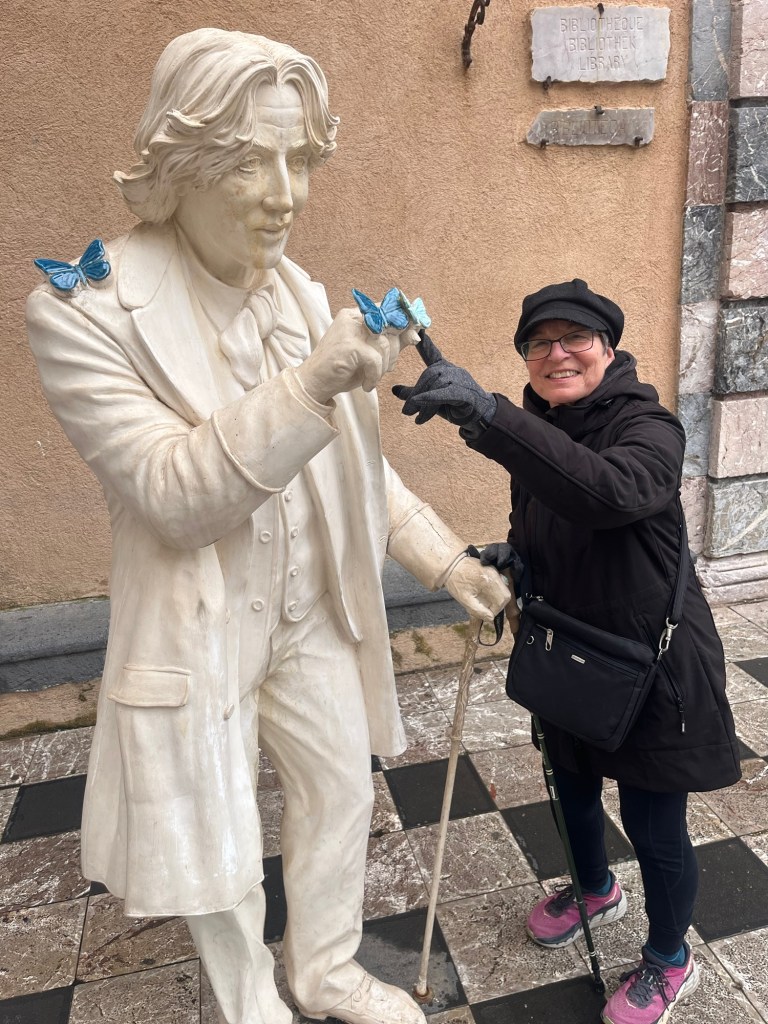
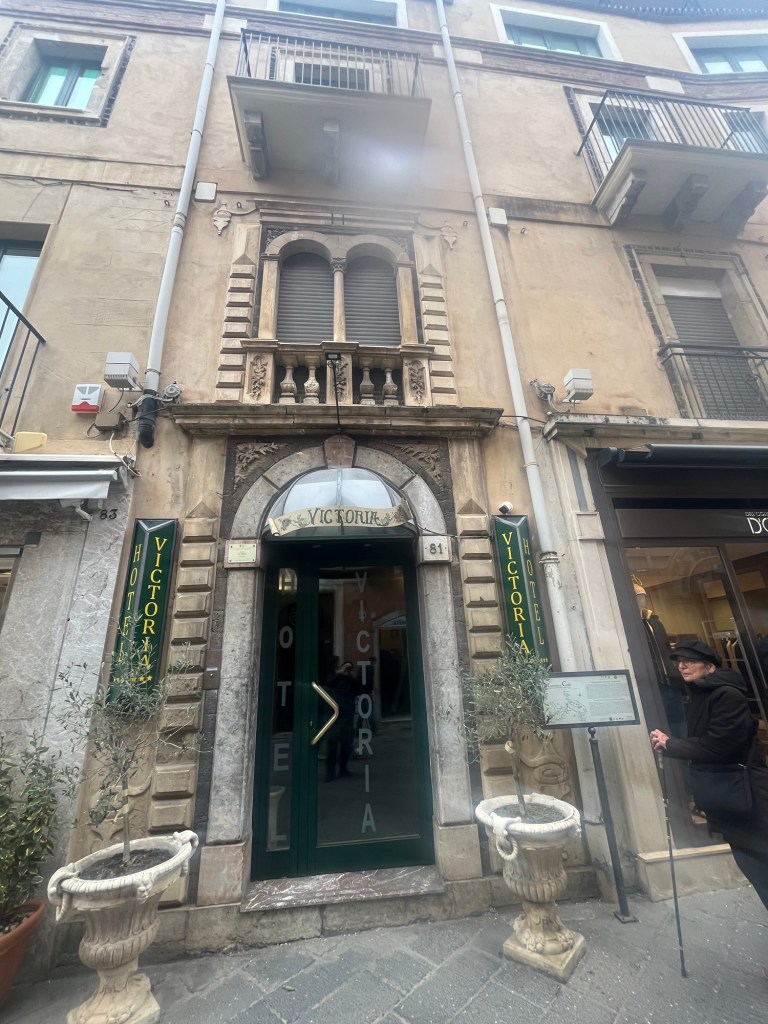
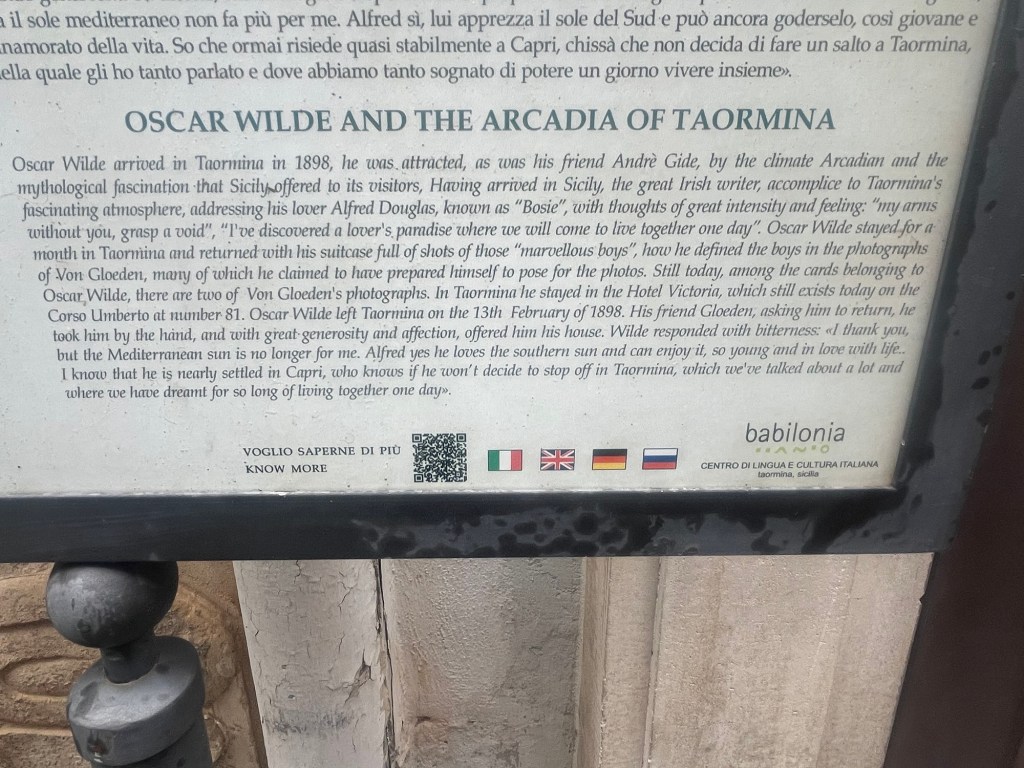
Then the search intensified when we passed the Hotel Victoria and read about Oscar Wilde’s 1898 month-long visit. After a month, Wilde returned home with a suitcase full of shots of those “marvellous boys.” His personal library includes at least two of Gloeden’s photographs, and he claimed to have “helped prepare and pose the boys for some of the photos himself.” The lure of Gloedens, the boys, and the Mediterranean, however, was not enough for Wilde, and he left after a month never to return.

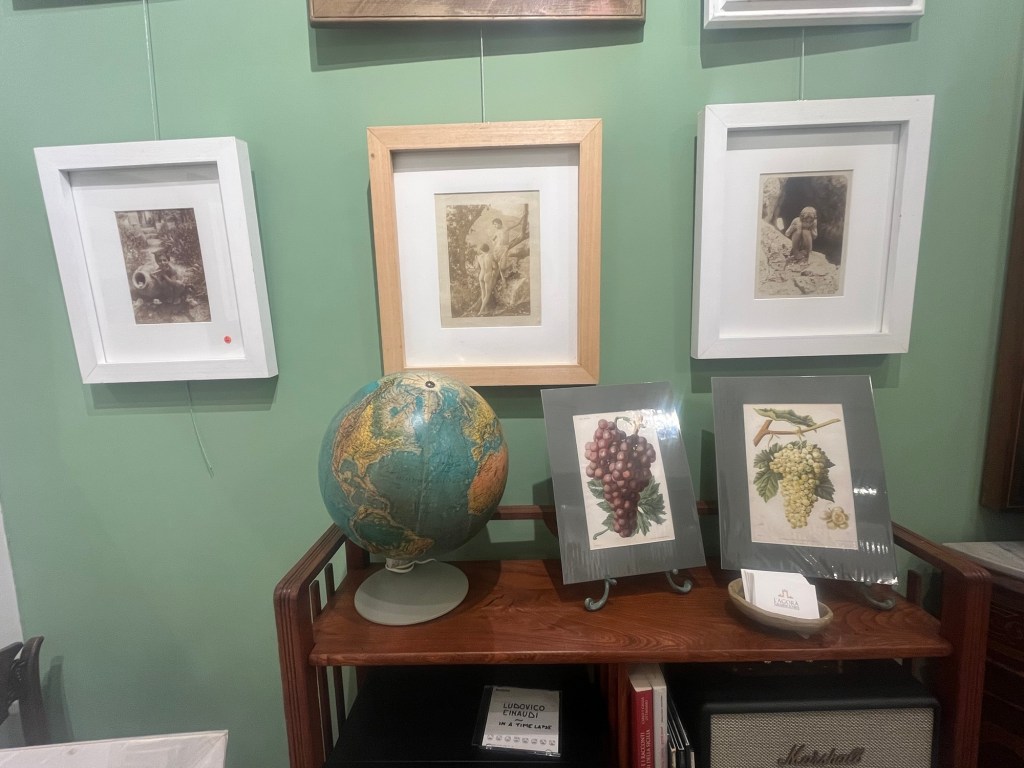
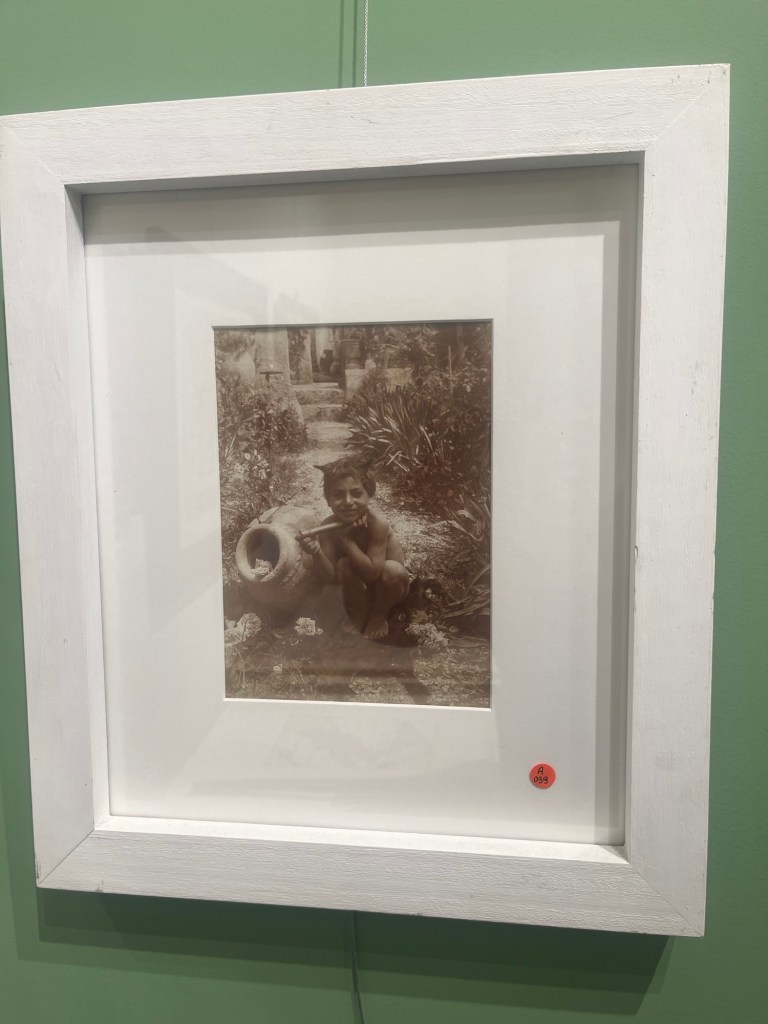
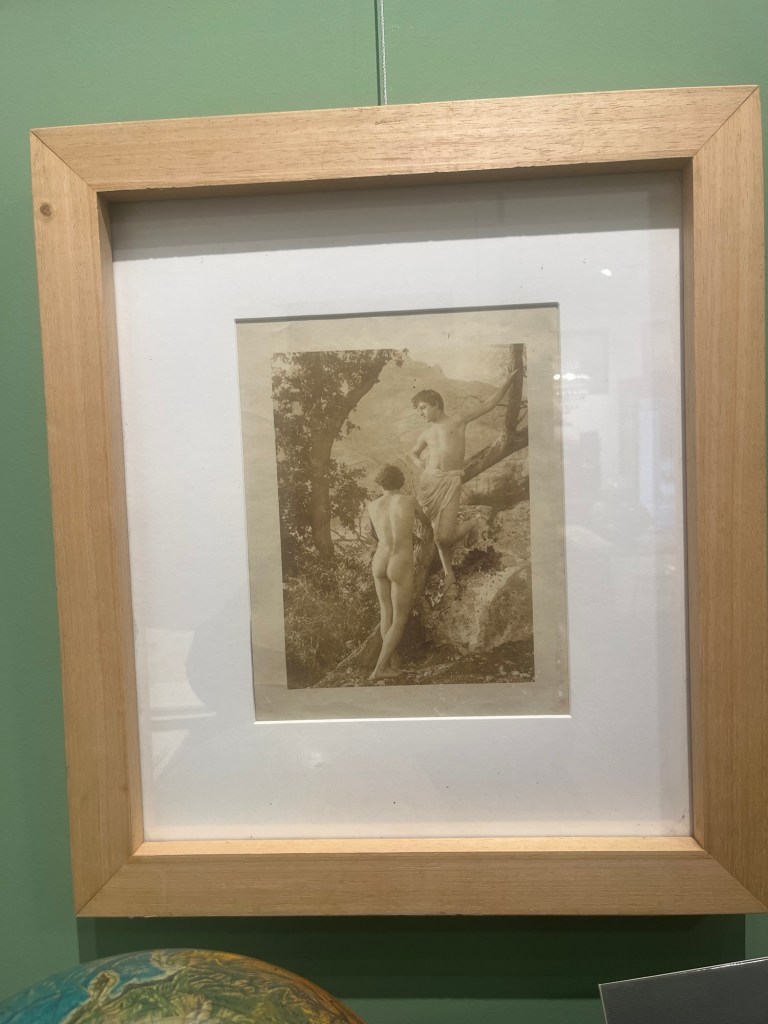
The search did not end there. We happened across an antiquarian art store, L’Agora, with some absolutely gorgeous work and a super nice worker named David. We struck up a conversation. David not only knew of Gloedens, the store had three of his photos on display. Paydirt. I have attached those three photos; they are not particularly risqué or inappropriate, and I suspect they capture the modernized Greek look that made Gloedens famous.

Most of Gloedens work, along with his house, was destroyed by bombs in WWII, so little is left. But David also told us about the owner of a toy store just down the street whose family had saved and archived many of the photos. The family still owned the store, but David knew precious little beyond that. We bade our farewells, thanked David profusely, and headed to the toy store to see what we could unearth.

It was a run-of-the-mill touristy toy store. As we entered, the proprietor was barking angrily in Italian at either one of the employees or one of the vendors. I couldn’t tell and had no desire to stay and find out. He was not emitting the vibe of an art collector.

And there the tale pretty much ends. I learned a fair amount about Oscar Wilde’s month in Taormina but nothing more about the baron. Upon my return down the mountain, however, I did call my good friend Gus in Atlanta, known to most of us as “Smokey.” He is one of those people who knows a ridiculous amount about a ridiculous number of things … sort-of a polymath. Sure enough, he knew all about Gloedens and his time with Oscar Wilde. Now I know about Gloedens and Taormina too. I was fine not knowing it, and I doubt it will come in too handy in the future, but at least I can still acquire silly things to fill whatever voids are remaining in my brain.
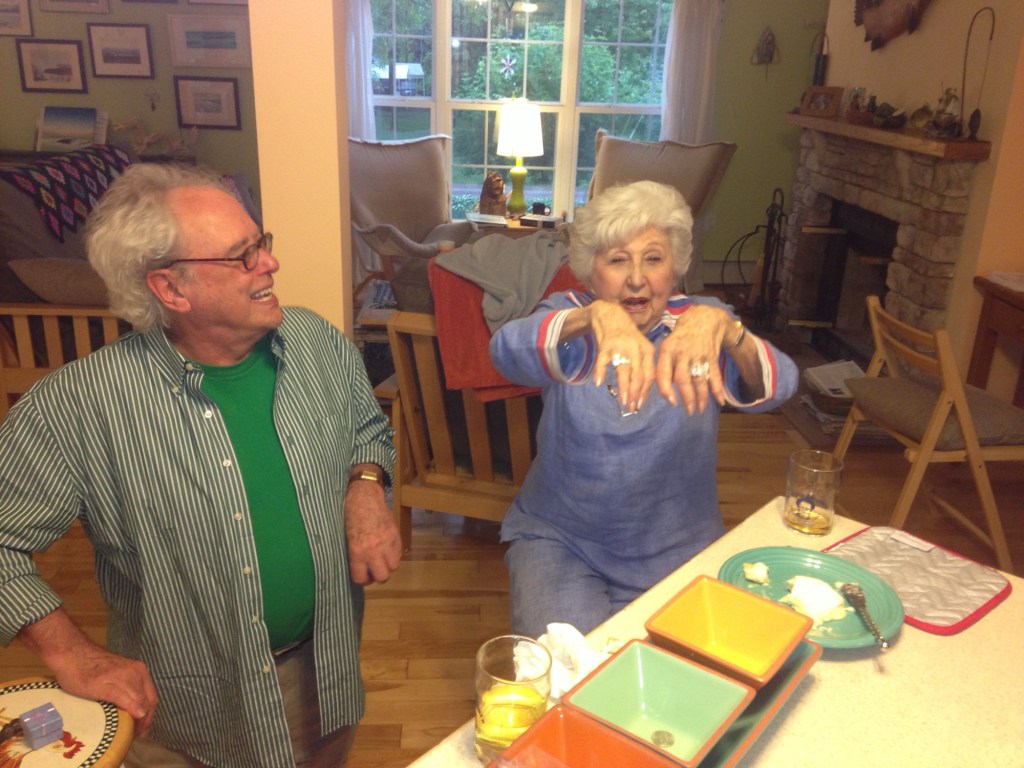
Rene proposing to Mom, one faux ring after another.


Moving Days … Always an Adventure: 70 miles in about 26 hours.

As I have written before, getting from Point A to Point B generally proves to be a bit of a challenge. Getting from Ortigia to Giardina Naxos – north of Catania and Mt. Etna and just south of Taormina – was no exception. We left our hotel in Ortigia at 10:00 Thursday morning and finally settled into our for-real hotel at noon on Friday. Except for “travel” and sleep, we did precious little else in between.

So here’s the story of our record-setting pace.

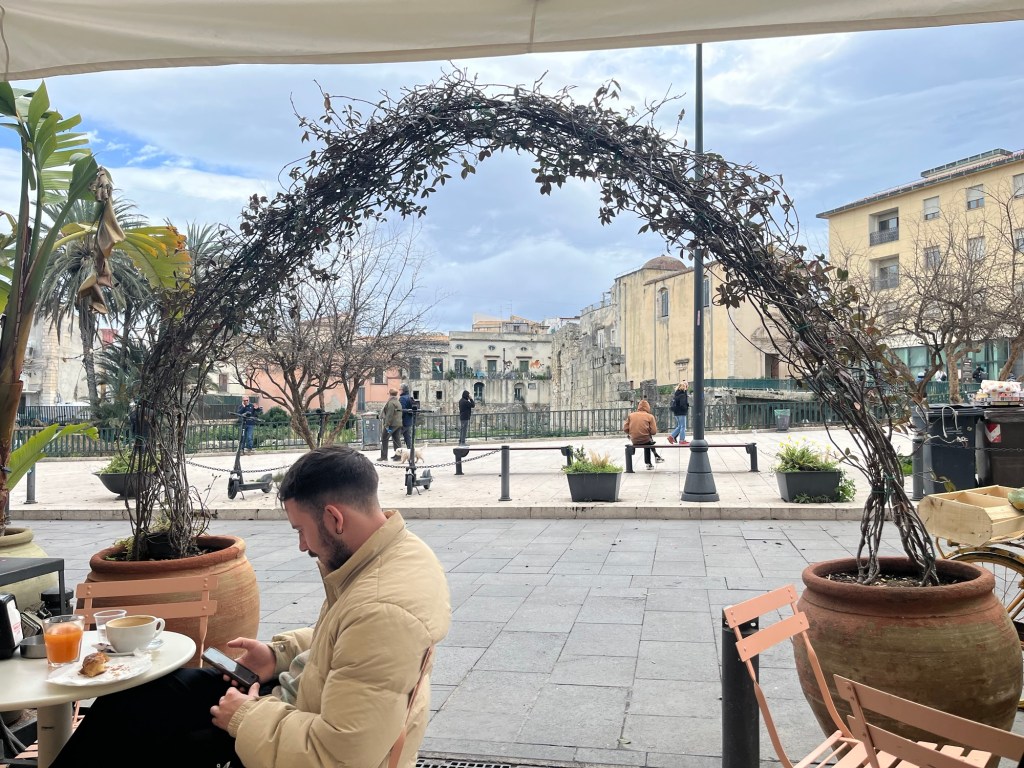
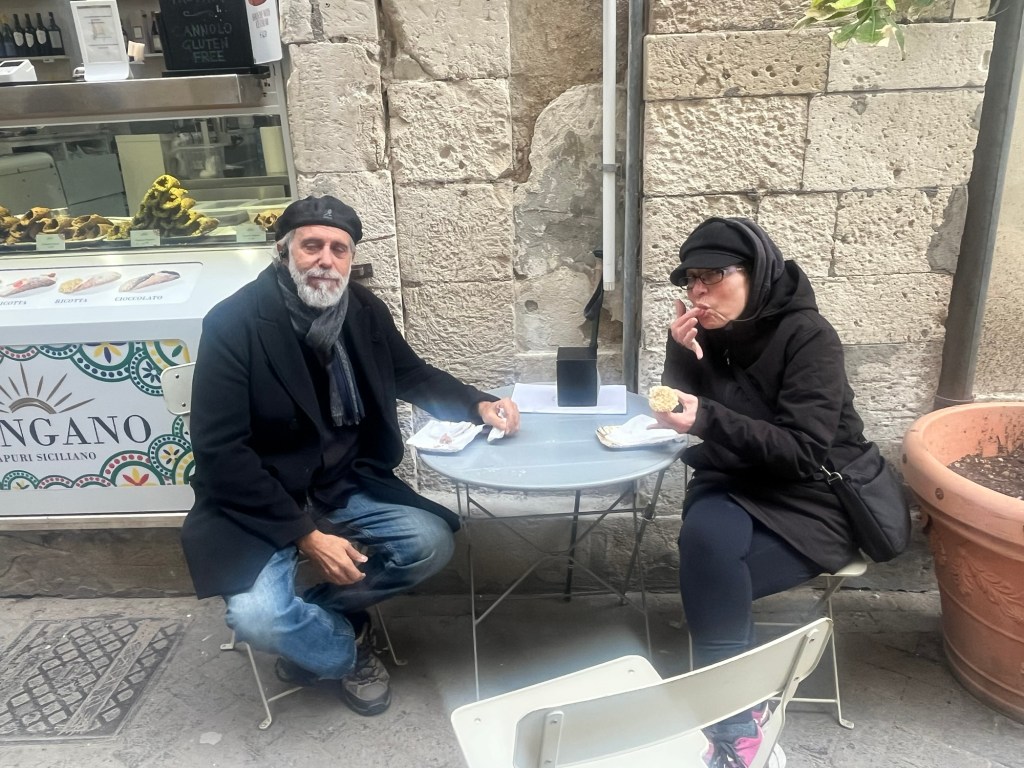
Our train from Siracusa to the Taormina-Giardini station left at 12:45. We started the journey in fine Italian fashion — by lounging over a coffee for an hour while we bade our goodbyes (ciaos?) to our new friend Carl. We met at a cafe next to bus stop for the 10-minute ride to the train station. After a leisurely coffee, we said goodbye and started waiting. Google Maps said the bus would arrive in 3 minutes. Then 6 minutes. Then 10 minutes. 30-ish minutes was about all the slop time I could handle, so about 40 minutes before the train, I recommended that we take a cab. That is when the bus arrived.

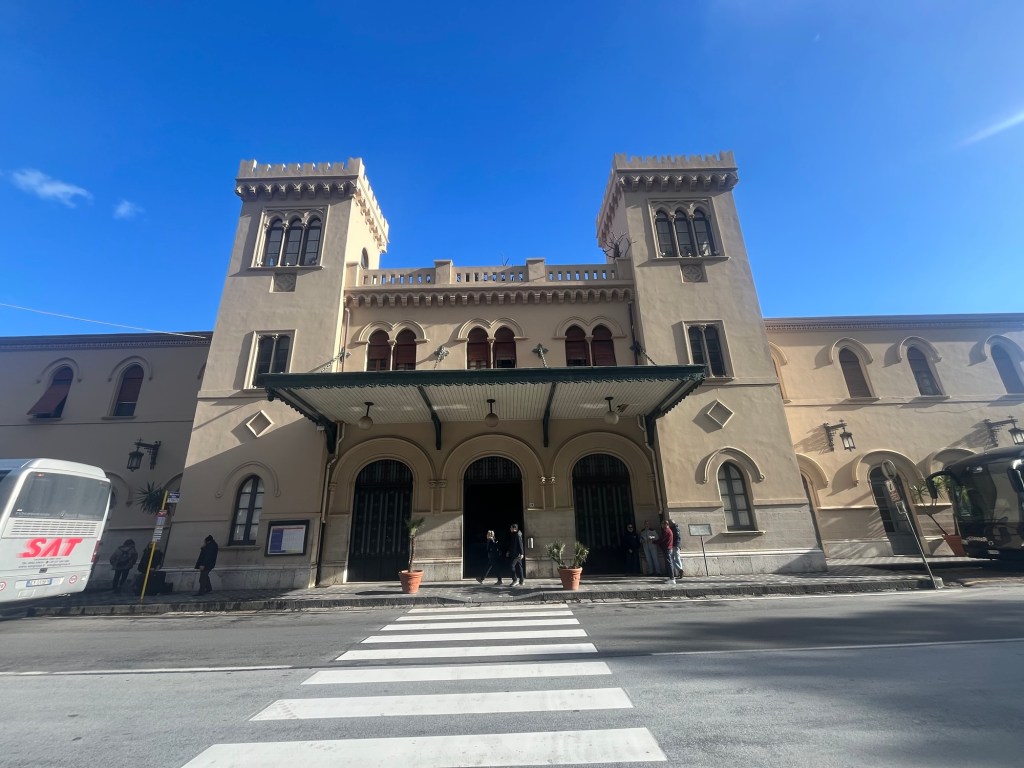
We made it to the station, found the ticket office (which mostly serves as a lottery ticket and cigarette shop) and bought our ticket. The guy said the train should be leaving from Track #3. (Thank goodness for Google Translate.) There was no apparent way to get across the tracks from Track 1 to Track 3. When I asked, the guy said not to worry: just because “Trenitalia’s” computer said the train would be on Track 3 does not mean it would be. Sure enough, the train pulled in on Track 1. We were perfect.

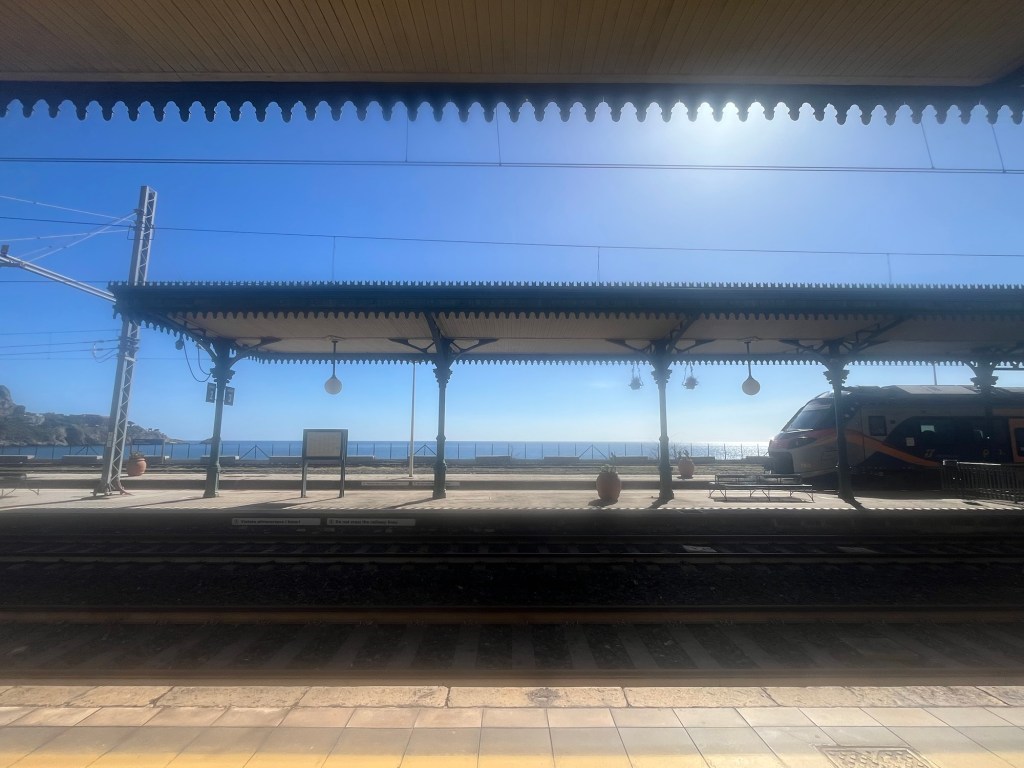
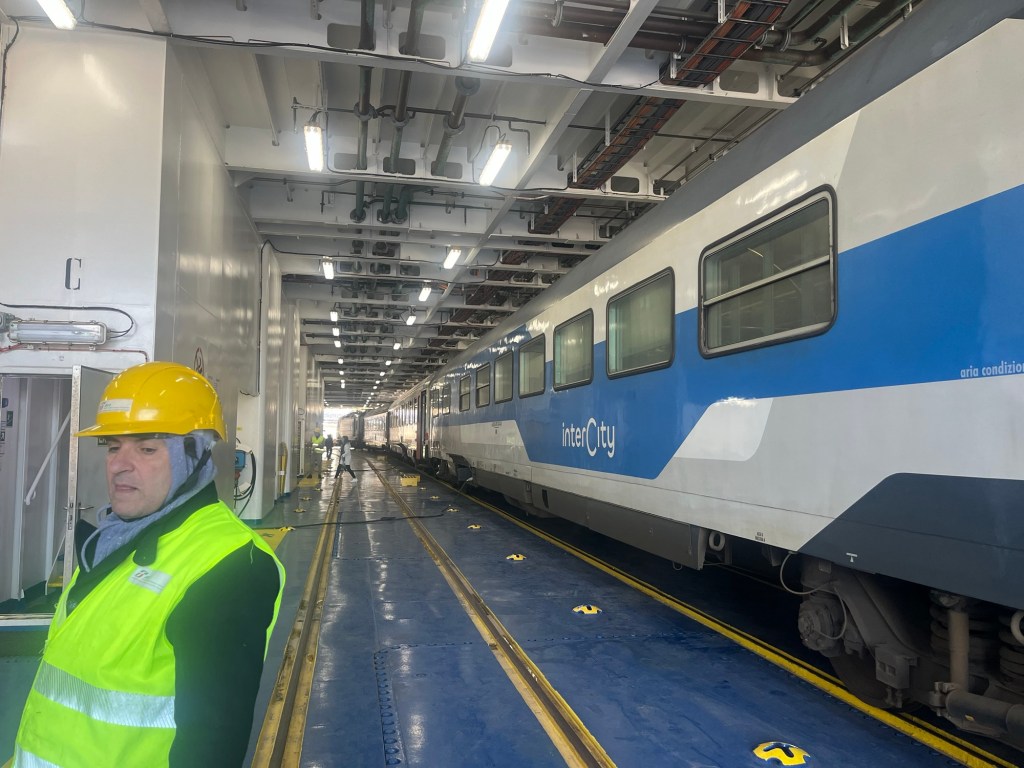
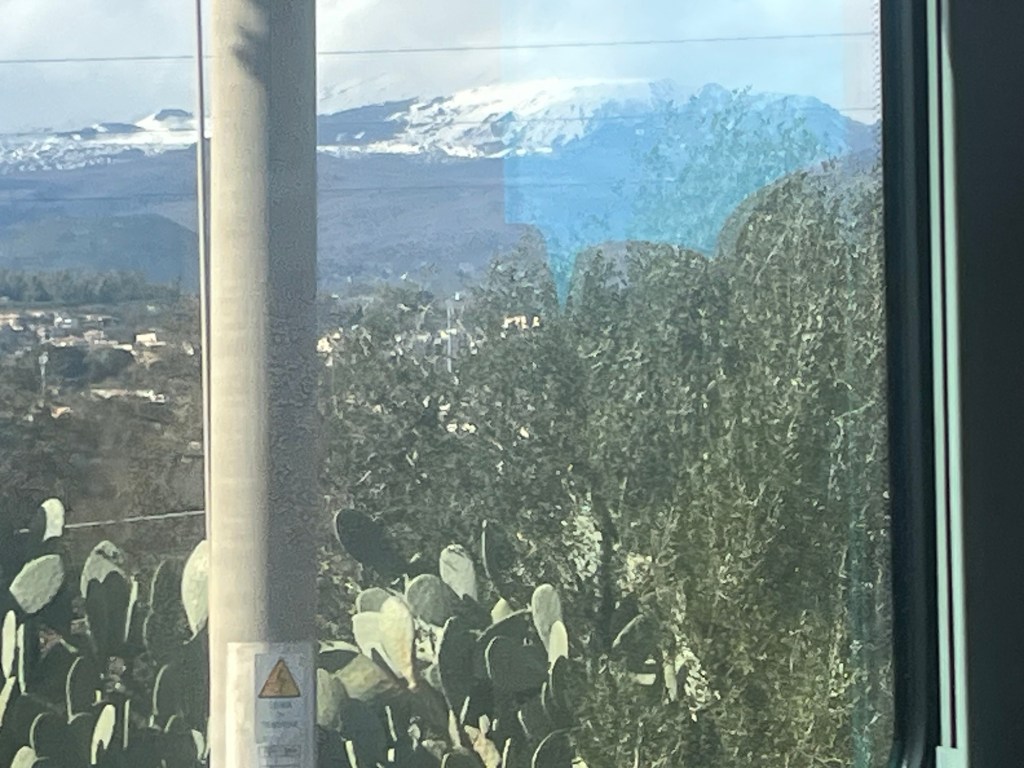
The train ride was comfy, on-time, and scenic, including endless orange groves, great views of the Mediterranean, a ride through Catania (Sicily’s second largest city), and stunning views of snow-capped Mount Etna. We arrived at the Taormina-Giardini station 4 minutes late. Not bad.

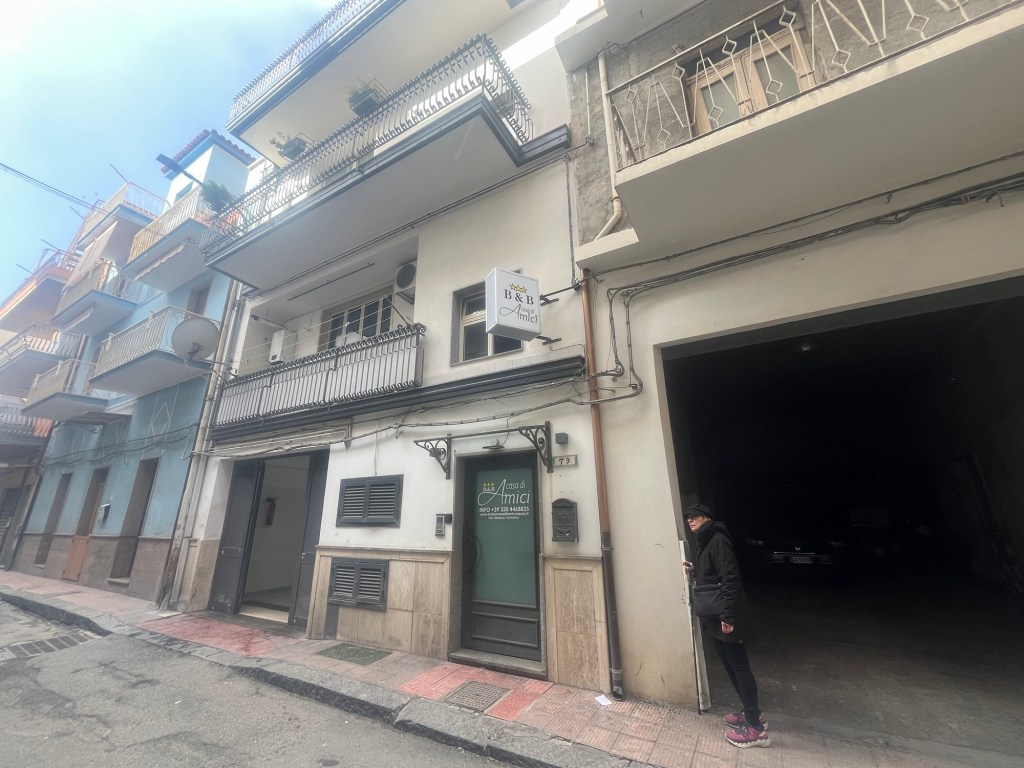
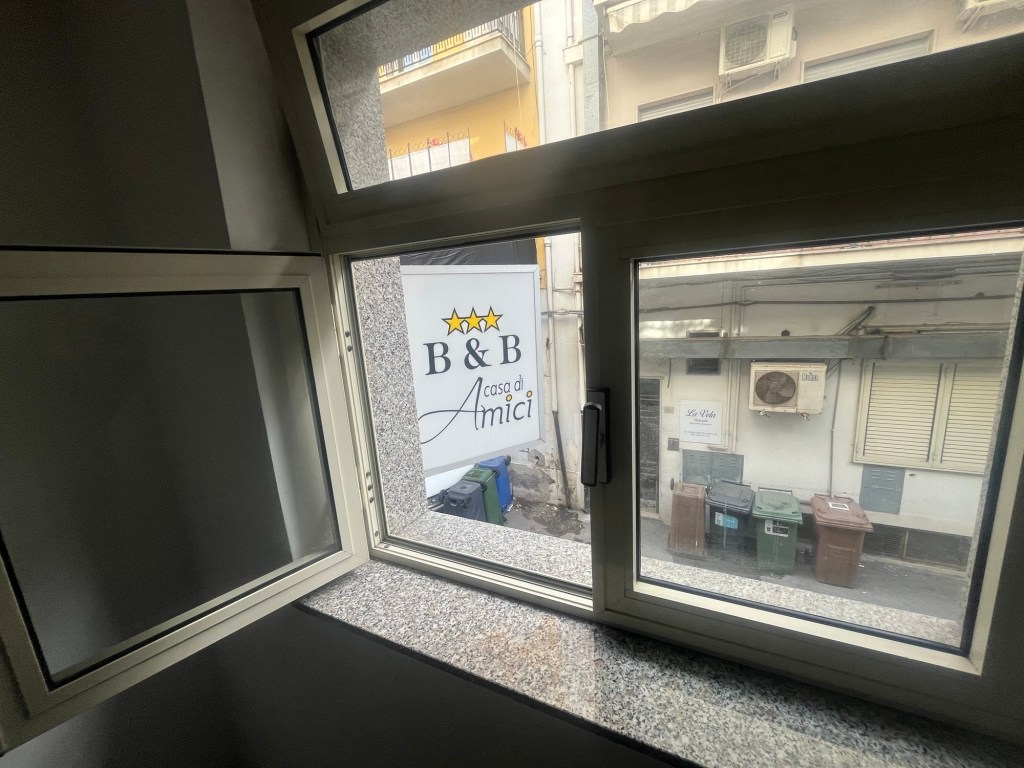
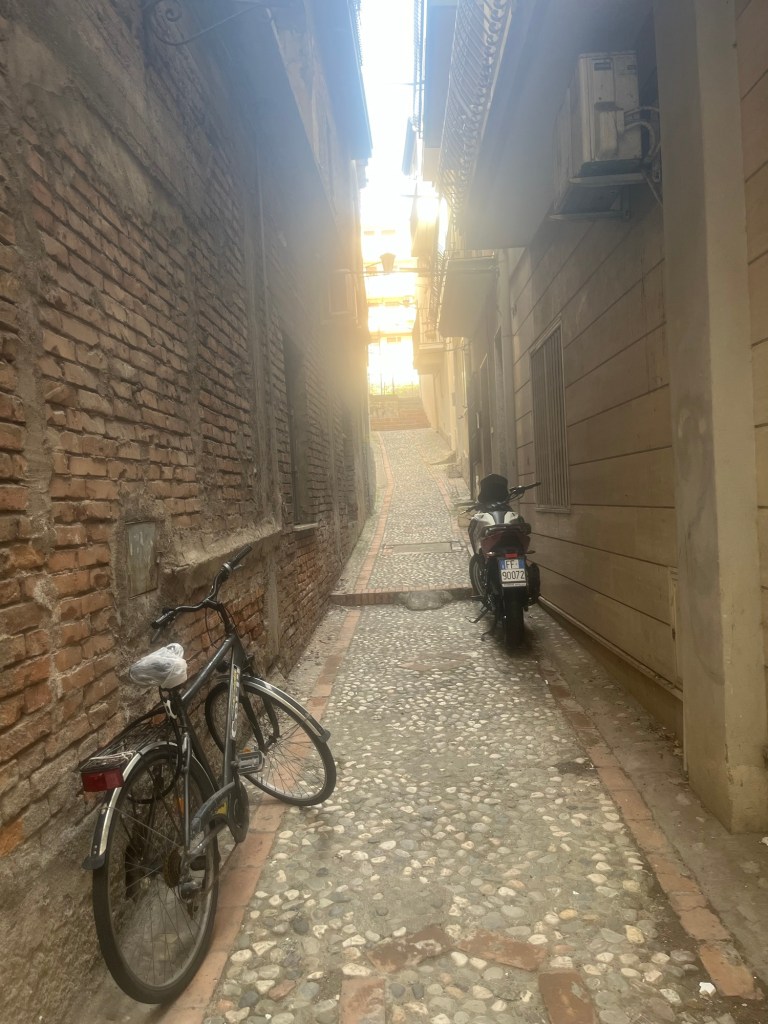
The bus stop was directly across the street, and the bus should be arriving in about 15 minutes. How perfect can it get! But like the bus in Ortigia, no matter what Google Maps said, the bus wasn’t showing up. Turns out, we later learned, Mediterranean Storm Harry washed out too much of the road. After about an hour, we gave up and walked to a taxi. 10 minutes and €25 later, we got to our B&B, Casa di Amici. It was in an alley just up the road from a pretty substantial tattoo parlor — not really sketchy, but definitely on that end of the spectrum.

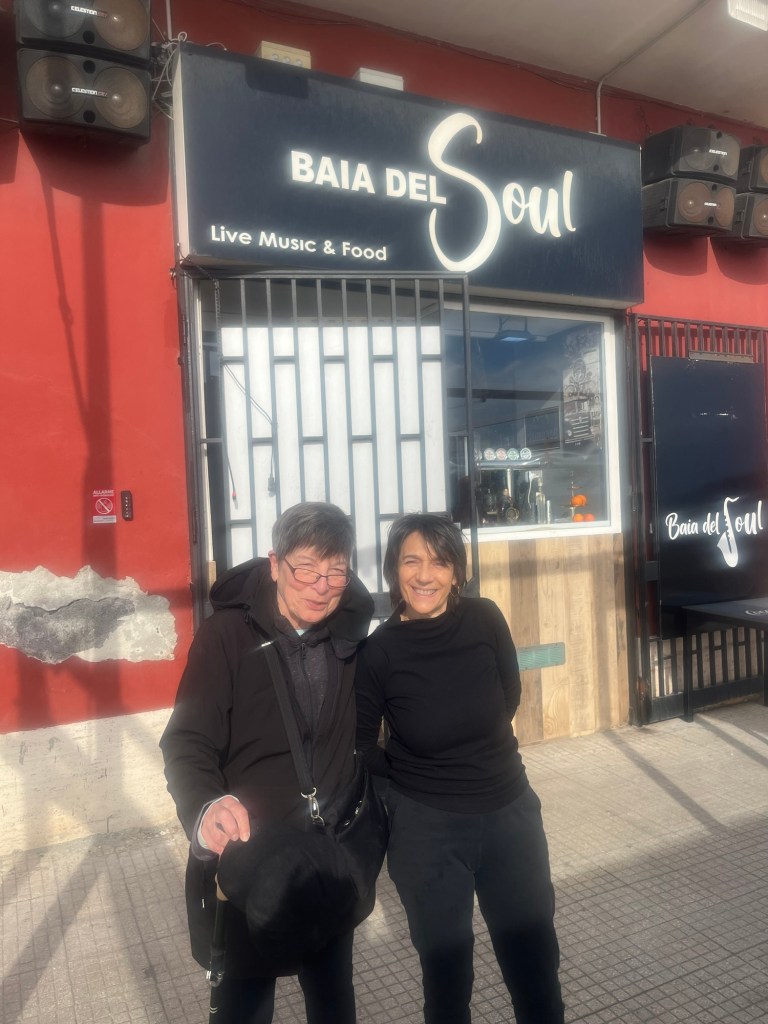
We paid the driver and tried to get in. I read back through all of my confirmation emails. Nothing about entering. I called the number on the door; a recorded voice said a lot of stuff in Italian, none of which helped. I called Booking.com. Halfway through my conversation, we got disconnected. “Shit.” I thought; it’s a good thing we still have a lot of daylight left. We’ll figure something out. So off we went to find an open cafe: Baia del Soul. We trundled in with our suitcase, two backpacks, and our ever-growing tote bag of miscellany, and explained that we couldn’t get into our hotel.

Nice people who can also speak English are fantastic medicine. The owner, Elena, had lived in San Francisco. There was nothing she could really do to help, but her presence felt like a welcome anchor.

We sat down and ordered a drink when the text message from the B&B came through. The call to Booking had apparently worked. In the most blasé and matter-of-fact style possible, the texter said, “I’ve been waiting here for you; what time do you plan to arrive?” “F-you,” I thought, but I just wrote that despite ringing and ringing and ringing the buzzer, no one answered. We finished our drinks and walked back to the B&B.

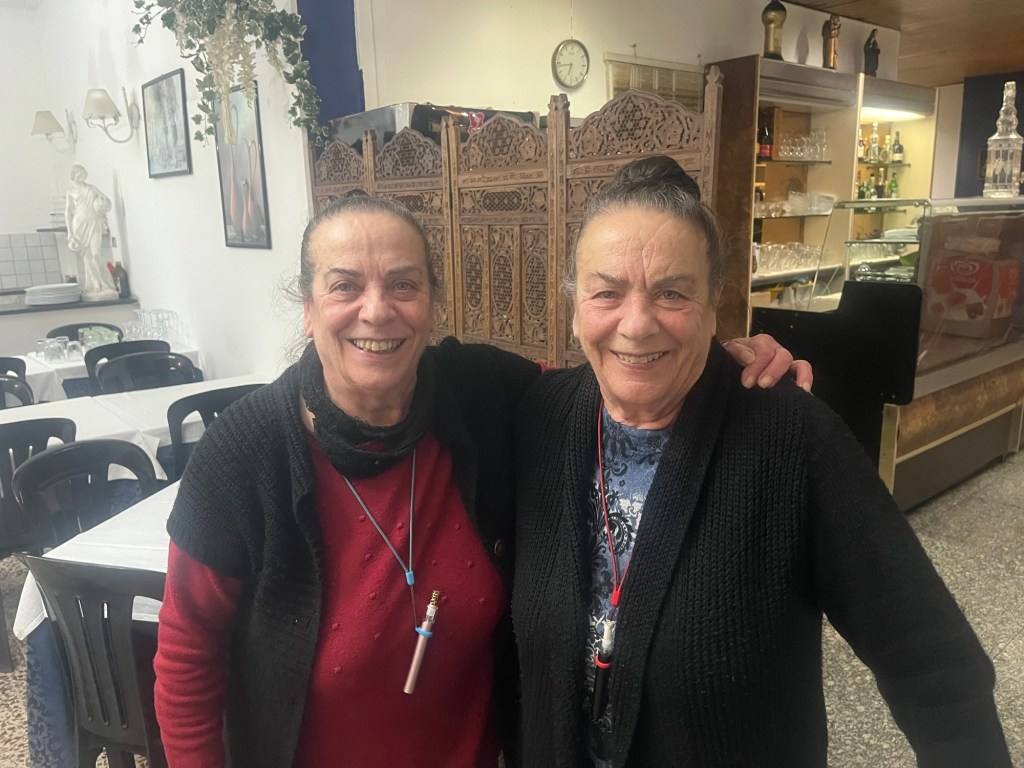
Despite a number of unanswered queries about stairs, we discovered we needed to climb a few flights … not welcome news to balance-impaired Rebecca. The room was nice enough and seemed clean. We found a great restaurant … owned by aging and very raspy identical twin sisters who totally played with my mind. We ate and went to sleep thinking that another day there wouldn’t be bad while we found a more comfortable, more accessible place.

I slept great. Rebecca hated the bed. The B&B offered breakfast … but not there … at a cafe one street away from the sea. Getting there entailed another alleyway with a long, uphill slog and then a long flight of very uneven stairs. You know that old adage about the link between happy wives and happy lives? We spent breakfast looking for a place with an elevator.

We devised a plan: I would take the first shower, walk the 1/2+ mile to place we found, check it out, and report back. That is when the deal was sealed. Damn, I hate finding cockroaches scampering my hotel bathroom!

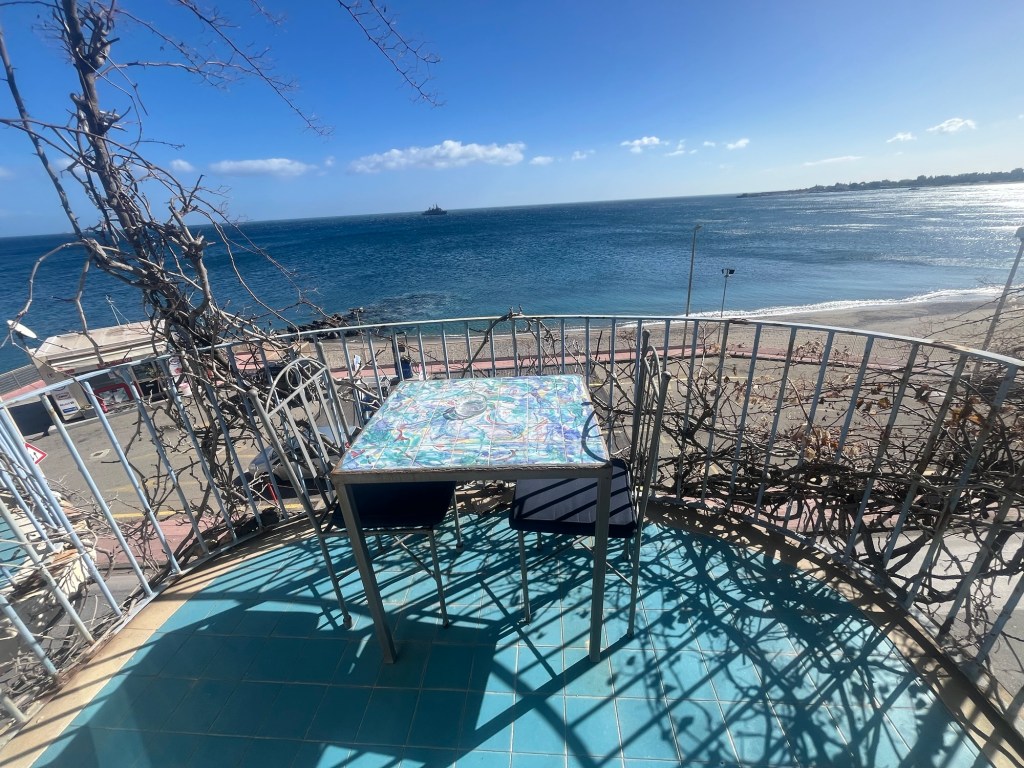
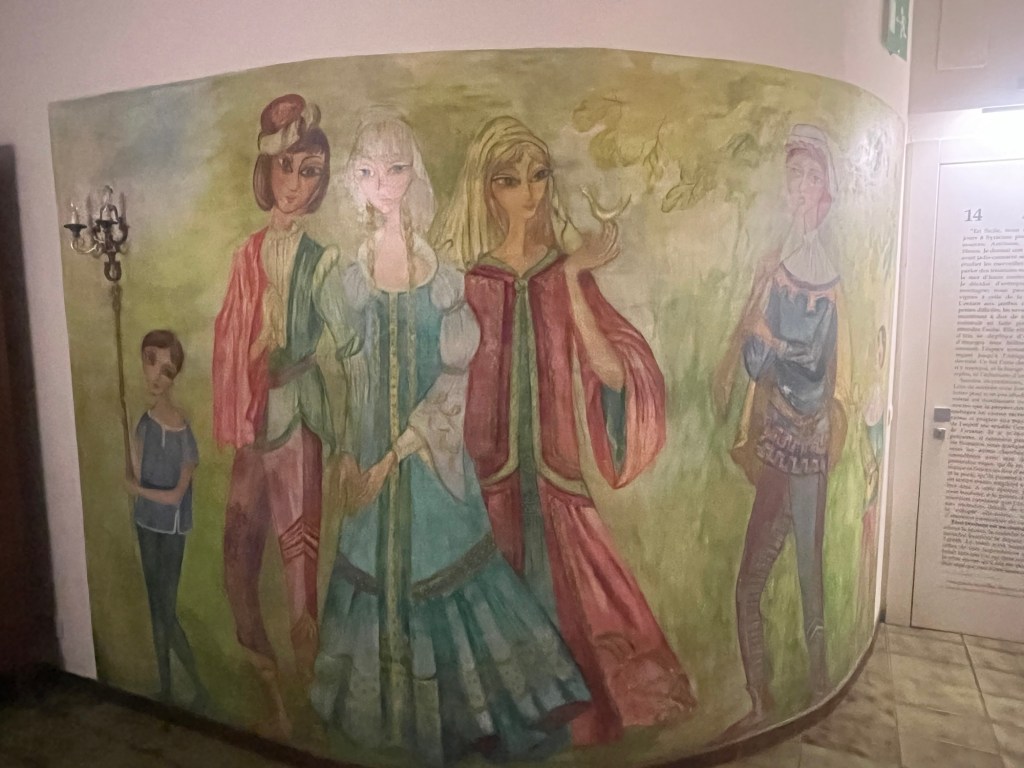
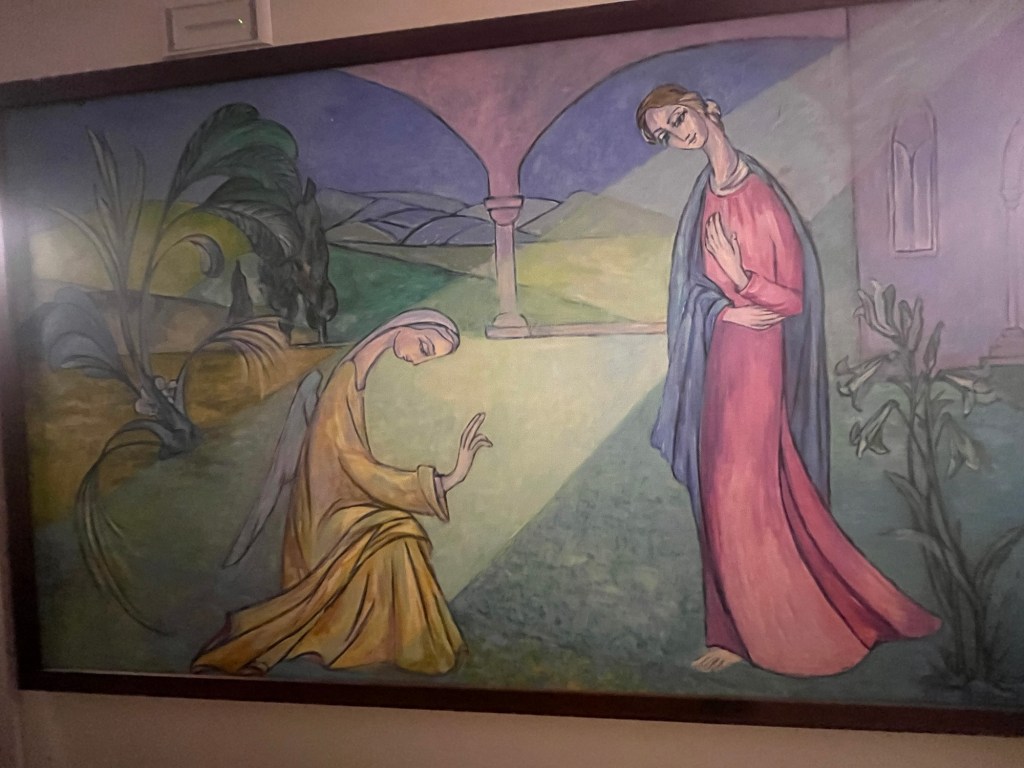
The good news: the new place (despite being way pricier than we wanted) is beautiful, with astounding oil-paint murals on the walls, a balcony with a full view of the Mediterranean, a custom-cooked breakfast, and a lift.

We have no clue if Booking.com will refund the money we paid (though I suspect the cockroach photo I sent them might be a decent motivator), but regardless, we settled into our new digs at noon and are ready for a Sicilian supper, Valentine’s Day, and Mardi Gras on the Mediterranean … as well as a day of exploring Taormina before we head to the Italian mainland.

Arriverdverci for now.


Ortigia is Magical!

Six months ago, I had never heard of Ortigia. I only knew of Syracuse because of A) Syracuse, New York, and B) I thought it played some sort of role in Greek mythological history, but I didn’t really know what. I thought it was home to the Cyclops, but I was wrong; the Cyclops is more closely related to where we are headed tomorrow: the Mount Etna region, north of Catania.

Ortigia is a small island – 1 square kilometer – that is the southernmost neighborhood of the city of Siracusa (the 4th largest city in Sicily). For those of you who have seen Hadestown, Ortigia is where Hades abducted Persephone. It was also home to Archimedes.

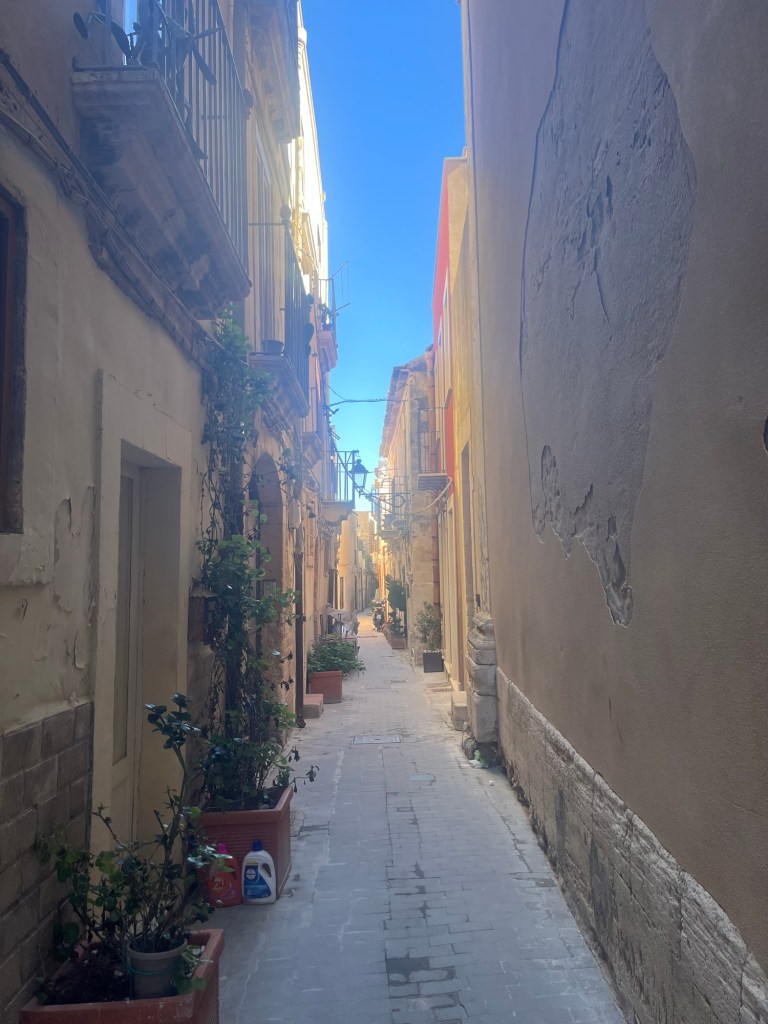
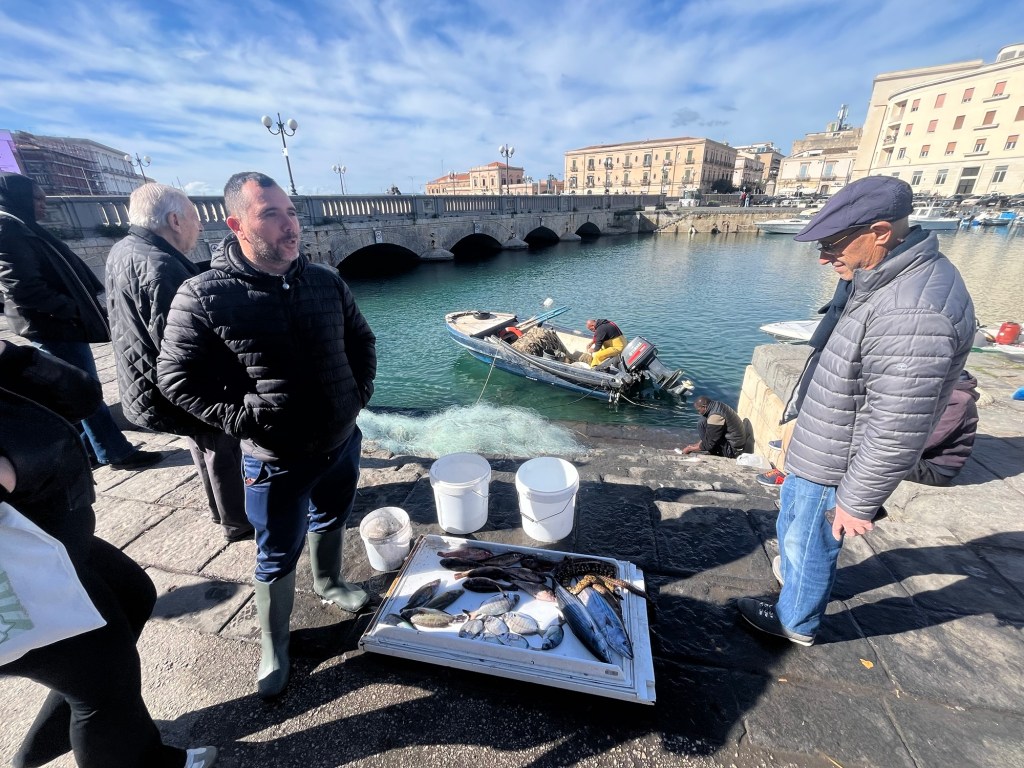
Having been here for a week now, I have a few impressions. The winding alleyways, many only 6-feet wide, are great fun to explore. The shops range from very upscale Italian to ridiculously funky and fun. The restaurants, bakeries, and cafes are the stuff of myth. Every one of them is perfect, and the food is insane! Six mornings a week, an open-air market lines one block plus a few alleys. Tourists love to go there, but it is really where Siracusans buy much of their produce, cheese, fresh fish, olives, capers, dried fruits, and herbs. The place, the vibe, the courtyards, the blend of commercial and residential vaguely remind of the very best parts of New Orleans’ French Quarter (though there is nothing in Ortigia even vaguely reminiscent of the grossest parts of the French Quarter, the Bourbon Street scene).

We have now been in Sicily for 10 days, 2 in the seaport town of Pozzallo, and 8 here in Ortigia. We have walked almost everywhere: in 10 days, we took a taxi from the ferry to the hotel in Pozzallo, an intercity bus from Pozzallo to Siracusa, a short-hop bus (1 stop) from the bus station to Ortigia, and a bus from Ortigia to the Archaeological Park in Siracusa. Other than that, we have hoofed it everywhere … easily and comfortably. (And once we got to the Archaeological Park, we decided it wasn’t worth the money to go in, so we walked around a bit, bought a little piece of art on papyrus, then rode back to Ortigia and started walking again.)

At this point, I have no idea if this experience has been typically Sicilian, typically Italian, or typical of nothing except a few days in Pozzallo and Ortigia. The place is generally friendly, and just enough people speak just enough English that we never feel much of a language barrier … but the language is most assuredly Italian, and the people are most assuredly Sicilians.

When I was a kid, whenever my New York City grandmother visited, she brought a big box of cookies from Sutter’s bakery in Greenwich Village. The box always contained a selection of cookies dipped in chocolate. They were the first ones eaten. Every bakery in Sicily has similar cookies dipped in chocolate. What a sweet, sweet childhood memory!

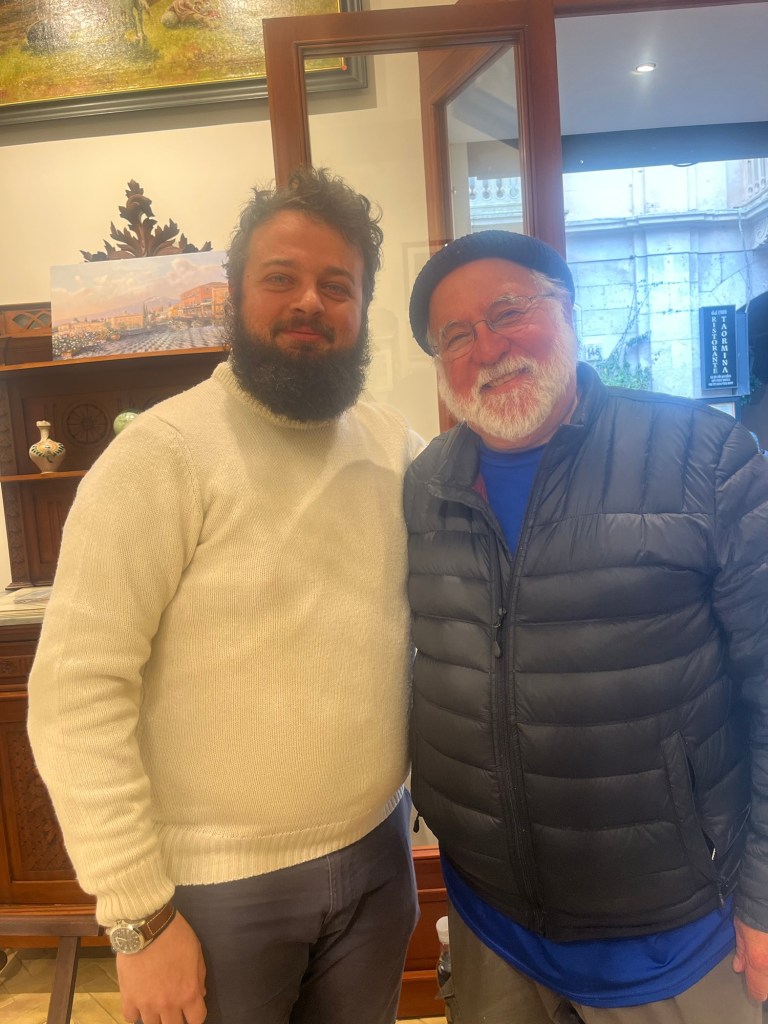
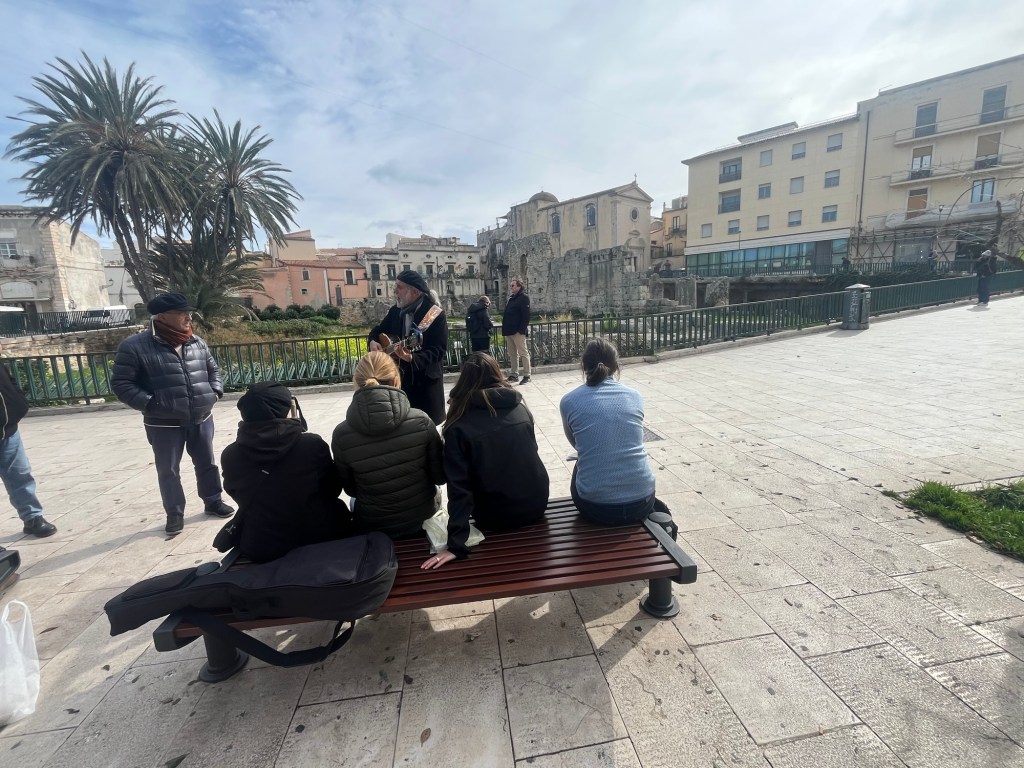
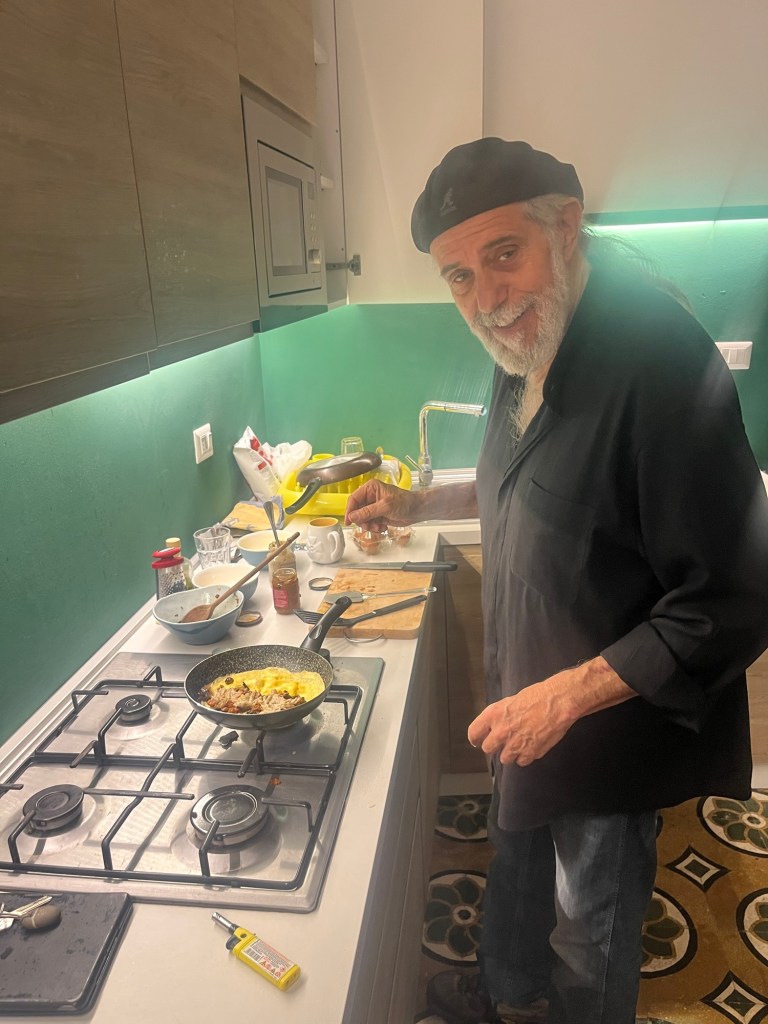
On our first morning in Ortigia, we stepped out of our B&B headed for the street market. Of course, we had no idea which way to go, so we asked the first person who walked by … an aging (but not old) bearded guy wearing a black cap backwards with a pony tail … if he could direct us to the market. Wouldn’t you know! He was an American from Jersey who was just settling into a month in Ortigia who knows Italian really well and loves it here. Within the first block, we ID’ed people we both knew. He is an itinerant performer, juggler, minstrel, musician who performs on the U.S. Renaissance Faire circuit – Carl Asch also known as “Giuseppe the Jester.” We’ve had a great time making a new friend in Ortigia! (If you are curious, our mutual person is Avner Eisenberg, known to many as Avner the Eccentric. I still remember him as Alan Eisenberg from Morningside Elementary School in Atlanta; Carl, our new friend, introduced him to his wife; the rest of you might remember him as Al Juhara, the “jewel” in “The Jewel of the Nile.” What a hoot. If this post makes it to you, Avner, it’d be fun to be in touch again!)

Today, we are off to the Papyrus Museum. In the Greek and Roman periods, Siracusa was the center of papyrus farming. The papyrus plants had been imported from the Nile, and the quality of Siracusan papyrus rivaled that of the best Egypt had to offer. We are now proud owners of a small piece of papyrus paper art. Enjoy it next time you visit. (Alas, as is frequent with February travel, the museum was closed for repairs.)

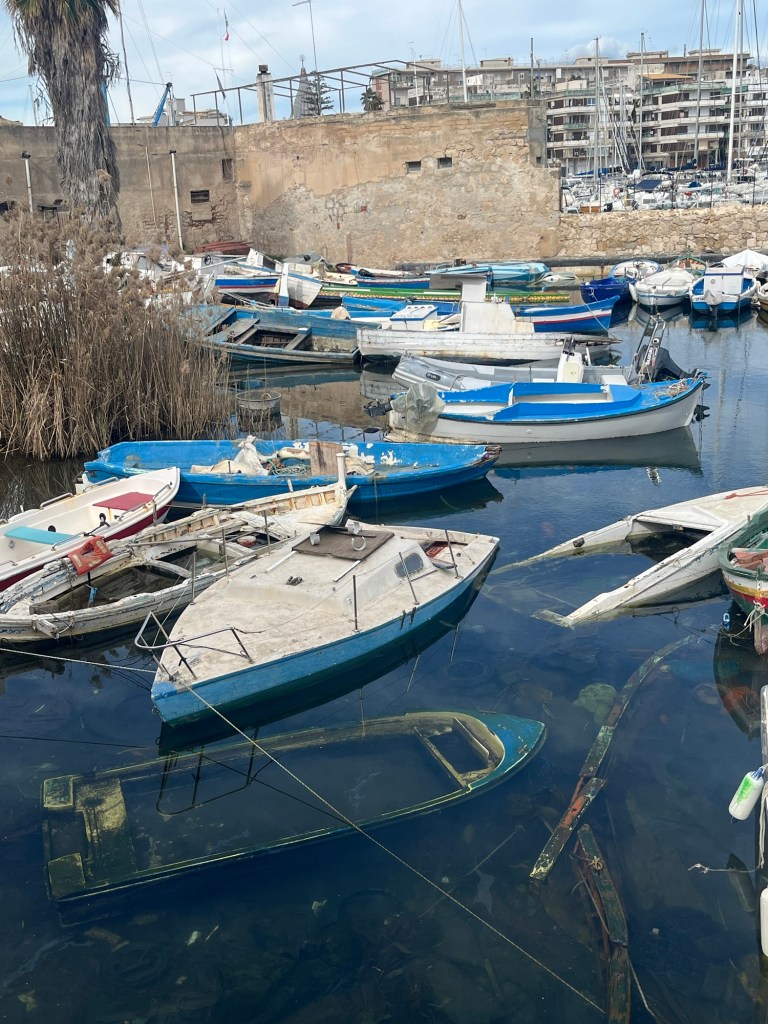
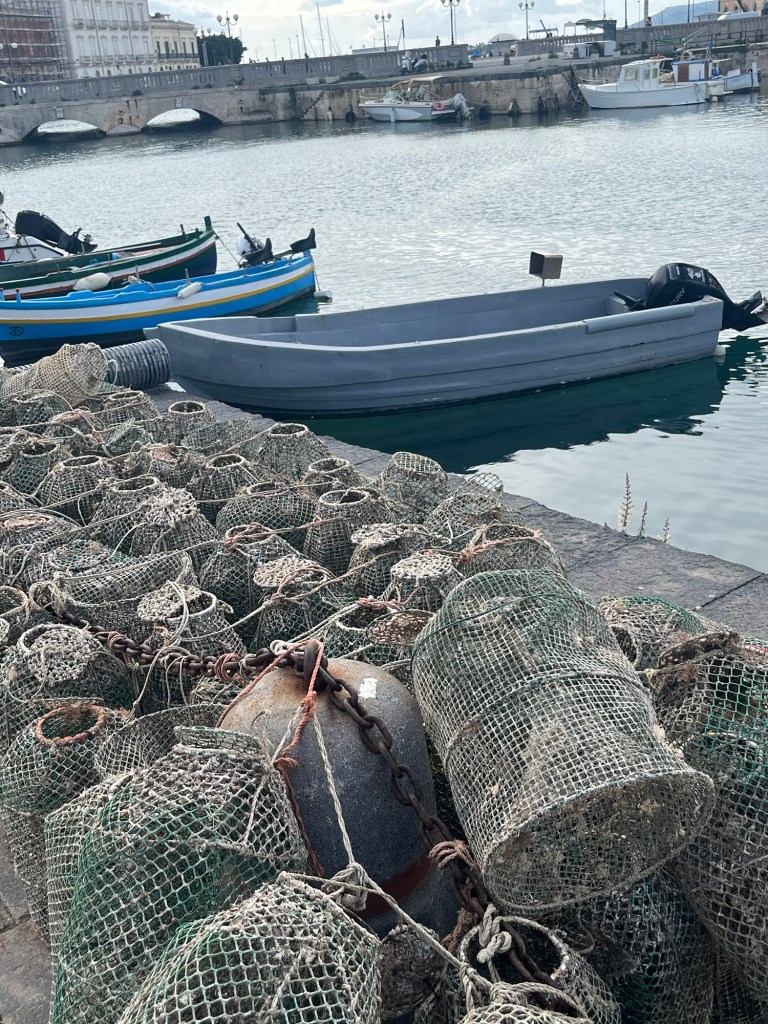
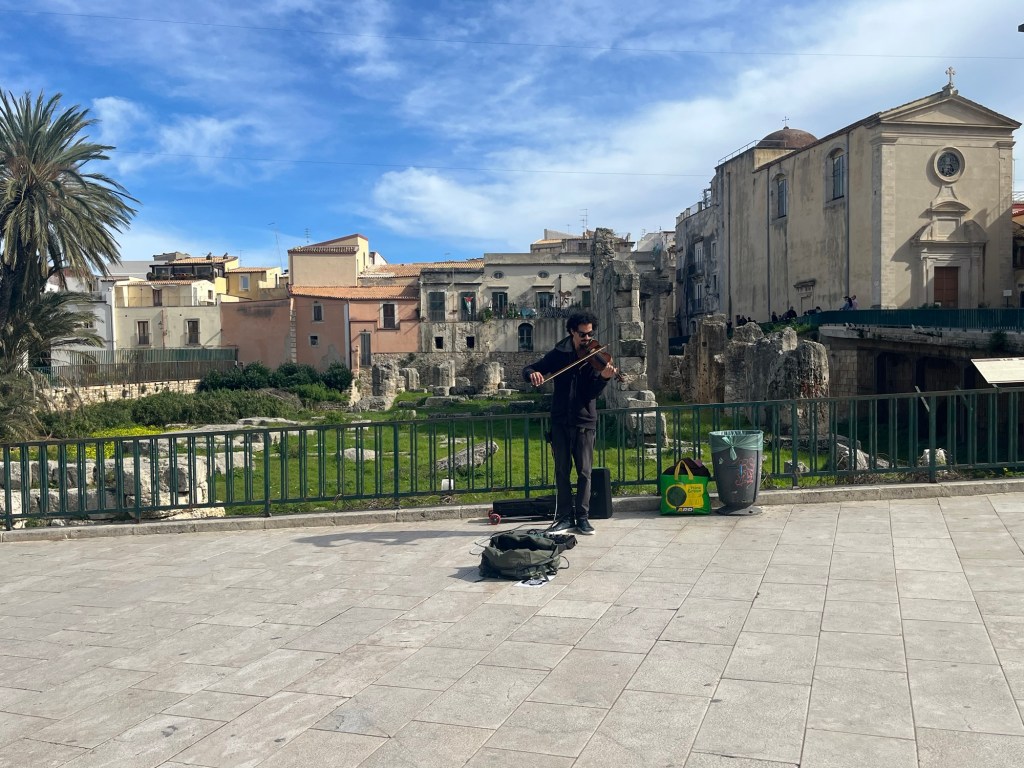
Here is a little visual smattering of our time in Siracusa…


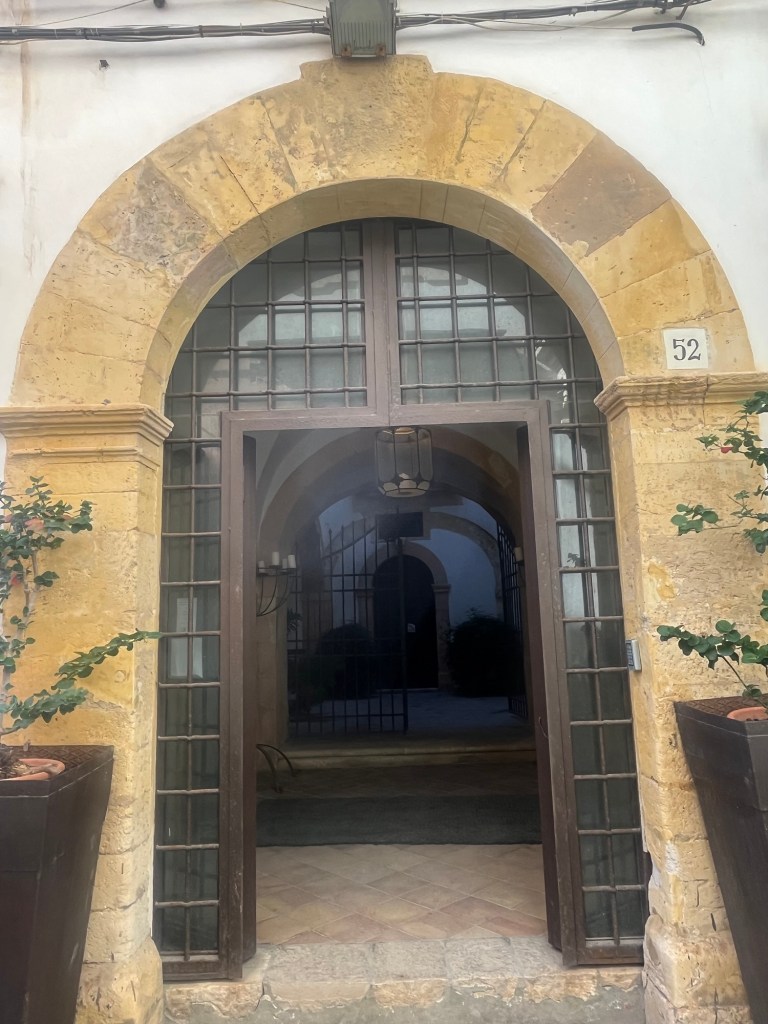
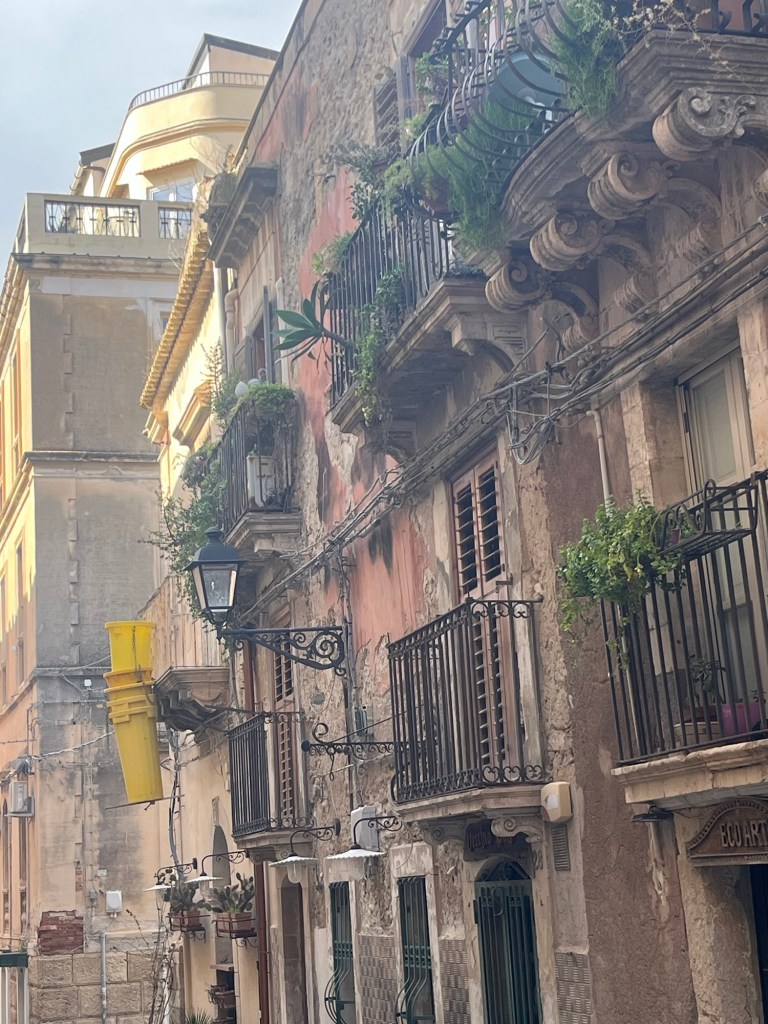
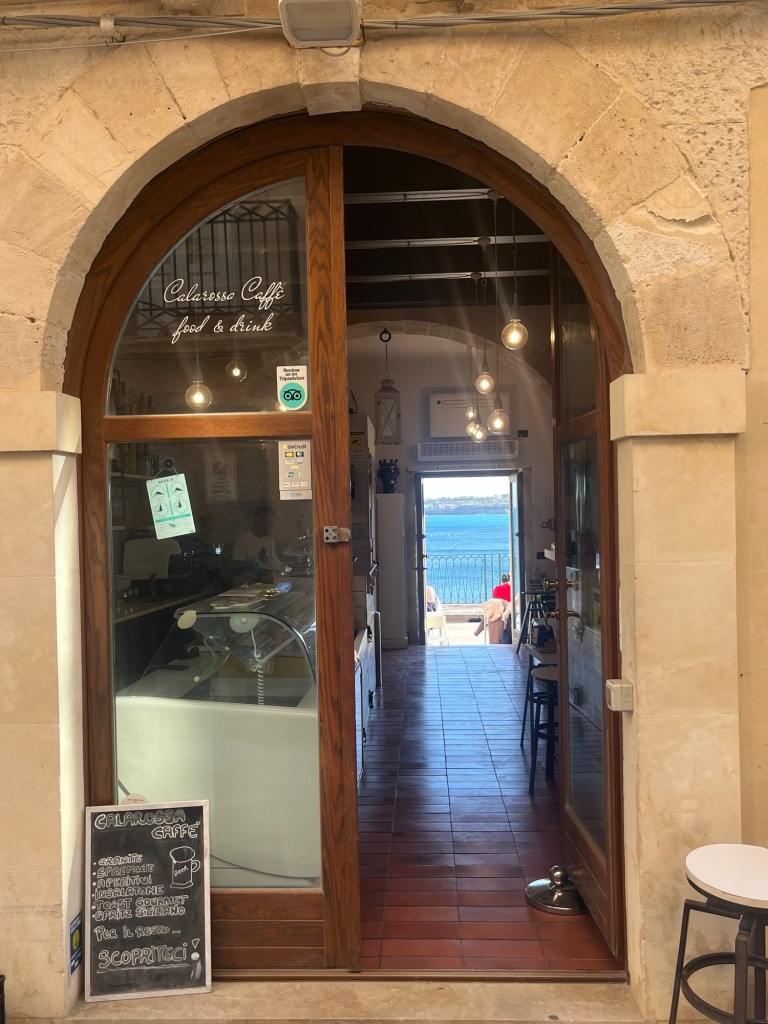
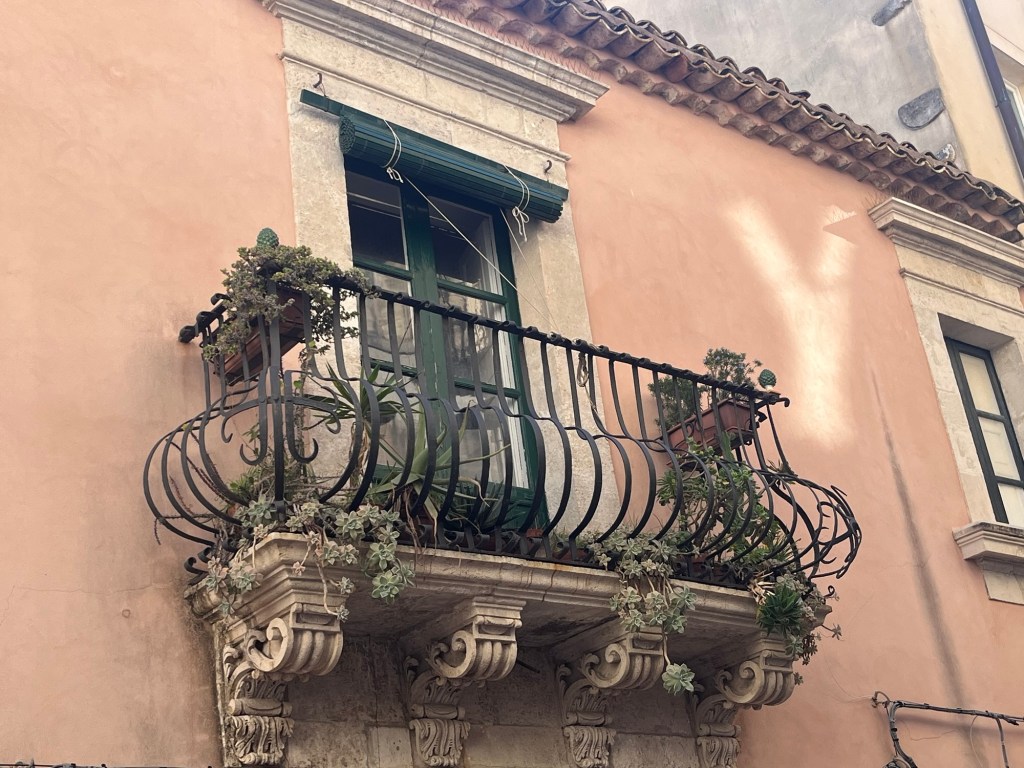
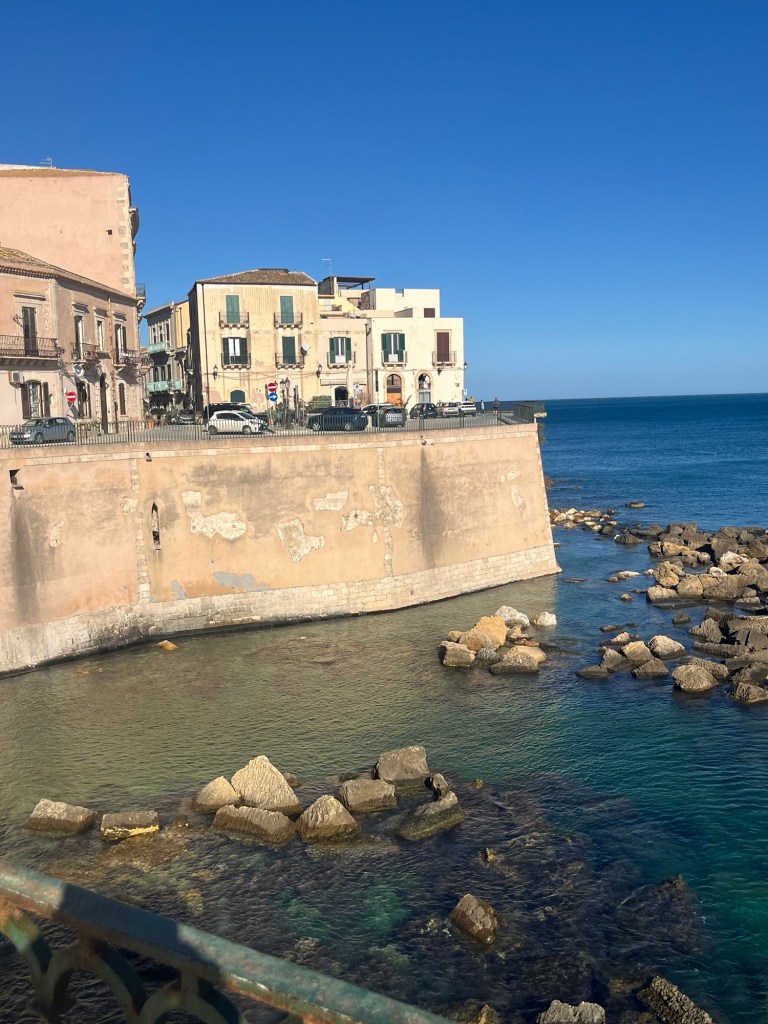
From the balconies to the alleyways to the piazzas to the doorways to the cafes to the sea scenes, Ortigia is a visual feast. Plus, it does have a touch of a New Orleans feel: what the hell are the plastic trash cans hanging from the wall in the top left photo? So random!


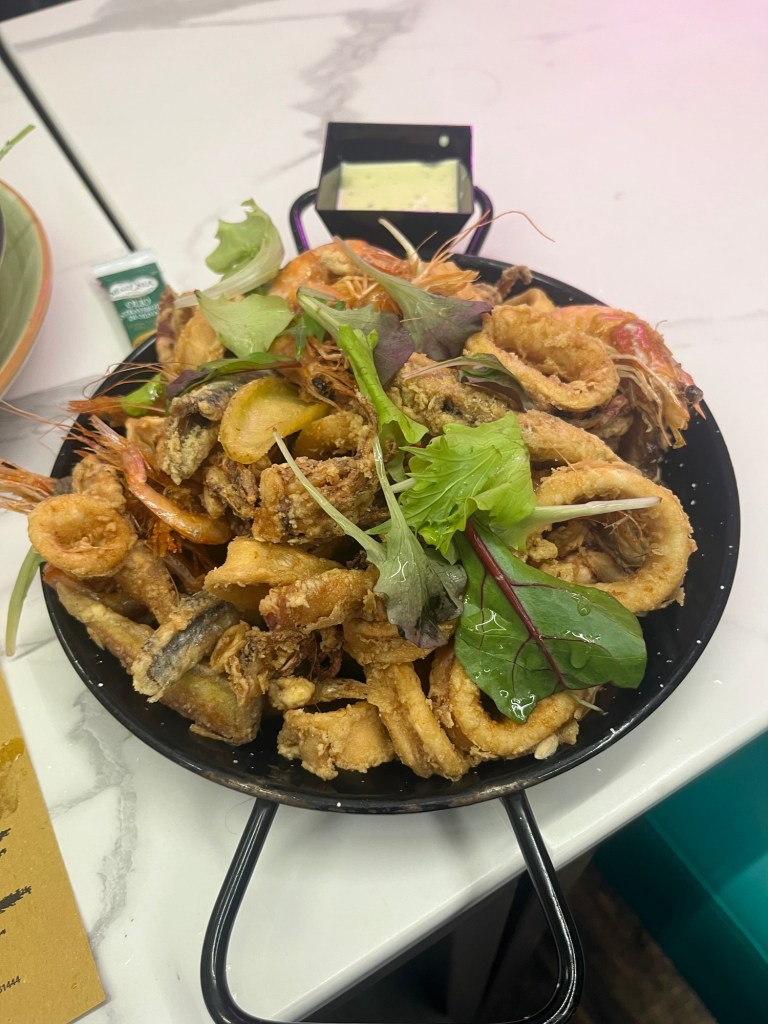
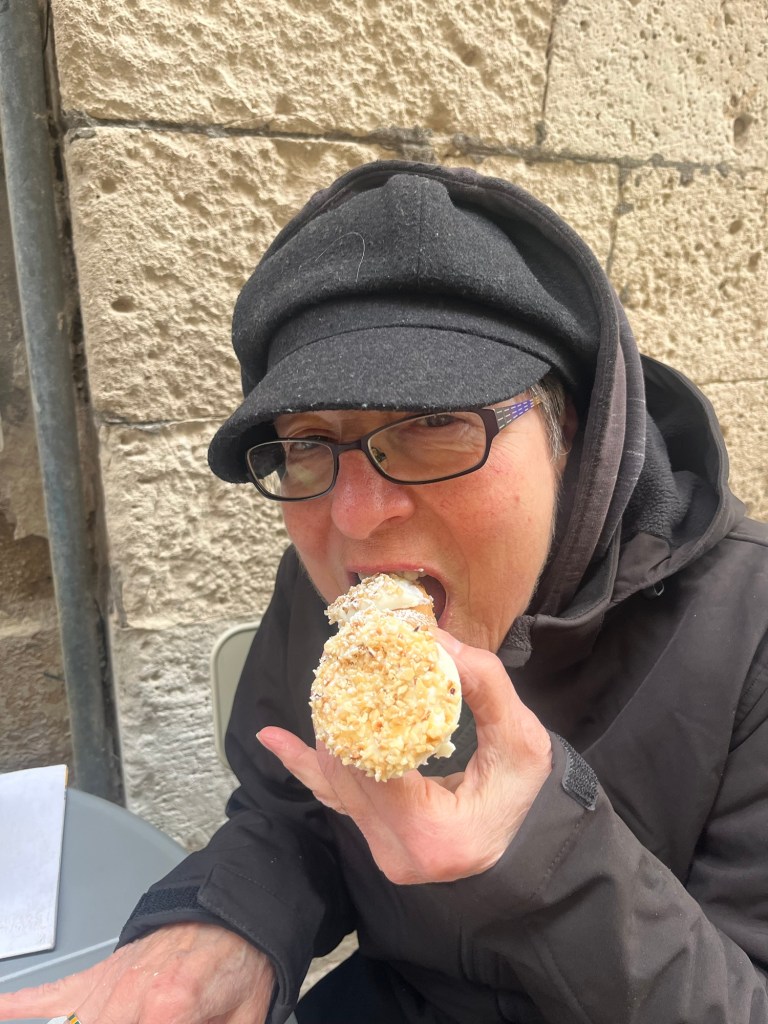
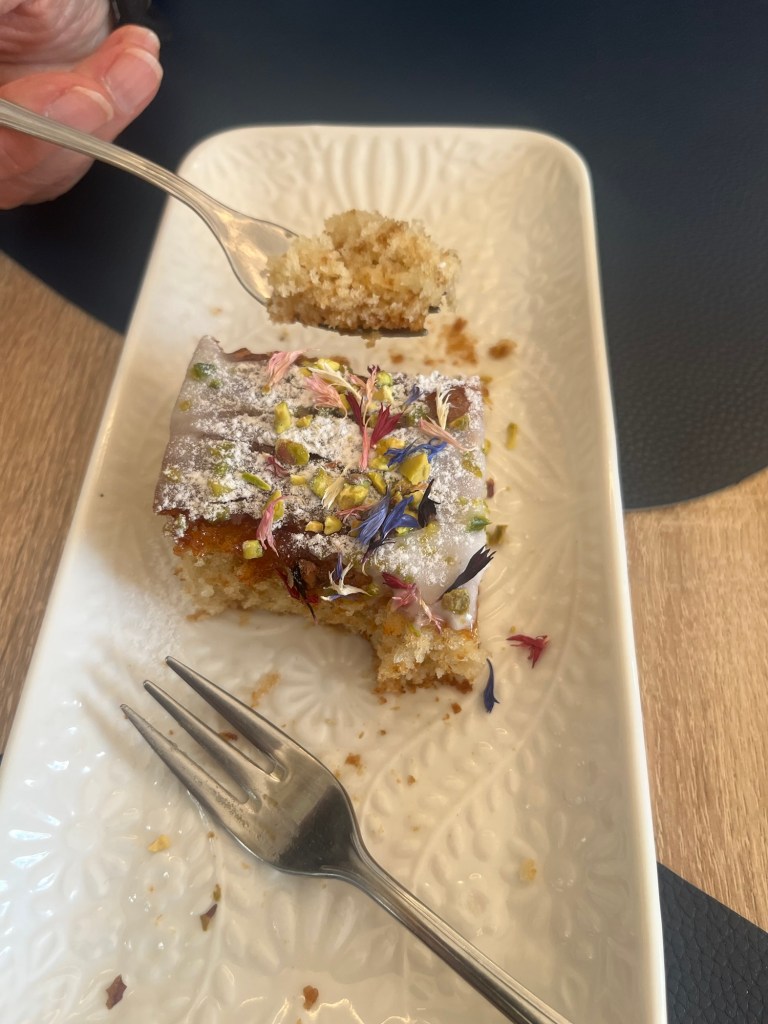
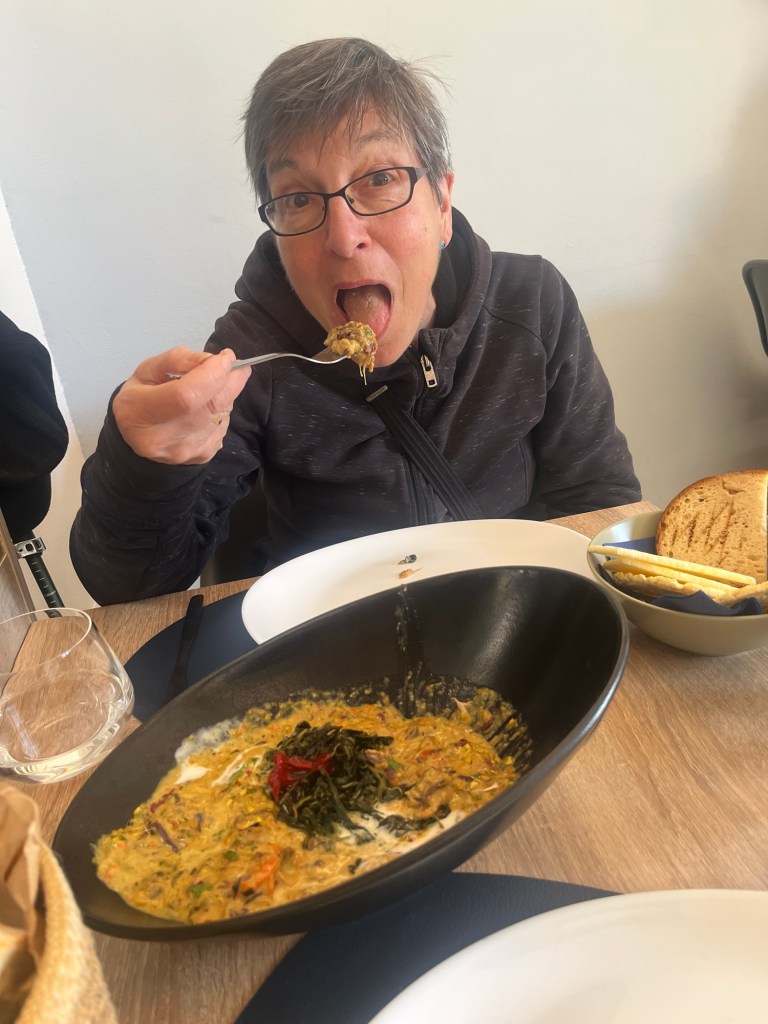
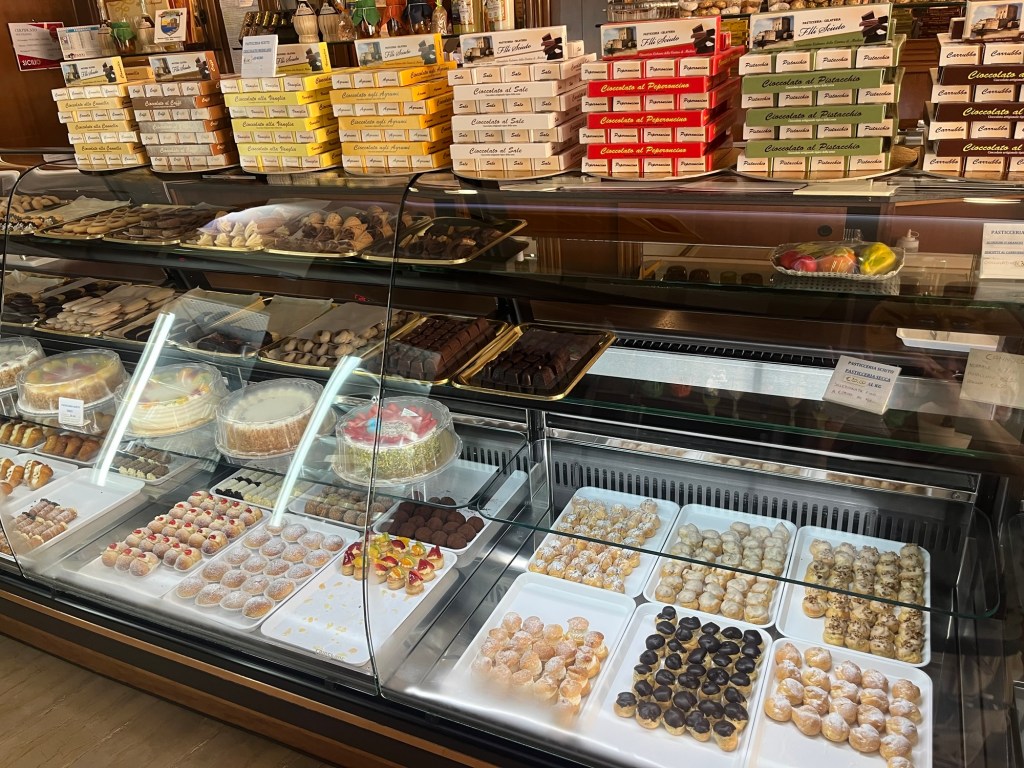
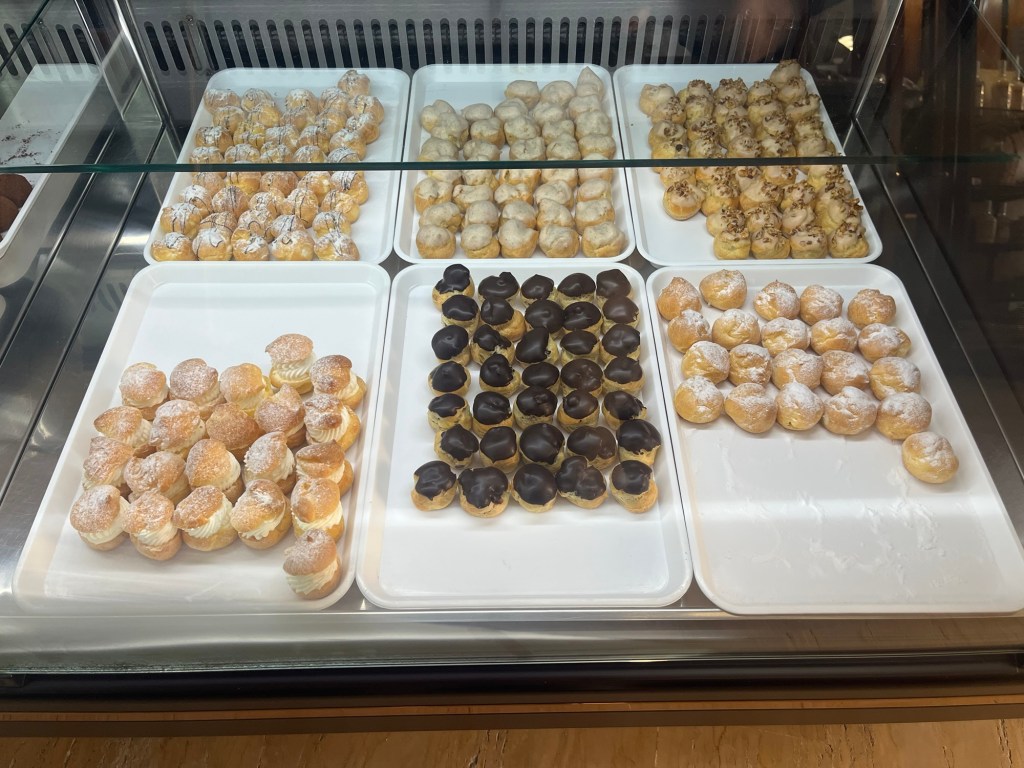
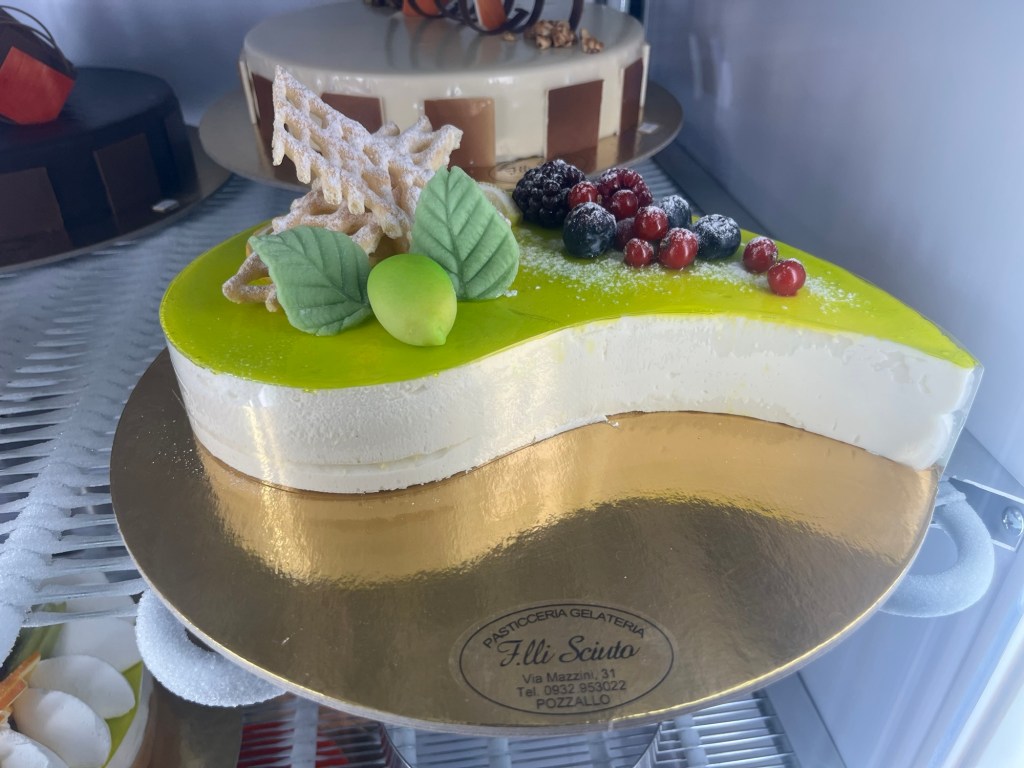
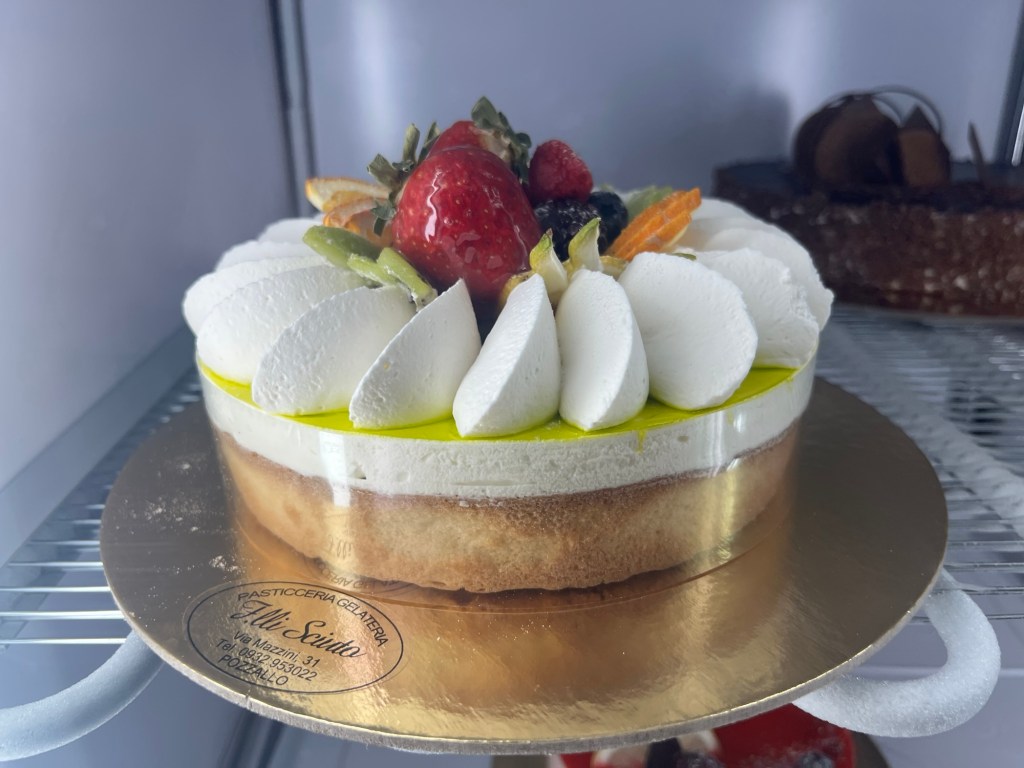
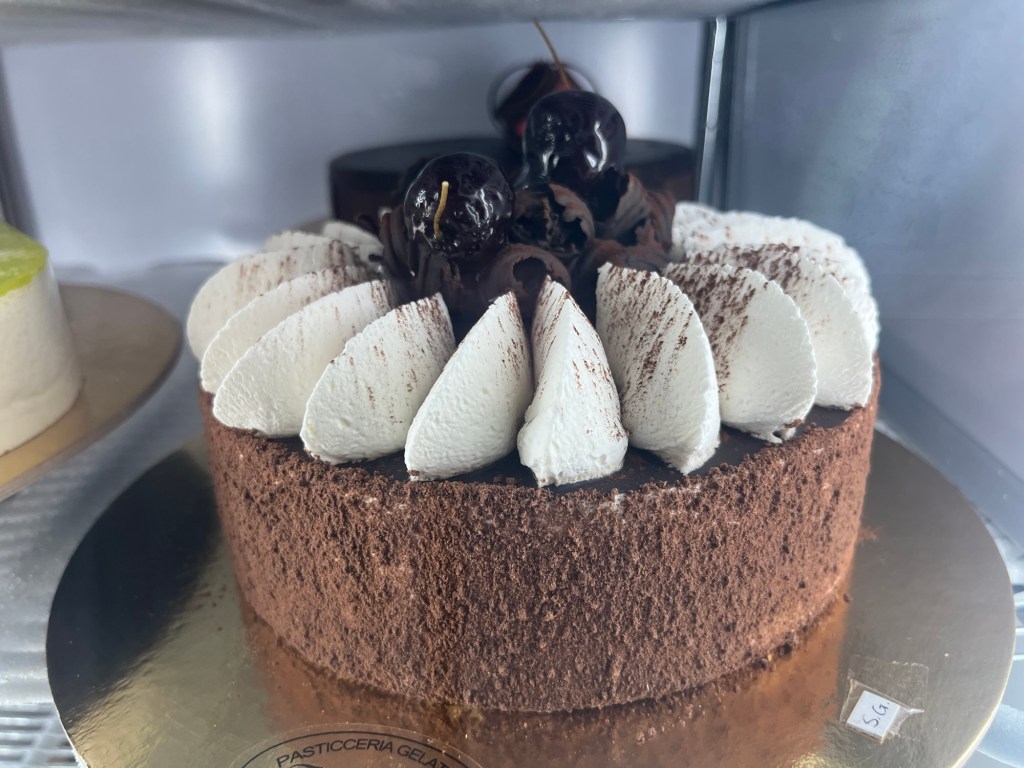
The food is insane … frito mixto, gluten-free pastries, cakes, and cannoli, even a Sicilian pulled pork dish that left me wondering how in the world they did that!


|


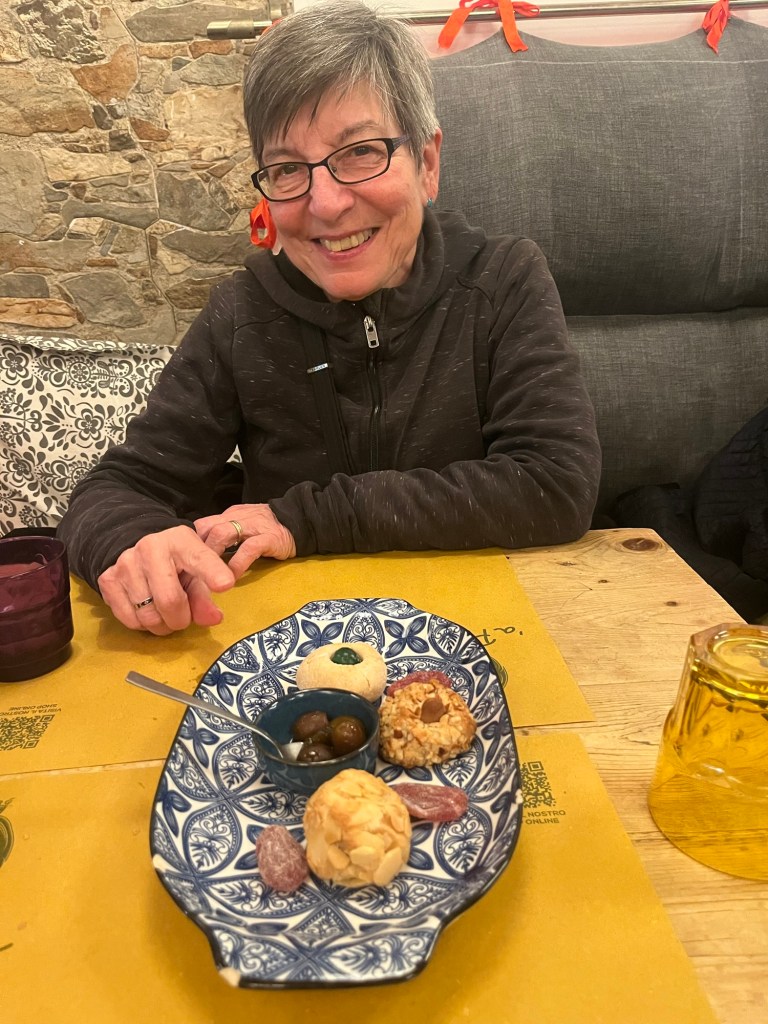
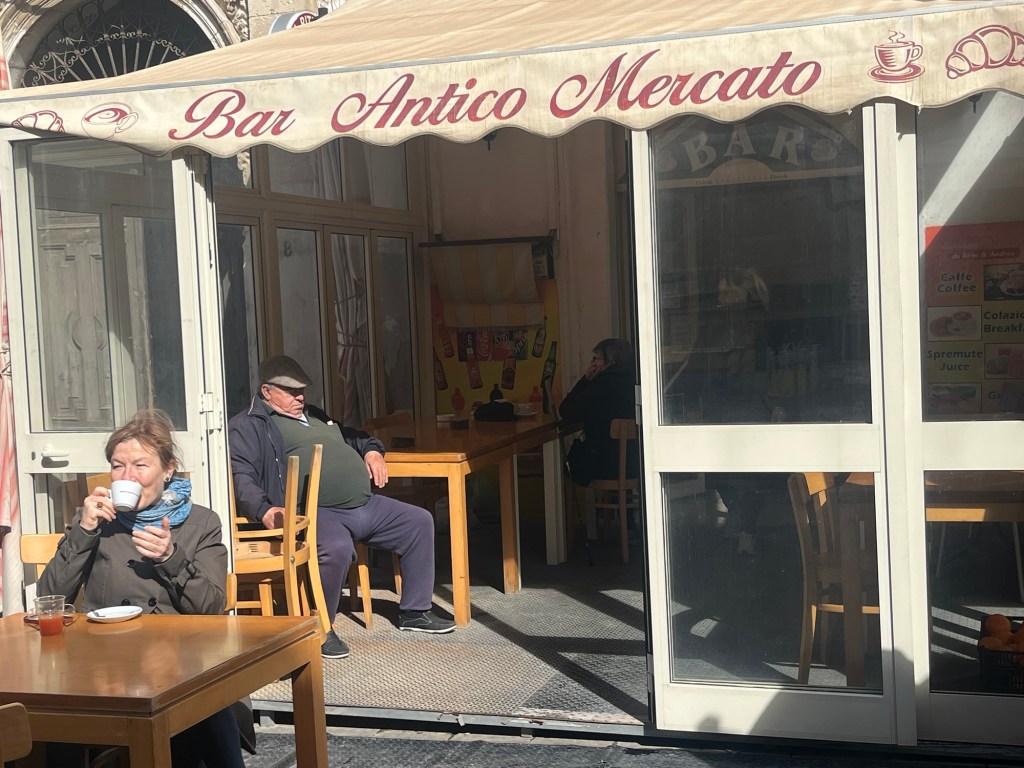
My favorite Sicilian. That is Rebecca sitting at the end of the table at a random cafe by the street market. This gent slept through our coffee and entire game of cribbage. He then awoke with a snort, stood up, moved across the cafe to the table beside us, lit a cigarette, fell back asleep, then woke up a minute or so later knocking the hot ashes from his thigh. Hollywood could not possibly do it better.


Re-Living My 5th-Grade Play

“Touching the Happy Isles, and seeing the great Achilles, whom we knew”


Don’t ever let it be said that elementary education is not important! I remember precious little about fifth grade: my teacher, my classroom, many of my classmates, and the curriculum have faded into the cobwebs. But not my 5th-grade play!

When I was 11, almost 67 years ago, I played Ulysses. Leslie Lenny played Circe. (If any of you readers from that era know her whereabouts, say hi for me.) My lines mostly came from Alfred Lord Tennyson’s poem, “Ulysses.”

Come, my friends. 
‘Tis not too late to seek a newer world. 
Push off, and sitting well in order smite 
The sounding furrows; for my purpose holds 
To sail beyond the sunset, and the baths 
Of all the western stars, until I die. 
It may be that the gulfs will wash us down; 
It may be we shall touch the Happy Isles, 
And see the great Achilles, whom we knew. 
Tho’ much is taken, much abides; and tho’ 
We are not now that strength which in old days 
Moved earth and heaven, that which we are, we are,— 
One equal temper of heroic hearts, 
Made weak by time and fate, but strong in will 
To strive, to seek, to find, and not to yield.

I remember the challenge of memorizing those 19th-Century lines. At the time, I had no real clue what any of that stuff meant. But those lines have never left me. I can still recite them.

I have had a fascination with the Mediterranean for decades, perhaps triggered by that experience.

Finally, this trip has brought Tennyson’s lines to life. Here we are: two codgers approaching 80 with our fair share of infirmities. But despite the obstacles, we are pushing our limits, exploring new worlds while not having any certainty about what the future will hold.

Come, my friends. 
‘Tis not too late to seek a newer world. 
Push off, and sitting well in order smite 
The sounding furrows; for my purpose holds 
To sail beyond the sunset, and the baths 
Of all the western stars, until I die. 

We may be getting old, but it is not too late to explore new worlds together … from now until we simply cannot do it any more.

It may be that the gulfs will wash us down; 
It may be we shall touch the Happy Isles, 
And see the great Achilles, whom we knew.

Maybe we will get caught in a mighty Mediterranean tempest. Or maybe we will find places of joy and beauty that we have dreamed of but never knew.

Tho’ much is taken, much abides; and tho’ 
We are not now that strength which in old days 
Moved earth and heaven, that which we are, we are,— 
One equal temper of heroic hearts, 
Made weak by time and fate, but strong in will 

OK. We ain’t what we used to be, but we ain’t dead yet, by God. We’ve still got a lot of living to do … and the will to do it …

The unyielding will to do it … to keep living and discovering new universes …

To strive, to seek, to find, and not to yield.

I am sorry I cannot write stuff like that, but at least I can be moved by it … and hold onto it — for dear life — for 67 years!

From Malta to Sicily

I have this old trope running around in my head. It is something about the trains in Italy always running late. From everything I know about modern Italy, that just doesn’t feel like it can really be true. But we are not in modern Italy. We are in the far south of Sicily, 20-or-so hours by bus, train, and ferry from Rome. We are in an area where most people really-and-truly do not speak any English. Here in southern Sicily, that old trope may not be so old after all.

We are trying to make our way up the coast to Siracusa, or more specifically, to Ortigia, a small island tightly connected to the rest of Siracusa. Ortigia has kept its 3,000+-years-of-history vibe while Siracusa has made full strides into the 21st-Century.

Pozzallo, where we were, is a big village. It is a seaport town and the main gateway to Malta from Sicily. It is where the ferry from Malta lands 3-ish times a day. We decided to spend a few days in Pozzallo for two reasons: it seemed like it might be a cool, interesting place, and it seemed like a fine place to start acclimating to Italy. We found a nice 100-year-old classic (and very well kept) hotel in the middle of town, and it was exactly what we had bargained for.

We could walk most of the town in an hour … which was important, since we had to do it a few times. Plus, it gave us a chance to realize the challenges of encountering true language barriers. I am getting good with Google Translate … but I still have a long way to go. We tried to get a kebab and salad without pita for lunch … almost like in the picture on the wall of the cafe, a kebab, but with no pita. I failed.

Per usual in the universe of international travel, we ended up at a better, more convenient place where I got to eat my first arancini, a fried Sicilian street food made of rice and filling. Being on the eastern side of Sicily, I ate an arancino, a cone-shaped delicacy associated with Catania. It is cone-shaped to resemble Mt. Etna … as opposed to the arancina, which is round … more feminine, resembling an orange, and associated with Palermo instead of Catania. Same food, different shape … and of major Sicilian importance!!!! Plus, we were right across the street from the bus stop where we may or may not be able to catch the 2:40 bus to Siracusa.

So back to that “Italian trains are always late” trope. We dedicate a not-insignificant amount of our travel time to checking out how we are going to get from Point A to Point B. We scored big on that front in Malta, when we checked out the ferry terminal a few days before we sailed to Sicily. Just like Google Maps said, we had a 15-minute walk from the “Bombi 1” bus stop, but it was down a steep, rough hill alongside seaport warehouses. We got to the terminal, checked it out, confirmed the ferry schedule, and then learned that there was a bus stop directly outside the building … but the bus that stops there only runs once per hour. SCORE! When we did it with our luggage a few days later, we timed our journey perfectly and had no problems at all.

We did the same thing on our first morning in Pozzallo. We walked up a hill to the train station. We arrived a few minutes after noon. We saw that a train was scheduled to arrive at 12:24, so we waited (and enjoyed a delicious fresh orange that we picked off the tree at the train station). At about 12:30, we figured if the train was late, we would hear it, so we could leave and start walking back toward the village. The train never came.

Here is what we subsequently learned. (Welcome to remote southern Sicily.) … And bear in mind, we like totally DO NOT know the language!

  • The trains were not running because of damage from Mediterranean Storm Harry.
  • The trains were running, but not the 12:24 train. Only the 3:30 train.
  • There was a 11:40 bus from Pozzallo to Siracusa.
  • There was not an 11:40 bus from Pozzallo to Siracusa, but there was an 11:40 bus that left Pozzallo with a mid-route transfer to Siracusa.
  • There was not an 11:40 bus from Pozzallo with a transfer to Siracusa.
  • There was a 2:40 bus from Pozzallo to Siracusa.
  • The 2:40 bus from Siracusa to Pozzallo was not running on Wednesday
  • We could take a taxi to Siracusa for about €100. (The bus cost €6.)

We also learned that there was an art supply/stationery store that sold bus tickets about a kilometer away. Off we went. That is when we learned that many Sicilian businesses close between 12:30 and 4:00. We arrived at 2:30. The place was locked up tight.

Wednesday morning, I started again, still having no clue how we were going to travel the relatively short distance from Pozzallo to Siracusa. I left Rebecca at the hotel and hoofed it back up the hill to the art supply/stationery store. Indeed, the 2:40 bus should be running just fine, and I left with 2 one-way tickets to Siracusa in my pocket.

We (fortunately) arrived at the bus stop two hours early. That is where I failed in my attempt to get a pita-less kebab and enjoyed my first arancino.

End of story: the bus arrived right on time. Two hours later, we arrived at the bus terminal in Siracusa … having to pee like crazy since the inter-city bus had no bathroom.

Segue to the next chapter: we found a bathroom and found the bus to Siracusa.

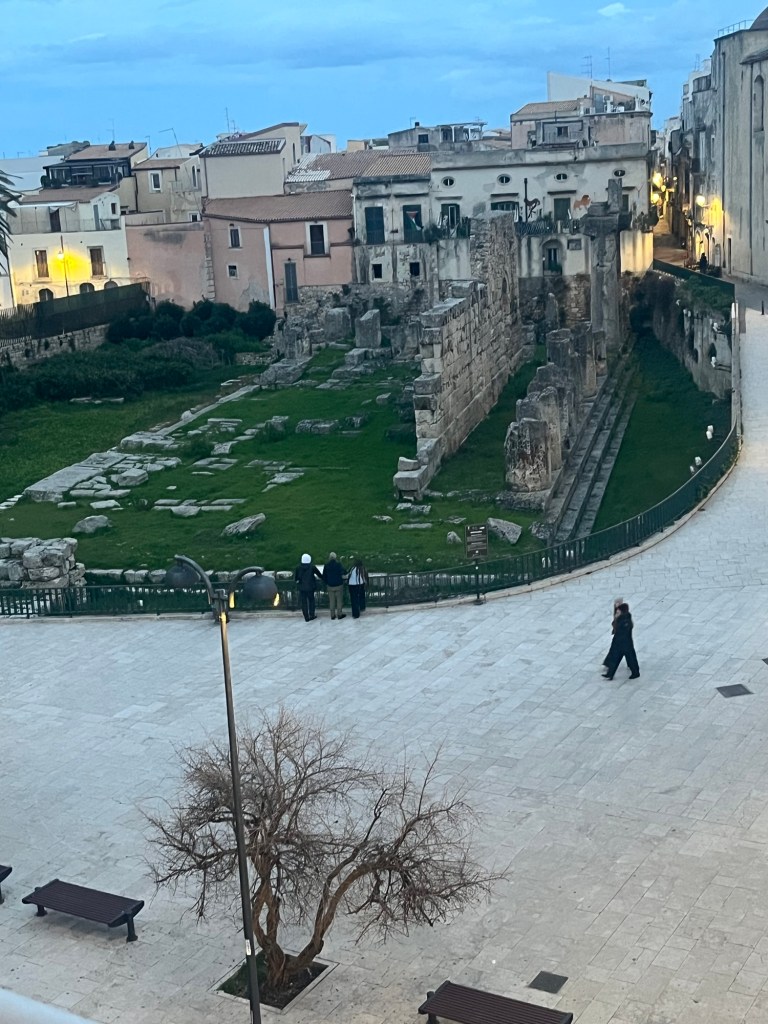
Next chapter: we arrived at our B&B. Sergio, our host, escorted us to our room and opened the shutters over the window. Our room peers down directly onto the Temple of Apollo, an amazing ruin in the heart of Ortigia. We plan to stay here a while. It is heavenly. Stay tuned for more stories!

The Temple of Apollo from our room in Ortigia.

Traveling: Then and Now

When I think of hard travel, I think of sailing ships and stage coaches and weeks or months passing between communiques. I think of unimaginable language barriers and dietary shifts. I think of cultural differences that must have felt like being on a different planet. Yet (like with most things in my life), I also think of Mark Twain: “One must travel, to learn.” (1867, Innocents Abroad) Twain relished in his long voyages. He was a true citizen of the world. Oh, how I wish I could have known him and shared a cigar and whiskey with him anywhere in the world!

By the time I started traveling, the world had shrunk exponentially from the days of Twain and before. Few places on the planet could not be reached, first by air, and then a mere day or two overland or by rail. Electricity allowed telegrams to be sent around the world in seconds. Phone calls were possible but very expensive, so our favorite means of staying in touch was the picture postcard and a 3¢ stamp. I did not leave North America until the 1990s … though I had most of the U.S. and lots of Canada and Mexico under my belt by then. I traveled by car (50-mph 2-lane highways passing through every town on the map in the days before Interstates), rail (with its storybook elegance, comfort, and great food), and air. Jetliners entered service in the late 1950s, but I vividly remember the days of DC-3s, Convair 440s, and the Constellation. My dad used to love to sit in the back, living room-like section of the giant “Constellations” where he could have a cocktail, smoke cigarettes, and shoot the breeze with fellow travelers. Those were the days when people dressed up to fly; every seat included an ash tray; and every service included a 4-pack of cigarettes. My grandfather traveled 11-months a year selling textiles across the US. He didn’t smoke, and at the time, the airlines did not put many limits on the number of “miniatures” travelers could take, especially frequent travelers like my “Gramps.” My Grandmother had a drawerful those little 4-packs, and the hall closet in their Manhattan apartment was literally filled with miniature liquor bottles. (And she had another drawerful of matches from restaurants and hotels across the country.) Their apartment was a fine place to be in my late teens and early 20s.

In some ways, travel has not changed much since then. 9/11 messed things up pretty badly by requiring atrocious levels of security. Commuter jets and small planes now fly to virtually every corner of the world, meaning that the entire population of the planet lives within a day or two of each other. That’s crazy! My great pal Jim Duffy and I have mused about the economic activity that air travel alone has spawned, from jetways to computerized conveyor systems, to tractors that exist only on the tarmac, to 20-foot-wide snowplows.

In other ways, the changes have been tectonic. In the late 1990s, I took my first work trip to the Middle East. I planned a full itinerary, reserving hotel rooms and setting up meetings across the Negev Desert, Jordan, Jerusalem, and the West Bank without ever picking up a telephone. I reserved hotels, rented cars, and created a full itinerary all on email!

As Rebecca and I have taken our epic road trips across the US, Google Maps turned the old AAA Tour Books into an anachronism. We could find available hotels by precise location and price, and since we travel in the off season, we could feel confident showing up and checking them out before we committed to them.

Now, spending two months in Europe, technology is expanding our horizons more than we could imagine. ChatGPT and OpenAI have already transformed our experience. Here’s our constraint: Thanks to aging, Rebecca’s balance is compromised. That is why we have limited our luggage to one suitcase and two backpacks. One backpack rides on the suitcase handle, and the other on my back. I worry about the stuff, while Rebecca worries about Rebecca.

We want to find comfortable villages with good views and good vibes, plenty of cafes, and concentrated centers that are flat and do not require a lot of stairs. We want to find comfy hotels with “lifts.” We are not overly interested in a lot of the traditional touristy stuff. “Place” and “people” interest us much more than “sights.”

I don’t know how to find that information using tour books or traditional web searches … and if I can find it, I certainly cannot find it quickly. ChatGPT changes that equation. Just ask. “Which hotels are closest to cafes and the city center?” “Is XYZ accessible to ABC without stairs or big hills?”

Stay tuned on how effective it is. We are just starting this phase of the adventure. This afternoon, we take the ferry from Valletta Malta to Pozzallo Sicily. We had not planned to spend much time in Pozzallo thinking that it was a scruffy seaport without a lot of interest. ChatGPT changed that thinking, telling us what a charming fishing village it was with a beautiful, concentrated center. Now we are reserved to be there for 2 nights and will probably spend several more depending on how we like it.

Our first major Sicilian destination will be Syracusa and Ortigia, but we might need a week or more to get there, depending on how we like Pozzallo, Noto, and some of the villages along Sicily’s southeastern coast.

Not only have we started leaning on ChatGPT, we have also been practicing up on Google Translate. Neither of us knows a word of Italian (other than things like “Ciao” and “Arrivederce,” of course). Malta has been ridiculously simple because English is everywhere. I expect we will encounter plenty of English speakers in Sicily, and we will greatly improve our sign language skills, but with Google Translate, we should actually be able to communicate.

And the days of the 3¢ postcard? Long gone. Postcards cost $1 or so, and postage costs $2 or $3. Today, they are quaint, nostalgic ways to reach out to a few special loved ones. Telephones, on the other hand, are totally free (other than the outrageous monthly fees you pay anyway). And who needs to just talk? We can FaceTime, chat, or email anytime, all from that tiny computer in our pocket.

And getting around by public transit? Unbelievable! Google Maps knows where you are. Tell it where you want to go and how you want to get there, it tells you the exact routes. The modes of travel to take. The timing of the next bus or train. The length of your walk to the stop or station. Then, once you are en route, you can follow along with your progress, so you always know the right stop to get off. ChatGPT can even tell you granular details about the terrain and neighborhood.
Holy Crap! Traveling in the Information Age is becoming a totally new experience. I have no idea how Mark Twain would feel about it, but I am totally loving it!


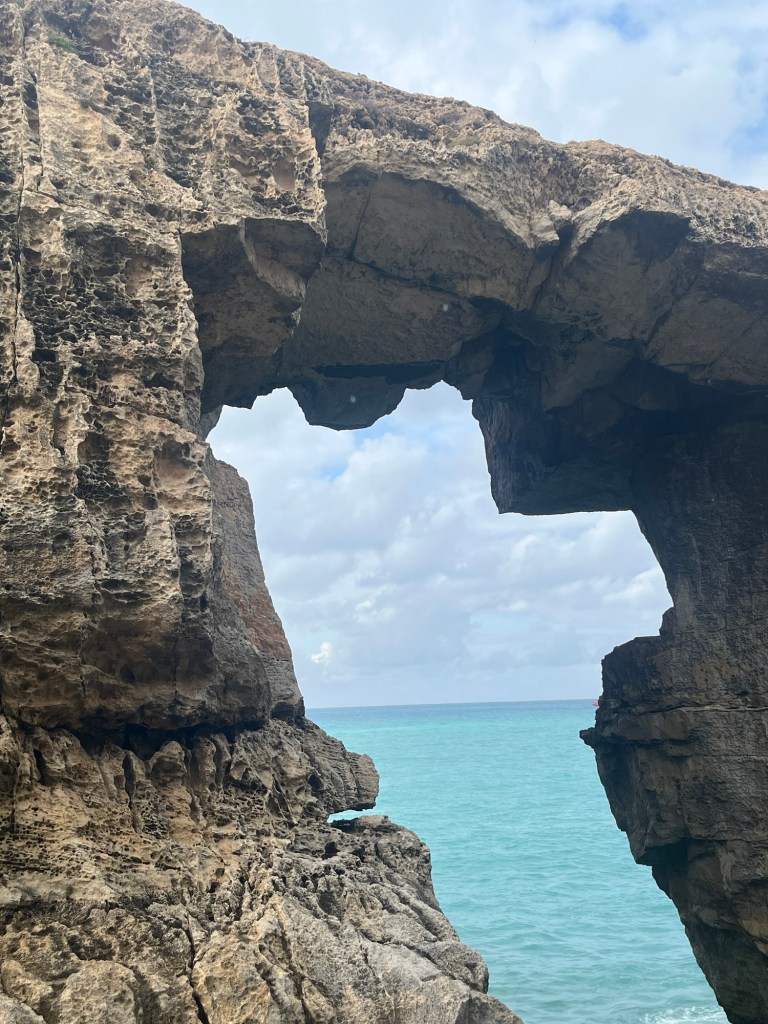
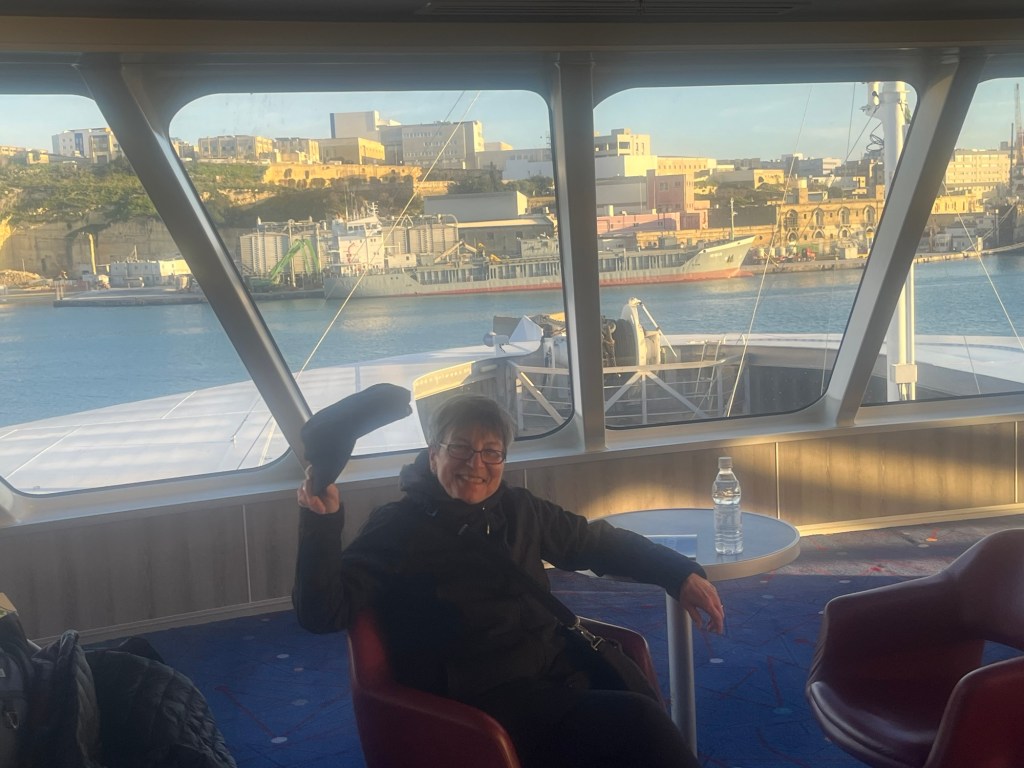
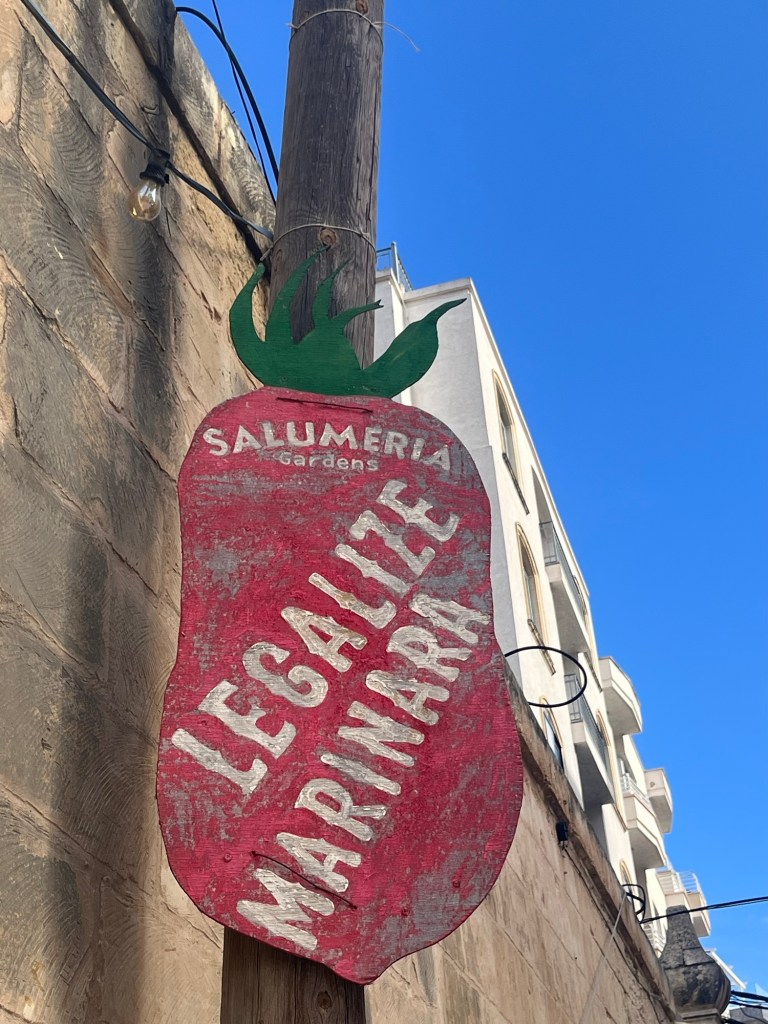
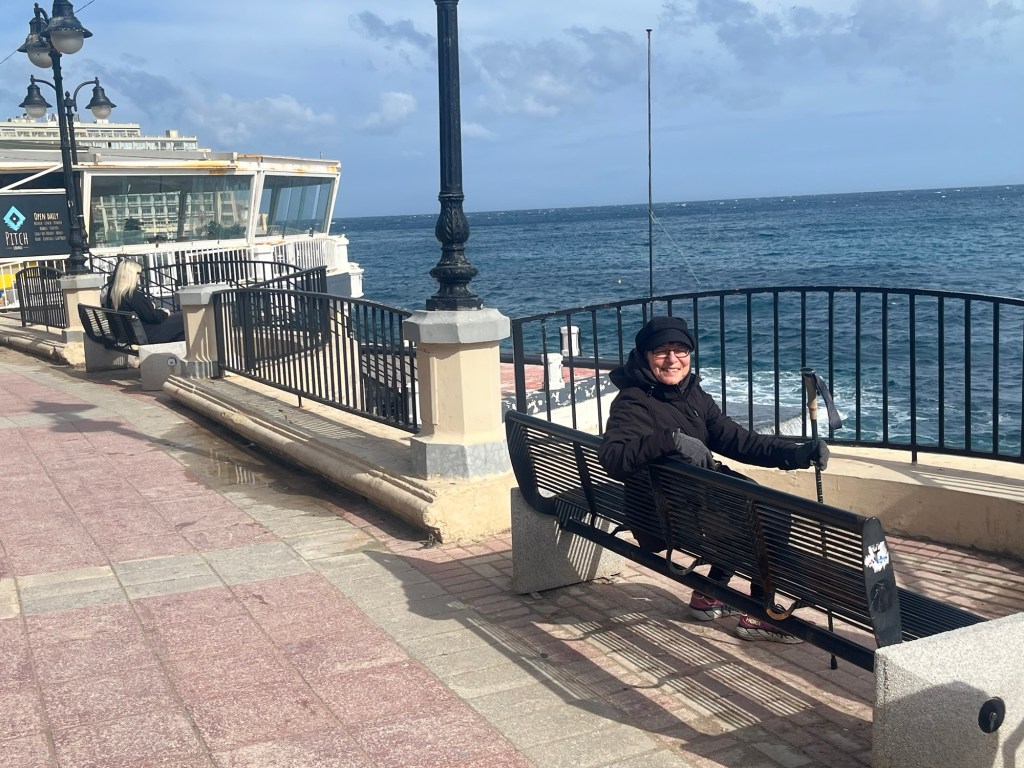
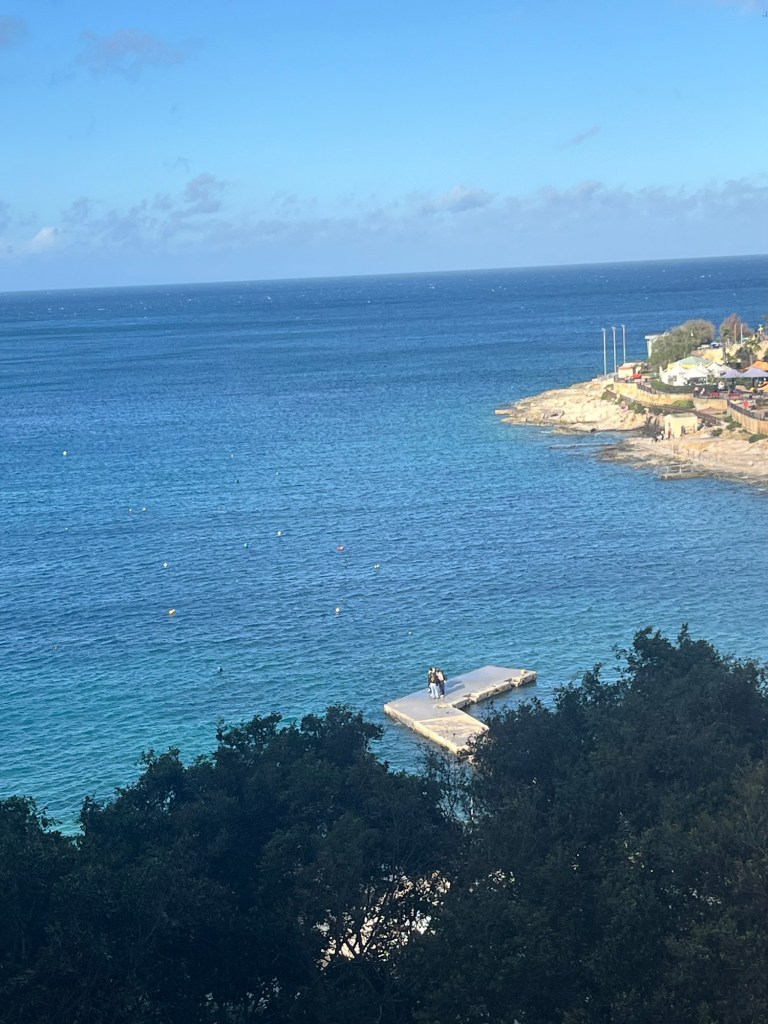
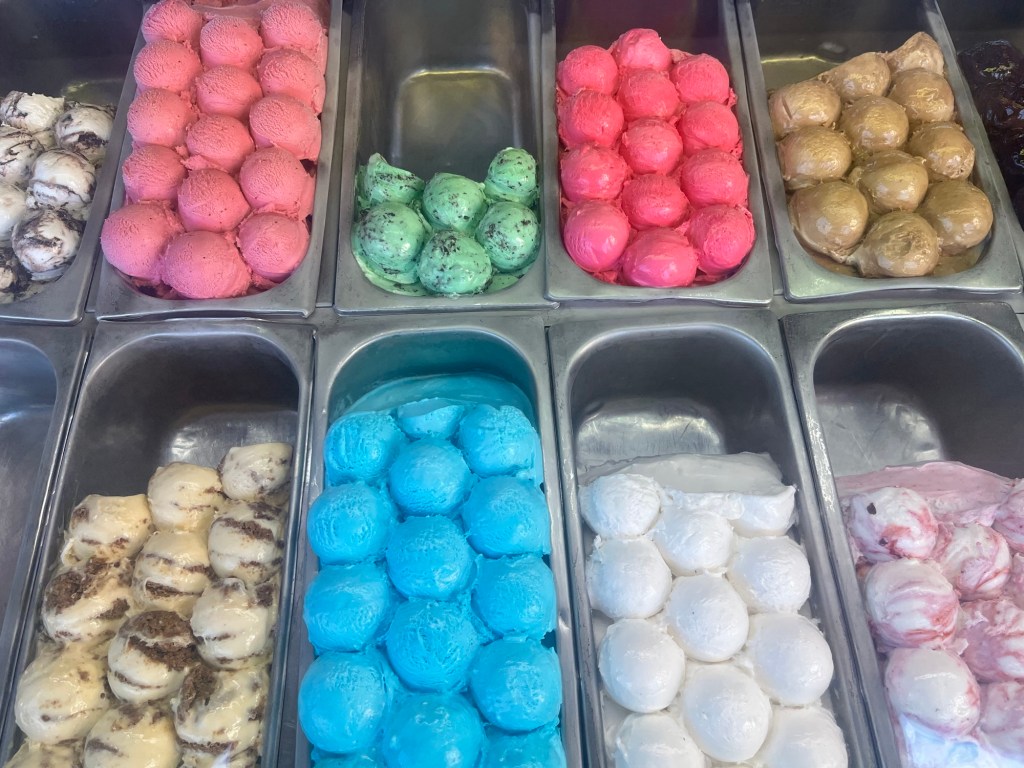
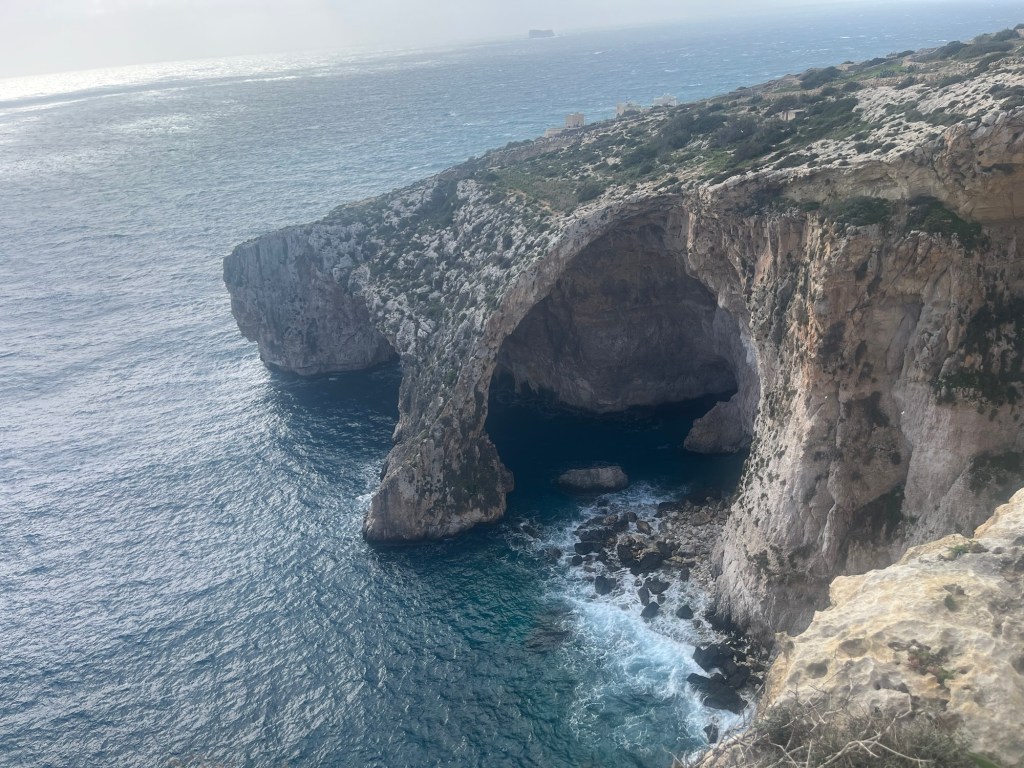
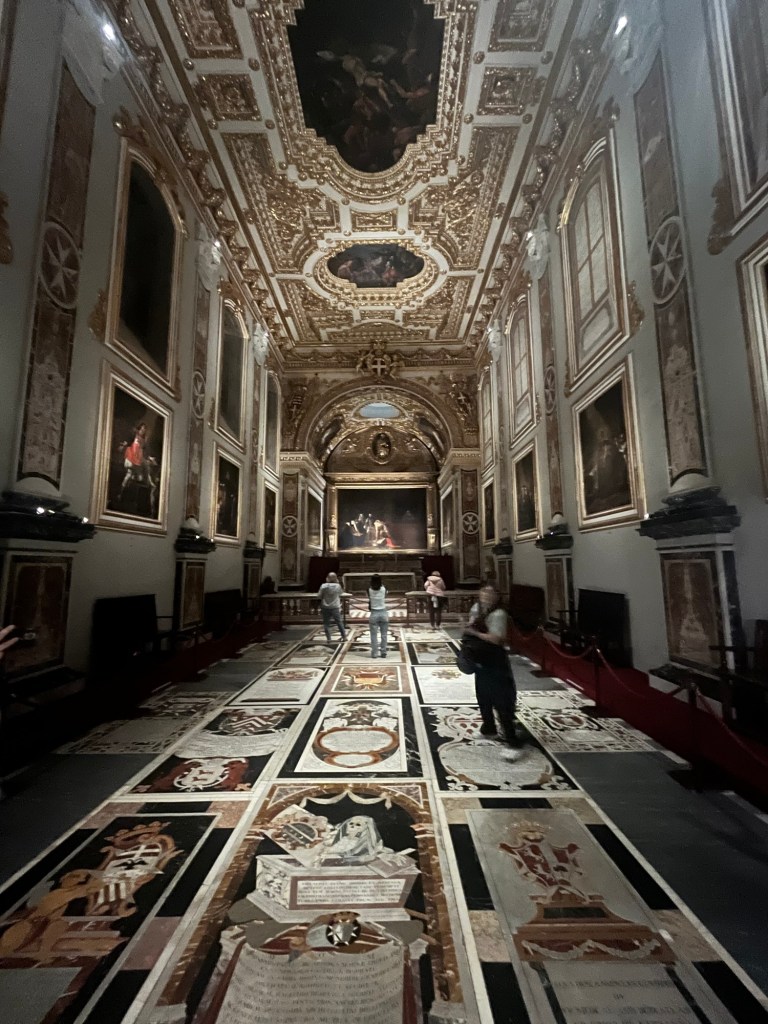
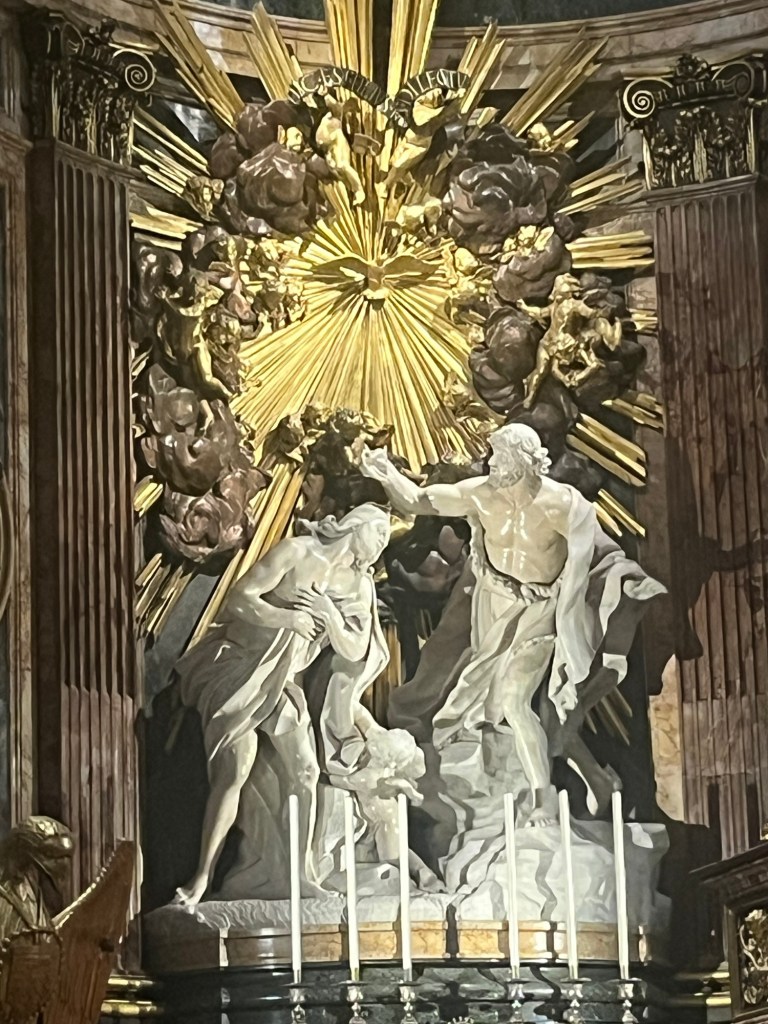
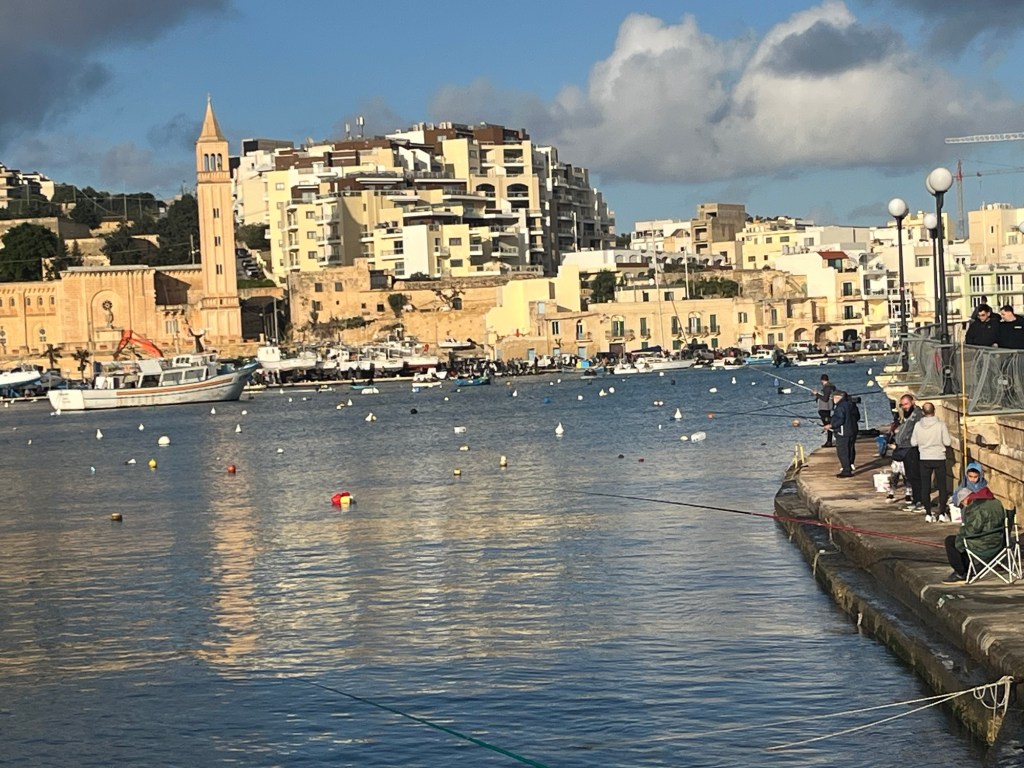
PS Here are a few random photos of our last few days in Malta. It’s been a fantastic place to spend a month!