As I have come to understand this history, the Gullah-Geechee people came to the US as slaves from West Africa. They were enslaved specifically because of their rice-growing prowess, so they populated the plantations from Wilmington NC to St. Augustine FL. In some areas, the plantations grew cotton or harvested native lumber, such as live oak. On this trip, I wanted to learn more. Jim Brown, the NFL running back and Michelle Obama among many others, have Gullah-Geechee roots. We found a Gullah-Geechee museum in Georgetown SC and learned more on St. Simons Island GA at the Harrington School Museum. Learning of this culture and seeing it respected and sustained has been a high point of the trip. Any time you want to visit us and have some Hoppin’ John or enjoy a low-country shrimp boil, we’ll make a point of thanking the Gullah-Geechee.
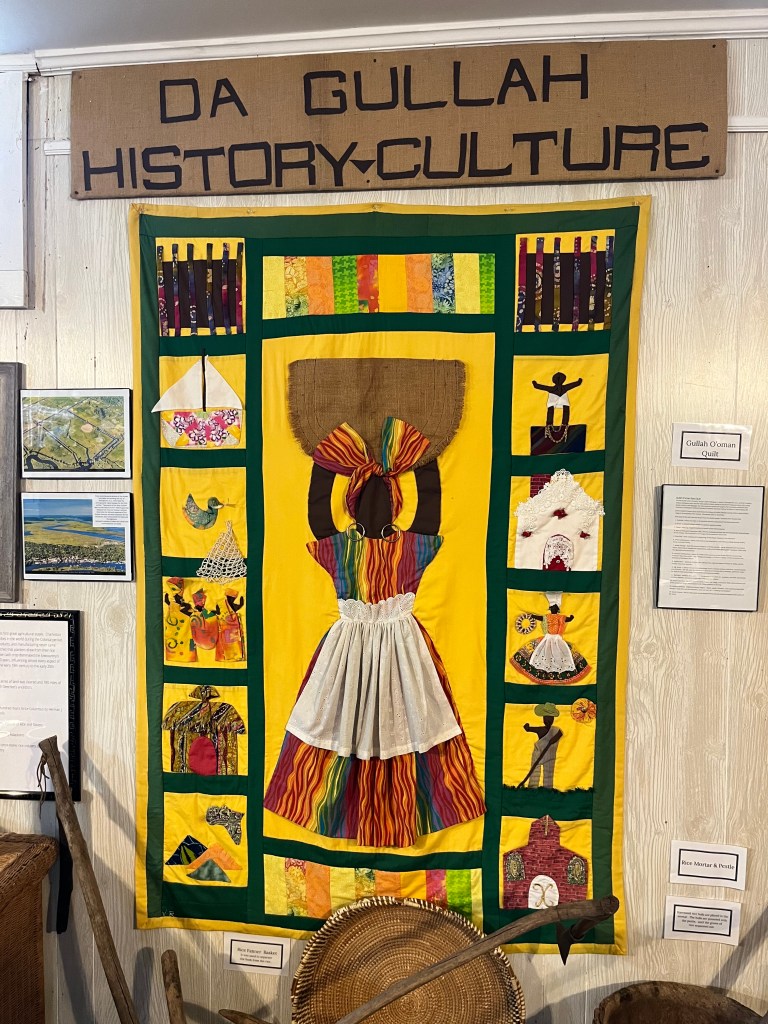
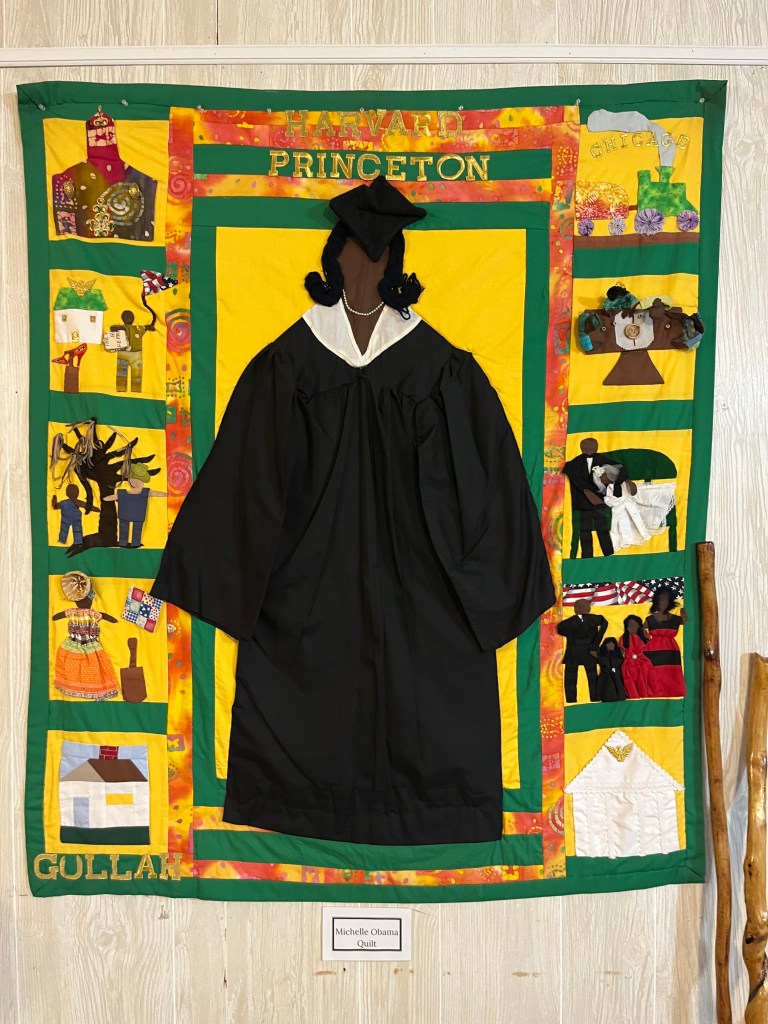
Quilts and tools and magnificent sweet grass baskets adorn the Gullah Museum in Georgetown SC. From bottom left to bottom right, each quilt tells a story. The one on the right is the Michelle Obama quilt, telling the story of her enslaved ancestors moving north in the great migration, her going to Princeton, marrying Barack, and, from a slave cabin, moving into the White House. If that doesn’t make you tear up, nothing will.
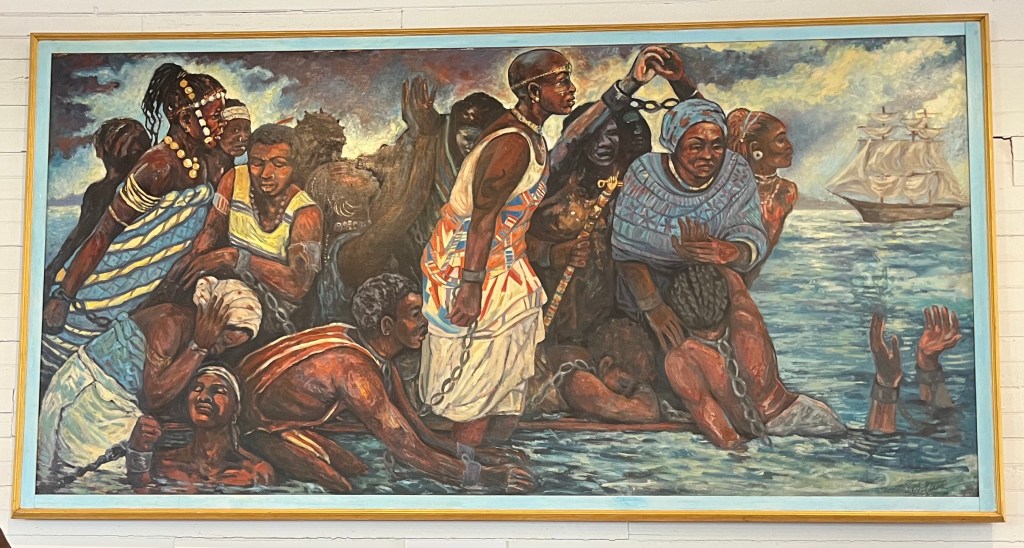
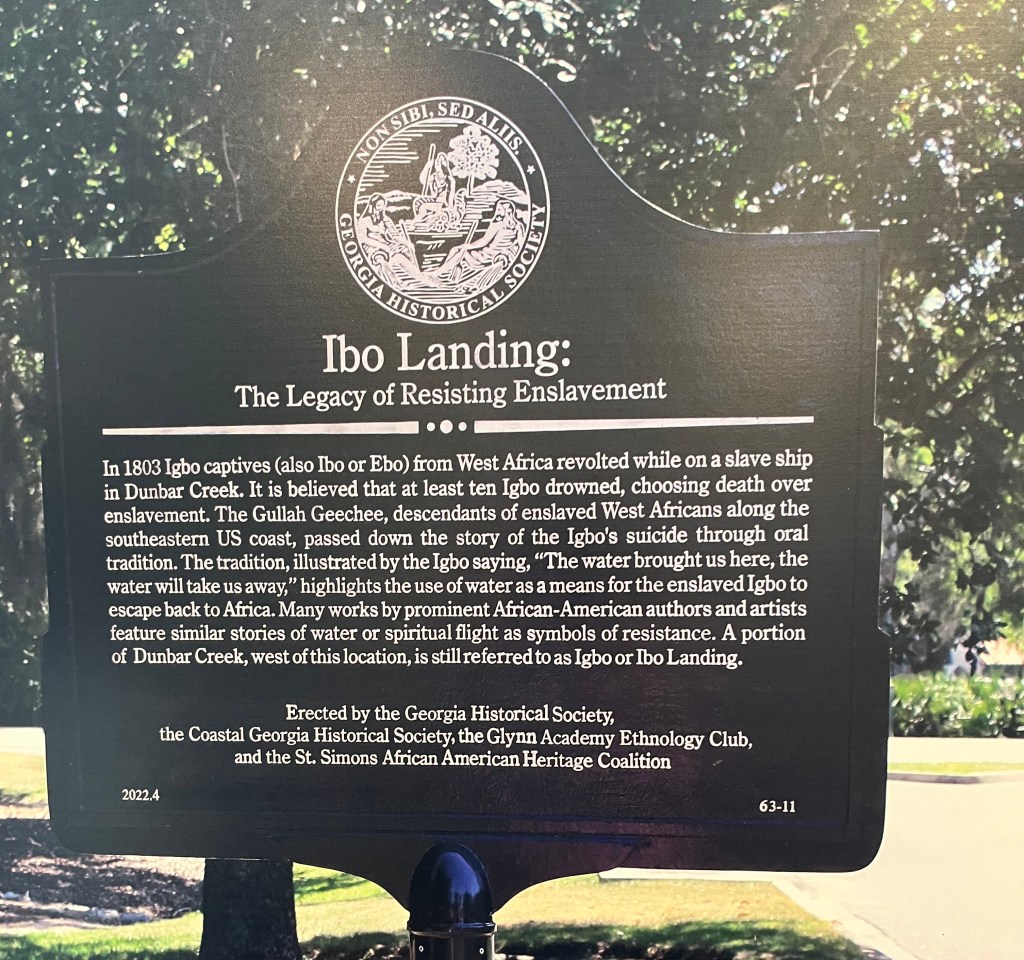
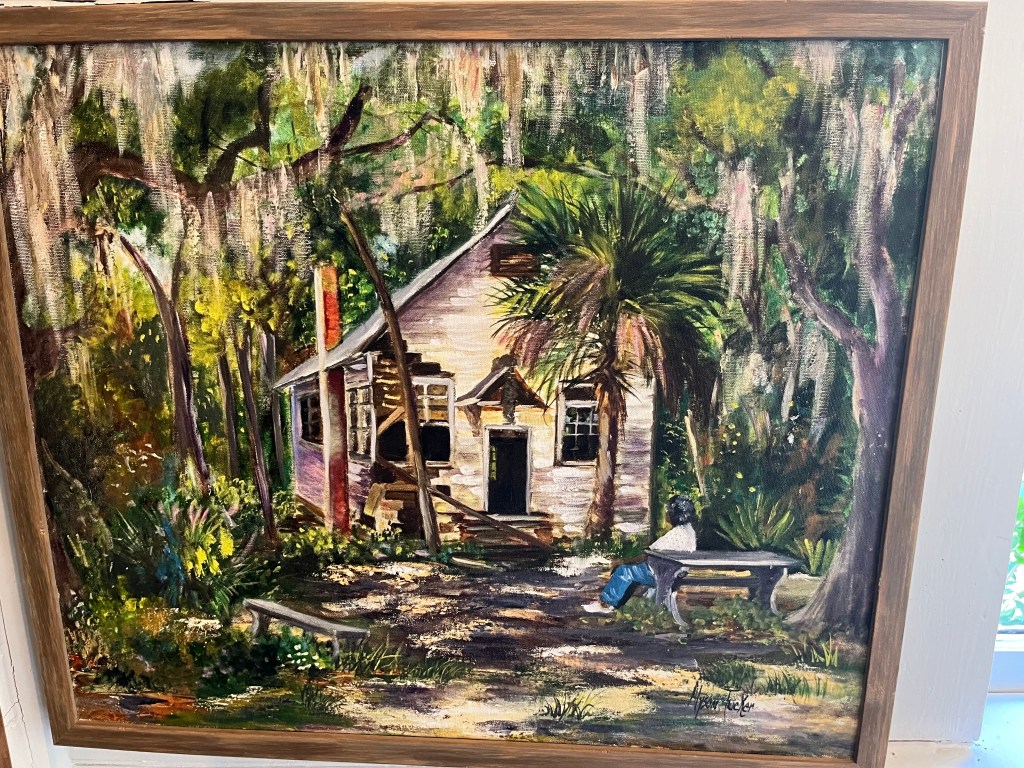
A painting and historical marker at the Harrington School in St. Simons tells the story of slaves drowning themselves in Dunbar Creek at Igbo Landing (or Ibo or Ebo, depending on the spelling) to escape the horror of slavery. The marker tells the story. The painting shows the story. The link following the next two photos shows a “Ring Shout” by the “Gullah-Geechee Ring Shouters” remembering the story.

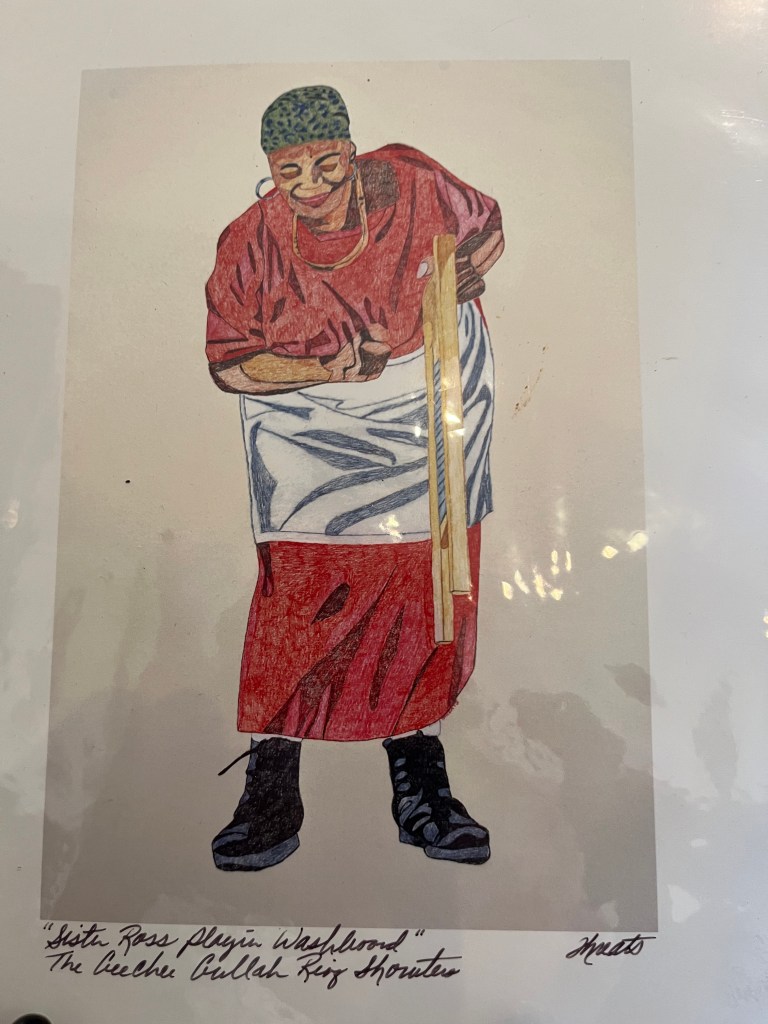
Twenty-five or so years ago, Rebecca and I celebrated our anniversary by going to Tanglewood and spending a weekend in Stockbridge, Massachusetts. In Stockbridge, we saw a photo of a very pensive John Lee Hooker in a display case that we fell in love with. We asked about it and learned that the photographer, Clemens Kalischer, then in his 90s, still operated a small studio there. We hunted him down and spent a few hours jawboning. He told us about taking the photograph at a symposium at the Music Inn in Stockbridge in 1954 tracing the roots of American blues music. He had a single print of the photograph in his studio and an old matte. He erased the writing on the old matte, re-signed it, and put it into a used frame. It hangs in our living room as one of our most prized possessions.
The picture shows Hooker, hand on forehead, beneath a blackboard containing a map of the evolution of the blues. I knew most of the early influences on the blues – marches, hymns, reels, jigs – but I had never heard of a “Ring Shout.” Now I know. It is from the Gullah-Geechee tradition that has influenced not only blues, but also spirituals and zydeco music, with the percussion coming largely from a washboard. Just as I had done with the picture of John Lee Hooker, I fell in love the with the picture of “Sister Ross Playing Washboard” as part of “The Geechee Gullah Ring Shouters.” This link will take you to a video of the Gullah Geechee Ring Shouters singing about the drownings at Ibo (Igbo) Landing.
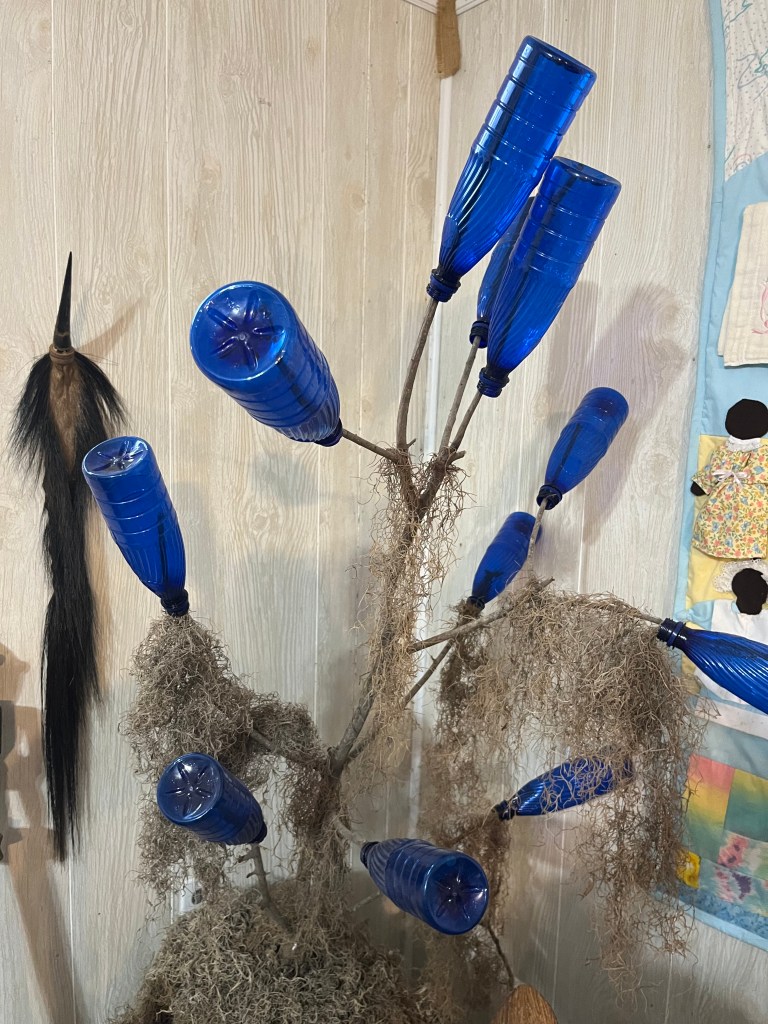
In my decades of traveling around the south, I have happened across any number of “blue bottle trees.” I have never known what they are … until now. The tradition has its roots in West African “Hoodoo” and dates back more than 1,000 years: Blue bottles are talismans that ward off evil spirits! As the interpretive explanation in the Georgetown museum explained, “Evil spirits are afraid of water so blue bottles ward them off. If the evil spirits enter the bottle, their fear traps them inside, and in the morning when
the sun comes up, they will be destroyed by the sunlight. If you’re not sure the light of day has really done its job, you can cork the bottle, take it to the river and throw it in the water. An evil spirit has no
chance against the river because they fear it.”
Tabby Construction
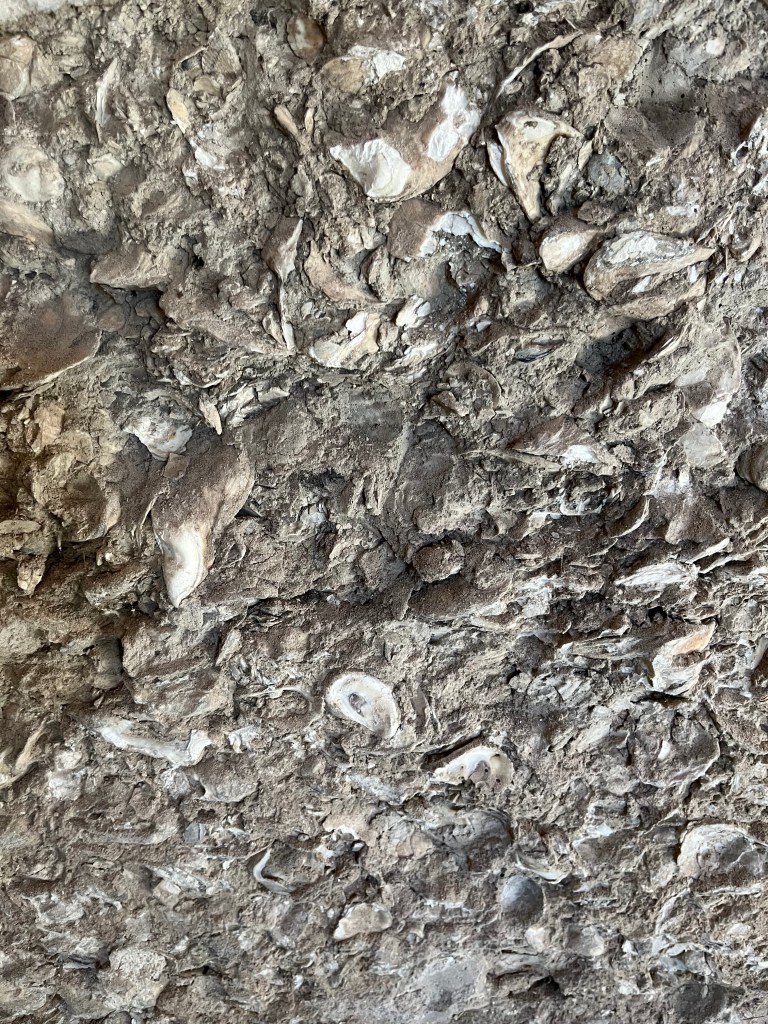
In addition to living in typical wooden shacks, the Gullah-Geechee lived in homes built of “Tabby,” a unique form of South Georgia concrete. They cooked seashells until they crumbled, which provided lime. They mixed the lime with sand, water, and intact shells to make a form of concrete. The unground shells stay visible in the long-dried slurry. The tabby photo is of the walls of a slave family’s home at Ibo Landing on Dunbar Creek in St. Simons. In 19th-Century construction, the “Tabby” was the concrete itself. In modern architecture, “Tabby” is a faux aesthetic technique that involves embedding shells into mortar on the exterior of buildings.
 myinnersociologist
I had no idea about the Geechee culture. You two find the most interesting things on your travels. Love your stories. It reminds me of the Garifuna culture in Belize. I was lucky to be able to learn a bit the Garifune it while filming in Belize.
LikeLiked by 1 person