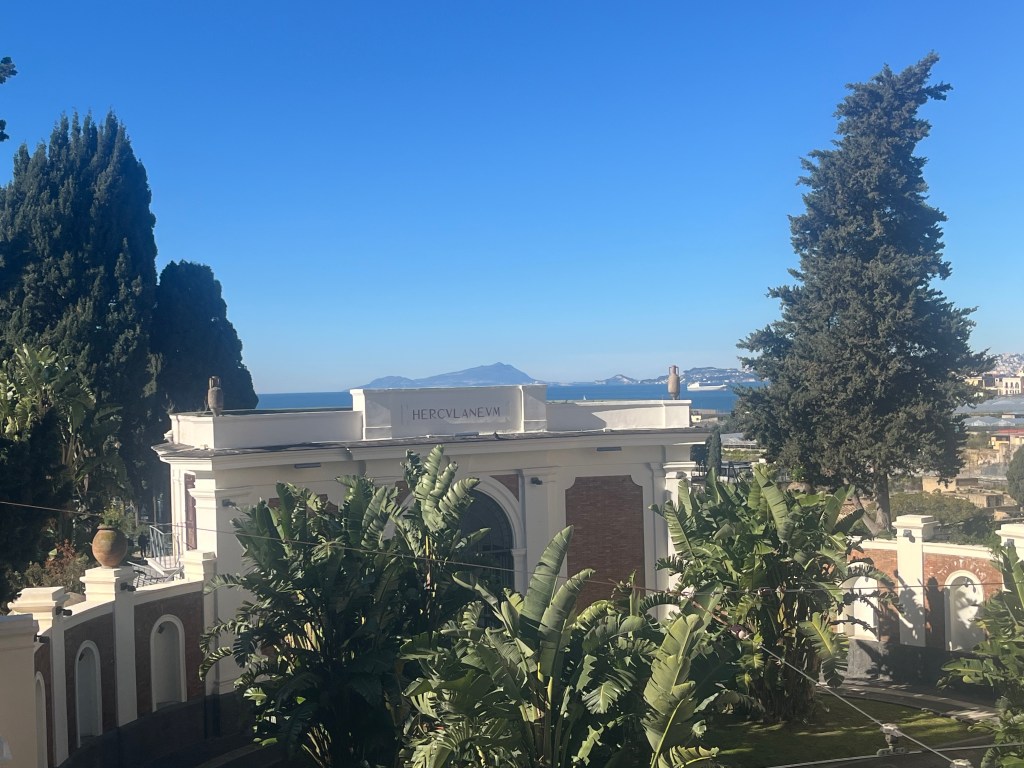
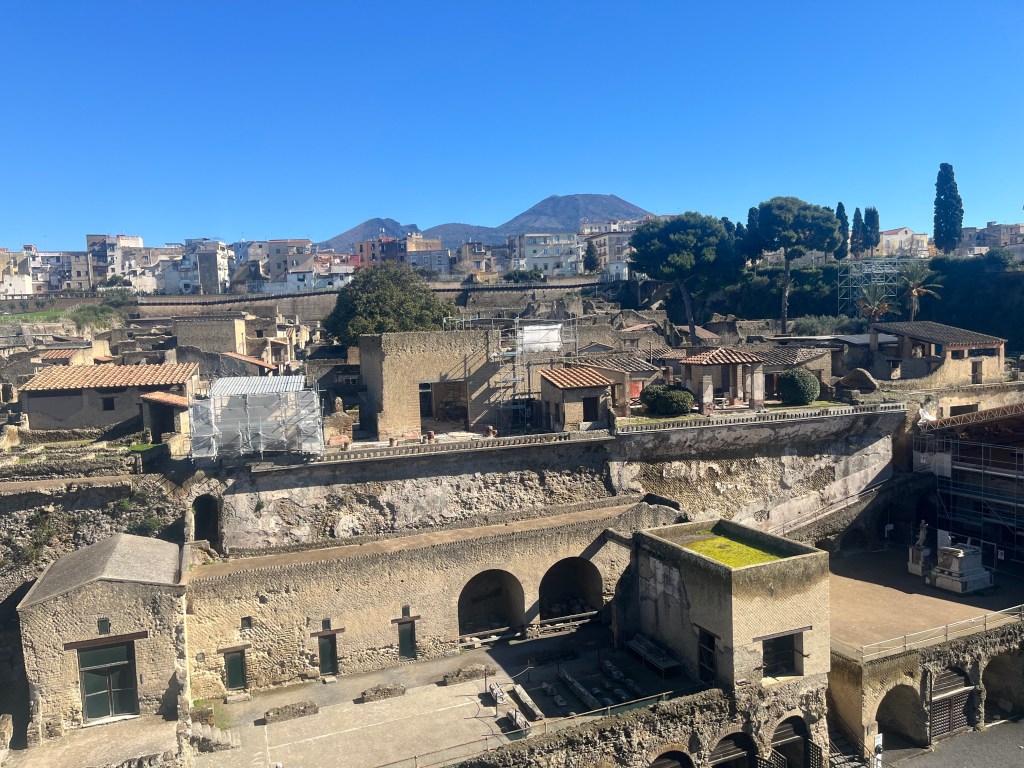
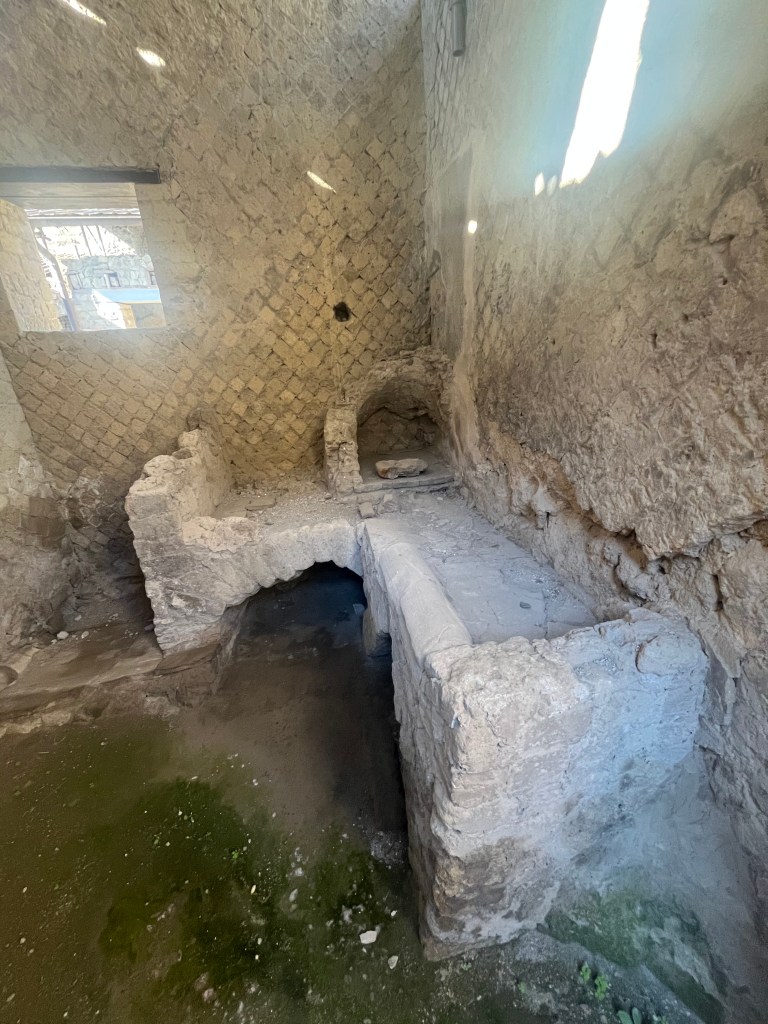
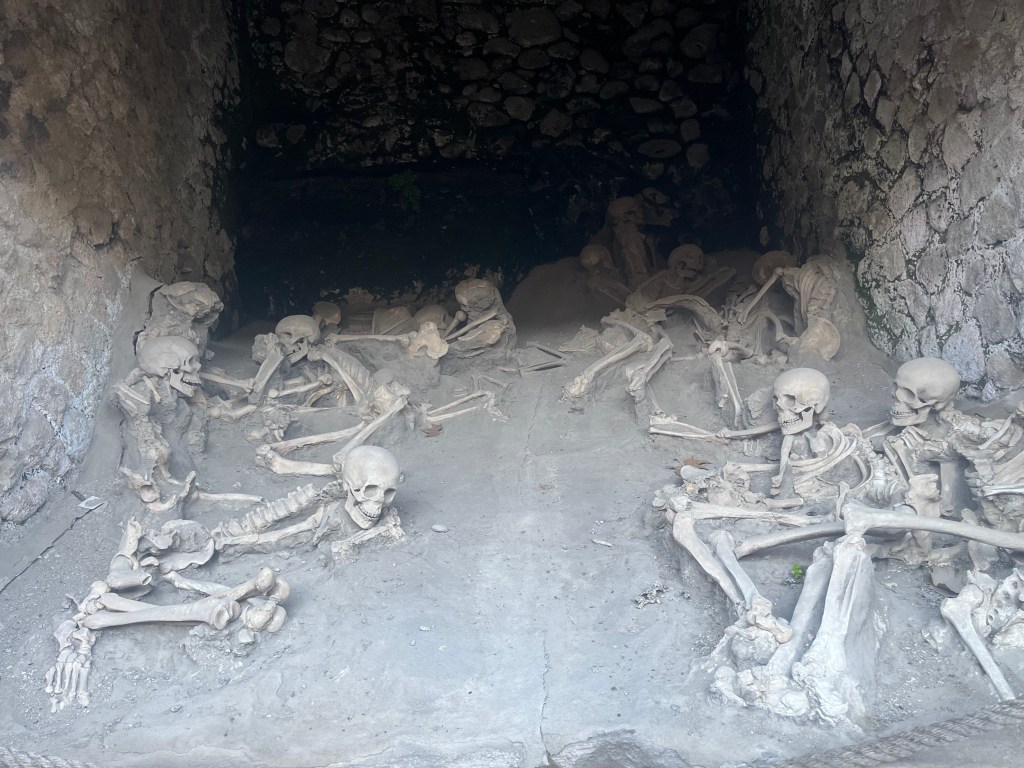
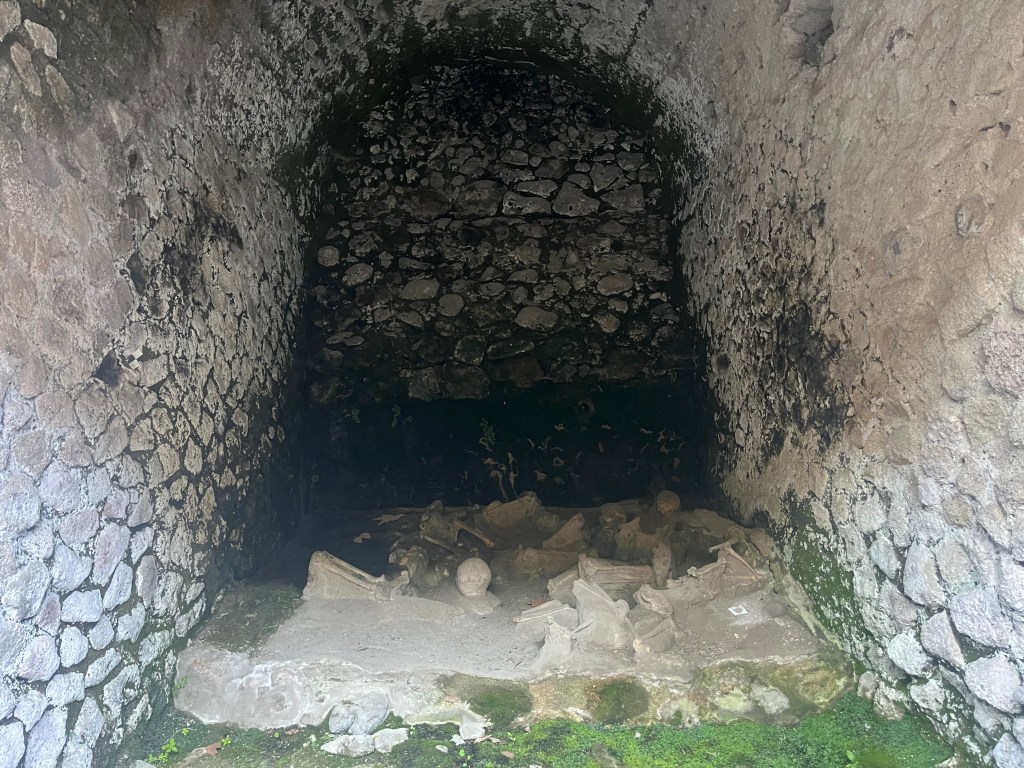
The archways at the far bottom of the right-hand photo were on the Mediterranean shore 2,000 years ago. The skeletons of 300-or-so people were found in those chambers (fornici) waiting to be rescued, still grasping their most prized worldly possessions.
OK. Maybe it was October 24. Pliny the Elder wrote August, but the historians think the evidence points more toward autumn because of stuff like ripe pomegranates. That was almost 2,000 years ago, so who really cares about two months.
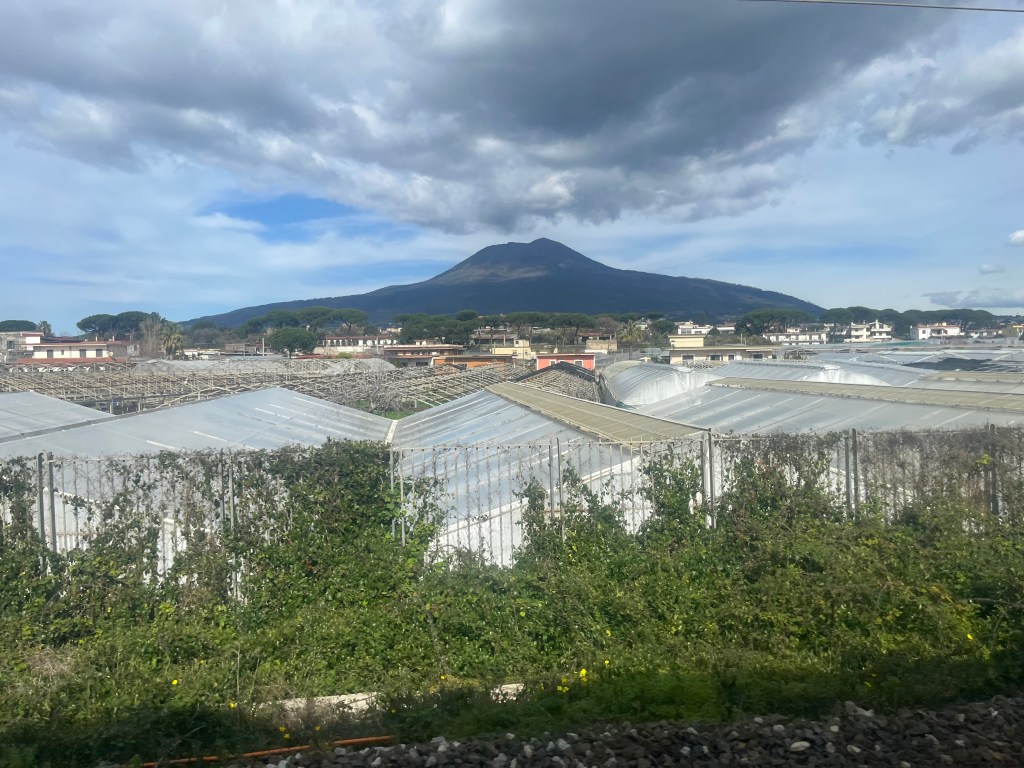
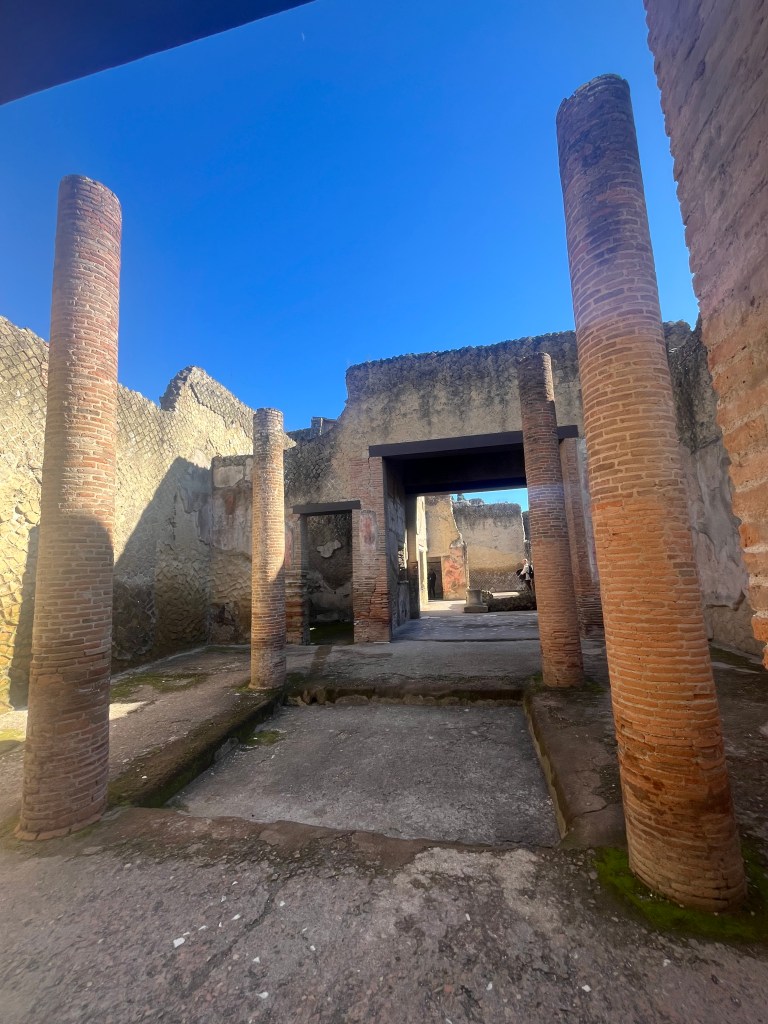
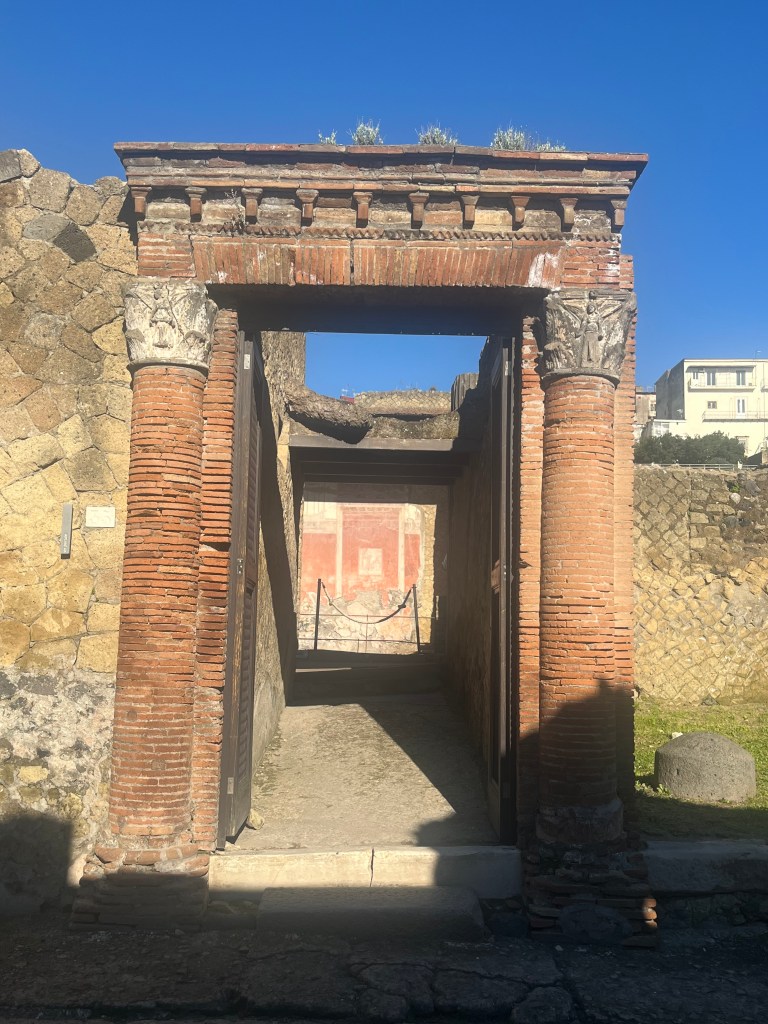
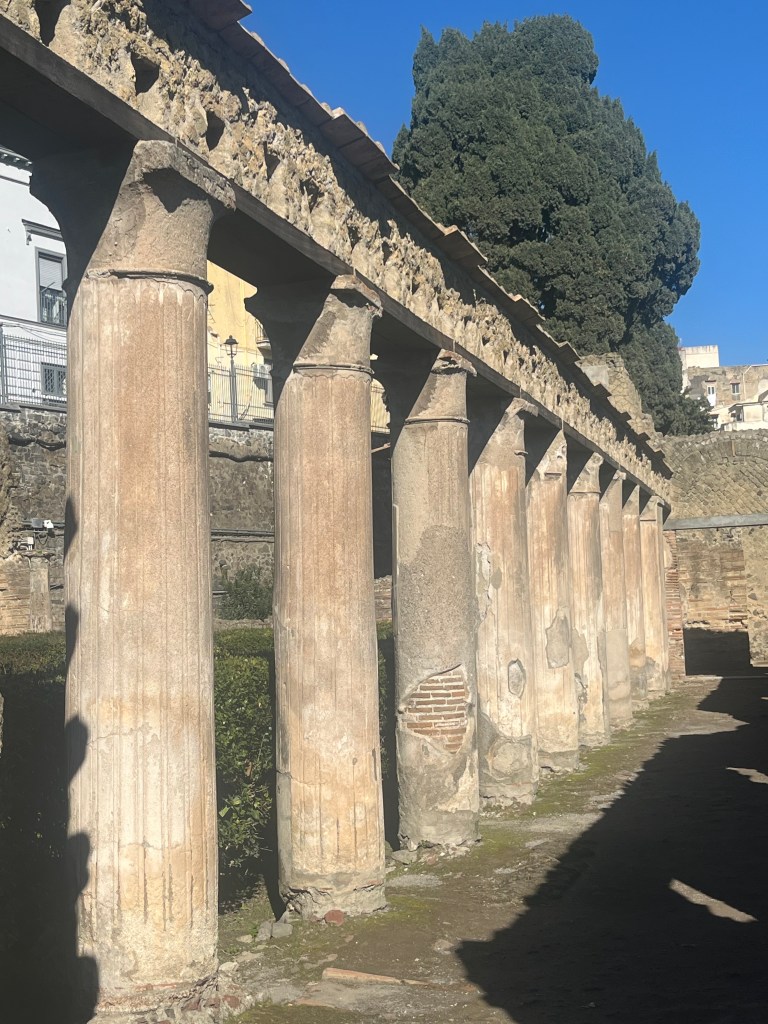
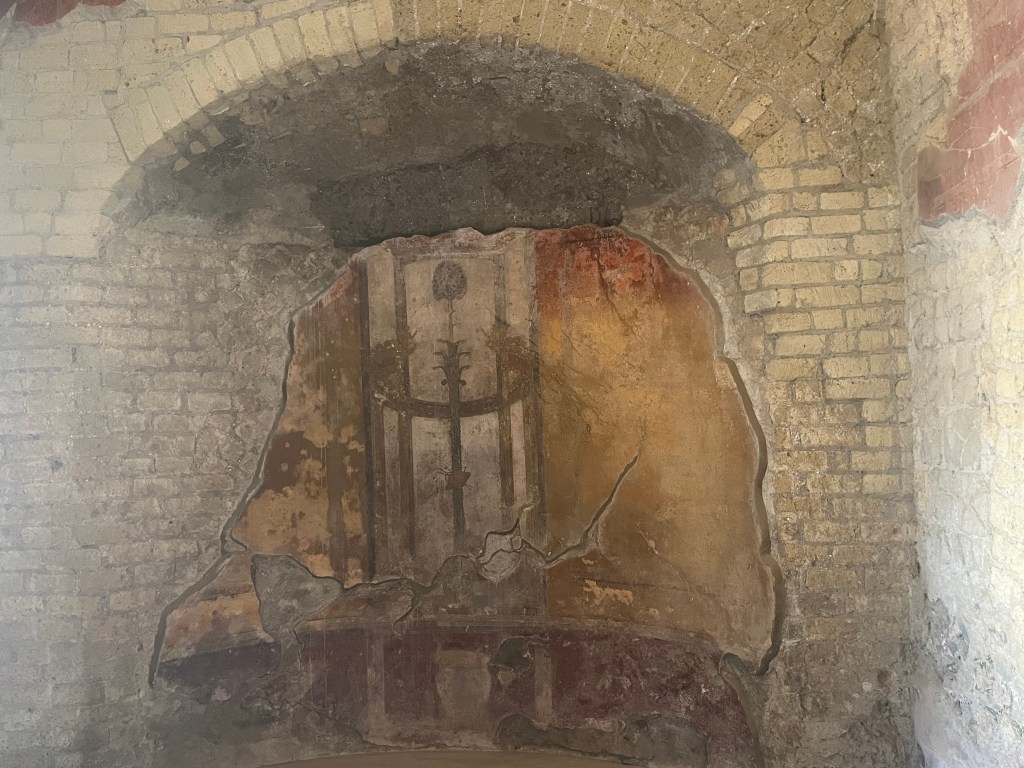
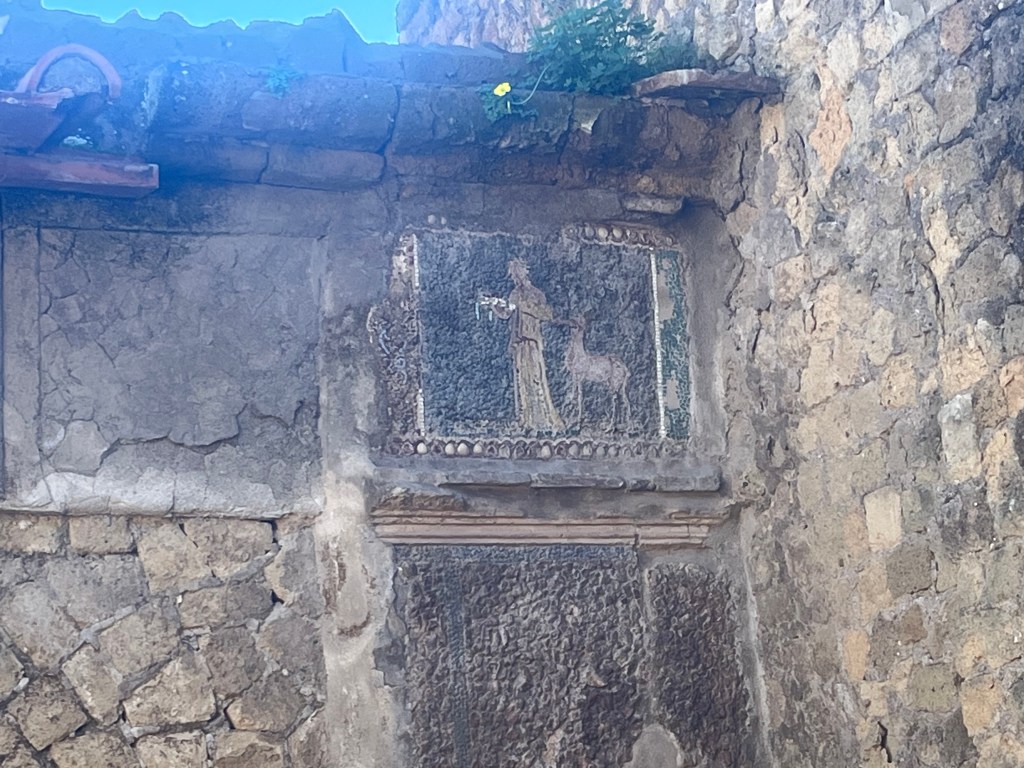
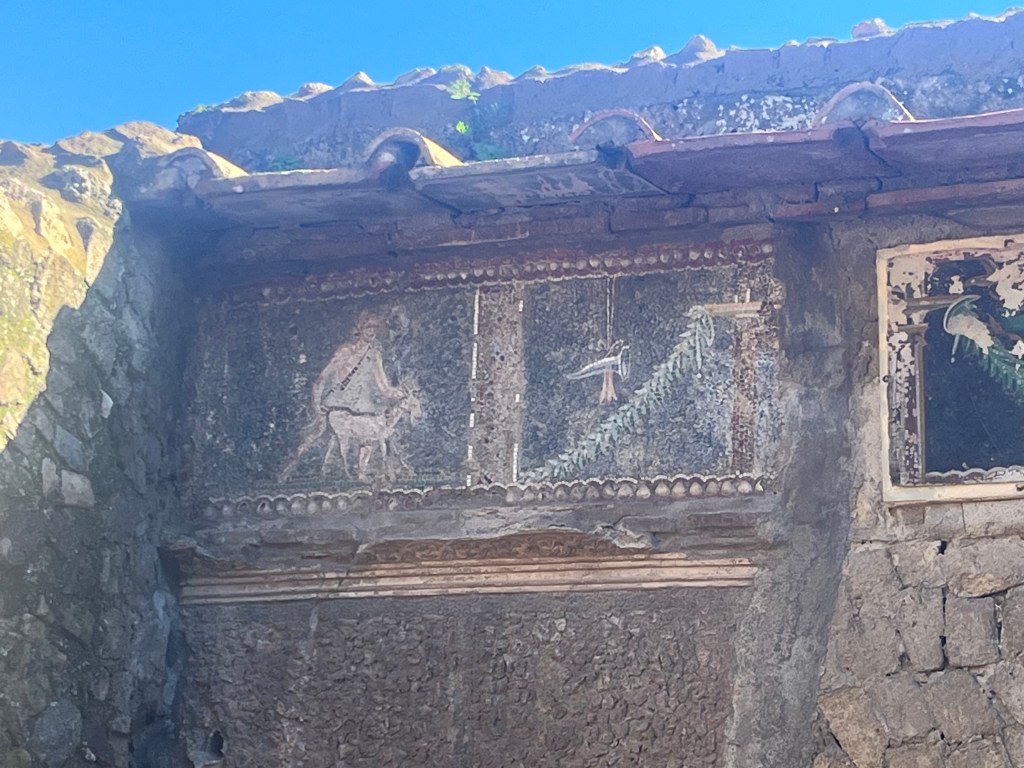
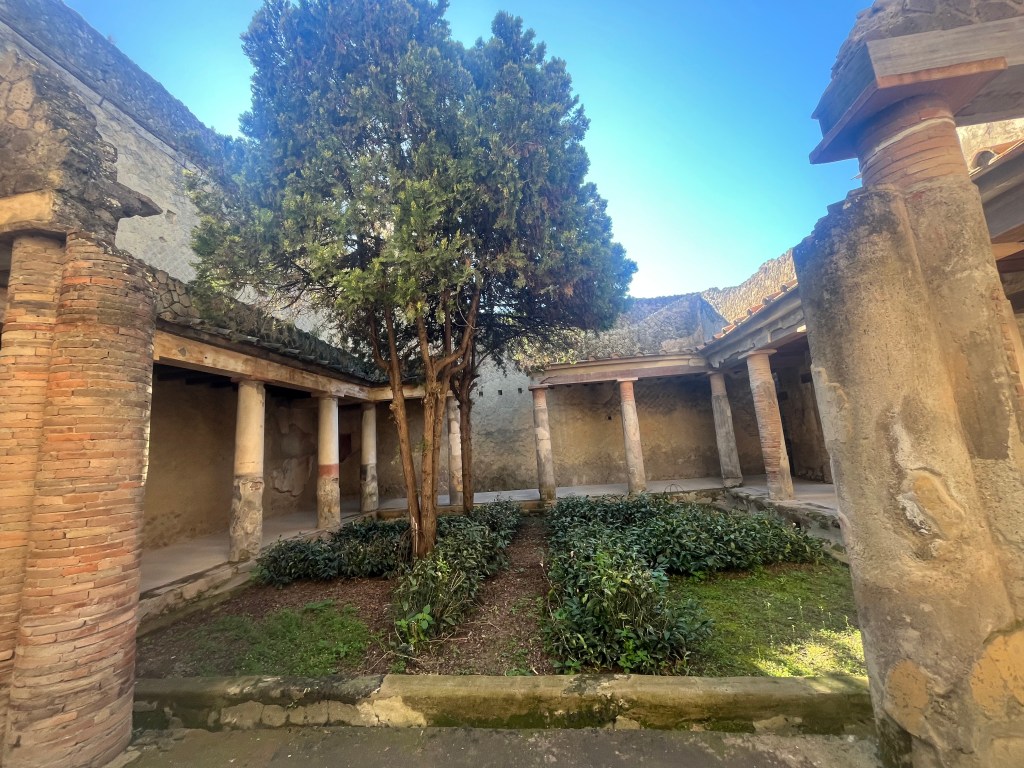
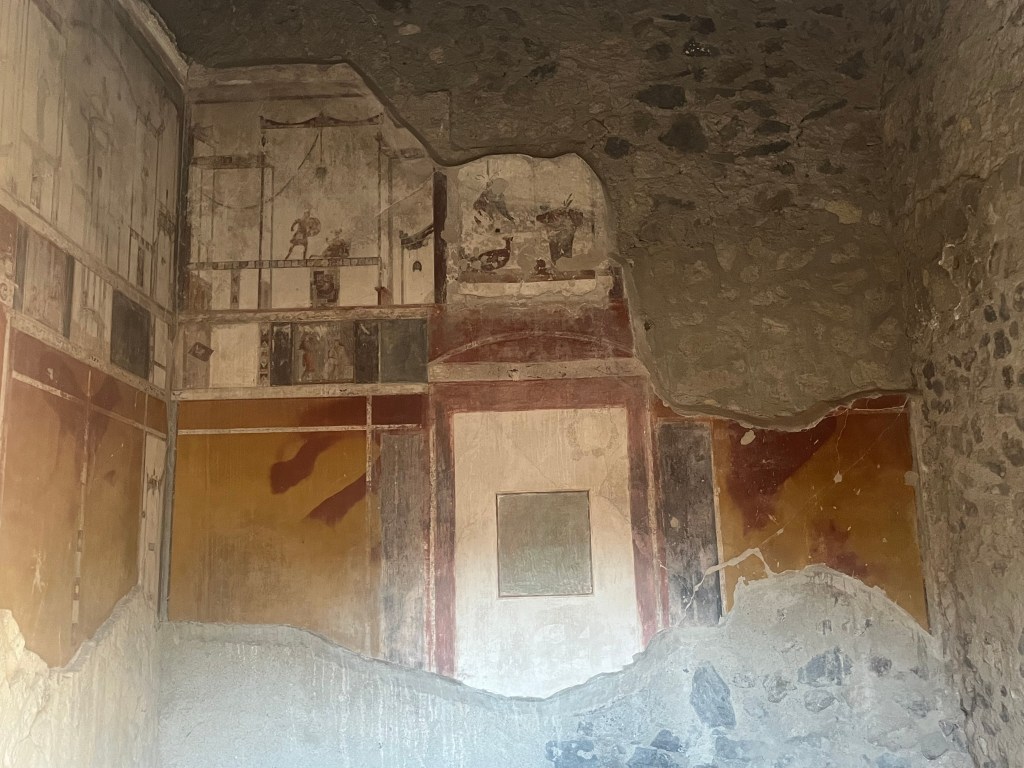
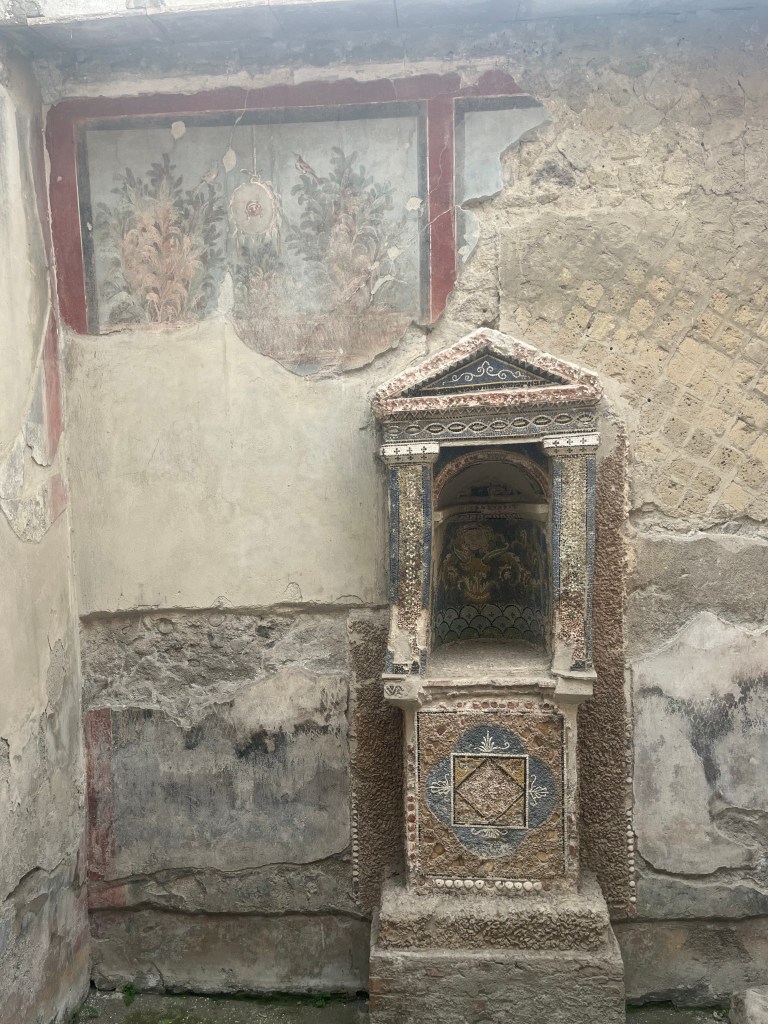
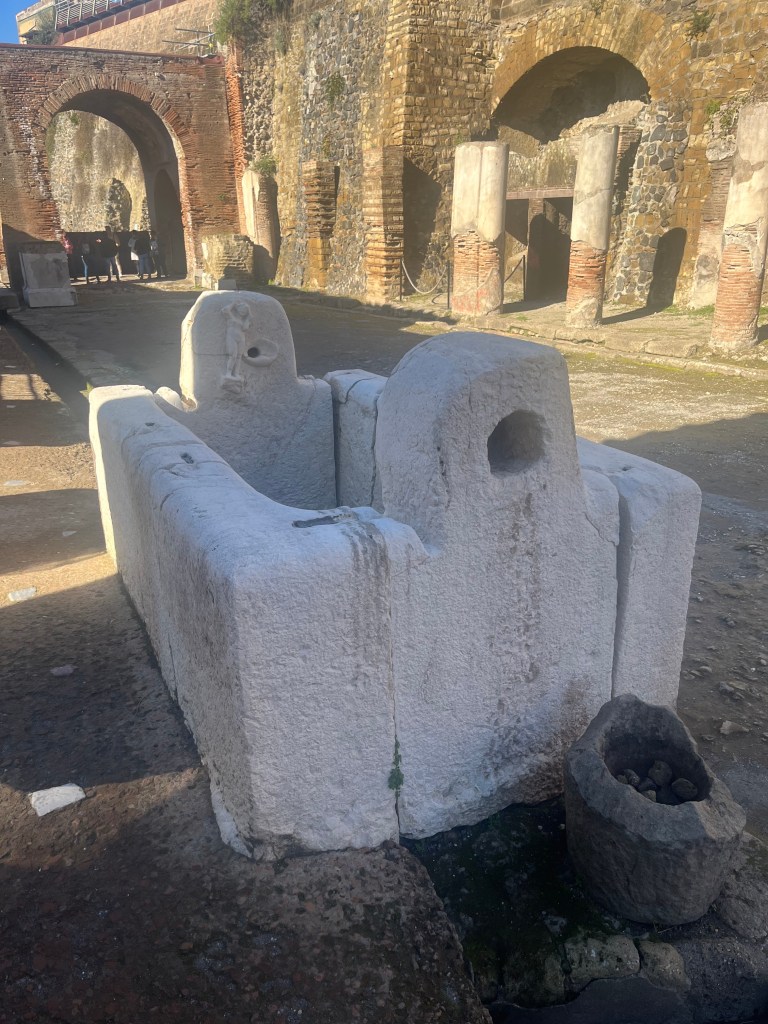
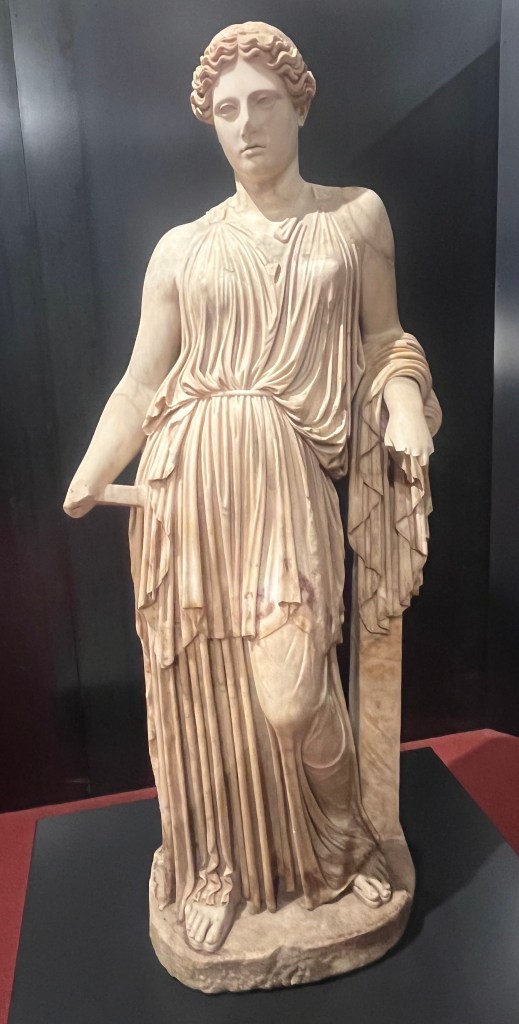
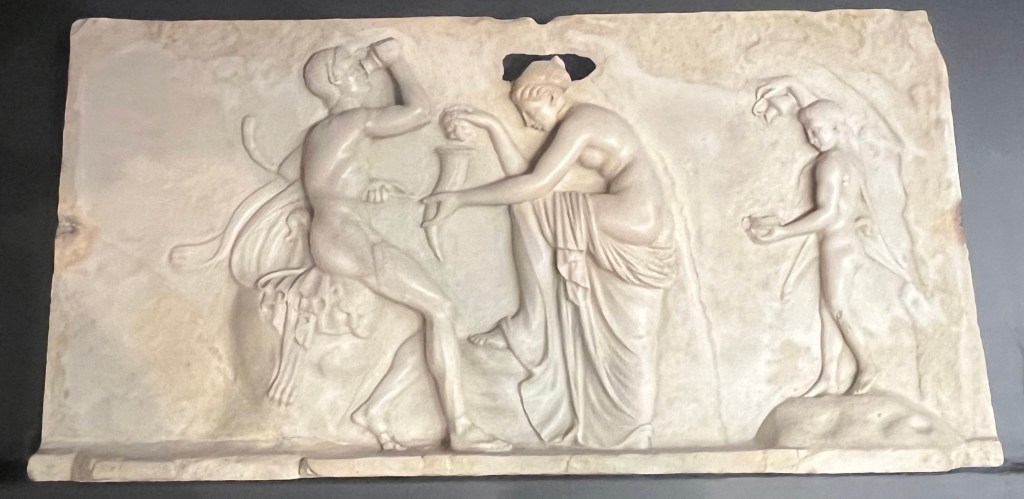
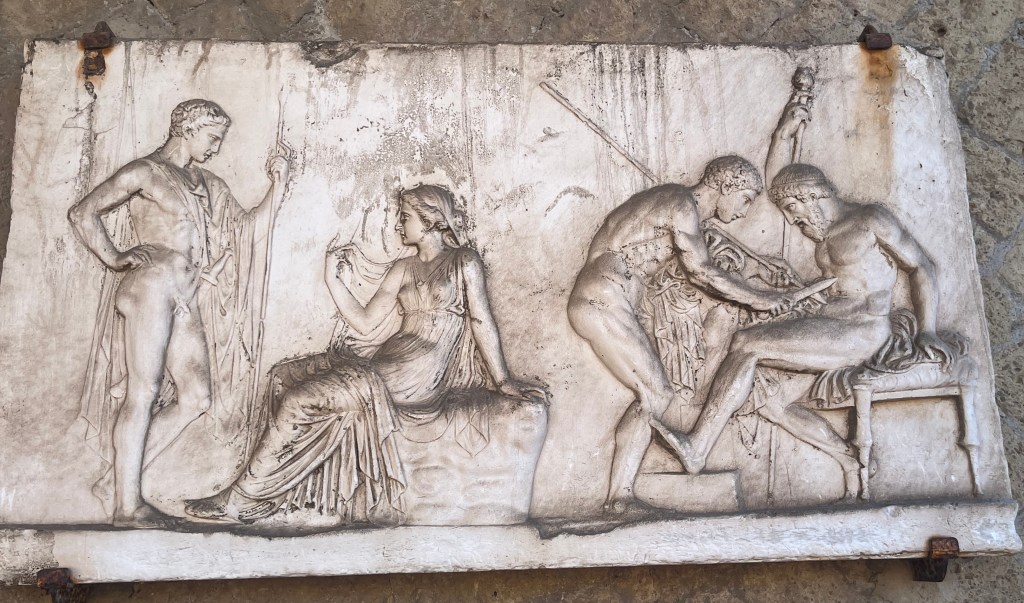
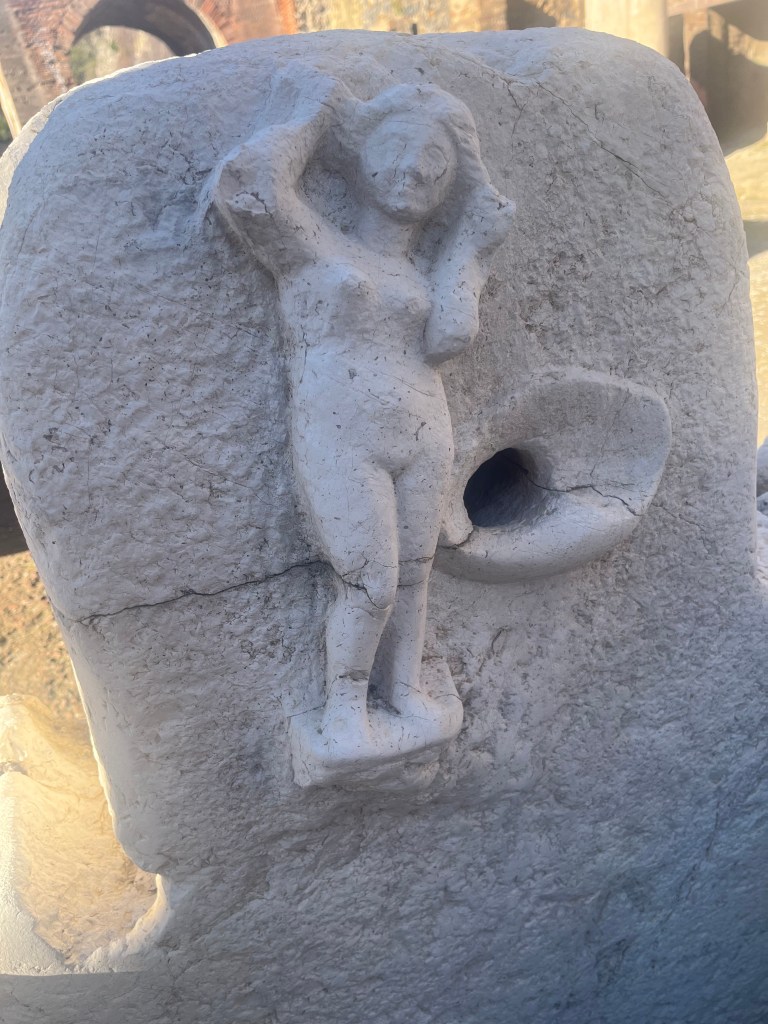
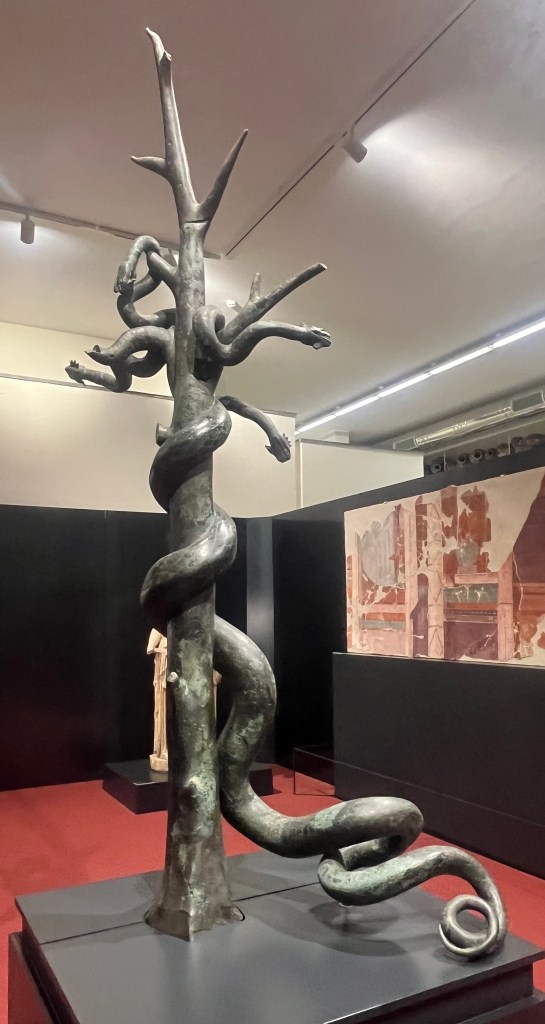
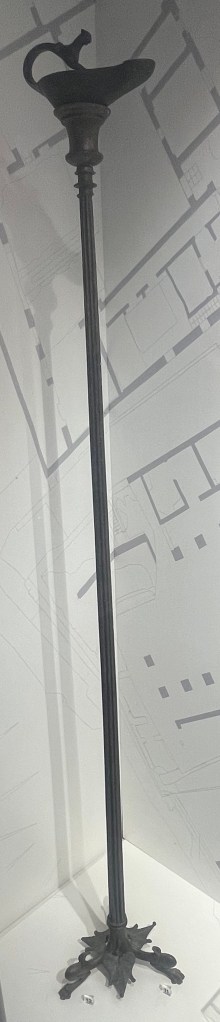
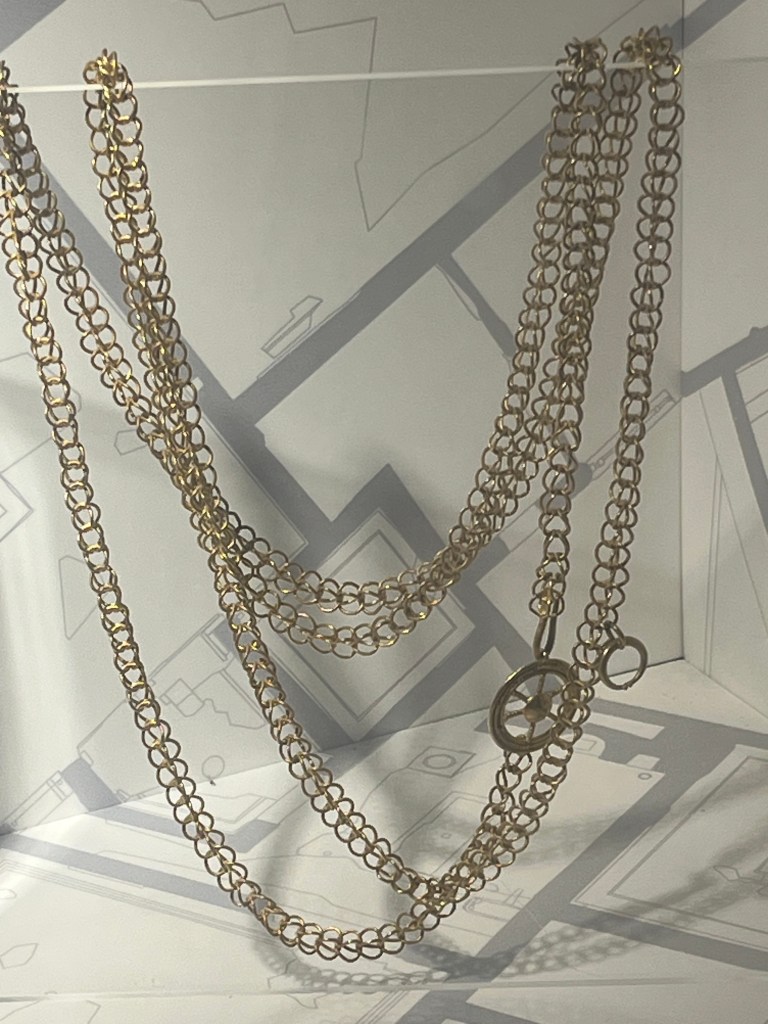
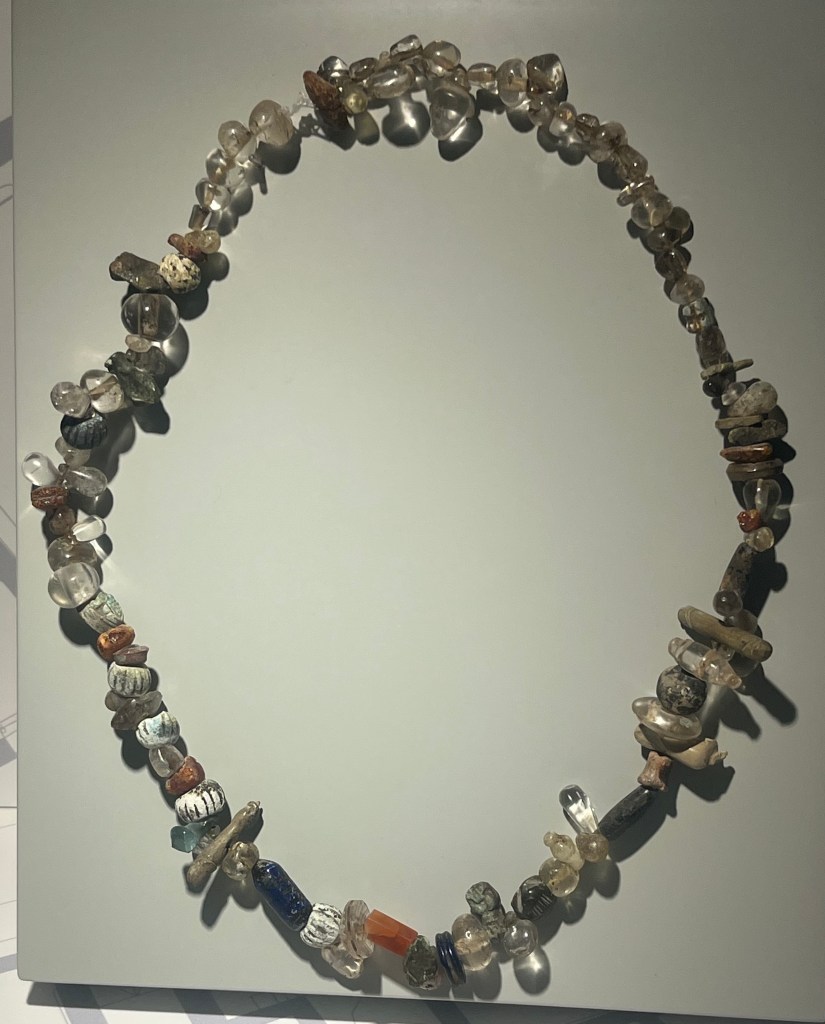
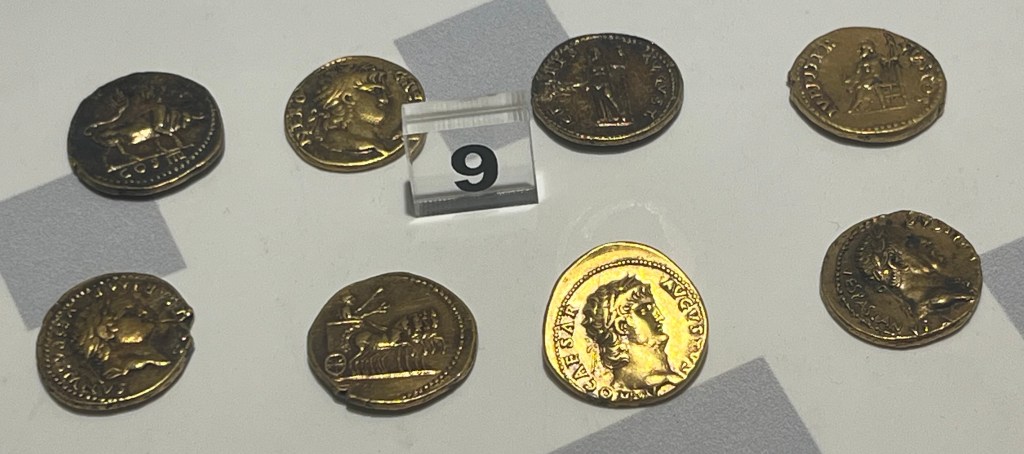
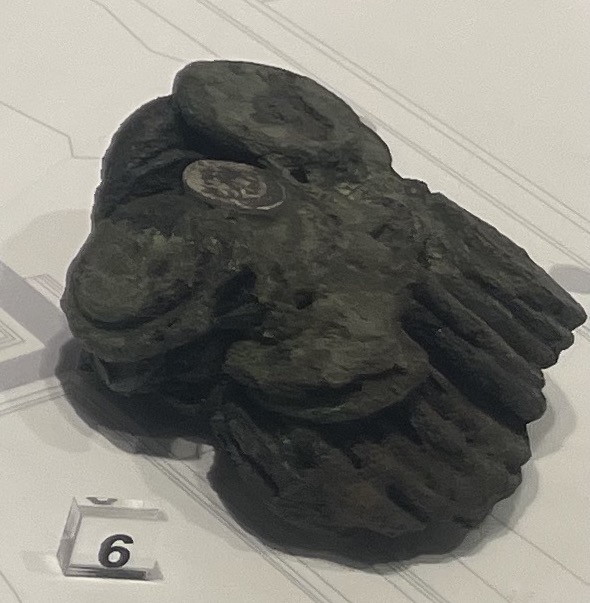
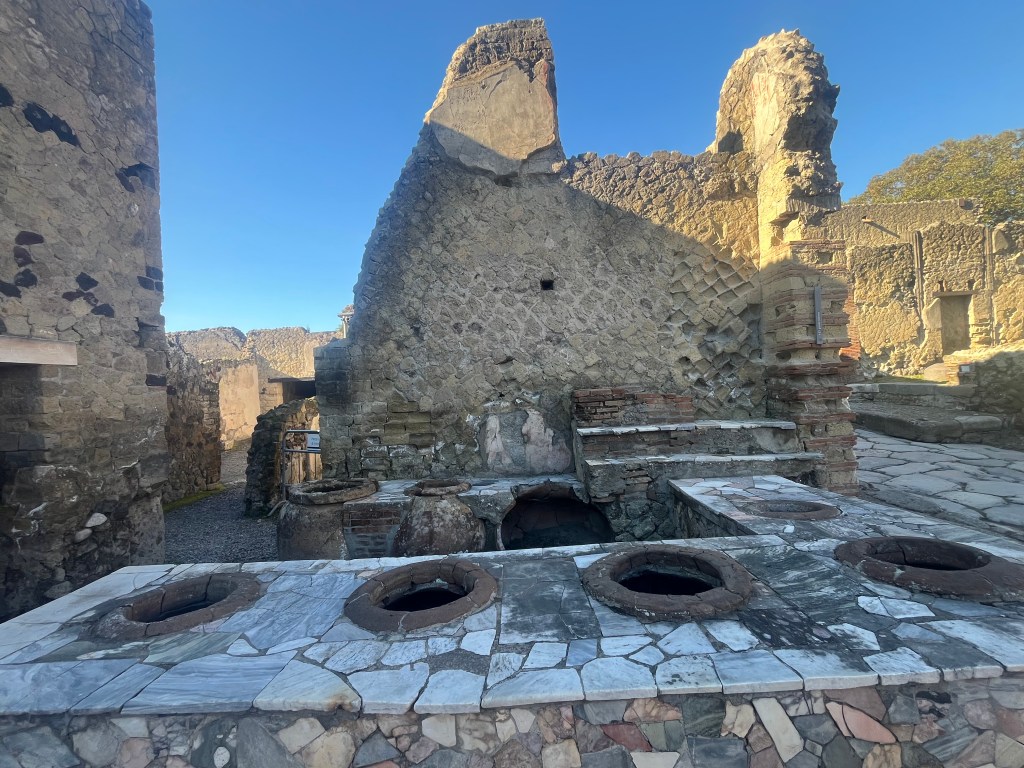
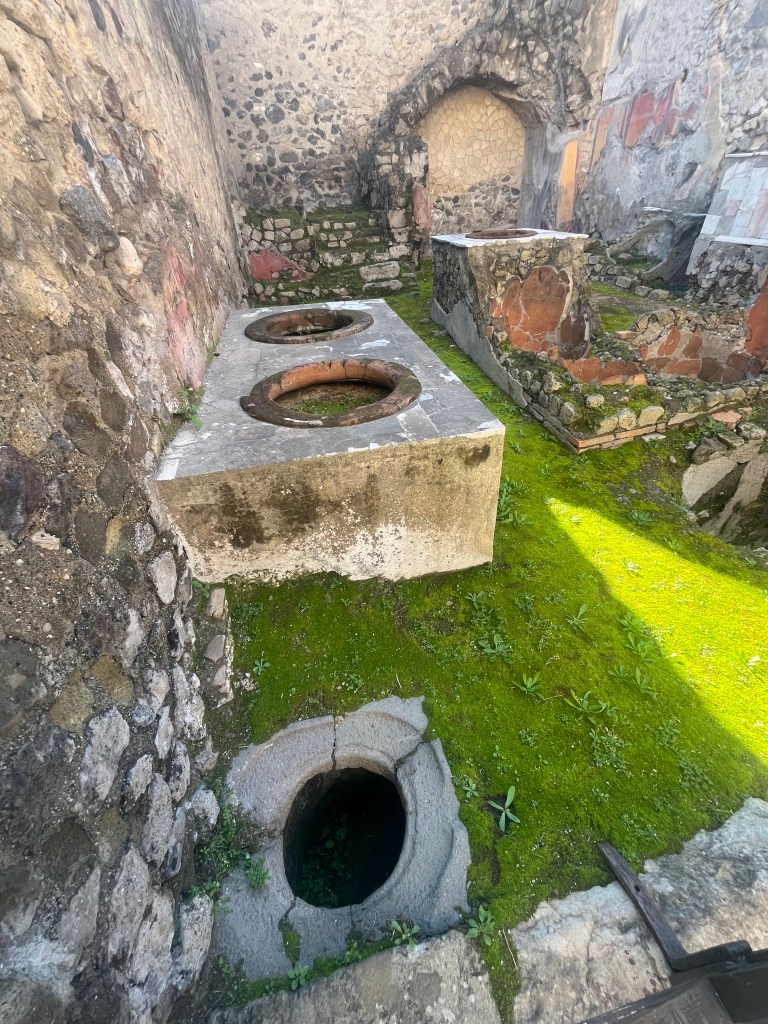
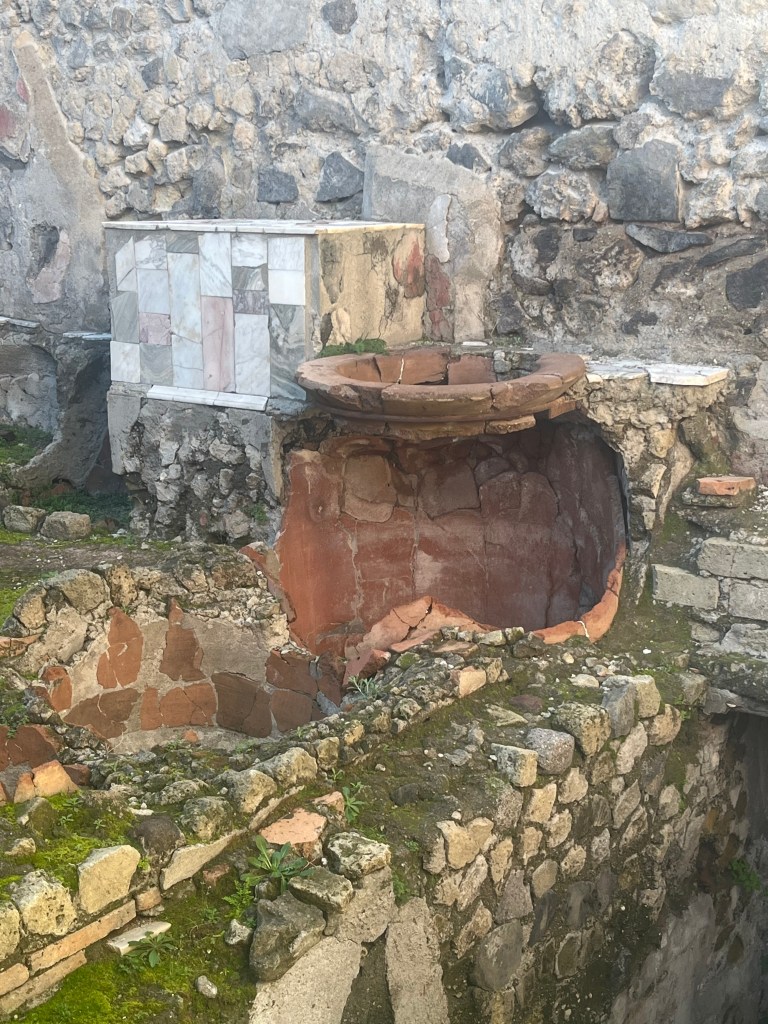
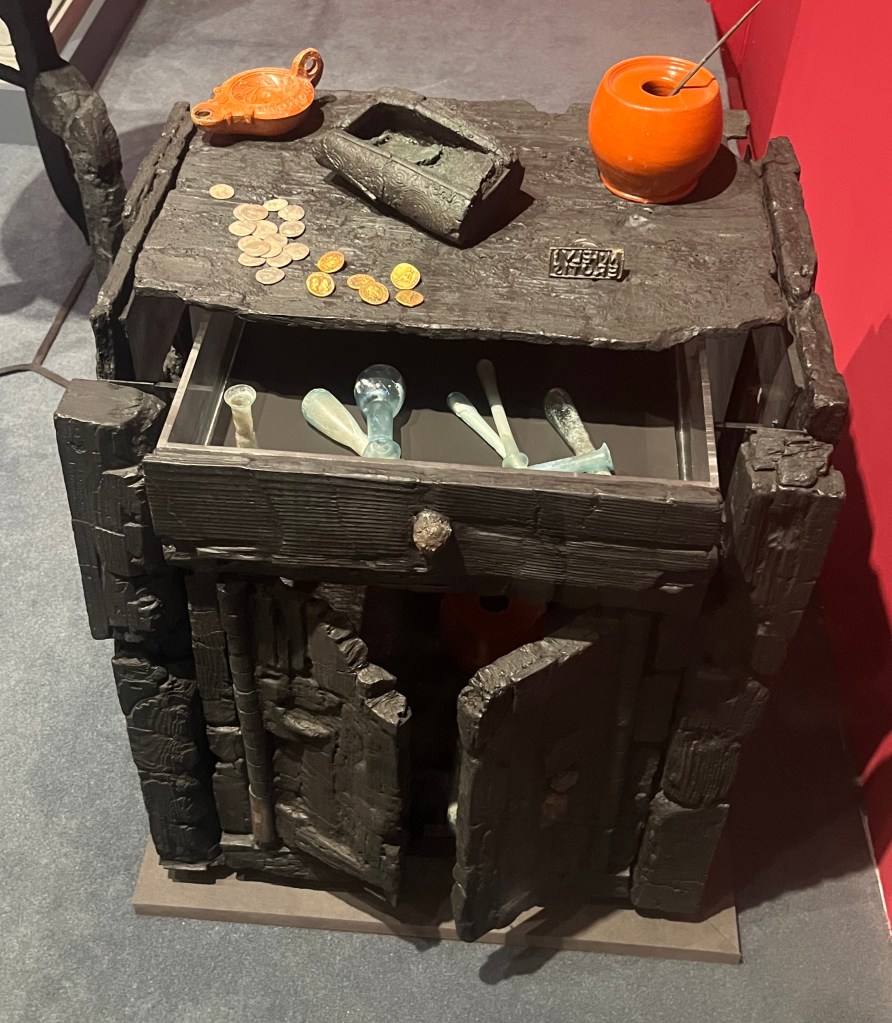
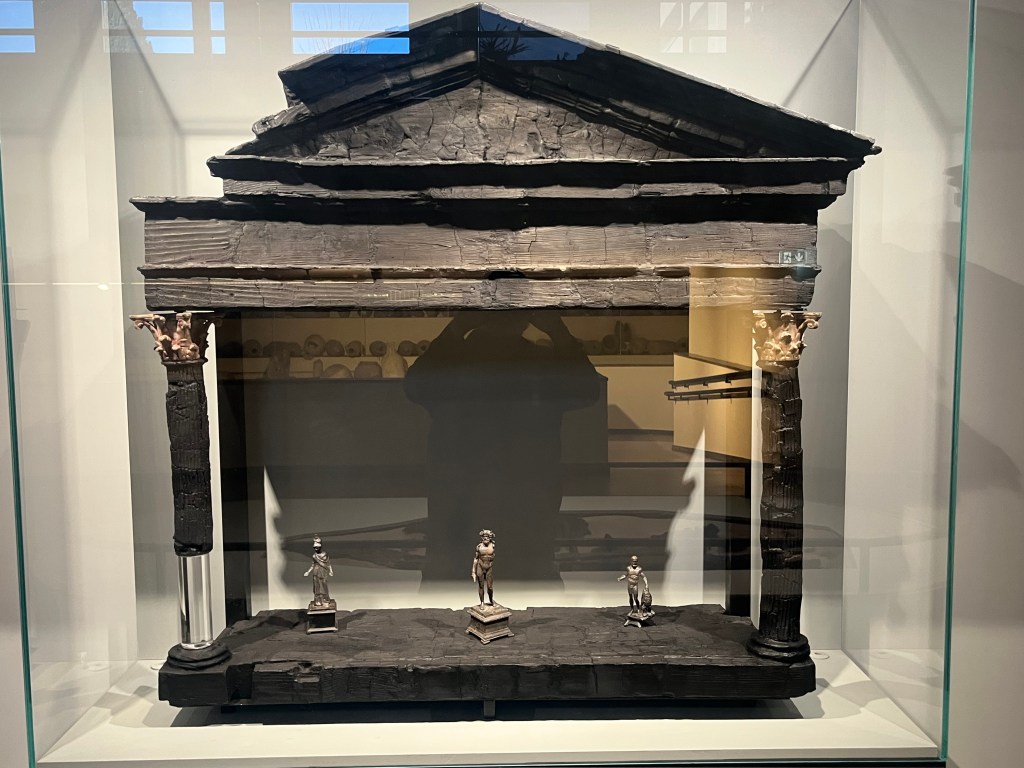
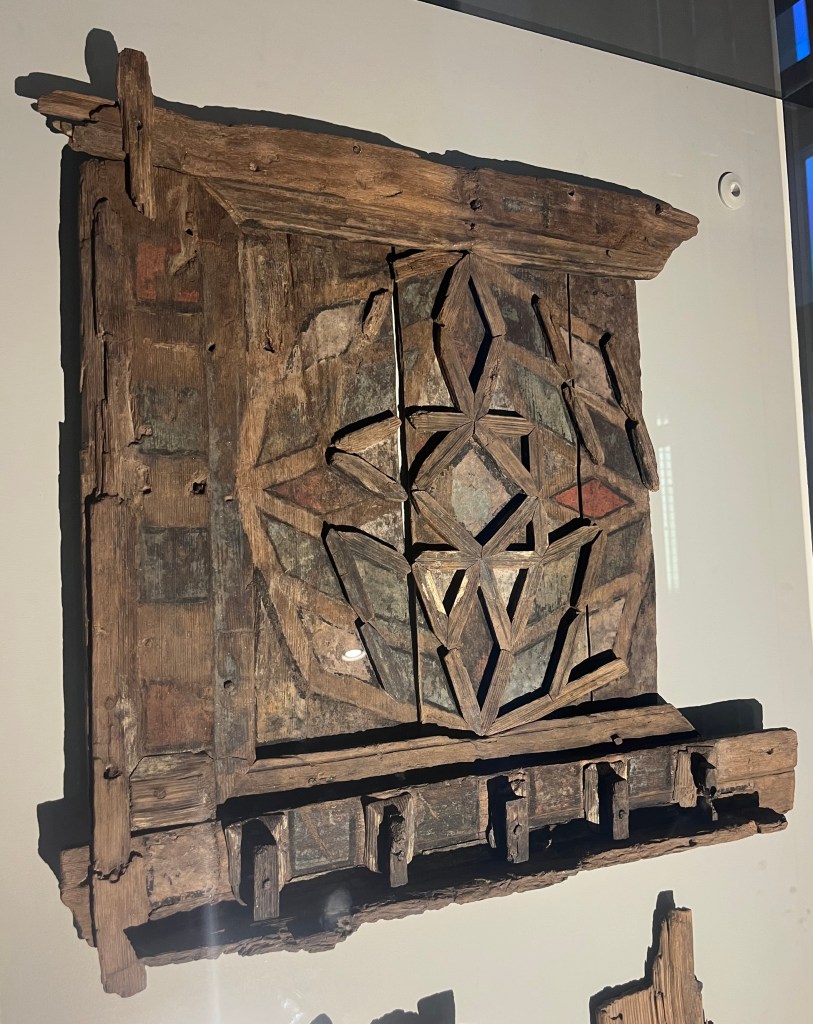
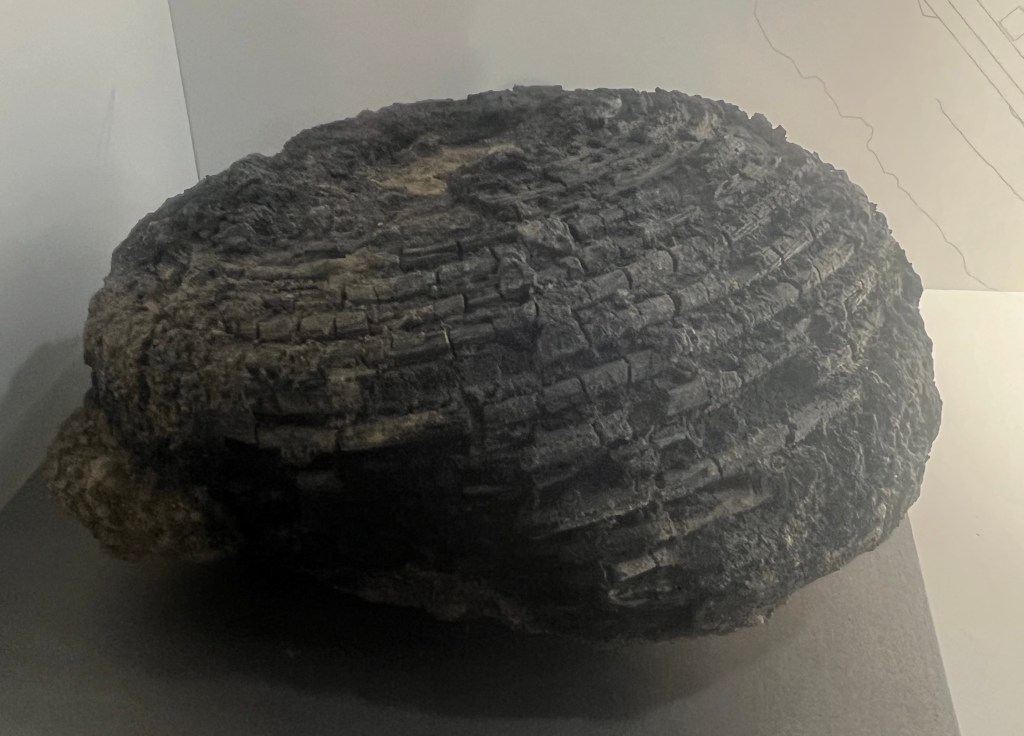
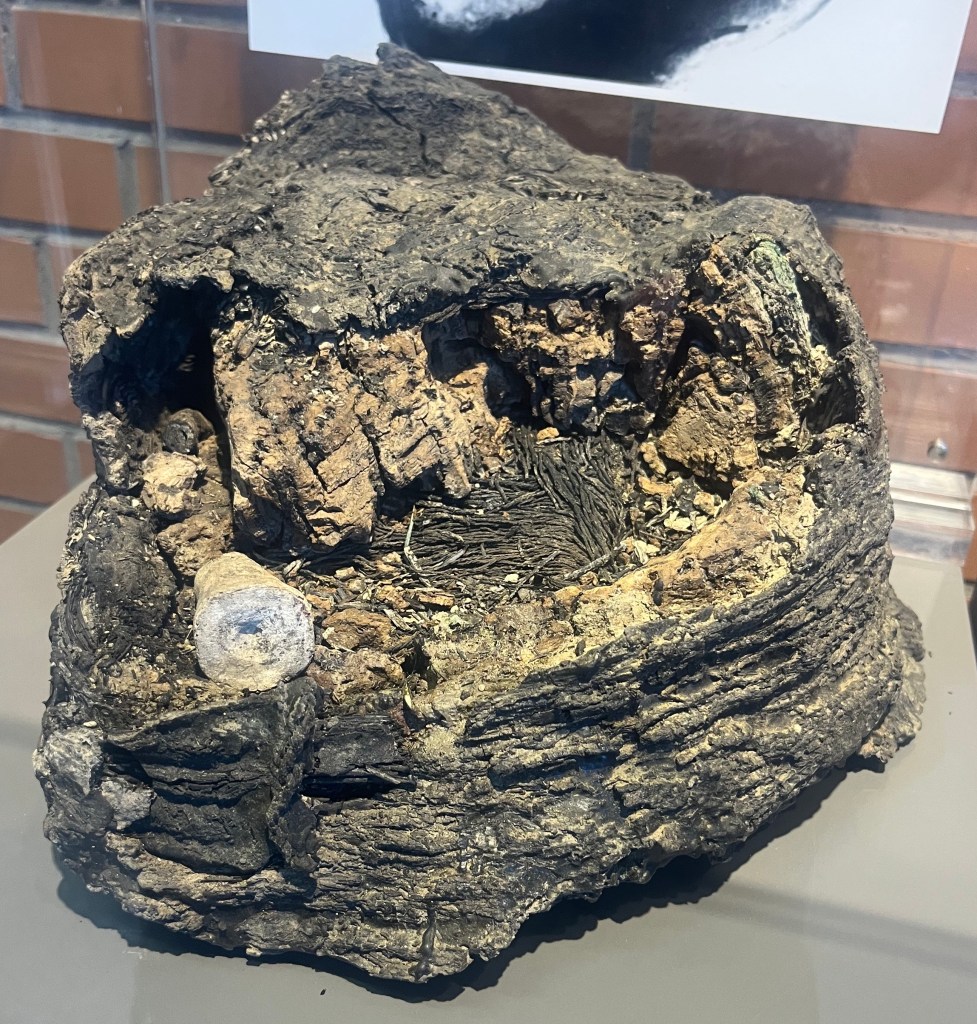
Regardless of the exact day, that is when Mount Vesuvius famously blew its stack, covering Herculaneum in “residue from a pyroclastic surge” … to be distinguished from the far-more pedestrian “ash” that covered Pompeii. A “pyroclastic surge,” I am learning, is a toxic brew of gases, ash, and intense heat that has no chance of being survived. The nature of a “pyroclastic surge” left even organic material –– wood, human tissue, and food –– intact and preserved. We ran out of time before we had a chance to visit “The Mostra,” where archaeologists have recreated the Roman diet of 79 and even created Roman recipes, but we did get to spend an amazing day at Herculaneum itself, a 12-acre-or-so archaeological site of unbelievably well-preserved buildings, art, jewelry, statuary, and other sundry antiquities.
In my humble opinion, we are really good travelers, but pretty lousy sightseers. We are way more interested in people than things. In 1978, a few years after I had moved to Boston, I still cared about stuff. At that time, the National Archaeological Museum of Naples arranged an international tour of relics from Pompeii. The Boston Museum of Fine Arts hosted the exhibit for about four months. The experience never left me.
Pompeii and/or Herculaneum were the one must-see sightseeing adventure on the trip. The two sites are right up the road from each other, both at the base of Mount Vesuvius, and both on the Mediterranean. Herculaneum is a tad closer to Naples. Pompeii is about three times larger, but Herculaneum is flatter, easier to walk, and better preserved … and at 12 acres, it is still damn big! Even better, Herculaneum is far less well-known and visited than Pompeii, so we had no crowds to fight at all. Except for a few student groups, we pretty much owned the place.
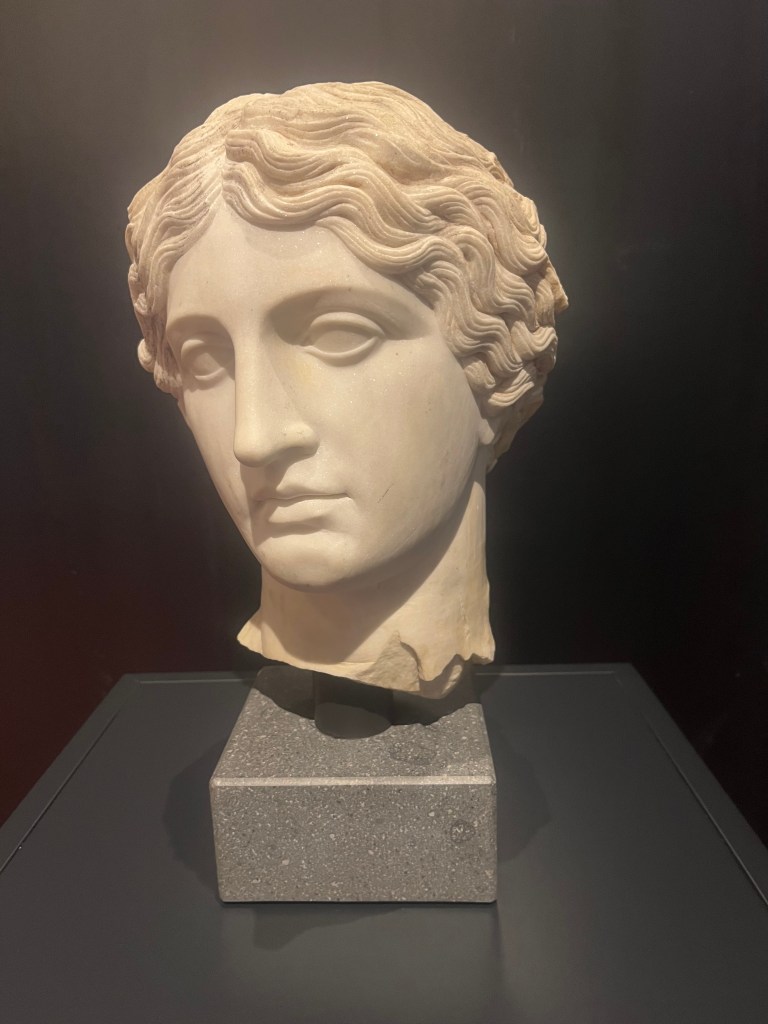
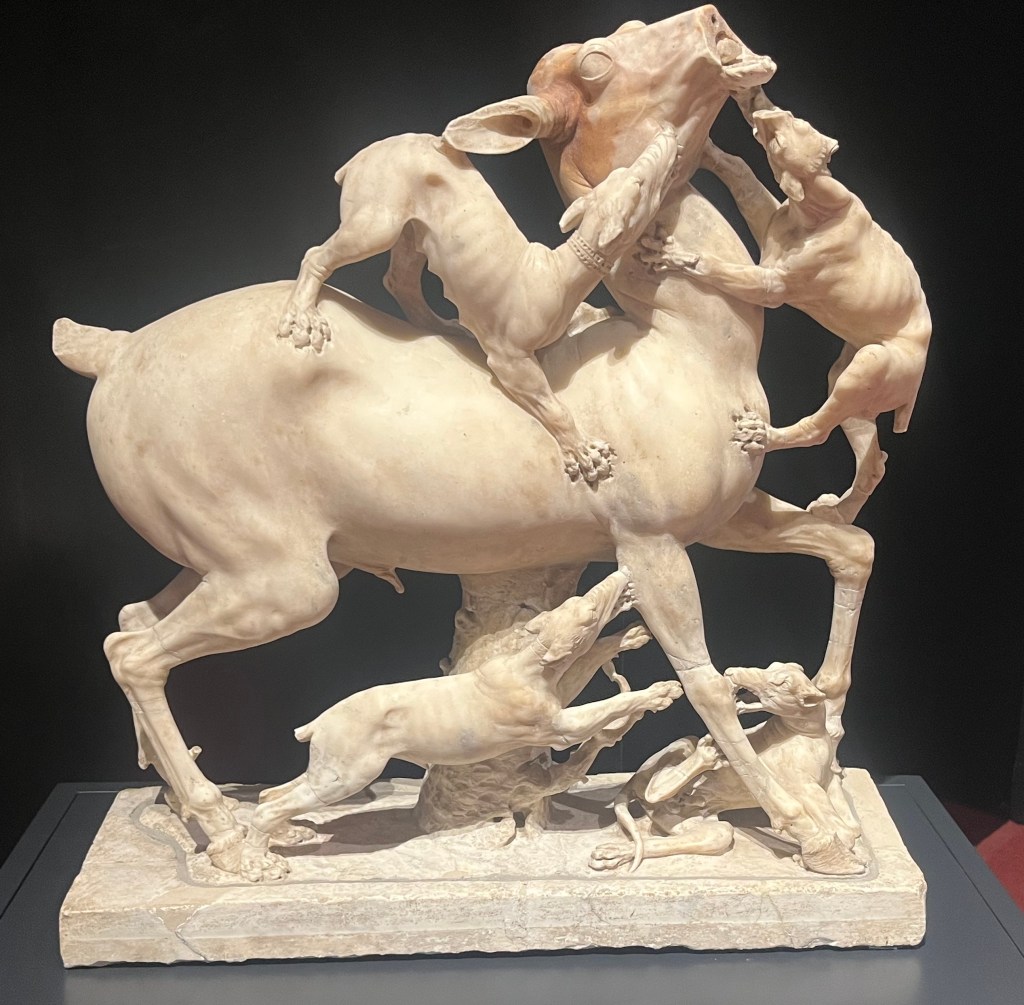
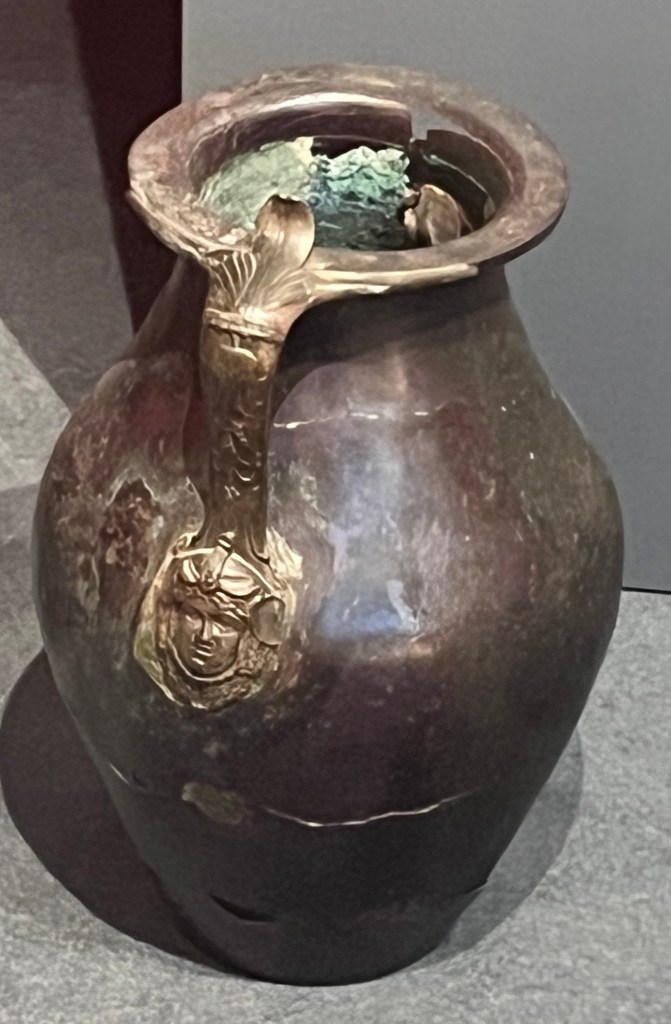
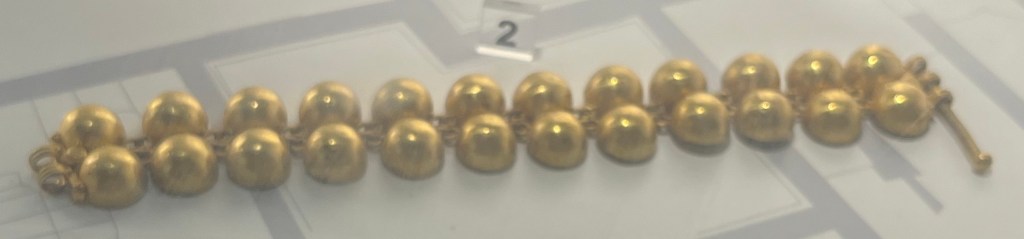
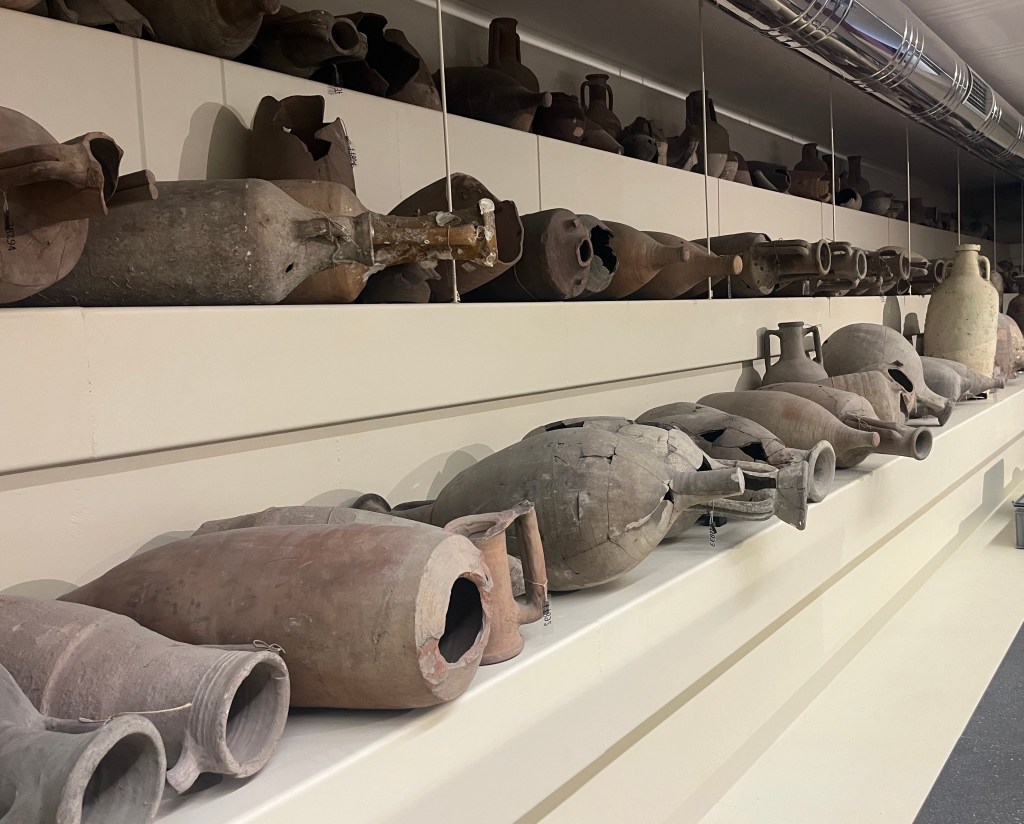
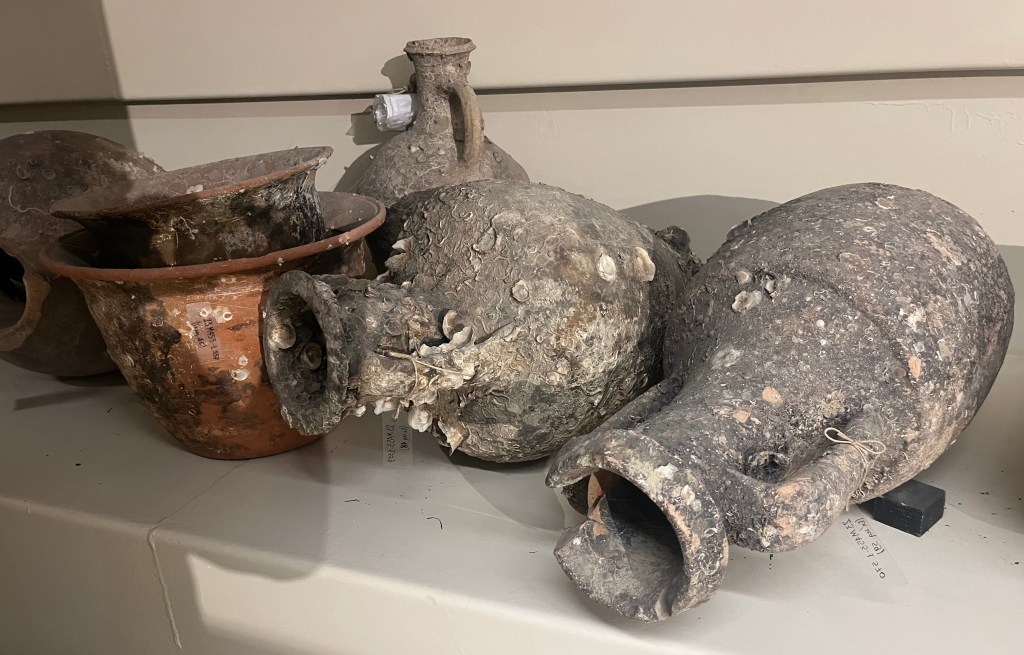
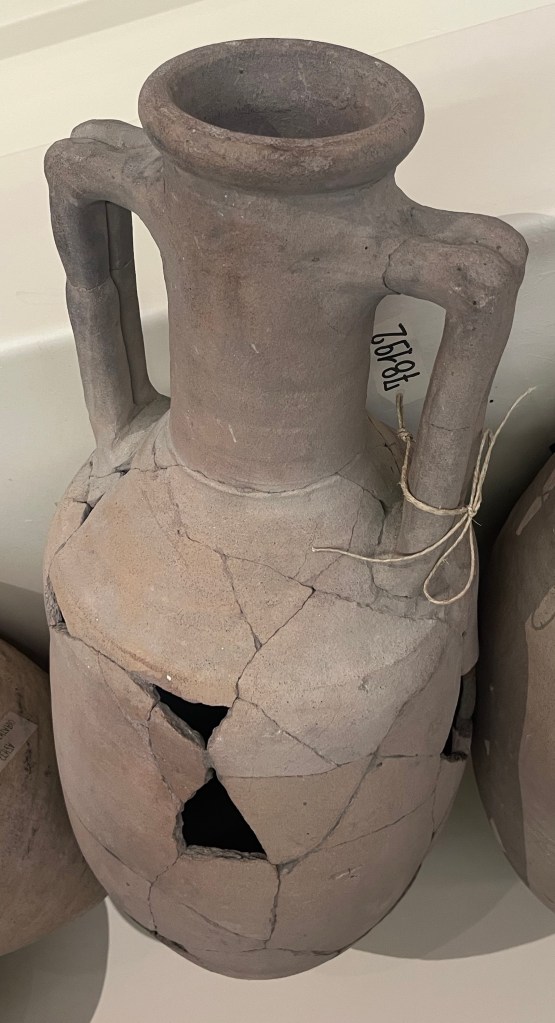
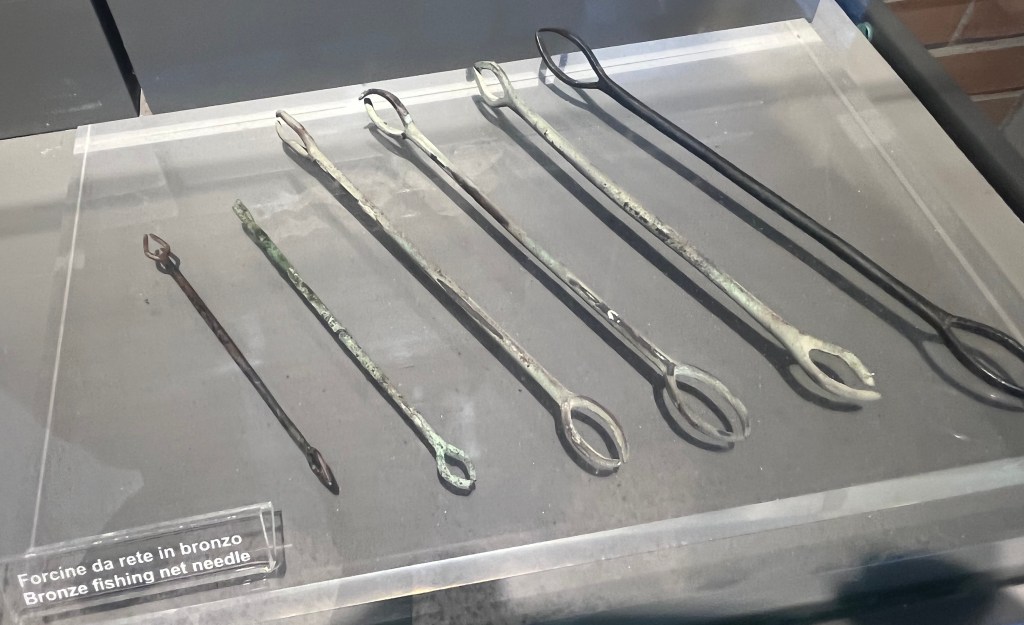
In the morning, we visited the site’s two “museums,” one of statuary, relics, endless amphorae (wine jugs suitable for traveling long distances), and jewelry, and the other of the fishing and sea-faring culture. When Rebecca got tired after a few hours, we grabbed some lunch and went to our room for a brief rest. When she decided she was too tired to return, I headed back for the rest of the day. It was a good call: the available info calls Herculaneum much more “flat” and “walkable” than Pompeii. Maybe it is. I don’t know having never visited Pompeii, but I would never describe Herculaneum as “flat” and “walkable.” It covers several stories, is paved entirely in rough stone, and has curbs that are one-foot or higher. It’s exhausting!
It was worth every huff and puff. I am just sorry we never made it to the Mostra to learn more about the food and gather up some ancient Roman recipes (which are pretty easy to find on line). Maybe you can drop by some time for some “Moretum” or “Chicken with Garum and Honey.” Enjoy the photos. It was a great dose of antiquity.
The similarities in our lives today and the lives of Romans 2,000 years ago – in art, design, household stuff, personal care, fishing, and so much more – are nothing short of amazing!
The Ruins
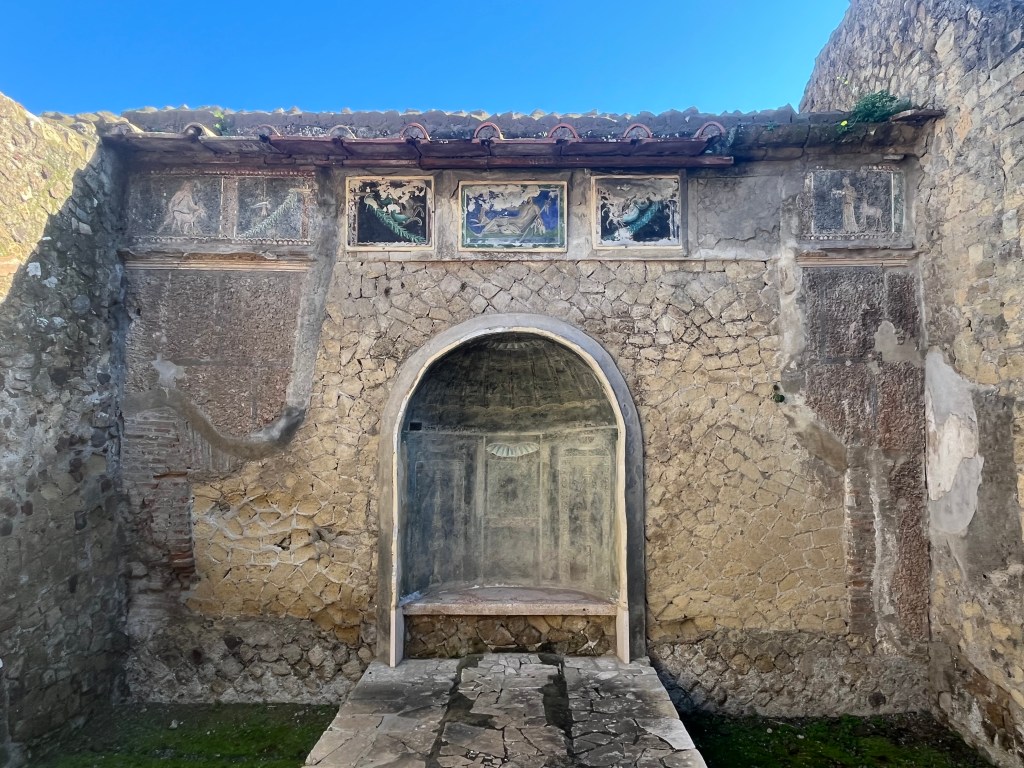
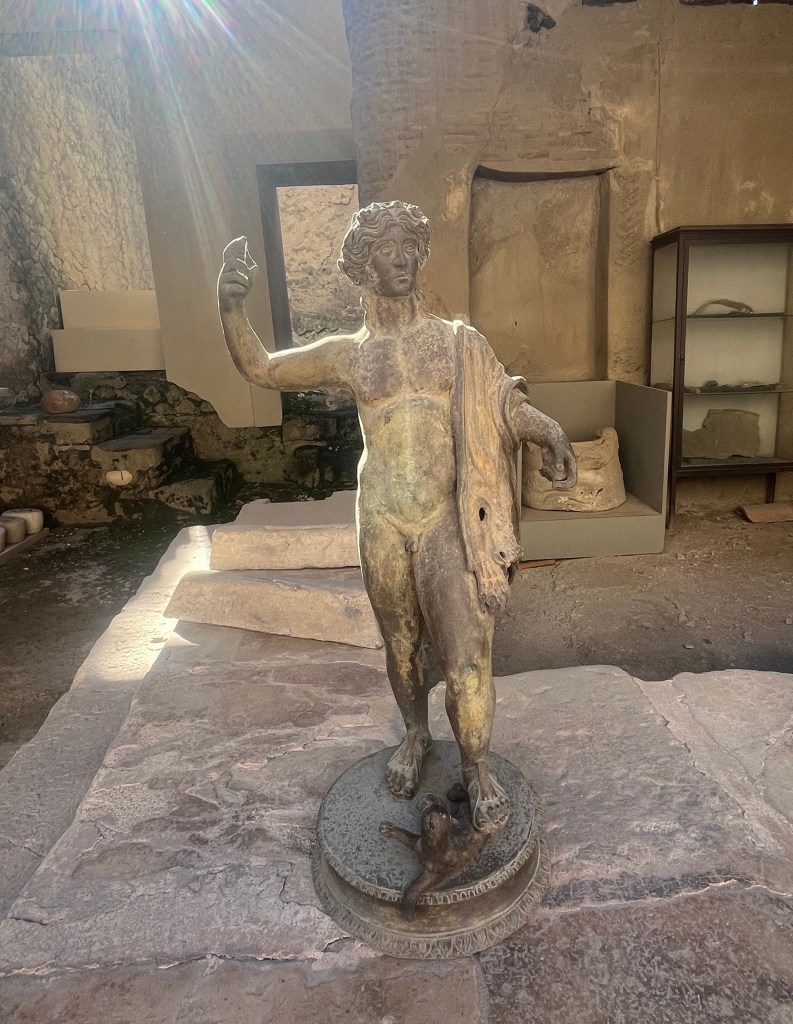
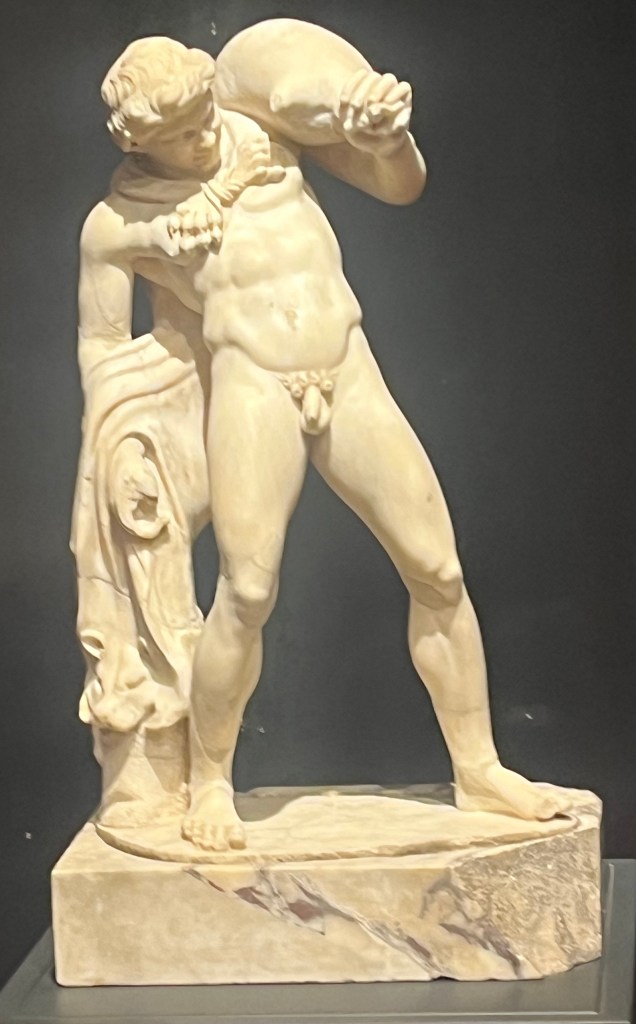
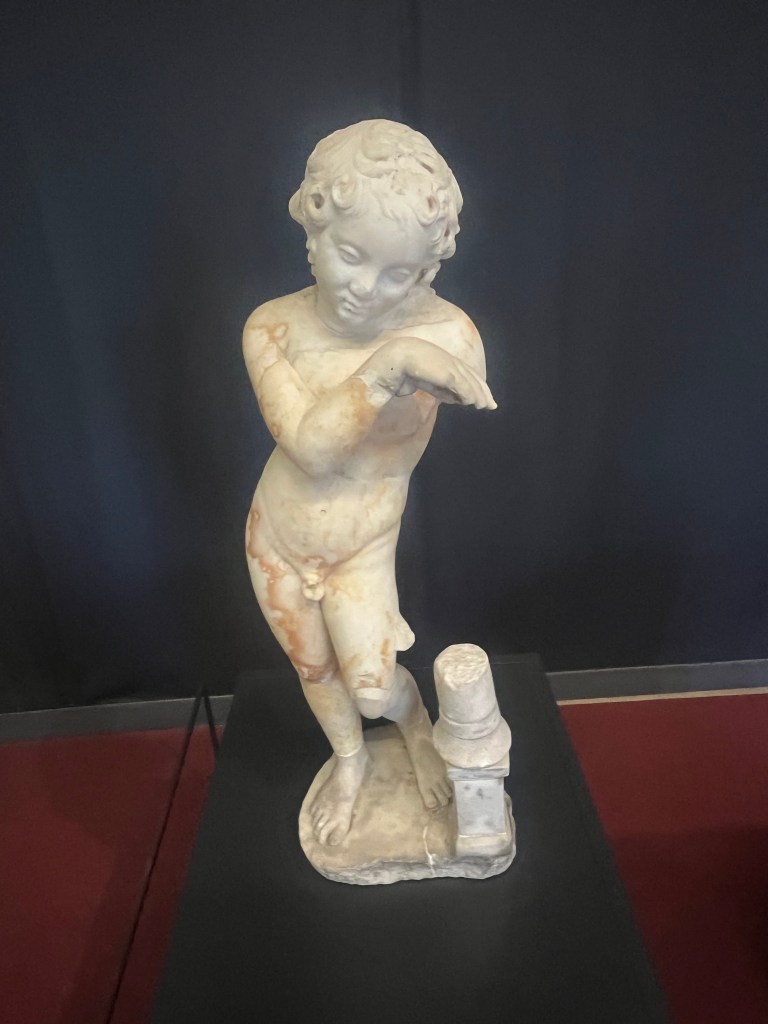
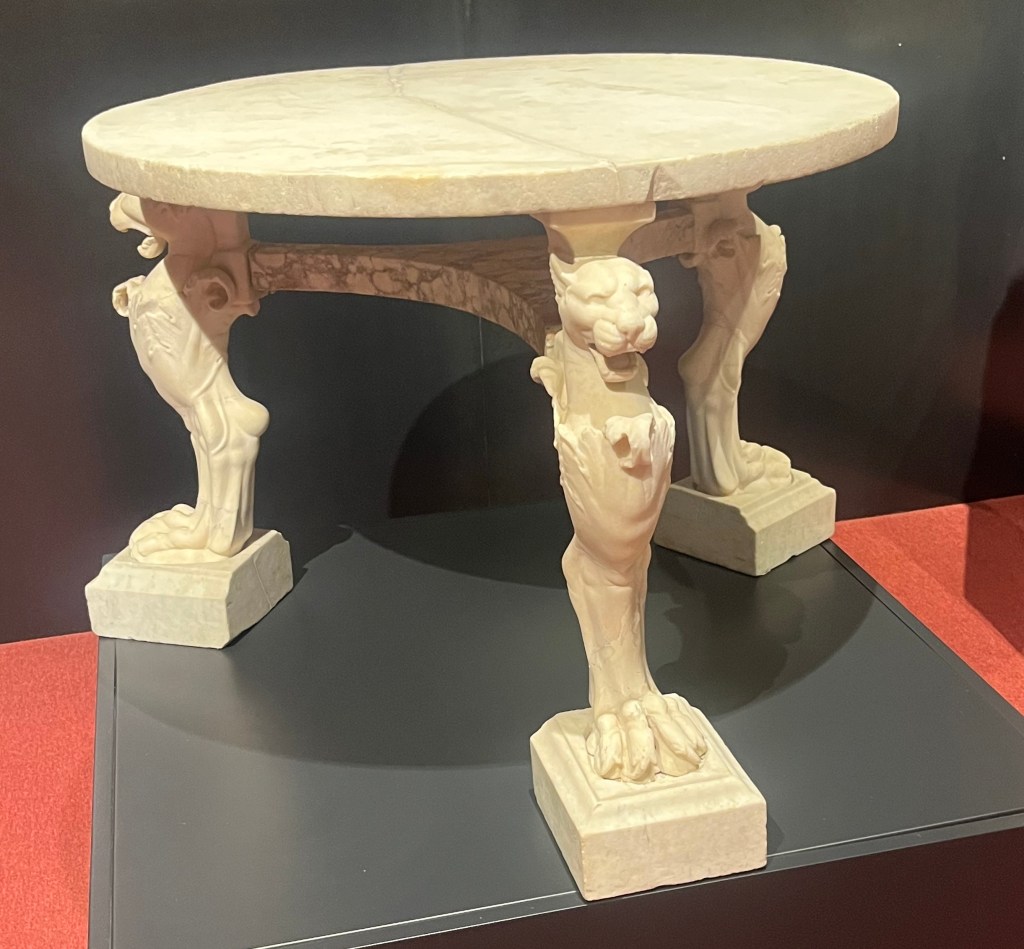
Statuary
Friezes
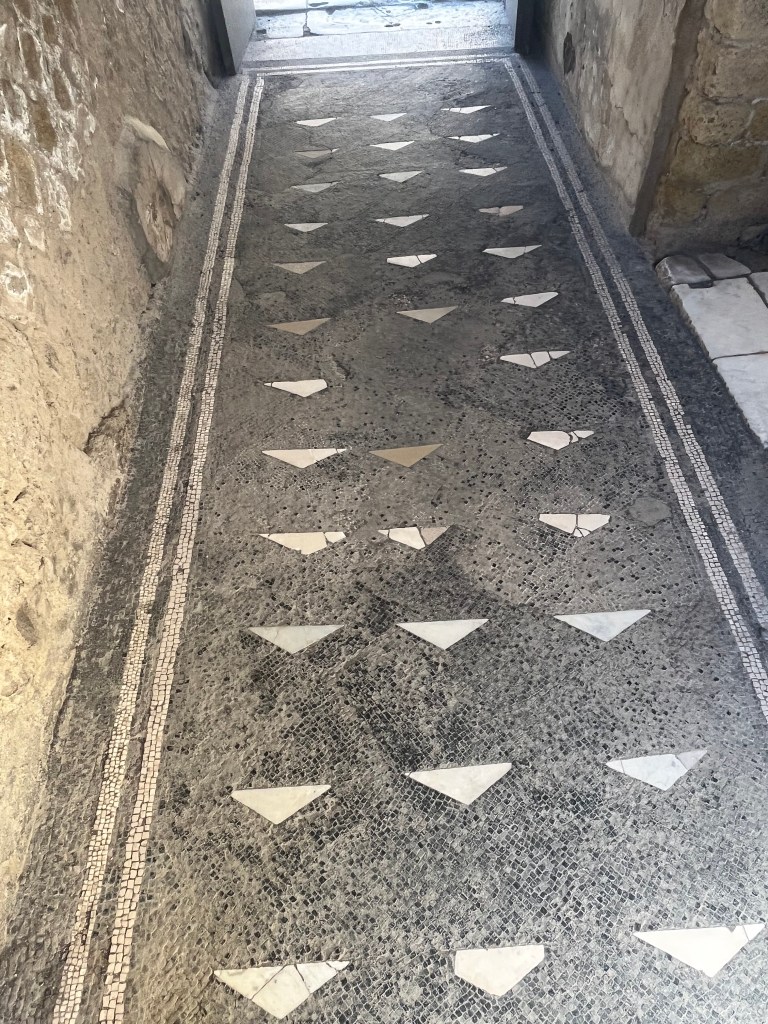
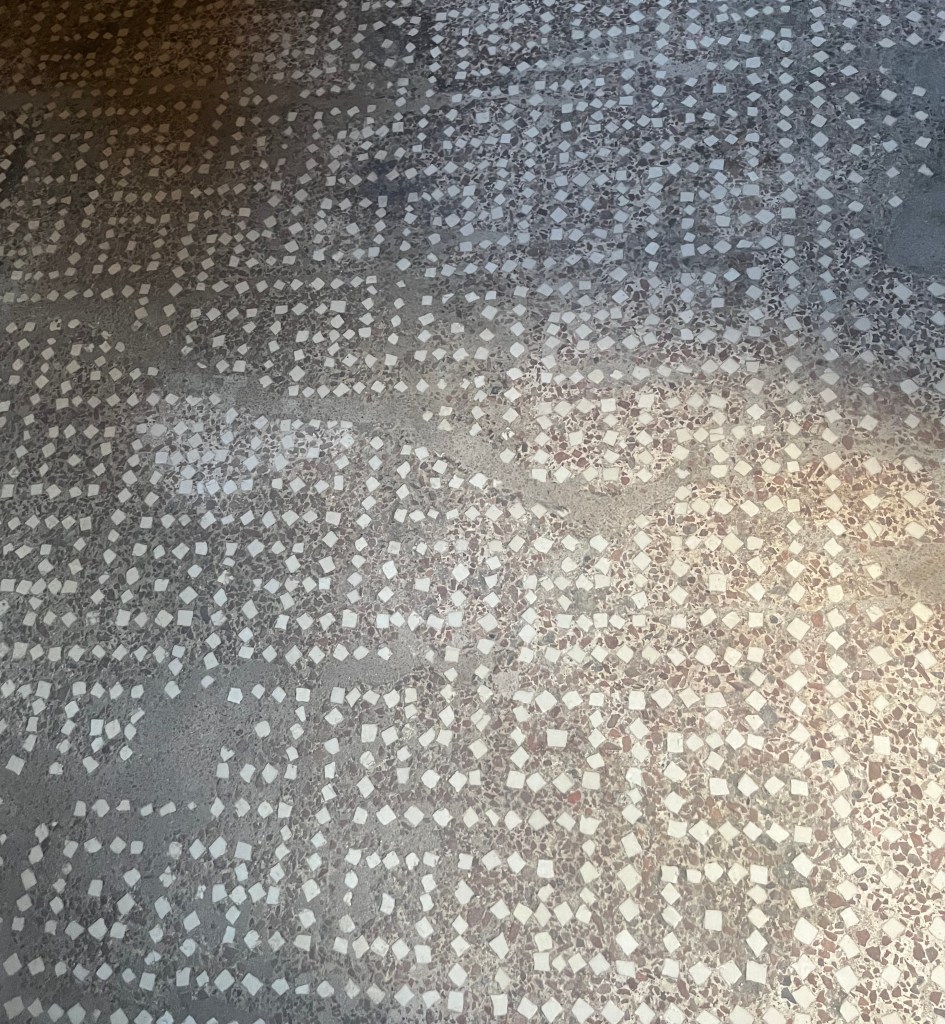
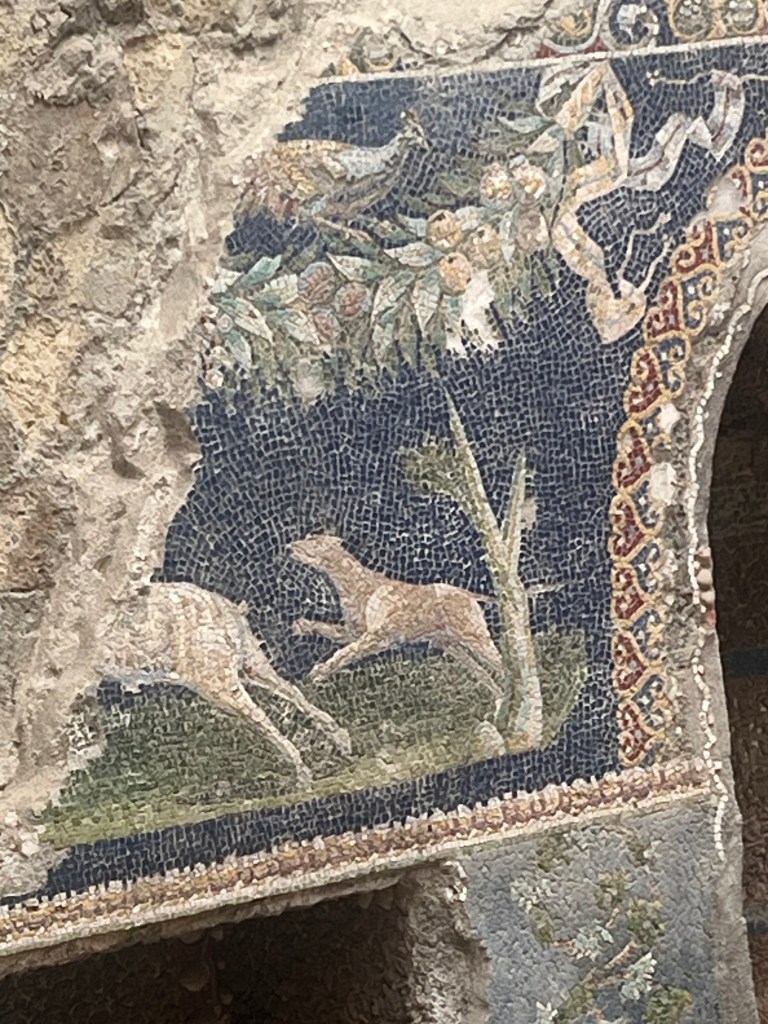
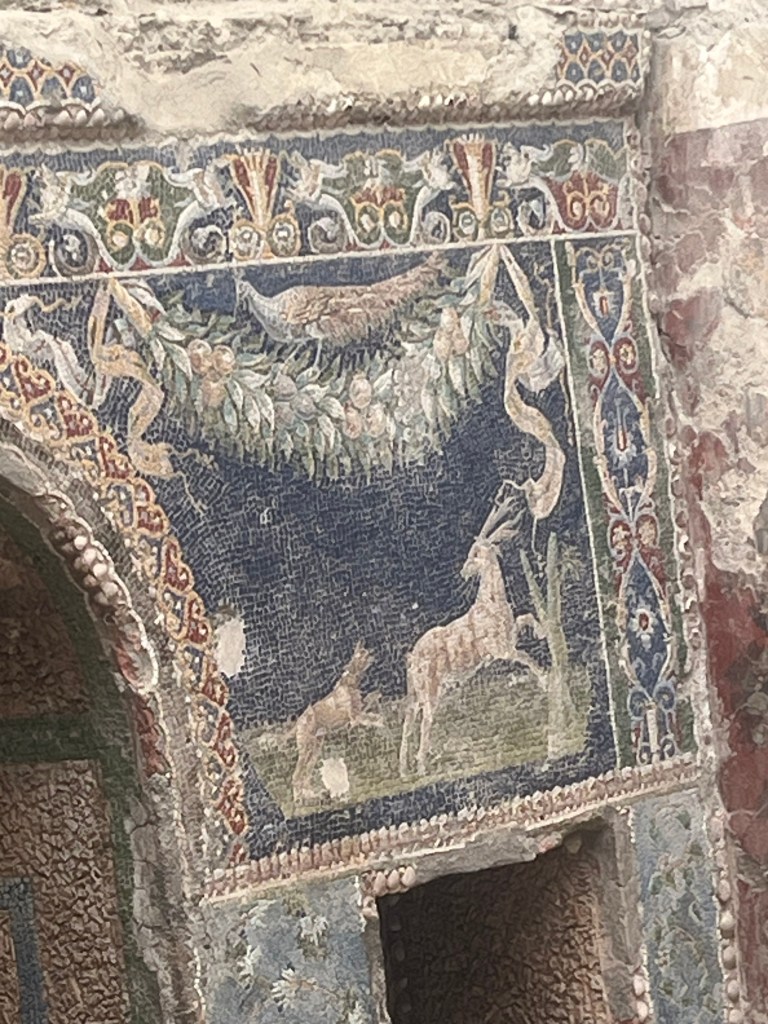
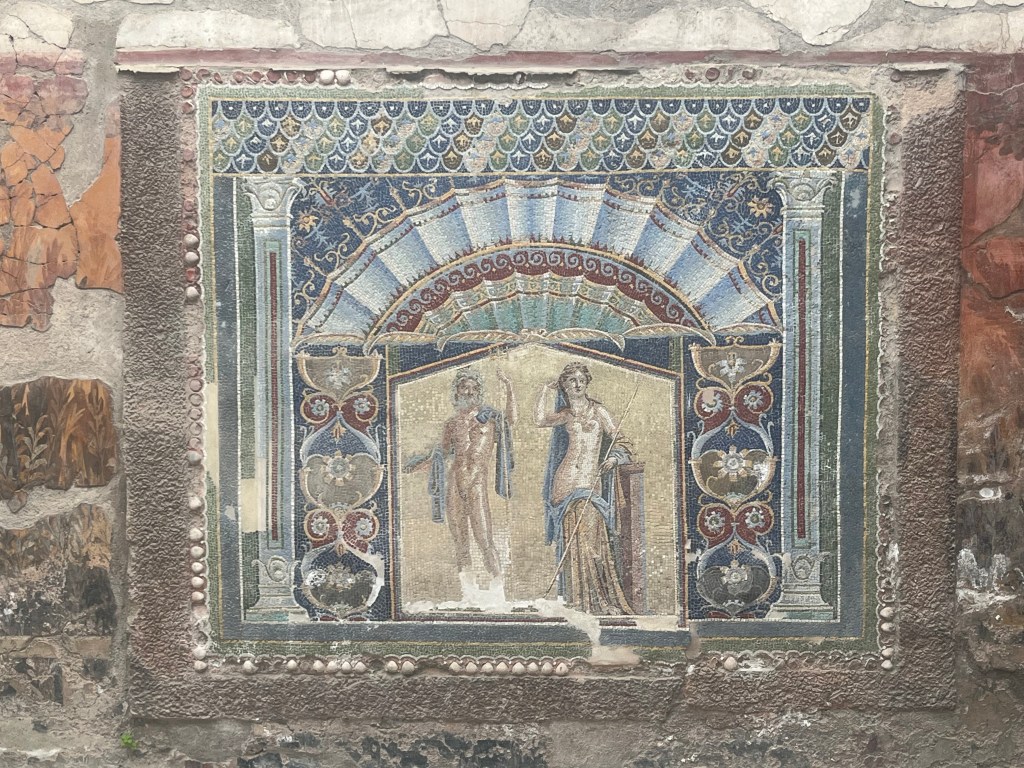
Mosaics and Flooring
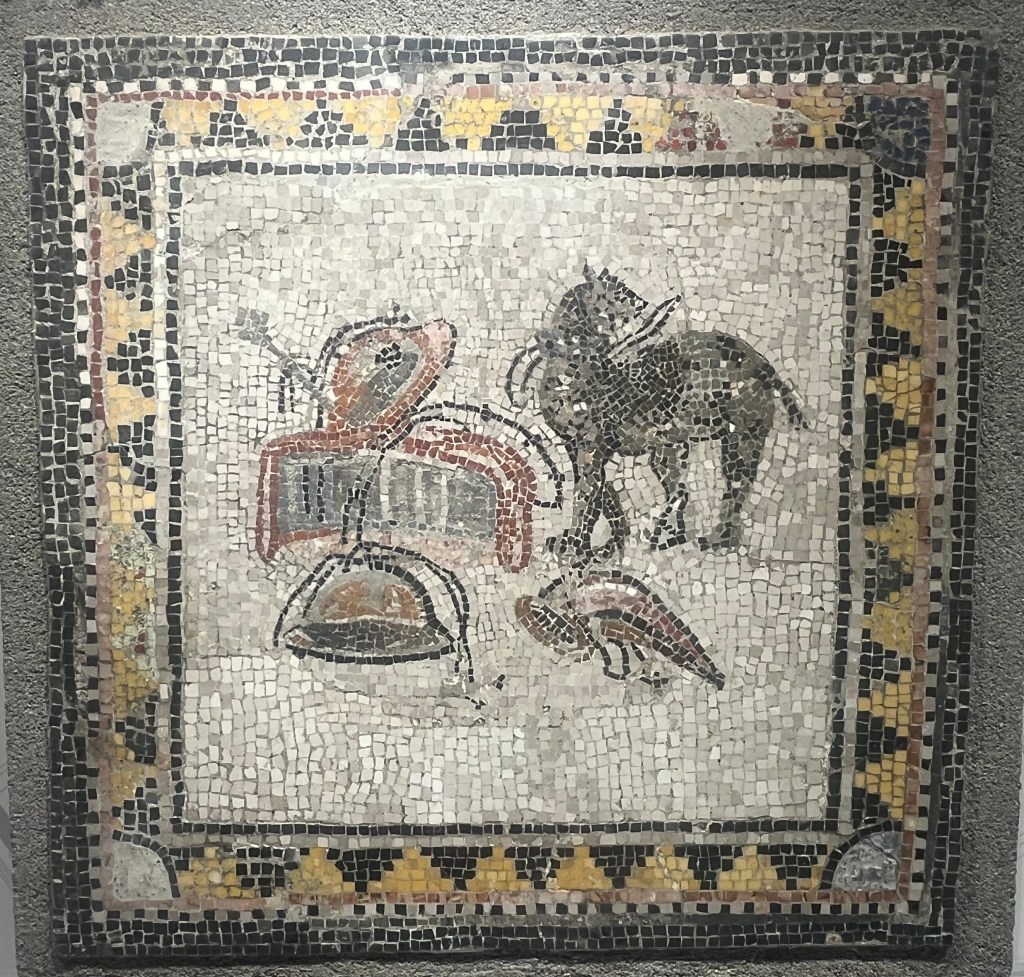
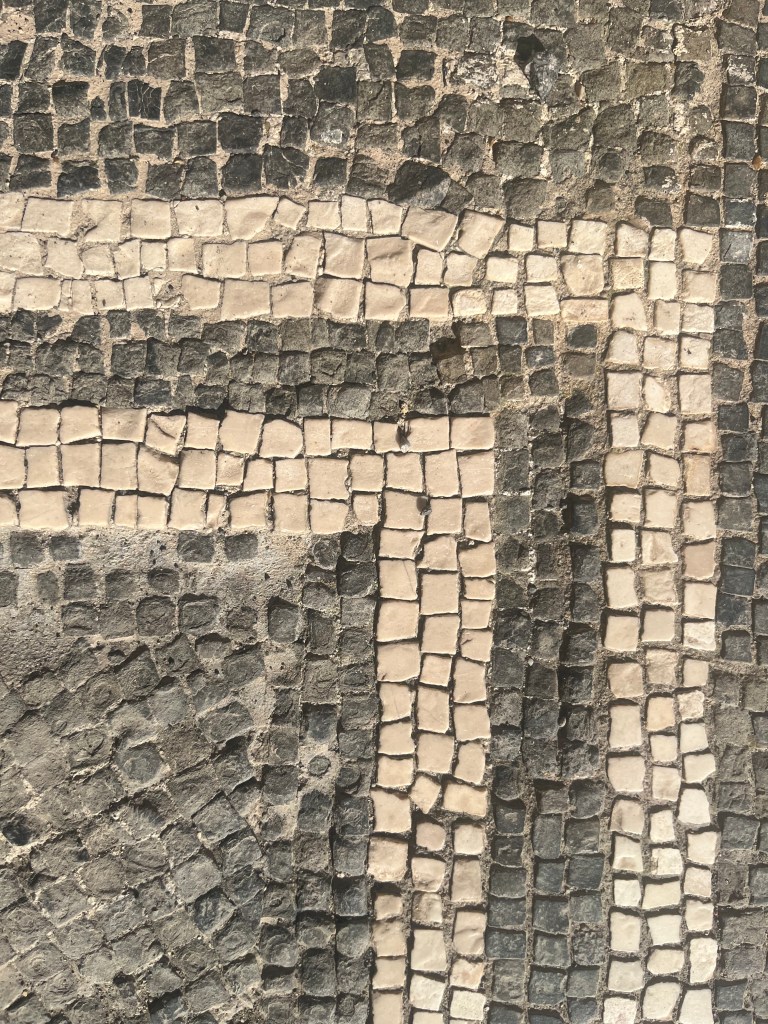
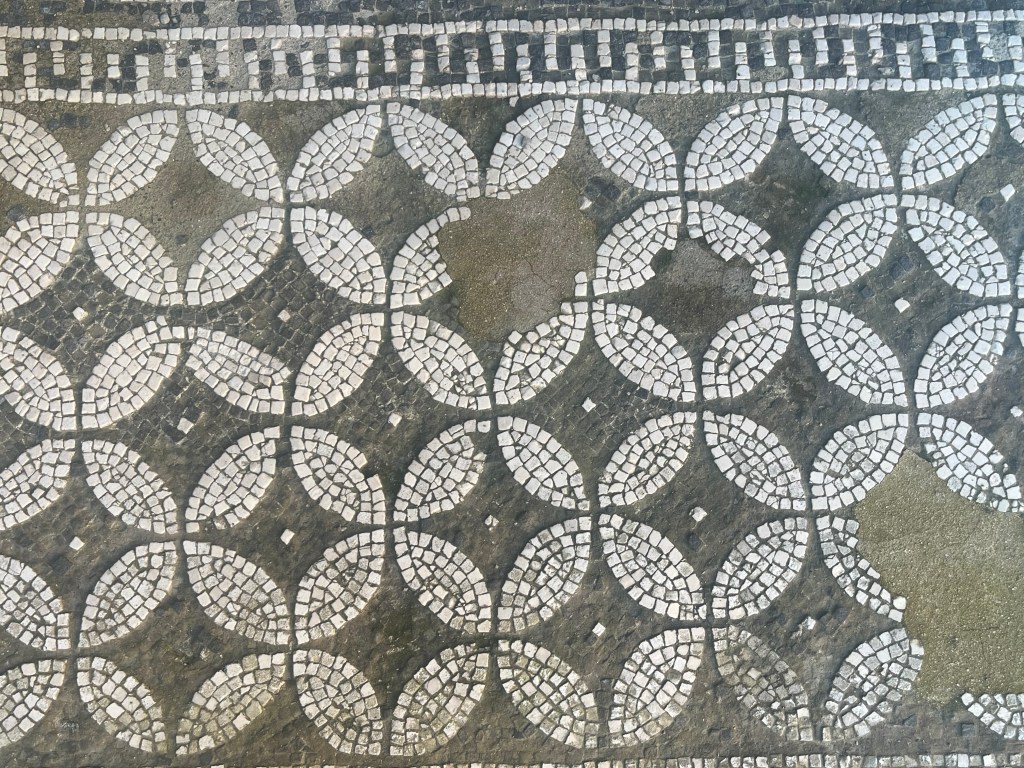
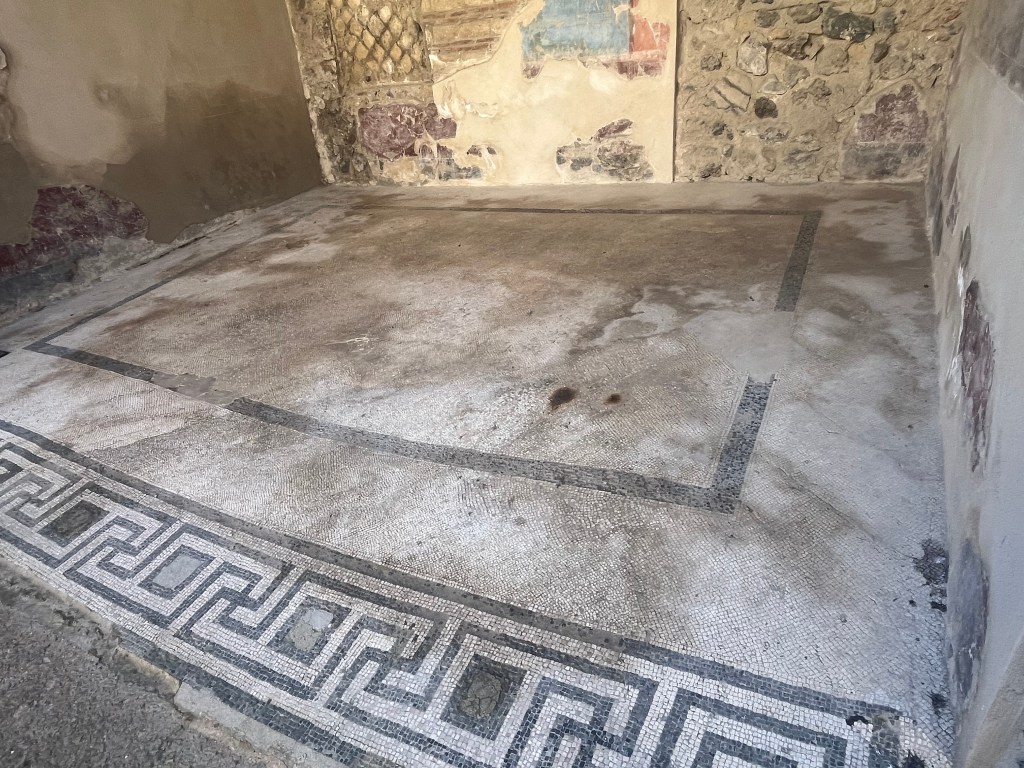
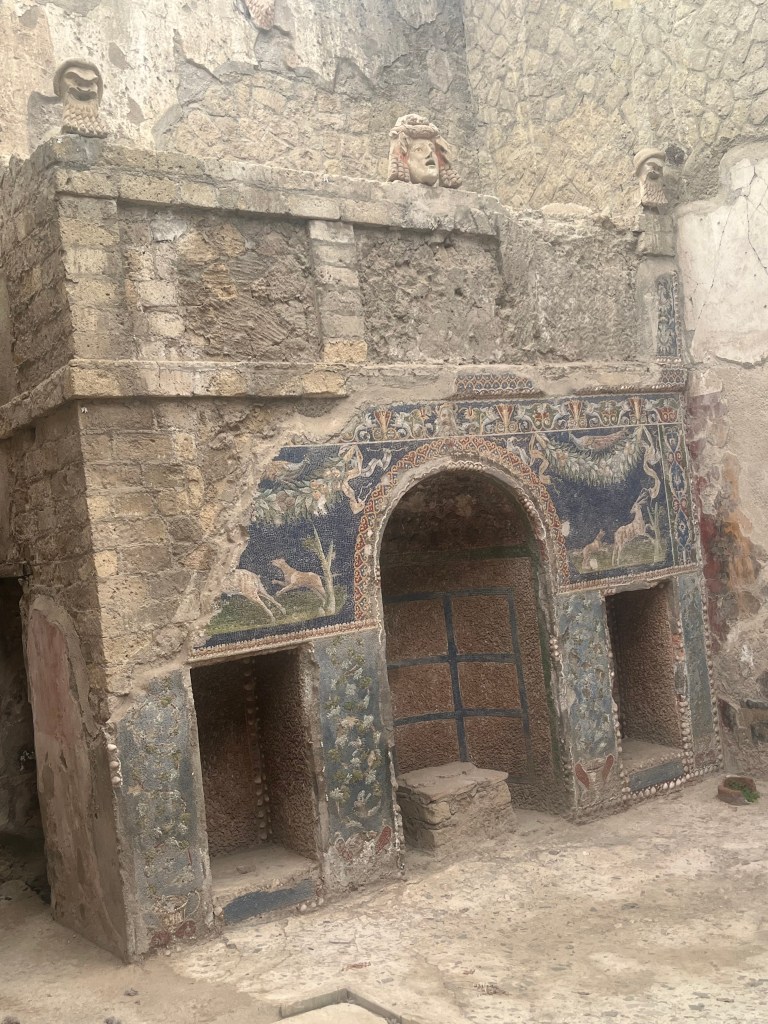
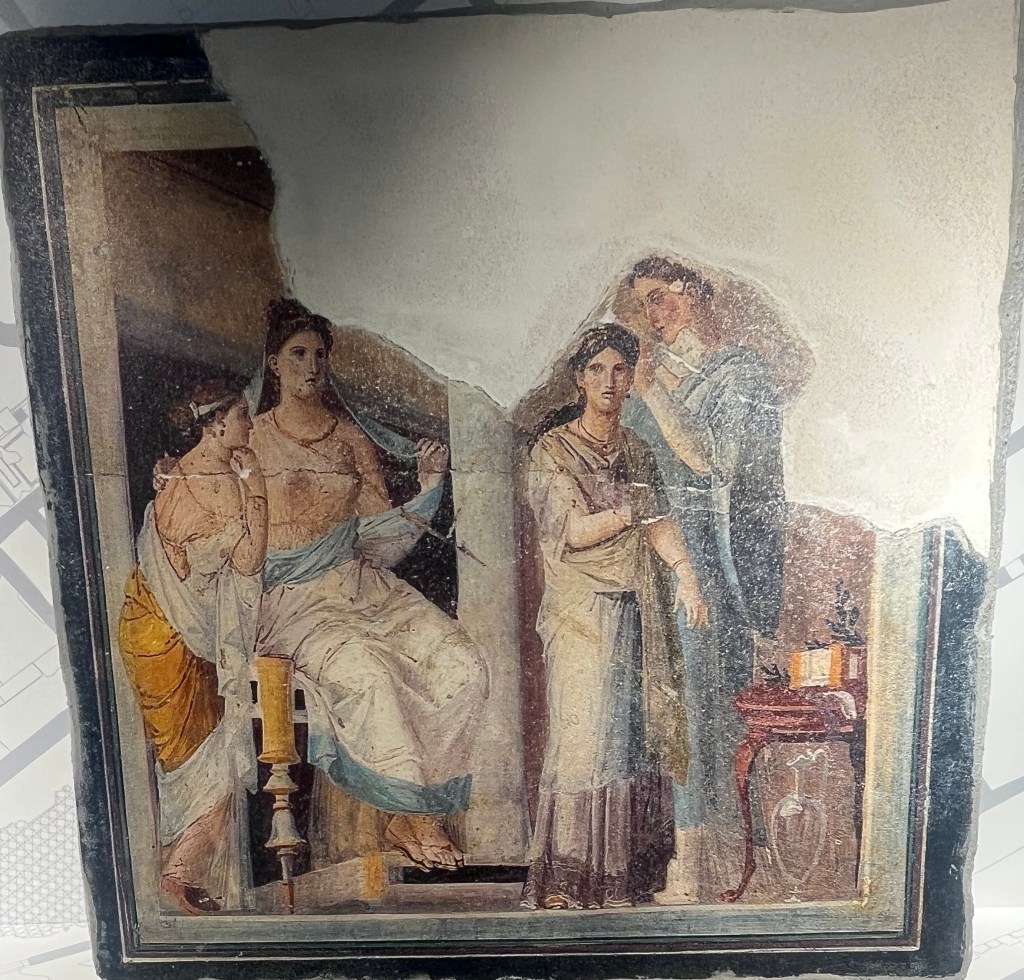
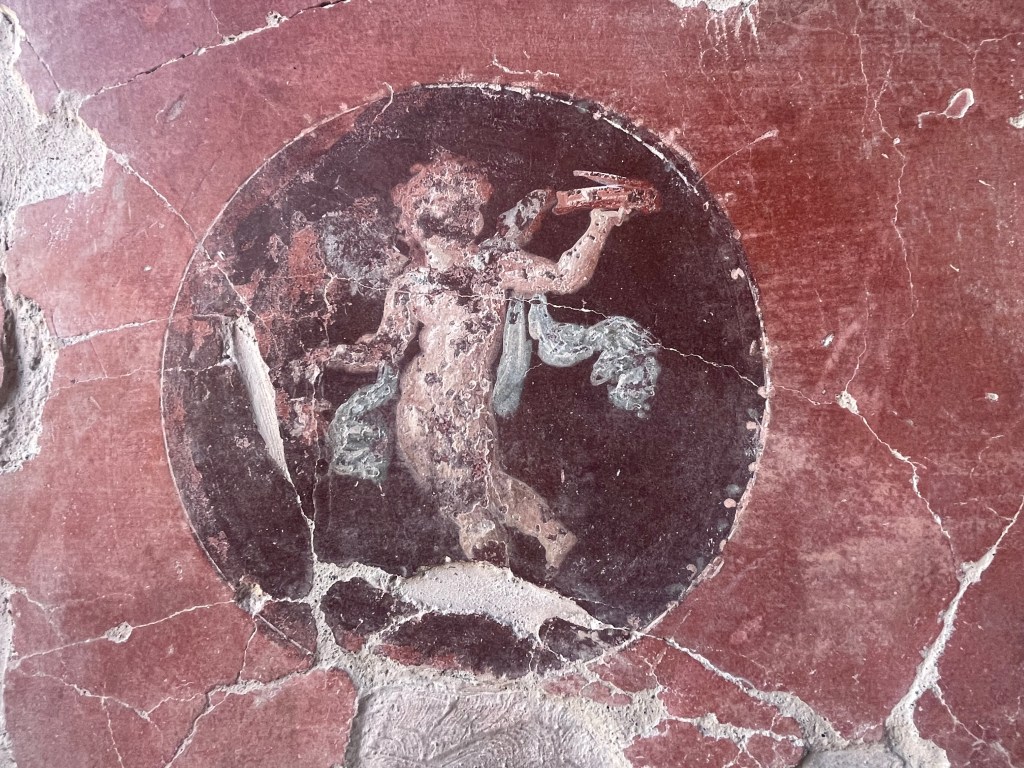
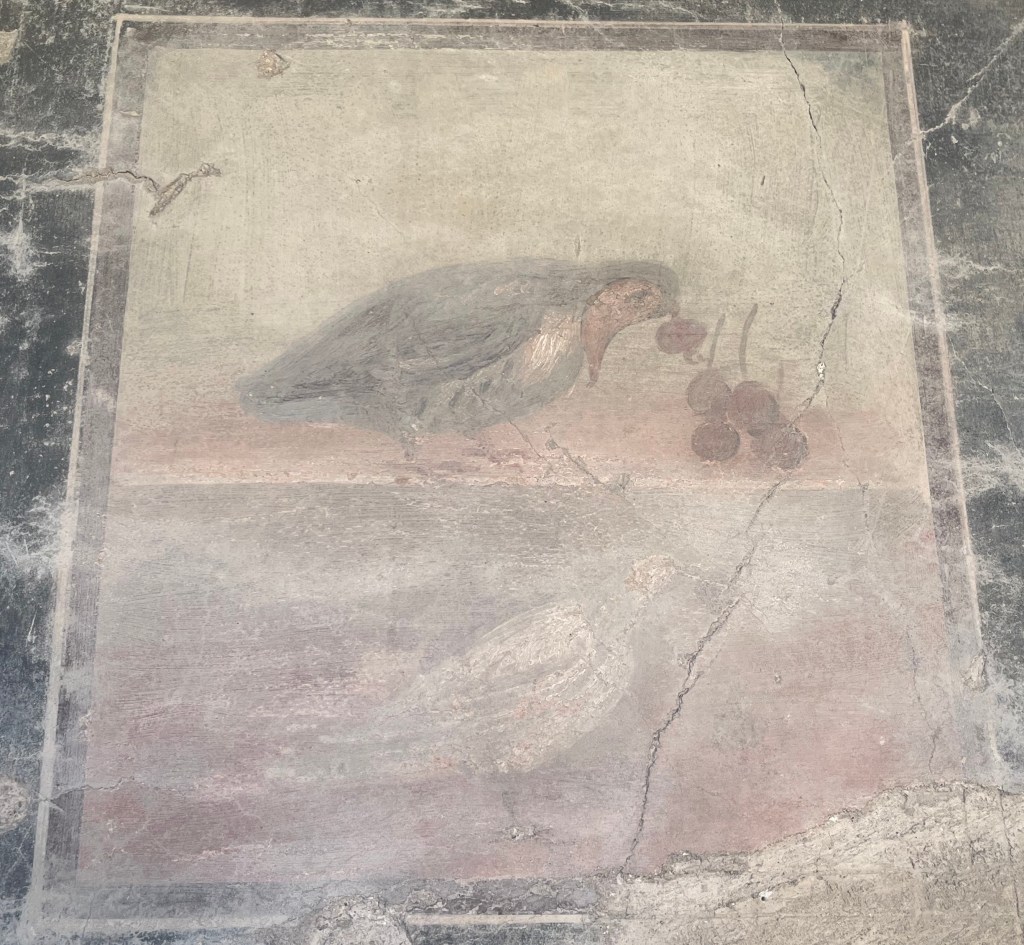
Frescos
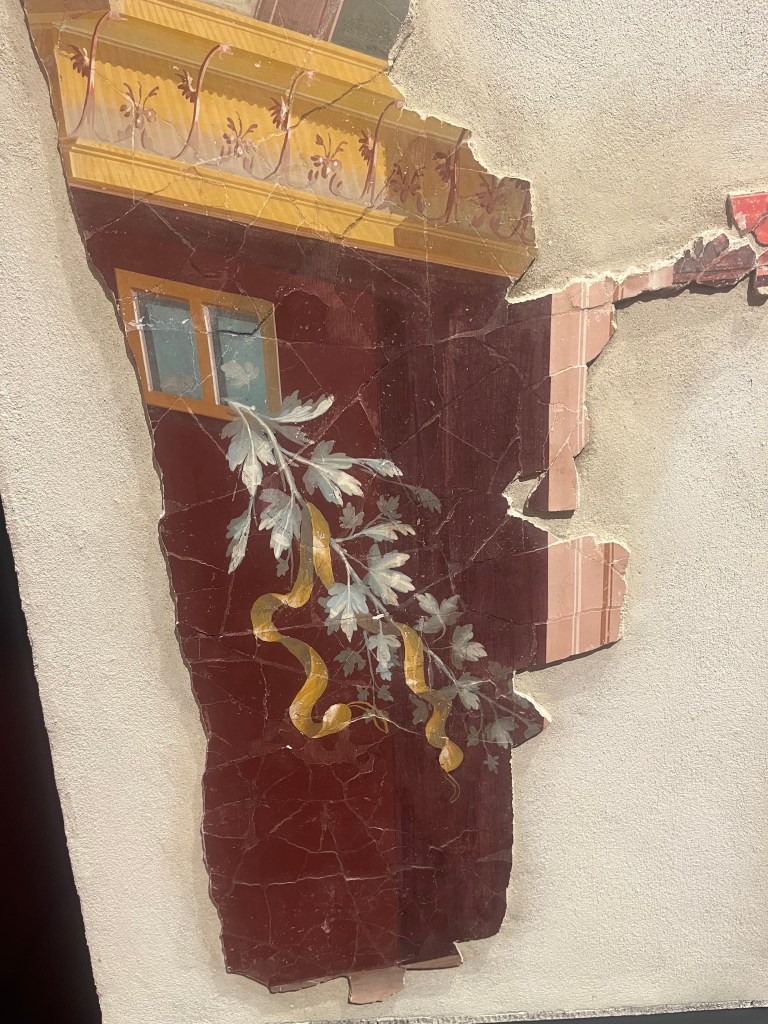
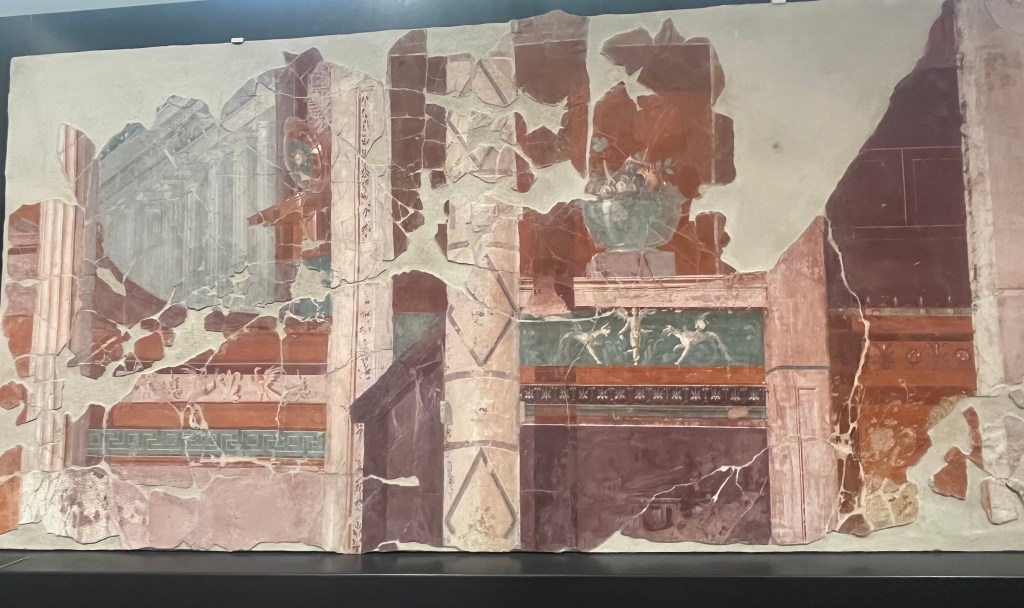
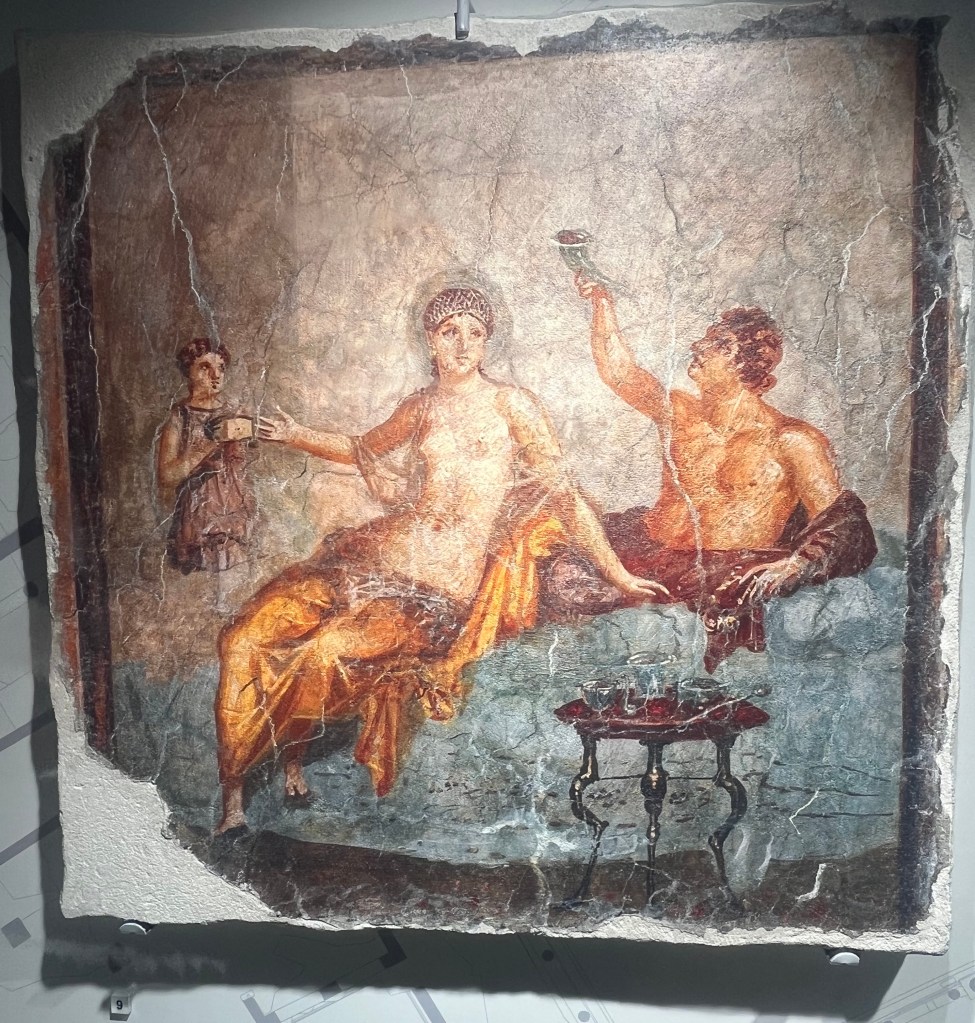
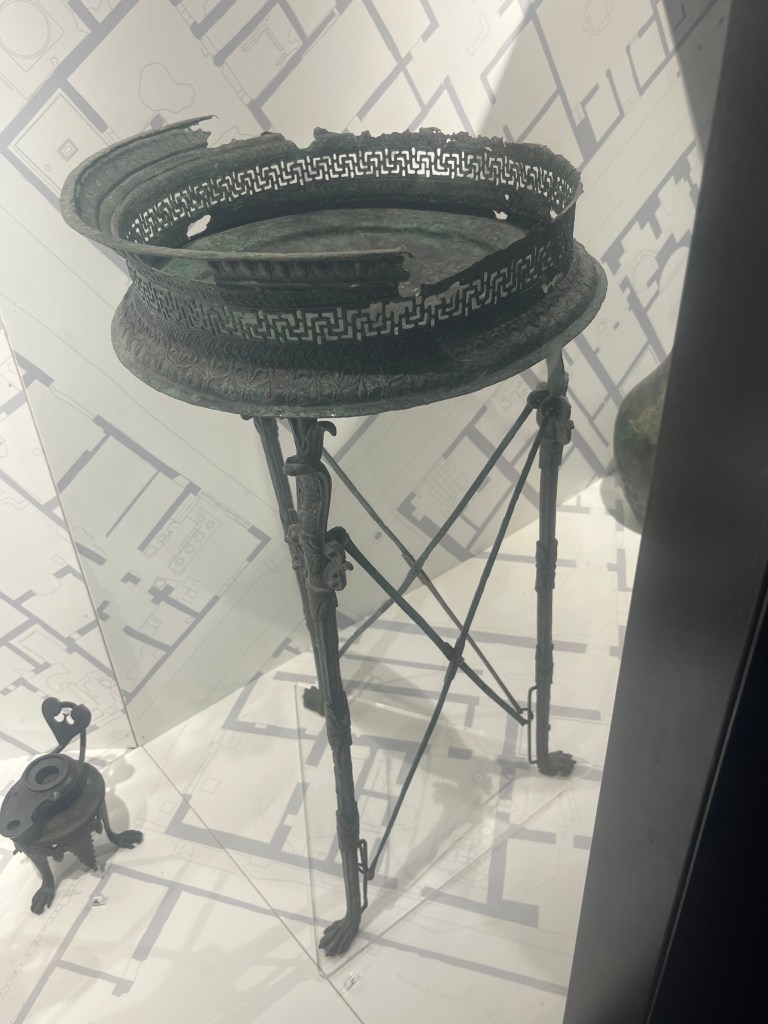
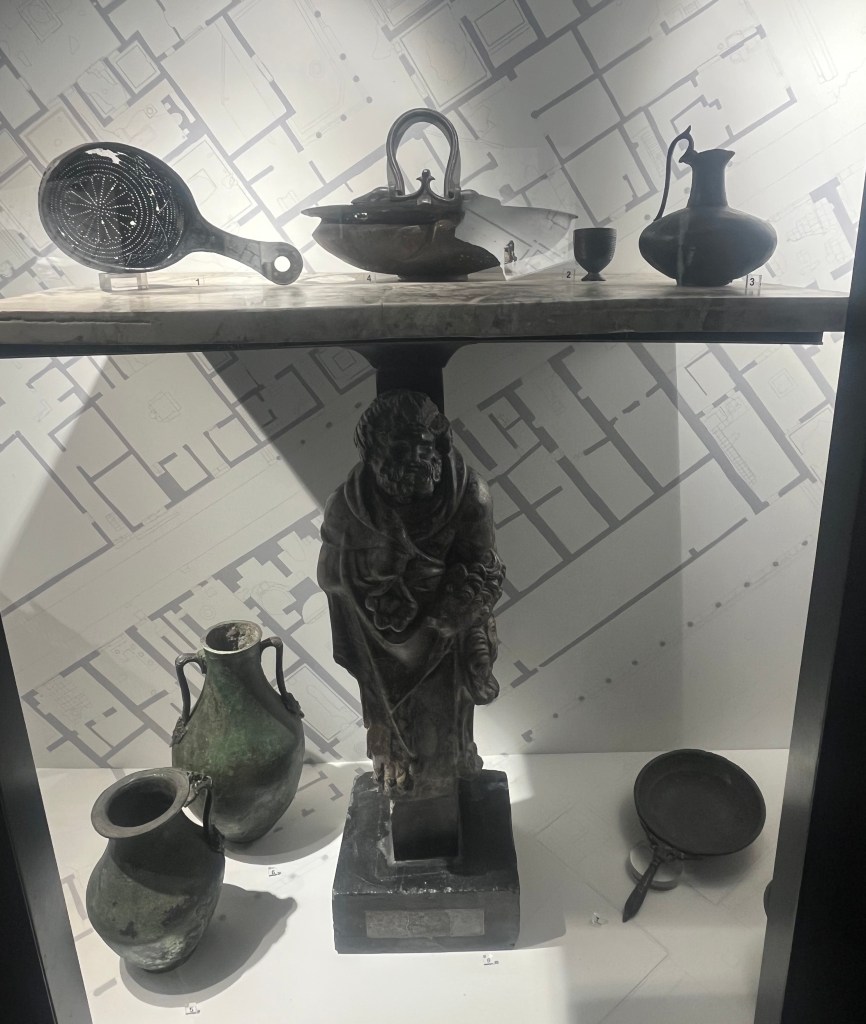
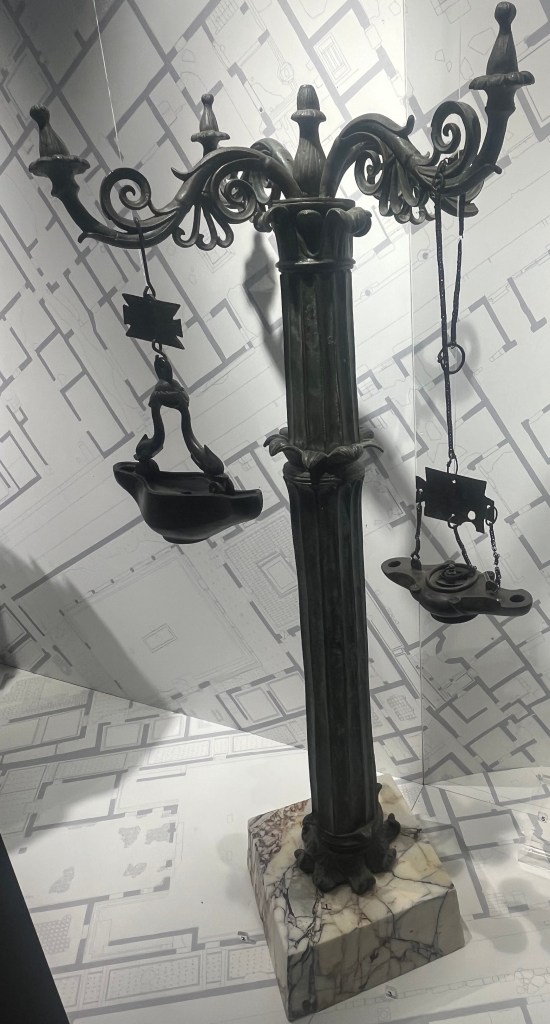
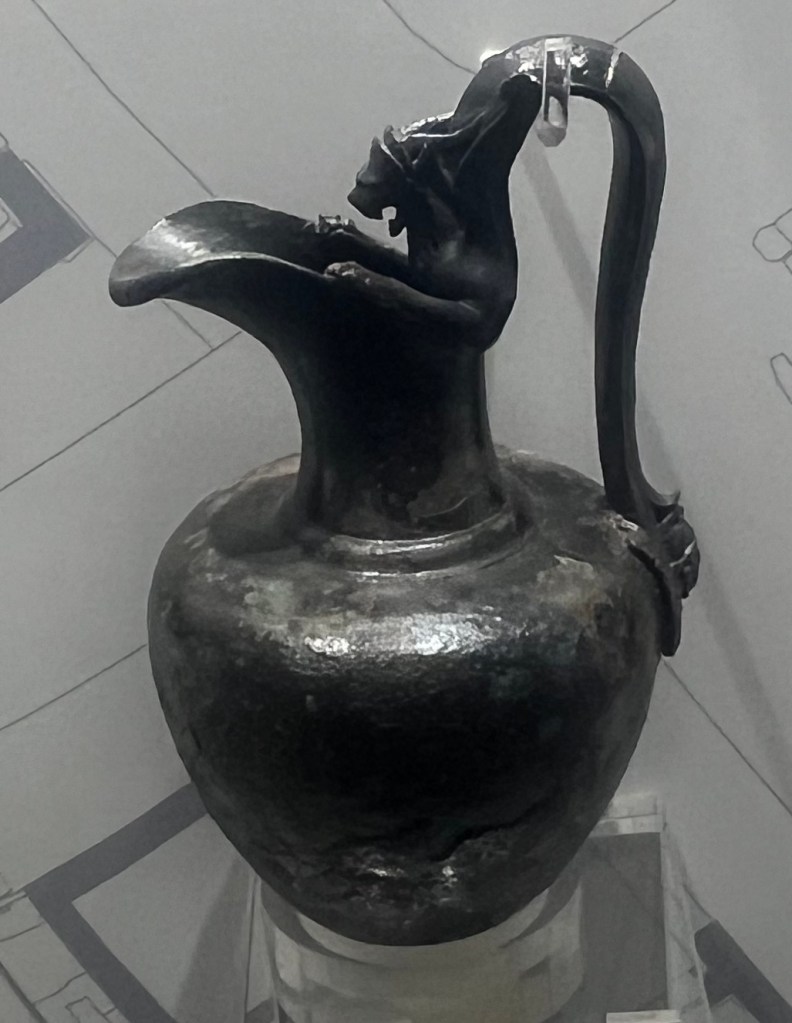
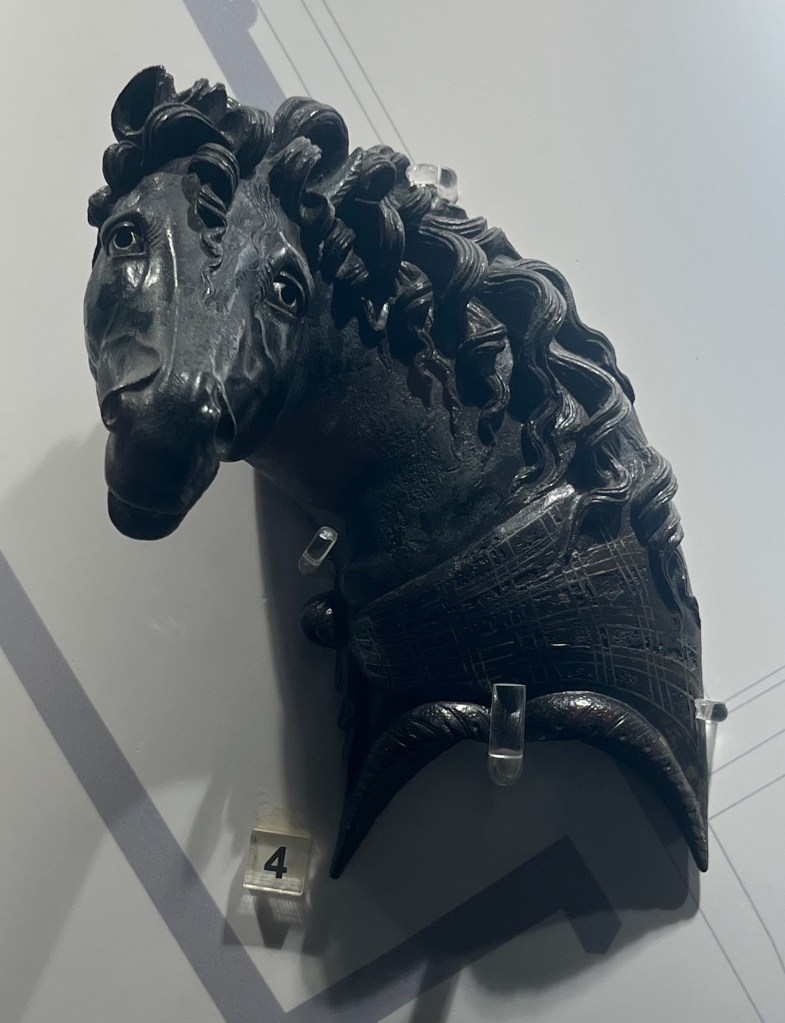
Bronze
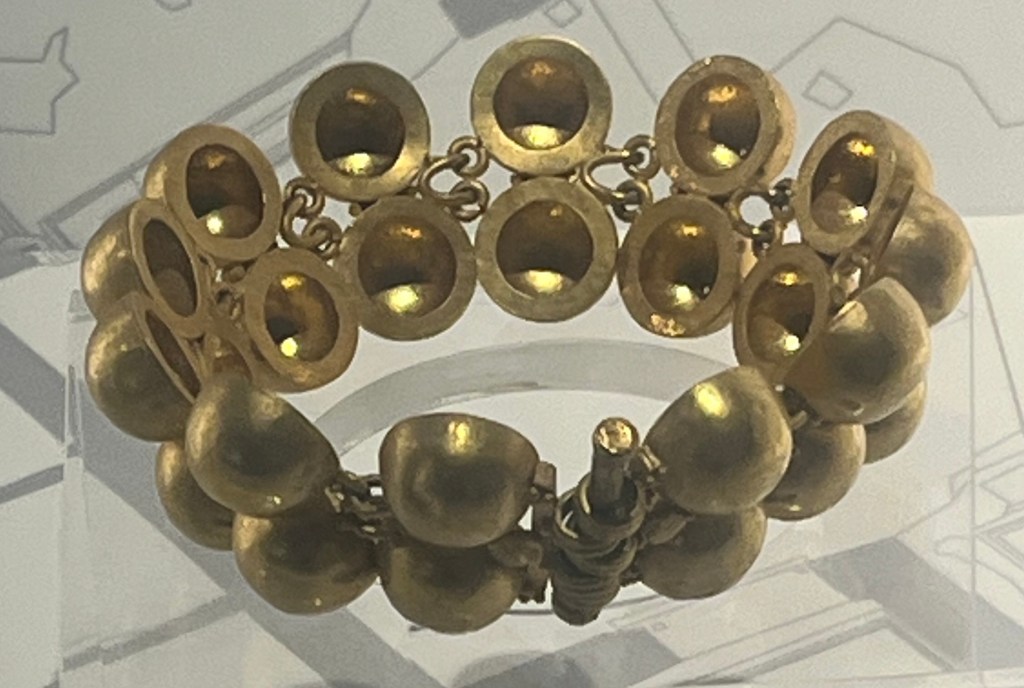
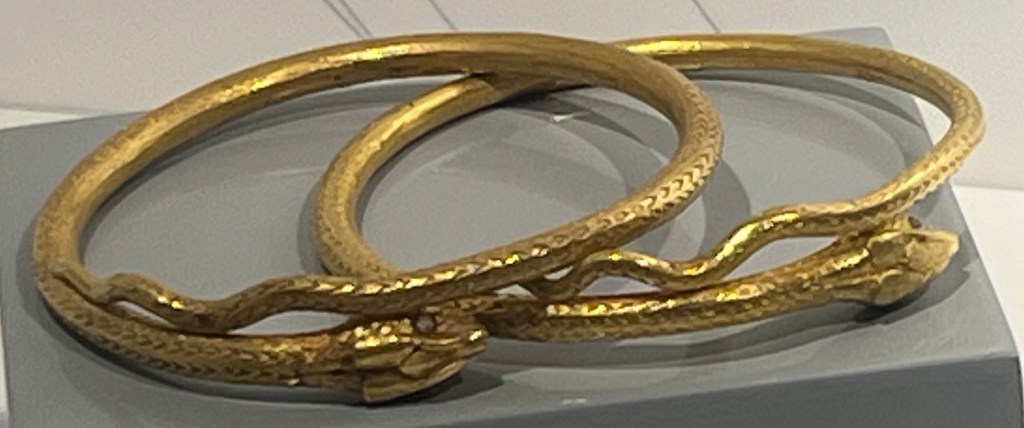
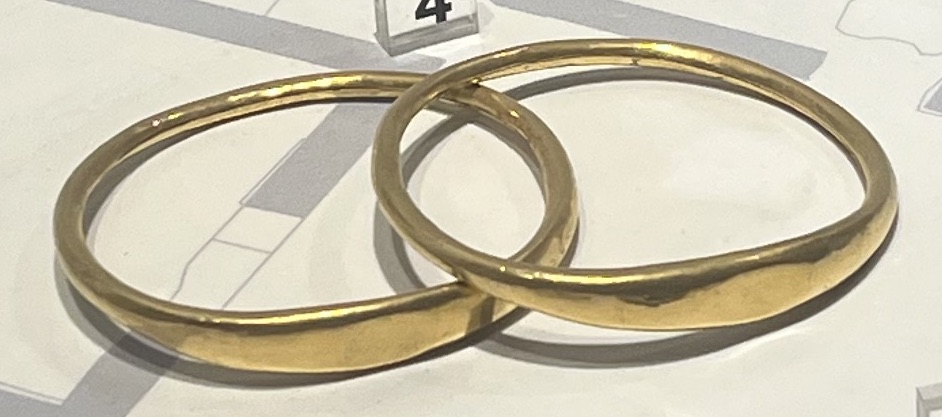
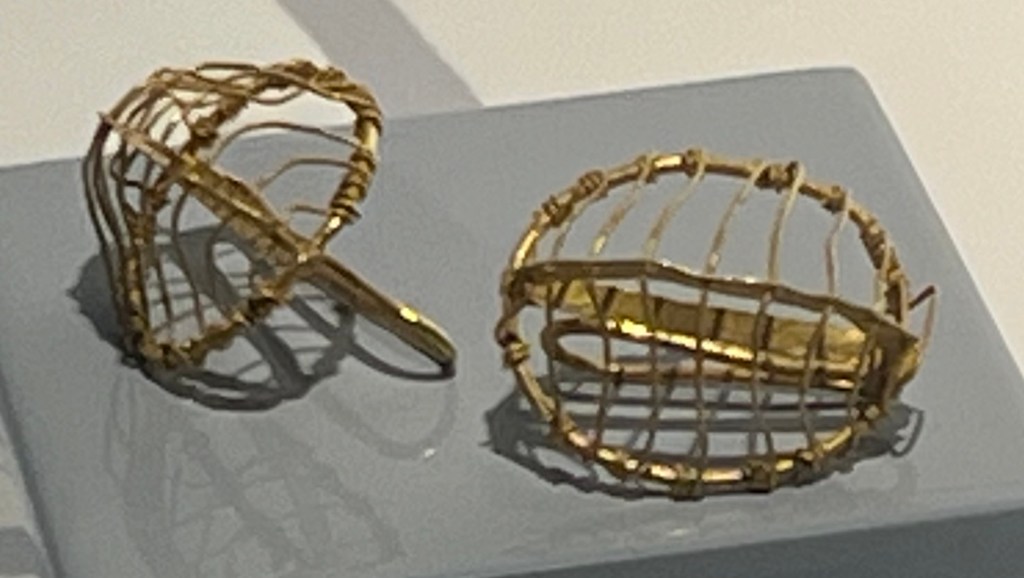
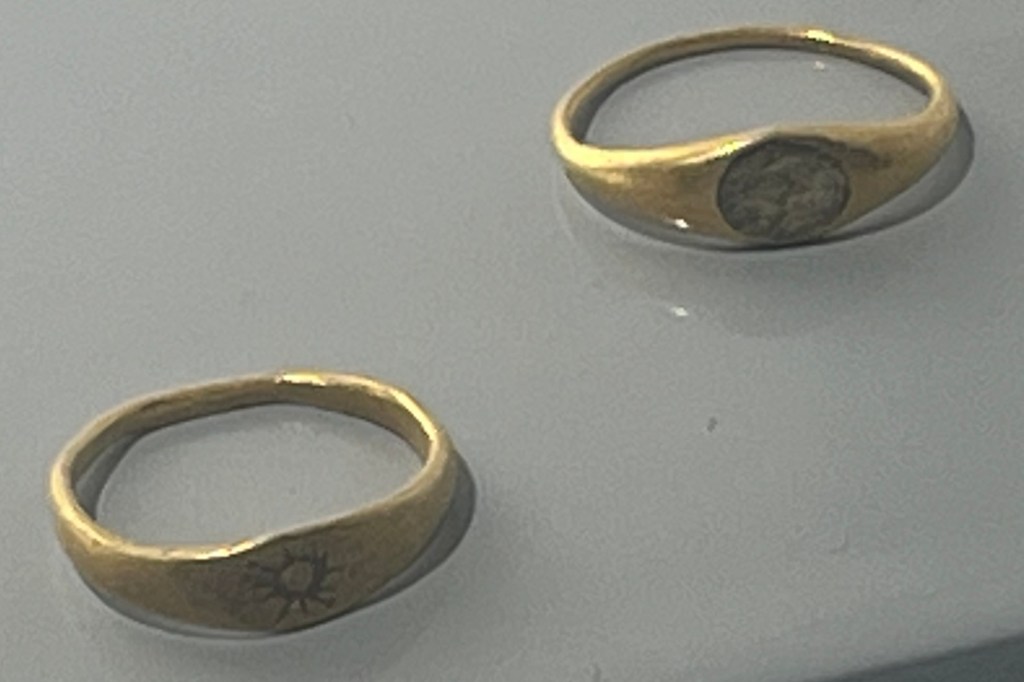
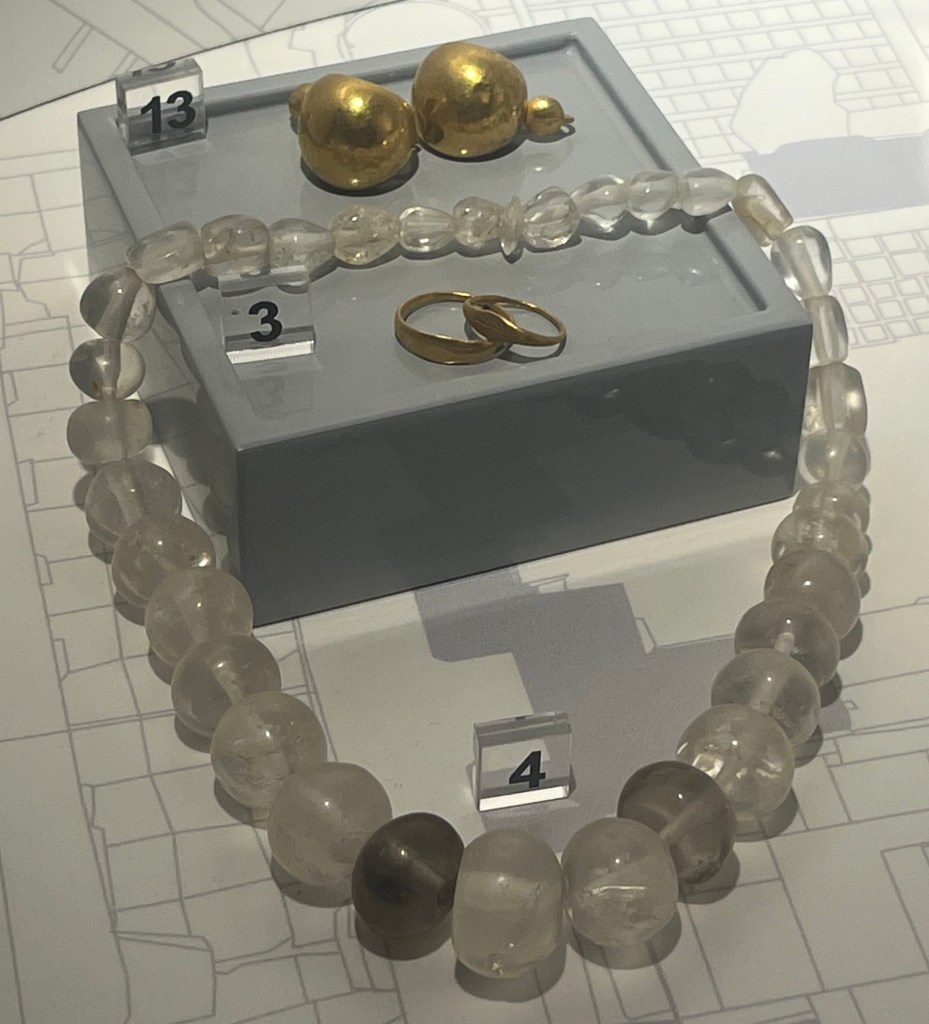
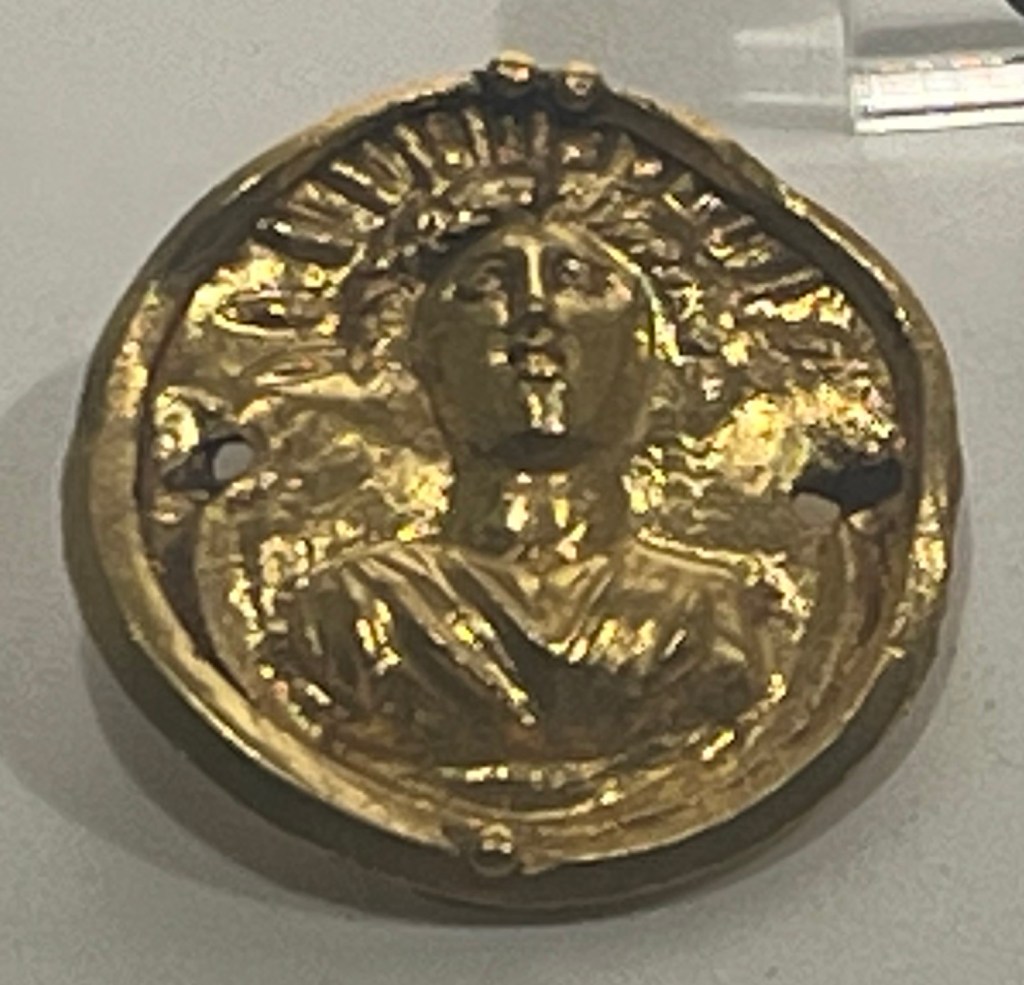
Jewelry

Coins
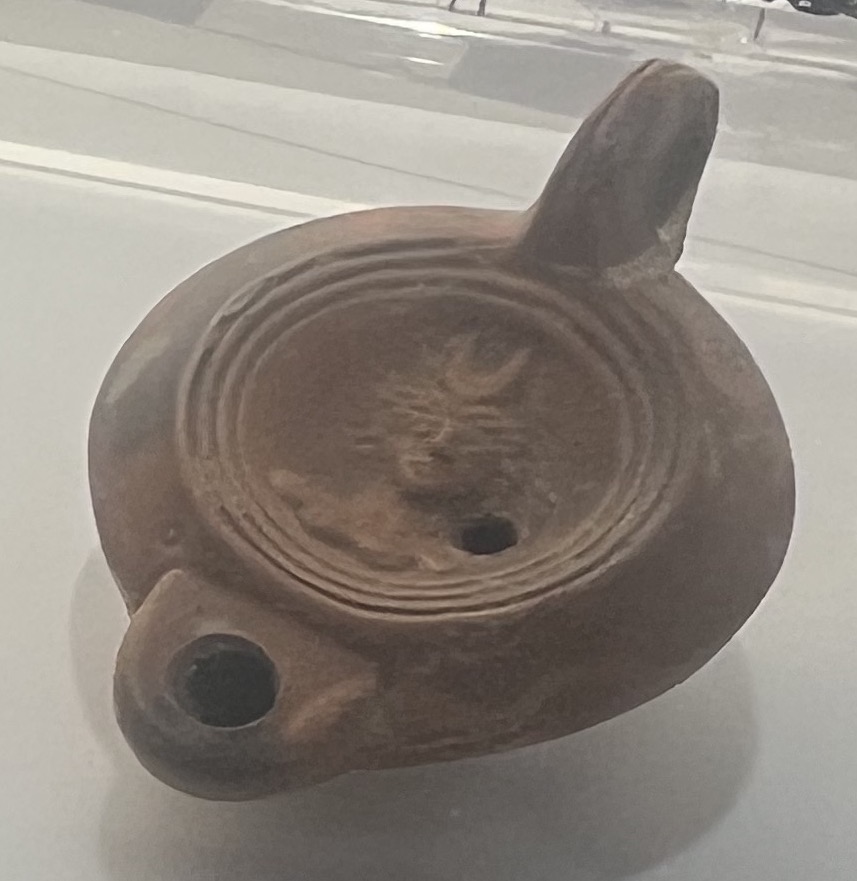
Cooking
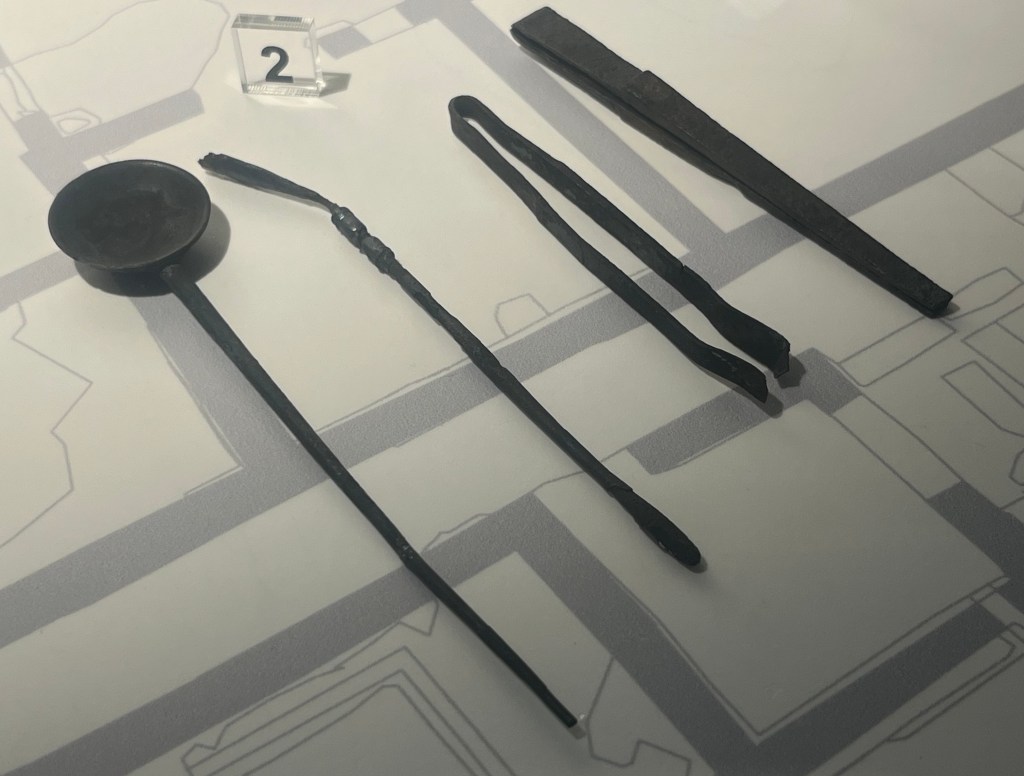
Tools, Tweezers, and the Everyday
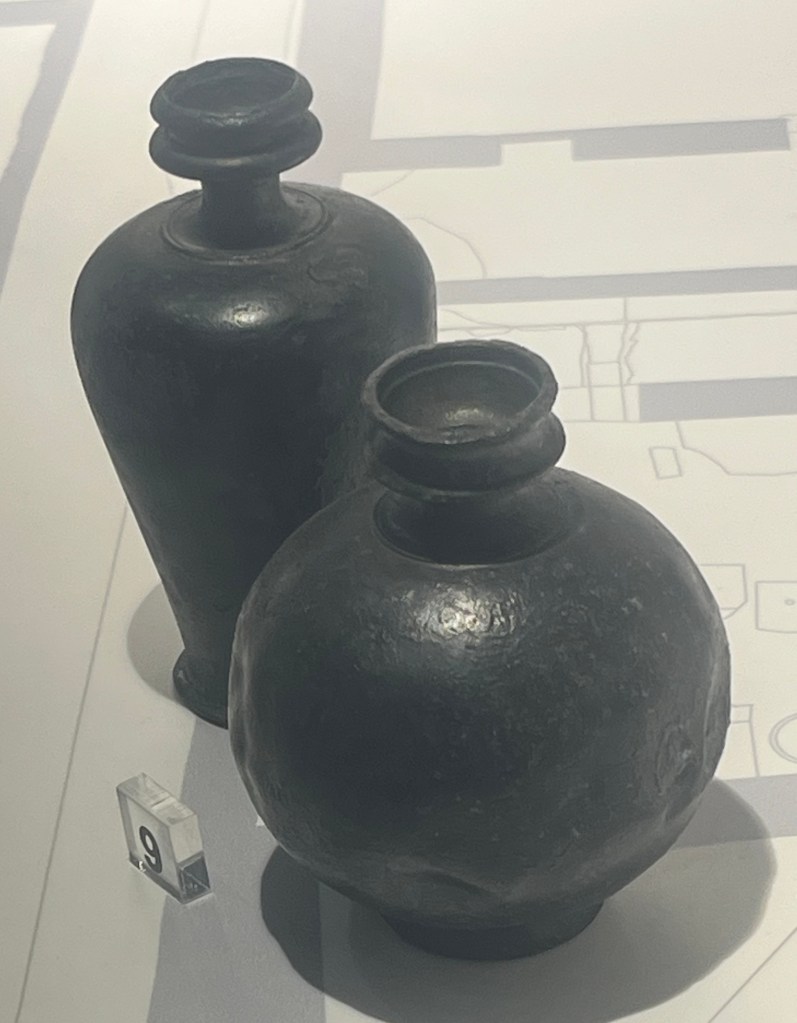
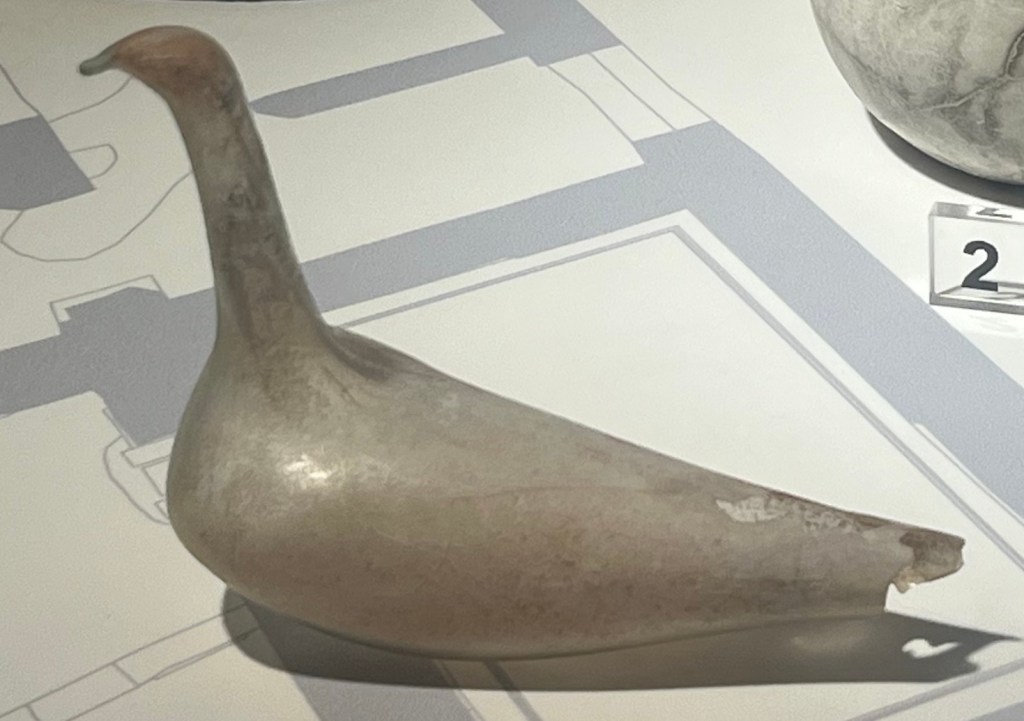
Vials and Glassware
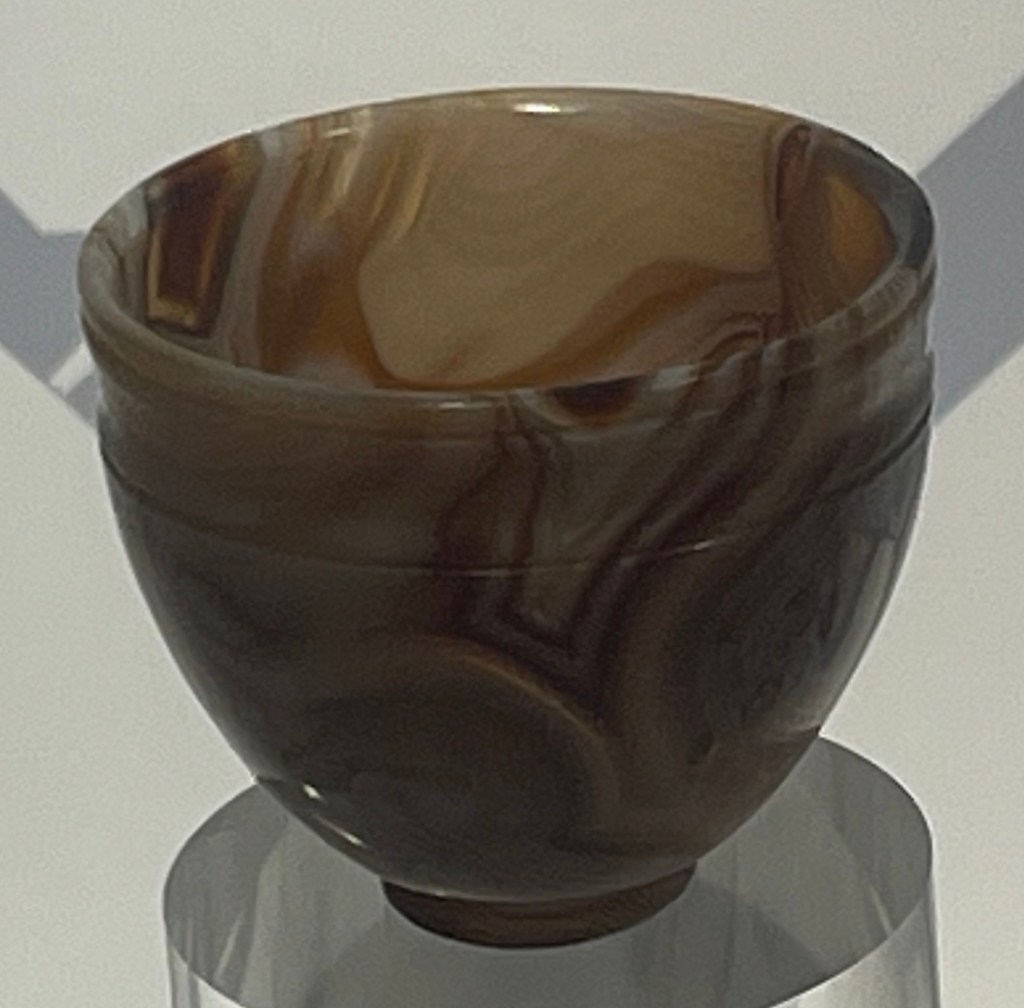
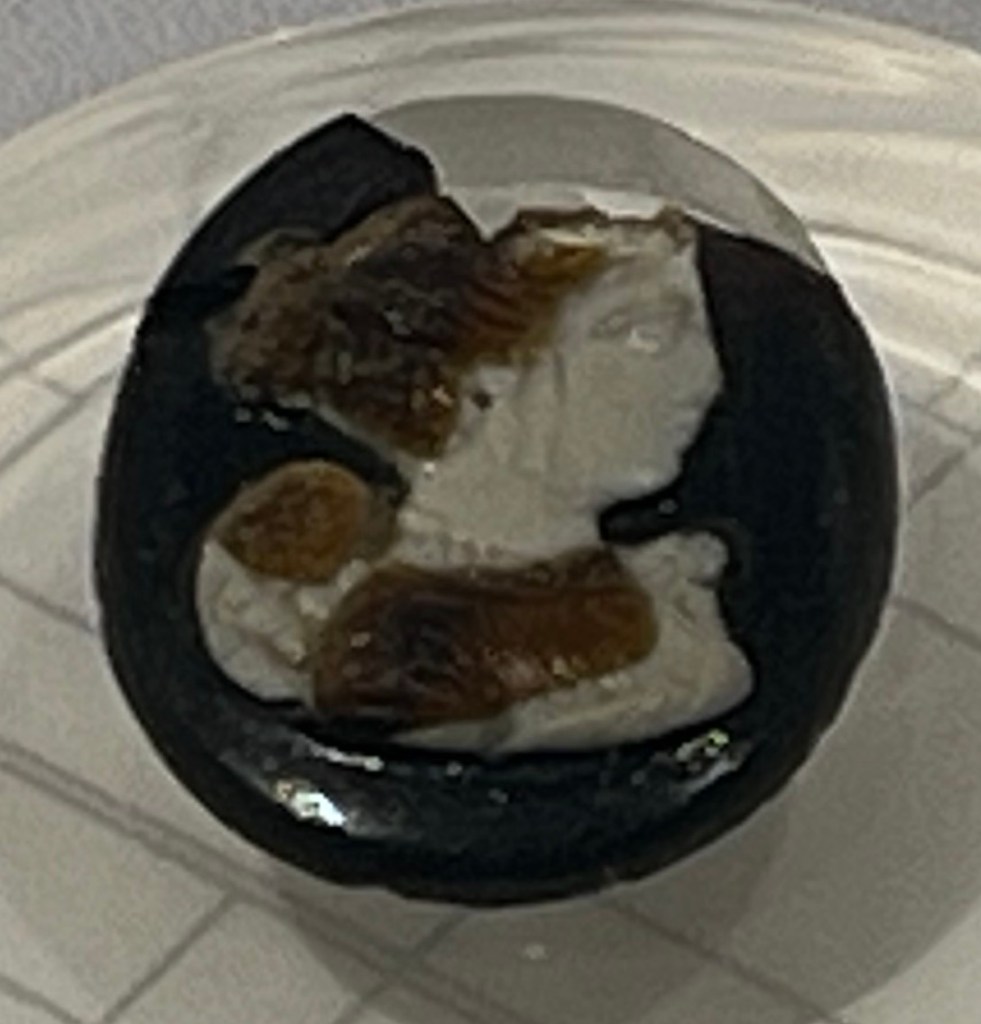
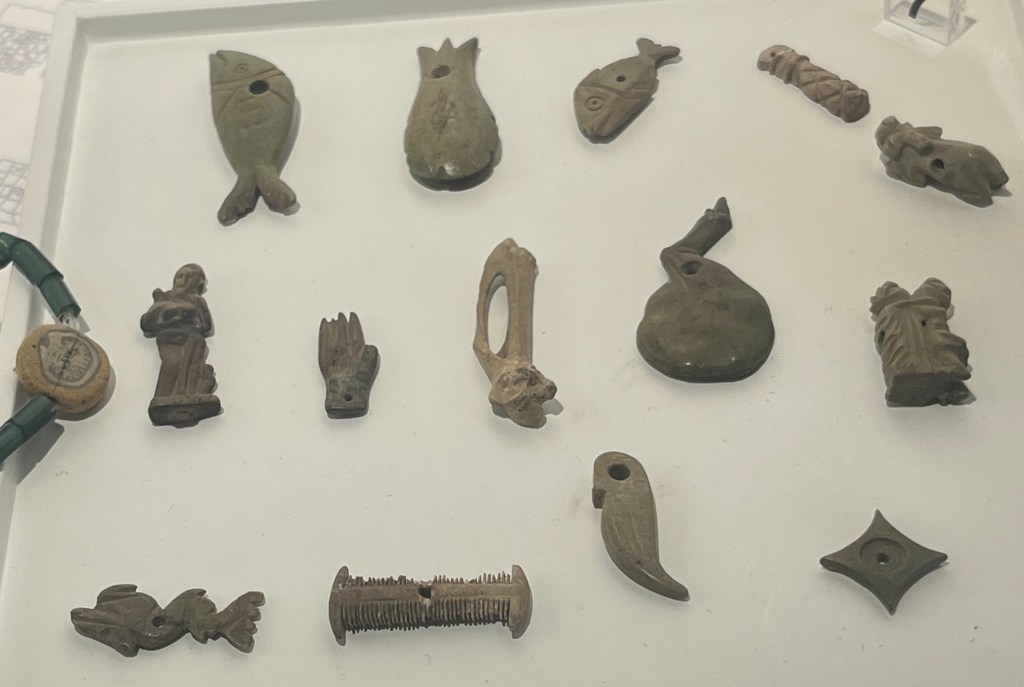
Tiny Art
None of these pieces was more than 1 or 2-inches!
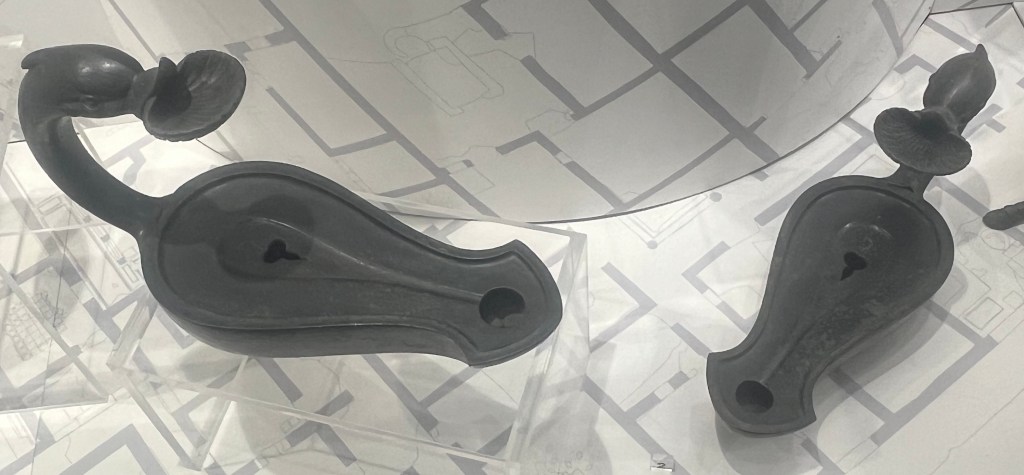
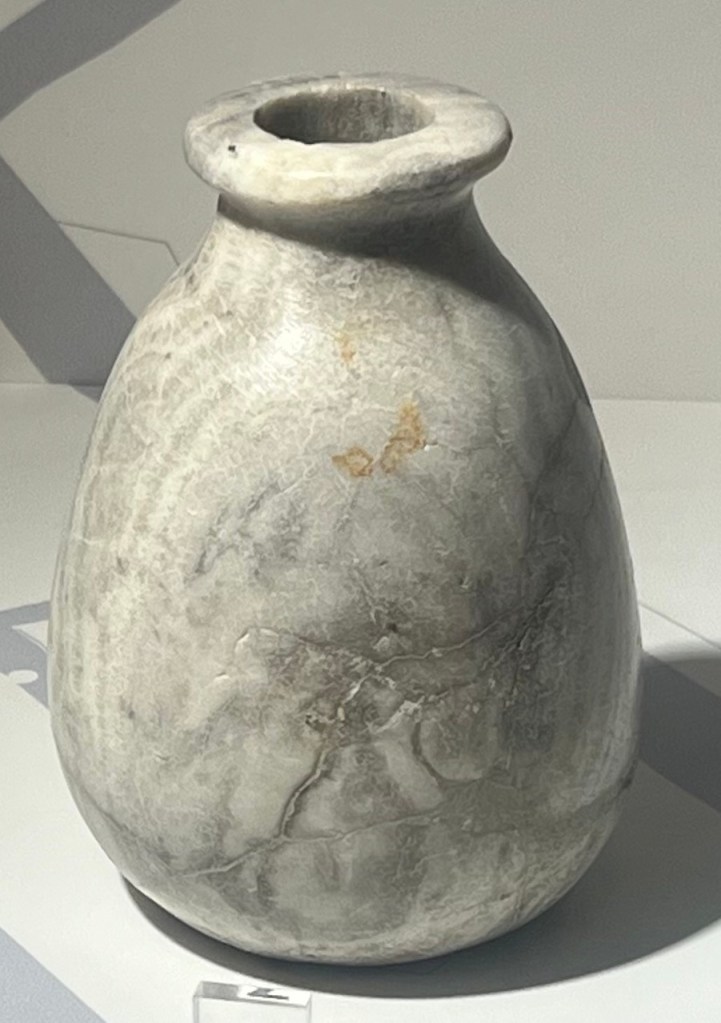
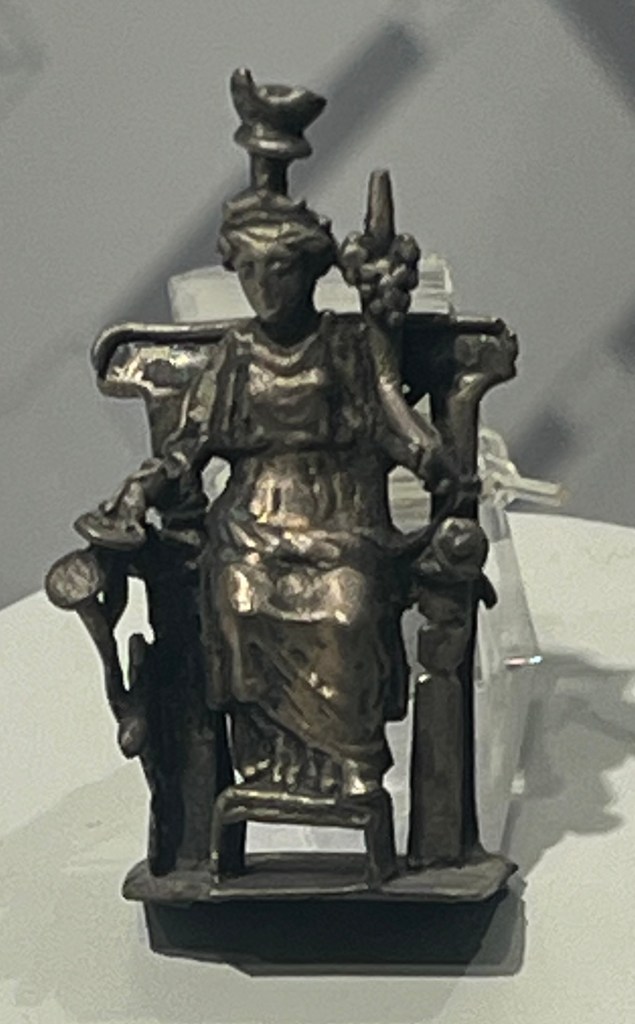
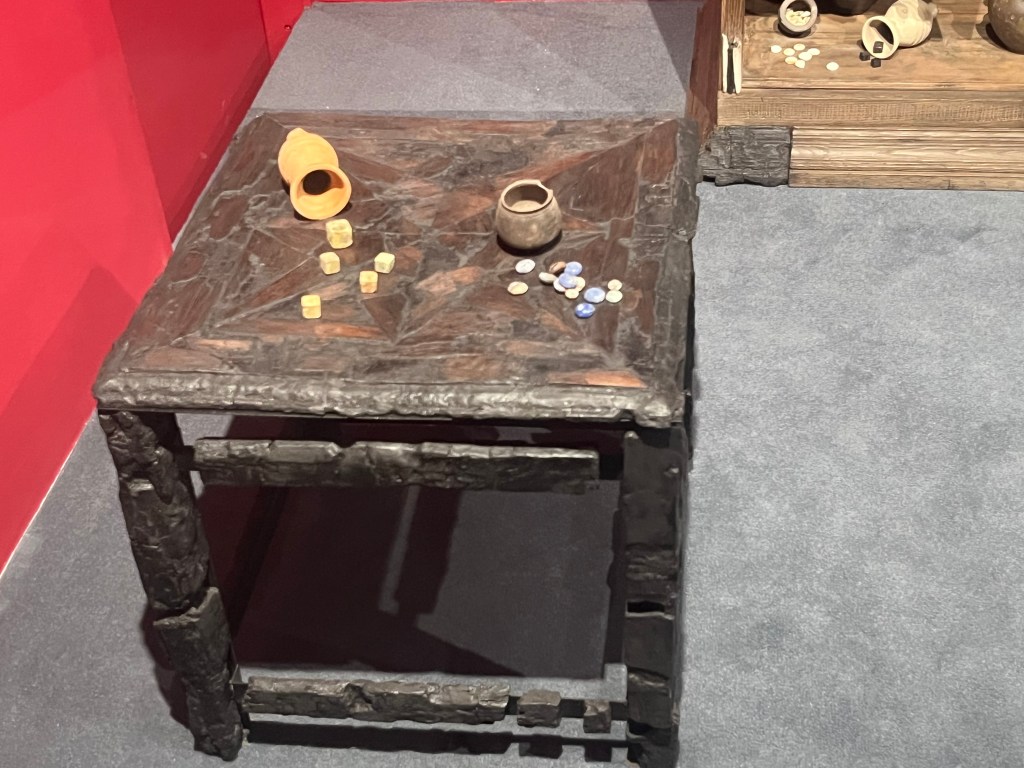
Preserved Wood
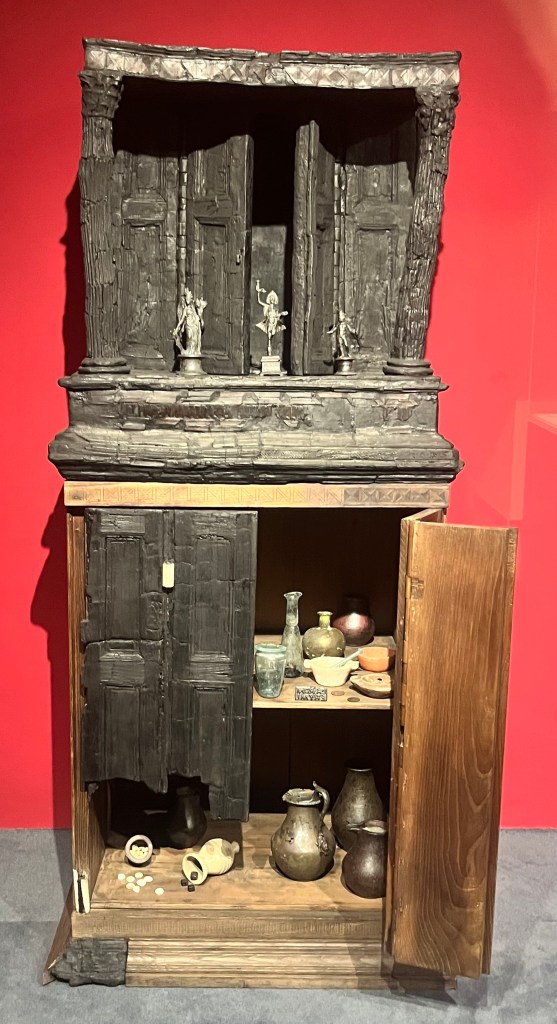
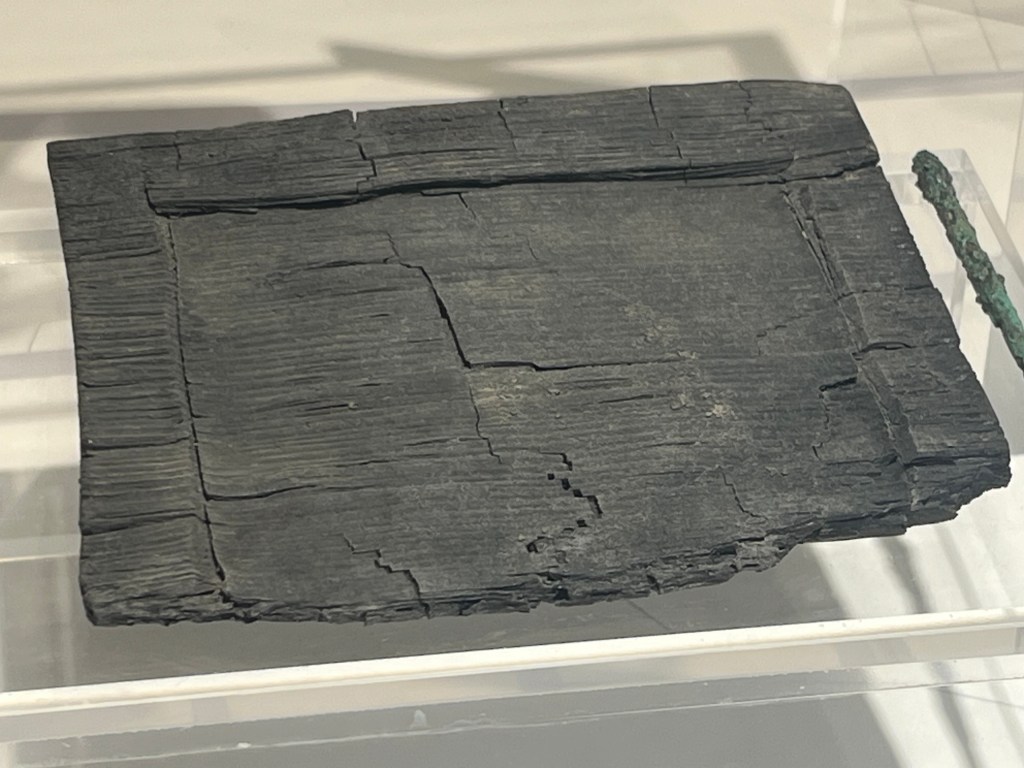
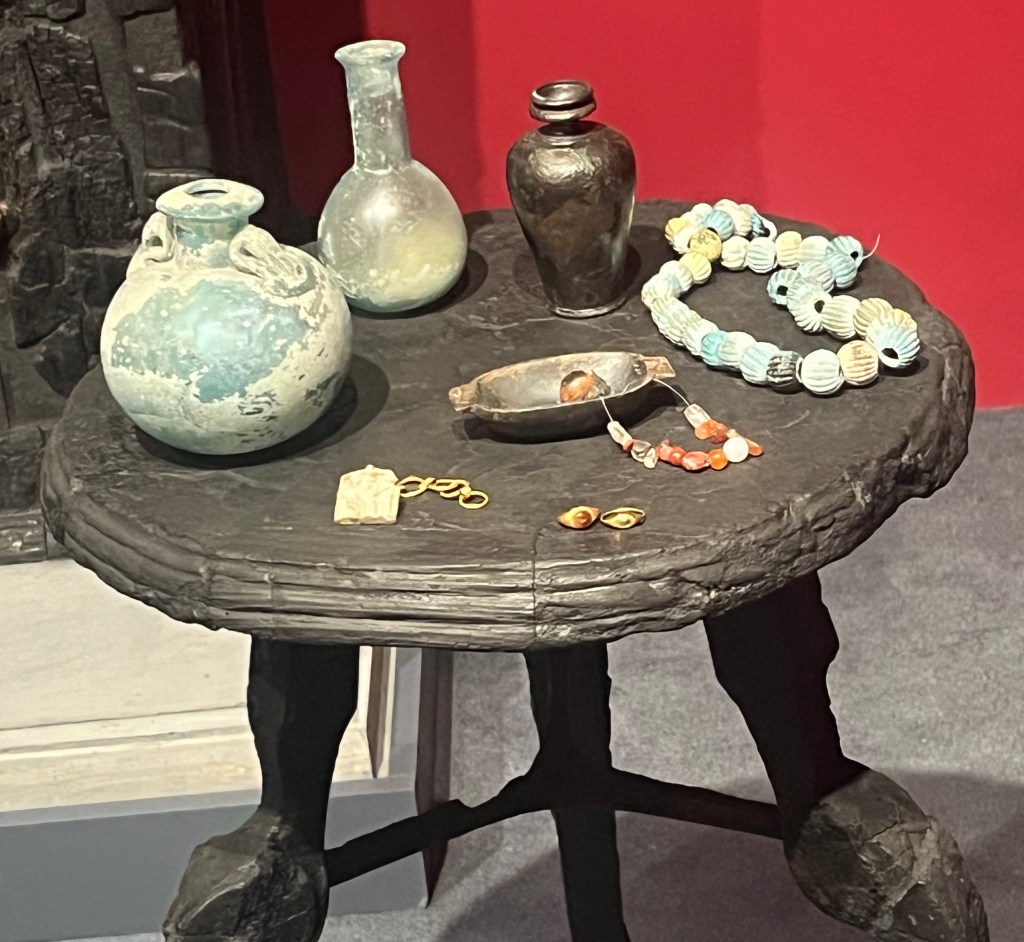
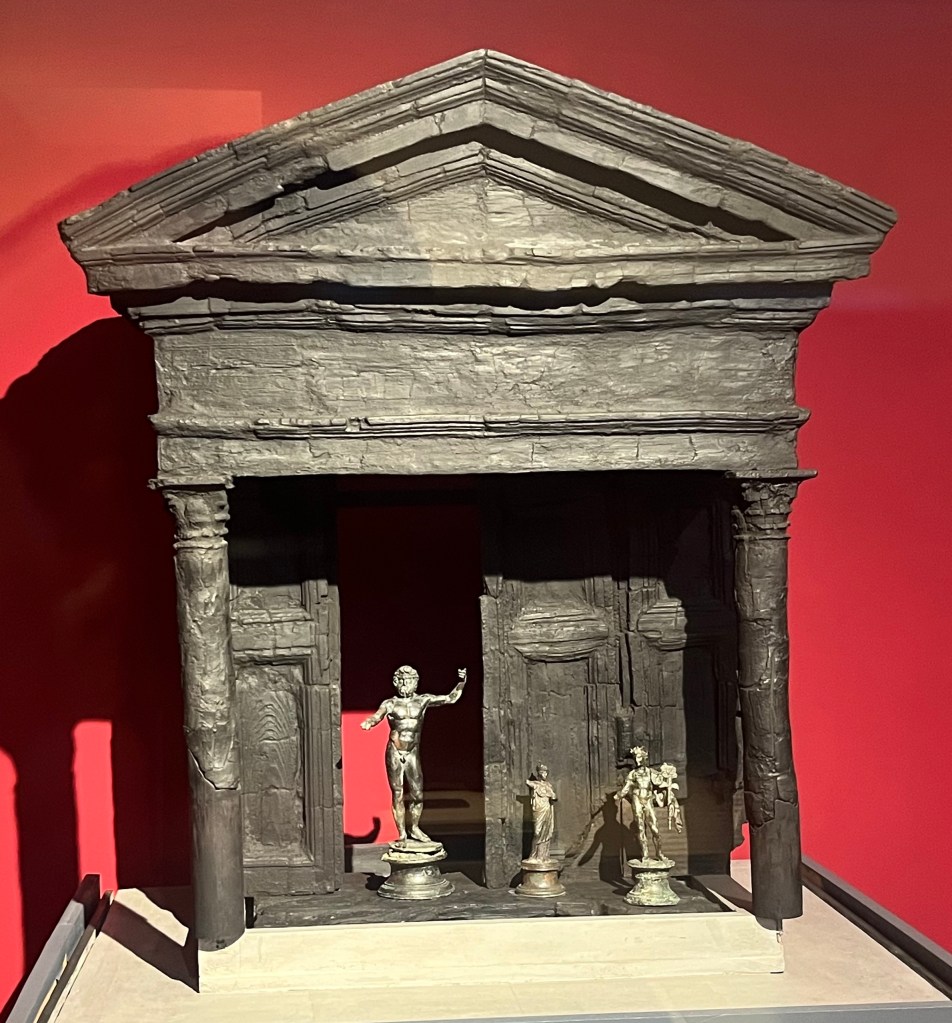
Amphorae
Jugs for carrying wine and other liquids long distances without spilling or spoiling.
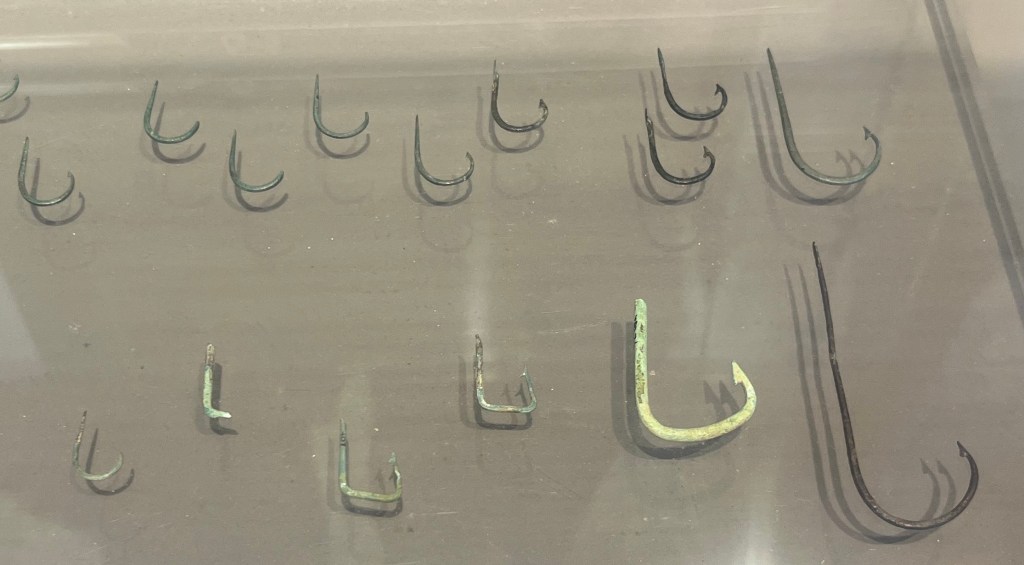
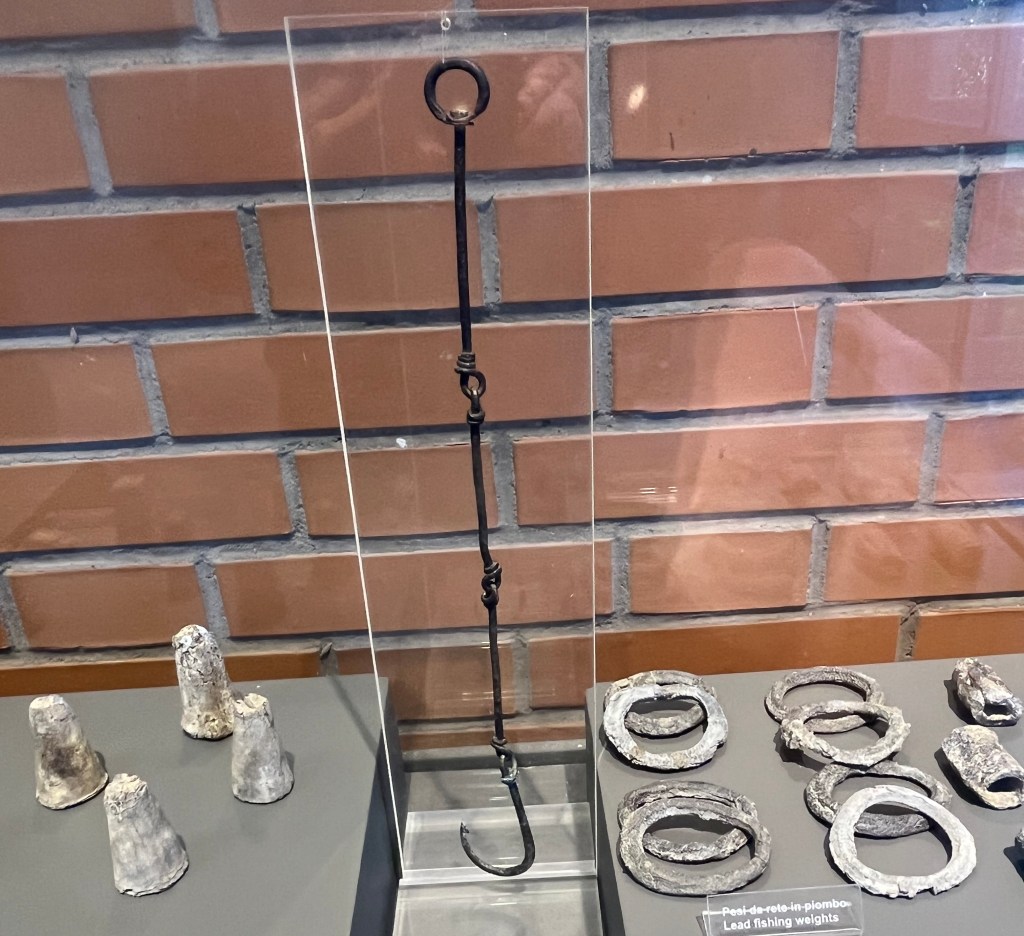
Fishing
Aw, c’mon! 2,000-year-old barbed fish hooks identical to the ones in my tackle box!
The Last Moments … Waiting by the sea to be rescued
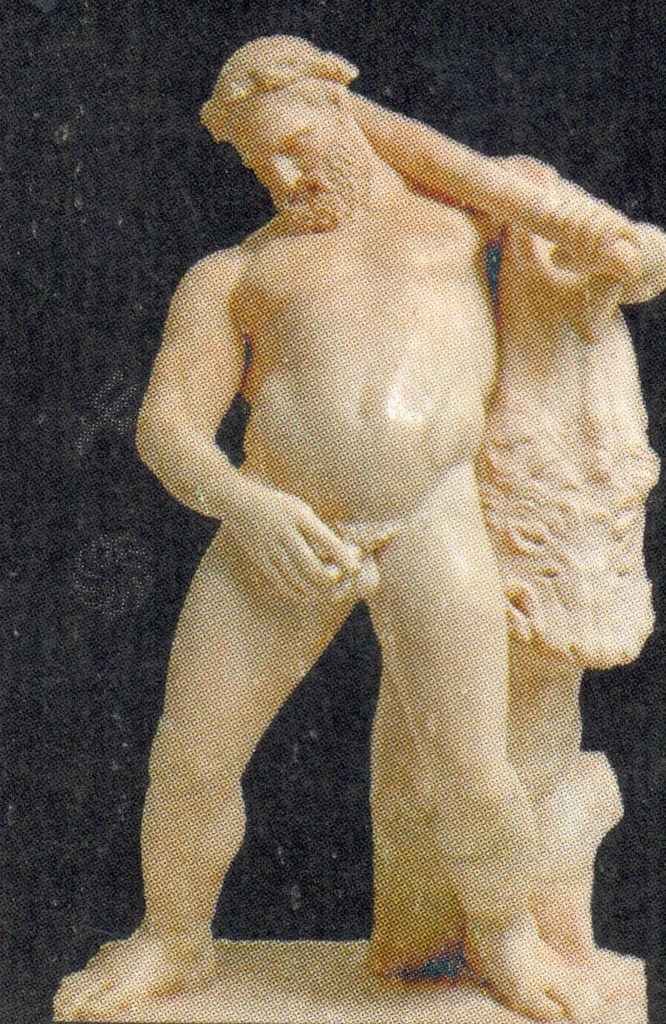
The Logo
You explain this one: How in the world did this image become the logo of Herculaneum? He appeared at the end of the day, showing up everywhere in the gift shop: bookmarks, cards, statues, you name it! I asked ChatGPT to identify it and learned that it is a common Roman art piece, often called “Drunken Hercules” and often called “Hercules Urinating” (or, more affectionately, “Pissing Hercules.”) My daughter Joanna was not good with any of those names. Thanks to her, in our house, this classic piece of Roman art is now officially “The Wanker of Herculaneum.” Thanks Jo!
 myinnersociologist