Summing Things Up: A Whole Bunch of Ideas, Experiences, and Lessons Learned

For everyday driving, I cannot really imagine a better mode of travel. On the road, the cost of charging was about 3/4 the cost of gasoline ($450 versus ~$575) … and Mo does not need any oil changes. At home, the cost is about ½ the cost of gasoline. As long as the travel day is less than 200 miles, one charge is good for the day. The at-home charger works all night and is done by morning. The deal with my electric company is that as long as I don’t charge during peak demand hours – 5:00 PM to 10 PM – I get $100 a year knocked off my bill, bringing the price down a little more. On those rare days when driving distance might exceed 200 miles, like Boston to Vermont, finding a charger is pretty easy, and 30 minutes is ample for a charge of 85% capacity or more.

The at-home charging apps are totally intuitive and easy. If you pay a time-of-day rate, you just program the app to charge only when rates are at their lowest. Easy Peasy.

Here are a few things I would like to know, have available, or understand better … and few ideas I have for making the experience easier…

Charging Speed and Battery Capacity

The Ariya has a battery capacity of 87 kilowatt-hours. It is rated to get over 3 miles per kilowatt-hour. In winter, it got about 2.5. High speed chargers are generally rated at either 150 kilowatts or 350 kilowatts. That is where my practical understanding stops.

I do not understand why some vehicles seem to charge faster than others at otherwise identical chargers, and I did not experience a big difference in actual charging speeds, though I always tried to charge at 350-kW chargers. At a Walmart in Erie, PA, I watched 3 different vehicles plugged into identical chargers get charged at dramatically different rates. I don’t get it.

Also, I have been told … and many of the chargers state … that charging slows down at 85% capacity, so the charge rate from 20% to 85% is faster than the charge rate from 85% to 100%. I did not experience the slow down, though I did try to space-out charging stations so I never worried about getting that last 10%, from 90% to 100%. I was usually antsy to re-hit the road, so I quit when I knew we had ample capacity.

Finding Charging Stations and Motels

On the one hand, there is an amazing amount of information about EV charging on the web. On the other hand, it is a pain to use. Plus, the number of charging stations is changing at warp speed. Keeping up with the changes would be nearly impossible.

All of the motel chain websites plus Hotels.com, Expedia, AAA, etc. have “EV Charging Station” filters as part of their search. Too bad the lists are not always up-to-date or complete; they often have no information or incorrect information about the plug (Tesla versus other … and lazy/cheapskate me never bought the adapter), and they certainly never have information about either the working condition of the charger or the number of cars needing a charge. From my experience, all of the public chargers everywhere are on a first-come, first-serve basis, and the only control to keep things moving is idle fees. “StayN’Charge” is an app that supposedly shows motels with chargers, but it is grossly lacking in data. We learned of a fantastic motel in Omaha through it, but other than that it never lived up to its potential.

There’s a mess of resources for finding chargers. “Plug Share” is an app that consolidates information from other charging sites. It’s pretty good, but nowhere near 100%. Google Maps is also pretty good and nowhere near 100%. With Google Maps, you can ask it to find EV Chargers near a specific locale, or you plot a route and then (on the computer but not a cell phone) hit the EV Charger filter. With a little more digging, you can learn the charging speed (Level 2 or High Speed), the charging capacity (150 kW or 350 kW), and the connector (CCS vs CHAdeMO vs Tesla). No doubt, these resources will improve over time.

Each of the chargers is operated by an independent business. (Think “Shell,” “Exxon,” “Mobil,” etc.). So, on my phone, I have apps for “EVGo,” “Chargepoint,” “Vialynk,” “ChargeHubEV,” “Flo,” “ChargeFinder,” “EVConnect,” “Envirospark,” “CircleKCharge,” “ShellRecharge,” and “BlinkCharging.” They are terrible for locating chargers, but once at a charger, they either make the charging easier or possible, and after-the-fact, they provide a great paper trail of where you charged, how much electricity you used, and the cost. For some, you need a credit card only and no account; for others, you need an account and payment method, so you charge with the swipe of a QR code. They are all different, so once again, patience!

In Ohio, we ran into a weird problem finding chargers. The chargers we found on the map were at dedicated service plazas on the Interstate, but the map did not tell us that, and we stay off of Interstates. We arrived at the back side of a Service Plaza; we could see it, but we couldn’t get into it. We had to drive 20+ miles out of the way to get onto the Interstate and then to the Plaza. Fortunately, we had learned our lesson about letting the capacity get too low, so we had plenty of battery for the wild goose chase. It was a non-event.

A Vision of the Future: Battery Swapping

I expect we will have a pretty robust infrastructure of charging stations in the coming years. But I also expect that battery capacity and vehicle range will increase dramatically too. With increased capacity and range, charging times will take longer and longer, and with more widespread adoption of EVs, lines will become longer and more frustrating. 

My hope is that a new industry will successfully emerge. Think propane tanks! Back in the day, everyone with a gas grill had to find a re-filling station for the propane tank. Then miraculously, a decade or two ago, tank exchanges popped up everywhere. The tanks are all uniform and meet a strict standard of safety. Users drop off an old tank and pick up a new one. Tank ownership becomes blurry. (Users own a tank, but not necessarily the tank they are using.) The whole process is as easy as buying a quart of milk. 

The same deal is happening with EV batteries … successfully in China, and as a start-up in the Bay Area. When it’s time for a re-juicing, you pull into a robotic battery center, the robot slides the battery pack from your car and installs a fresh, fully charged one. The provider recharges your old battery so it’s ready for re-use. You drive out fully charged in less time than it takes to fill a tank with gas. Get to work you entrepreneurs. Time is of the essence!!

Ease of Handling the Cables

EV chargers look like gas pumps, and the electrical cable looks a lot like the hose on a gas pump. But don’t be fooled. Those cables are filled with conductive wire. They are heavy and stiff, especially in the cold. And the plugs themselves are not forgiving. They must be lined up perfectly to attach to the car. In the blowing cold, hooking up the charger is really hard work. Over time, I expect to see increasingly lighter weight and more flexible materials, so the act of getting a charge does not require as much brawn.

Location of Charging Ports

Mo’s charging port is on the right side, just in front of the passenger door. If I don’t pull up to a charger perfectly, the cable will not reach, and I cannot plug in. If there are multiple cars using chargers, I may not be able to maneuver the car so the cable fits. Charging ports on other cars are everywhere: left, right, front, and back. If manufacturers put them in similar places, it’d be a lot easier to design chargers that will work on all cars.

It’s time to bury the Westinghouse / Edison hatchet. Make this stuff uniform so we can all enjoy the benefits of going EV without fighting the hubris of infantile design engineers!
Starting to Fall in Love After a Rough Start

Lipton introduced canned iced tea to the world in 1972. I was in grad school in Georgia (a place where we know a thing or two about iced tea). It was a foul swill that bore no resemblance to actual iced tea. Then, a friend offered a new perspective. “Stop thinking of it as iced tea,” he said. “If you just think of it as a canned drink, it’s not bad. It’s only bad if you think it should taste like iced tea.”

The experience of driving 4,200 rural, back-road miles in an EV followed a similar trajectory. 

At first, I leaned into an early life of road tripping experience: Get in the car in the morning; drive til you need gas; fill up; keep driving; make pit stops only when necessary; buy easy-to-eat-in-the-car road grub; drive til you’re tired; sleep a few hours; repeat. You could cover a lot of miles that way, and if the few hours of sleep included camping, you could even have some really good fun.

Then aging set in. Children in the car required more stops and less marathon driving. Retirement brought a new freedom: The journey became the priority instead of the destination.

Then we dared to change machines, from internal combustion to electric, at a time when we knew the infrastructure for on-the-road charging was still nascent.

The first week or so was overwhelming. Would we find the chargers we needed? Would we wait for hours while a Level 2 charger juiced us up? Would we have to spend days waiting for a charge on a 110-volt circuit? (I brought a 100-foot extension cord along just in case.)

Very quickly, we learned that the mileage capacity that showed on the dash at 100% had little or nothing to do with reality. We also learned that the 272-mile range the Ariya was supposed to have was fiction … and that the stories we had read of high speed, mountains, and cold weather affecting performance were totally true. (According to the car’s computer, our lowest range at 100% capacity was 191 miles; our highest was 246. Actual experience might have been even more variable. I expect to see well over 300 in summer.)

Two experiences taught us the importance of being conservative and careful. The first was our very first road trip when we left Albany, NY with what appeared to be 100 miles of extra capacity (a seemingly comfortable cushion) and drove north through the Adirondack Mountains at Interstate speeds of 80-ish on a very cold evening. By the time we reached our Grand Isle, Vermont destination, that 100 miles of extra capacity had miraculously become 20 miles. We made it, but I was neither happy nor chill.

The second was on our journey west in Lafayette, Indiana late on a Saturday afternoon. Wisely or not, I had made the assumption that college towns would be more likely have chargers than other places. I still have no idea if that assumption is totally true. The best bet for finding a high-speed charger is a place with a bunch of car dealerships … but dealer-provided juice might cost an arm and a leg.

In Lafayette, we had reserved a room at a motel with a charger, so we didn’t worry when our capacity started to get low. By the time we arrived, we had 50 miles of range remaining. When I made the reservation at The Best Western, I had asked the clerk every question I could think of, but silly me had neglected to ask one more essential question: Did their charger work! The clerk was utterly non-plussed when we asked. “Yes,” he said, “we have a charger. But it is not working right now.” Lesson learned. Take nothing for granted. 

So I called the local Nissan dealer. The nice guy on the phone assured me they had a high-speed charger we could use. It not only worked fine, he said, but the guys at the dealership would provide the charge for free. But the guy on the phone was not the guy at the dealership … and the guys at the dealership were jerks. Their high-speed charger, we were told, was for their cars only. We could use their Level 2 charger for the 2 hours they were still open, which might get us 20 miles, but then we were on our own until Monday. Like I said, take nothing for granted.

Fortunately, we found a Doubletree with a free Level-2 working charger. We paid more than we wanted for the room, but left in the morning well rested and with a full charge.

Lesson: Plan to charge with at least 100 miles of range remaining. Misinformation, broken chargers, and long waiting lines (especially at Walmart chargers) are commonplace.

By this point in the trip, I had reached a nadir: Road tripping in an EV sucks, and I never want to do it again. I told my family back east that the experience had earned an “F,” and it would be a while before we tried a stunt like this again.

From the Depths

That is when the attitude shift started to set in … when, like with the Lipton canned iced tea, I stopped thinking of this experience as just another road trip, but rather as a road trip in an EV, with its own pace of travel and its own opportunity for really fun, cool experiences. I have come to embrace EV travel. I never did learn to like bottled iced tea.

The trip home in Mo was slower than I had anticipated, and it required a lot more planning and flexibility, but the experience was well worth it. Plus, we gave ourselves some time to just have fun. We dawdled before leaving Omaha, enjoyed an afternoon along the Mississippi, spent a full day at the Rock and Roll Hall of Fame, and hung with really good friends in Syracuse.

Wintertime is assuredly the wrong time of year to learn the EV ropes. The days are short, and the battery life stinks. Plus, we are slow-moving old folk who had a hard time hitting the road before 9:00, who wanted to stop before dark (just because), and who wanted to avoid Interstates (because we love the quiet, beautiful, truck-less solitude of back-road driving). Speed was not a priority.

In summer, with warm temps and lots of daylight, I expect to be able to cover 600 miles a day. On this trip, with our traveling days limited to 7-ish hours (9-4), average speeds of about 50, and 2 charging stops, we aimed for about 250 slow, leisurely miles, and we succeeded. The rhythm of the day became a fun part of the trip. Planning the route around reliable chargers … which required a lot of apps and phone calls (to be sure they were available and working) … and motels with chargers (usually free Level 2 that take all night to charge) became a daily ritual.

Is it like driving a gas-powered car? Yes and no. You still climb into a car, start it, put it in drive, punch the accelerator, and cuss at the horrible, rude drivers or cut you off, speed and weave, tailgate, or don’t let you change lanes. But it is also the smoothest, quietest ride I have ever imagined. The acceleration is from a different planet. The internal climate control (because it does not depend on heat from the engine) is totally comfortable all the time … and it is easy to heat the seats, steering wheel, and back seats. Most importantly, in 4,200 miles, we did not burn a single drop of gasoline!

My jury is still out on long, destination-focused road trips.  But for everyday driving, there is no choice: The EV wins hands down.

Near the Halfway Point

By the time we made it to Kearney, Nebraska and Granddaughter Ella’s senior art show, we had driven about 2,000 miles.

Planning the trip west was exciting. We had no idea if it could be done or how much hassle it would be. We had no clue how the cost would compare to gasoline. 

By Kearney, we knew some of the answers: Yes, it could be done. Driving an EV through the rural Midwest and high plains is a hassle. We won’t know the cost until the trip is complete.

Unlike past trips, we could not just take whatever route we wanted. We had to study maps and apps and find day-time routes with high-speed chargers spaced at roughly 100-mile intervals. We had to work to find motels with Level 2 chargers, so we could charge overnight, hopefully – but not always – for free.

We could not haul ass. In past trips, we had to stop for two things: peeing and getting gas, both of which take 5 or 10 minutes. Peeing happens in roughly 2-hour intervals; gassing up in roughly 4-hour intervals. With the EV, peeing and needing to charge happen at roughly the same 2-hour interval. Peeing still requires just a few minutes, but charging takes 30 minutes or more … unless you have to wait for a charger, which fortunately happened rarely. We had to spend roughly 25% of our time charging. That down time provided a perfect opportunity to confirm or pinpoint our next charging destination, and if we were lucky, get in a half game of cribbage. We could make a beeline between chargers, but not between points, and stopping at motels with a charger might take us 10 or 20 miles out of the way, so we could not possibly minimize the miles we had to drive.

That is exactly the work and hassle we had anticipated. It changed the fabric of road tripping. It was hard and somewhat frustrating, but we learned that EV travel can be done.

In Kearney, I wondered why we had ever embarked on such a whacko adventure. By the time we re-crossed the Mississippi, I had a much better idea of the answers and had become a convert. Except for the rare I-gotta-get-there car trips, EVs it will be!

Cheap and Easy So Far … but No False Sense of Security

I hope we have not experienced a calm before the storm, but I fear we might have!

We are nearing the end of our first week on the road, and we’ve travelled about 1,000 miles. The trip has been easy, gorgeous and chill, all on back roads laced with stone walls, beautiful mountains, nifty villages, plenty of manicured farms, and, not unexpectedly, a mind-blowing number of Trump signs. 

Interestingly, the Trump signs pretty much disappeared in the 60-mile stretch between Columbus, Ohio and Dayton, Ohio. In the center of that stretch sits Springfield, Ohio, a small-ish town with a rich immigrant population that was recently made famous by both Trump and Vance for their ravings about the Haitian immigrants eating their pets. We made a point of stopping there to try to get a sense of the place; we walked around the local Kroger supermarket for a while and engaged in some friendly banter. Yes, the people are more darkly hued than in the surrounding towns, and yes, they do have accents and appear to be less well off than others, but they were all extremely nice.  Just sayin’.  Trump won the county by 30 percentage points, so the electorate was no different from other places, but the visible, in-your-face Trump-ness was absent. I have no explanation; only observations.

But this blog entry is not about politics, flags, or yard signs. It is about keeping an EV charged and running. Our first few days, I fear, provided a false sense of ease and security. Chargers were plentiful and mostly free. Our first 800 miles cost just $15 thanks to motels with free overnight charging and really nice Nissan dealers who let us plug into their high-speed chargers.  

As we move west from the comfortable “woke-ness” of the east coast, the chargers get scarcer, the distances longer, and the cost, higher.  So far, the drive has been less costly than gasoline-powered travel. Now that we are entering Indiana, though … followed by southern Illinois, Iowa, and Nebraska … I expect the cost and hassle to rise, perhaps by a lot.

Up until now, we have taken the straightest possible route that follows the AAA-map dotted highways, the scenic roads. That strategy is ending. Now, our goal is just to stay charged, regardless of time, cost, and distance. Running out of juice would really suck!

And the other great uncertainty, in addition to the location of charging stations and time required to charge, is the effect of cold. The last few days have been sub-freezing. Our battery capacity has fallen from 270 miles on a charge to 240 to 210. Tomorrow, we start seeing temps in the 40s and 50s again. What will the effect be? I’ll let you know. All I know for now is that I don’t want to go more than about 120 miles without a charge.

Our totally chill, relaxing drive will either stay that way … or it won’t. Stay tuned.

Three Clicks Got Dorothy Home

Dorothy only needed three clicks to get home.  We needed five.

Just before Thanksgiving, we headed from home in Vermont to home in Boston for the holiday. This time, I had the mid-trip charging situation a little more under control … or so I thought.

Midway through the drive, we stopped in White River Junction for a charge. White River has a couple of options, so we figured we’d be safe. I pulled into the Mobil Station, drove all the way around it, and never saw the chargers that were supposed to be there.

No problem. I could see the Chevy dealership up the road that also has a charger.  Off we went for our first (of what I expect will be many) dealership charges. The people were nice. The charging was easy. We sat and played a game of cribbage while we waited. (Rebecca beat me, dammit.)

The battery charged almost to the point we needed, then it just stopped. We wasted about a half hour thinking it was still working, but apparently it wasn’t. The lady at the dealership said that happens sometimes. (Note to self: Make sure things keep working.)

We still needed a bit more charge to get to Boston worry-free. I asked about the chargers that were supposed to be at the Mobil Station. They are there, she explained, but in another parking lot behind the station. No wonder I couldn’t find them the first time.

We pulled up to finish the charge. This time I was a pro at using ChargePoint chargers, so no more lost credit card fiascos. We grabbed a bite to eat then came out to leave.

Techno Side Note: Level 3 EV chargers look a lot like gas pumps and nozzles. The similarities stop there. Instead of a rubber hose, EV charging cables are about 50% larger in diameter and are filled with very densely packed wires. They are heavy, and in winter (and maybe in summer; I just don’t know yet), they are stiff and hard to maneuver. They carry up to 350 kV of DC electricity. That is a lot of juice! The plug, which looks a lot like a gas pump nozzle, needs to be wrestled to get it to line up with the charging outlet in the car. The whole operation is not really hard, but it takes real work, at least for a novice.

When we returned to the now-charged car, the plug was stuck. I didn’t know how hard to wrestle with it. I surely didn’t want to break anything, but it just wasn’t coming out. I punched and punched and punched the little release button. It clicked responsively but nothing budged.

So, I did what I am getting used to doing: I called the lady at ChargePoint. I think I got the same lady who taught me to use my credit card properly a few weeks earlier: sweet and knowledgeable with a very heavy accent who asked way too many unnecessary questions.

She instructed me to lock the car and close the windows, then click the “unlock” button on the key fob five times. Five clicks later, the charging plug lifted gently from its nest, and we were headed home. A new lesson learned.

Dorothy ain’t got nothing on us. We both made it home. I wonder how many more lesson-learned moments await us.

A New Adventure: Maybe the Best EV-er! 5,000+ Miles of Uncertainty

“Mo”

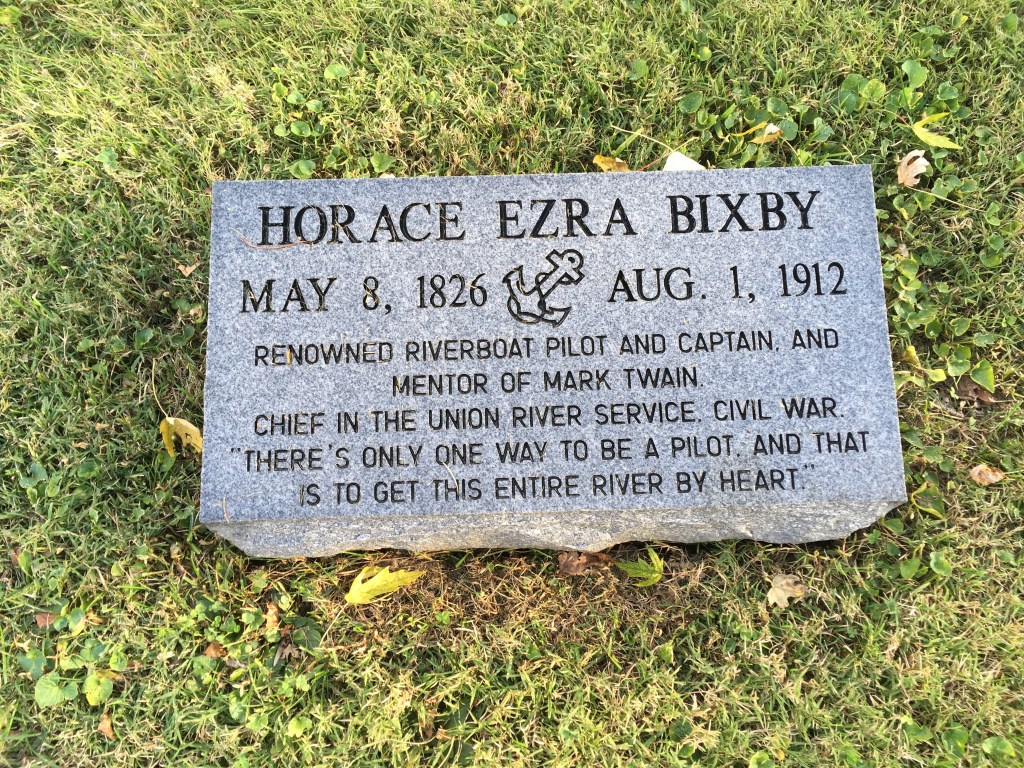
I had my last car for 10 reliable, maintenance-free, super comfortable years. I called him “Barney” for the first few years of his life because he was nothing special. Just an old Ford. Then, in St. Louis in 2017, as Rebecca and I were driving the length of the Mississippi River, we changed his name to “Mr. Bixby.” Horace Bixby was the riverboat captain who took the young cub pilot Sam Clemens under his wing and taught him the river. Mark Twain’s stories of Mr. Bixby in “Life on the Mississippi” are mesmerizing. His no-messing-around teaching style, his encyclopedic knowledge of the Mississippi, his civil war exploits, and his union organizing made him one of my heroes. Finding his headstone in the Bellefontaine Cemetery in St. Louis became one of the high points of our trip. Mr. Bixby has been in 42 states and a lot of Canada. He’s never once acted up. Even with 160,000 miles under his belt, he’d do great on another road trip. But it’s time.

Like sailing ships, the steam engine, dial telephones, and black-and-white TVs, time is passing him by. He runs on gasoline, powered by an old-fashioned internal combustion engine. Imagine! In 2024!

Both Mr. Bixby’s

A few weeks ago, I signed a two-year lease on “Mo,” a brand-new all-electric Nissan Ariya. I still have Mr. Bixby. I can’t quite let go of him yet. He’s been a gem of a friend. But “Mo” has some serious “MoJo”! I wanted to name him after an aria. (He is, after all, an Ariya.) But my knowledge of opera is limited at best. As I struggled to think of an aria that would make a fitting name for a new car, I landed on two of my favorite operas (or one opera and one operetta, if you are a purist), “The Magic Flute” by Wolfgang Mozart and “Der Fledermaus,” by Johann Strauss. In the absence of a specific aria, I figured the composers would have to do. “MoJo” it would be; “Mo” for short.

”Mo” drives like a dream: comfy, peppy, and full of autonomous features like automatic lane control, windshield wipers that sense moisture, and high beams that never forget to switch off. When I drive past gas pumps, a snarky inside voice gloatingly whispers, “suckers.”

Now it is time to figure out if the world of 2024 is ready for an EV road trip … on back roads, acceding to our whims of the moment.

Here’s the plan: On December 14, our granddaughter Ella opens a show of four years of her art at the University of Nebraska at Kearney. On December 21, grandson Seff graduates from the University of Nebraska at Lincoln with a degree in horticulture. Plus, we have a brand-new great granddaughter in Omaha whom we have not yet met. The drive to Nebraska would normally take us five or six days. We will allow two weeks. “Mo” supposedly has a range of about 270 miles. I am dubious! We’ll be driving in winter at highway speeds. My goal will be to plan a route with chargers every 100 miles or so. That is easy in the densely populated east; it is harder in the farmlands of the high plains and the stubbornness of the deep south; and it is even harder in the wide-open expanses of the far west.

When we arrive at a charging station, it may be out of order. It may be in use. And who knows what else might go wrong! Regardless, we need to be prepared. In the worst case, we have AAA Plus, which gives us 100 miles of free towing … but a tow truck won’t do the job. We’d need a flatbed. Since there is no neutral gear on an EV (because there is no transmission), turning wheels always engage the motor, and since “Mo” is 4-wheel-drive, when a wheel turns, a motor turns. No more tow trucks for us.

Mostly, I suspect we will need lots of patience and a good sense of humor.

Finding charging stations, I am learning, is not so easy! Tesla has an extensive network of high-speed chargers, but they don’t work on other cars. One day, Tesla will adapt its chargers so they work on cars like “Mo,” but the change is coming slowly. We’re not there yet. Maybe next year. 

Then there’s the issue of charging speeds. Level 2 chargers work fine but take 5-10 hours to charge the batteries. That is fine for an overnight, but not a quick juice-up-and-go. Level 3 chargers will charge to 85% in about a half hour. Not bad if you have the right connector – a CCS in “Mo’s” case.

If I were a motel chain, I would install a charger at every property, advertise the hell out of it, and allow EV drivers to reserve a charger when they reserve their rooms. A few hotels and motels, I have learned, are on that trajectory, but it is still precious few. 

Google Maps is in on this adventure too. If you put a route into Google Maps (on your computer but not on your phone) and then hit the “EV Charging” tab, it will show a lot of the charging stations on the route … but not all of the charging stations by any matter of means.

I have also downloaded apps from different charging companies: “PlugShare,” “Electrify America,” “EVGo,” “ChargePoint,” “ChargeWay,” “ViaLynk,” “ChargeHub,” and “FLO.”

NEWS FLASH … QUESTION: How fast is this landscape changing? ANSWER: As I was writing the last three paragraphs, I got an email from Nissan. In that moment, they notified me that they had added a charging station mapping feature to the “My Nissan” app that combines all of the charging apps from the last paragraph. Nissan has done a bunch of the time-consuming work for me. Regardless, I am still planning on an adventure and allotting a lot more time than I would otherwise just to control frustration.

Stay tuned. You’ll get the skinny as it happens. If we indeed choose to go with EV instead of gas, I expect no shortage of adventures.


EPILOGUE: About 10 minutes ago, Rebecca and I decided to go for it!!! The only uncertainty now is a major winter storm along the route, and I expect that would trip us up regardless of vehicle.