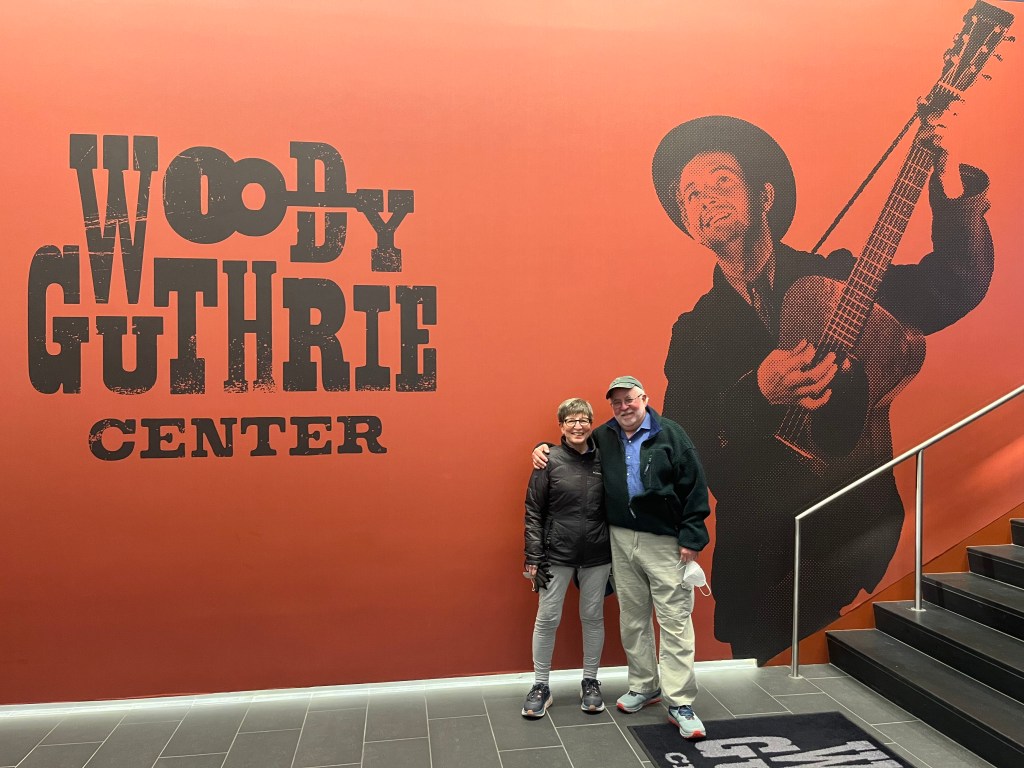
Darn. I’ve done it again! I called this blog entry “Finding ‘There.’” I know we are in Tulsa, but I am still not sure what or where “there” is.
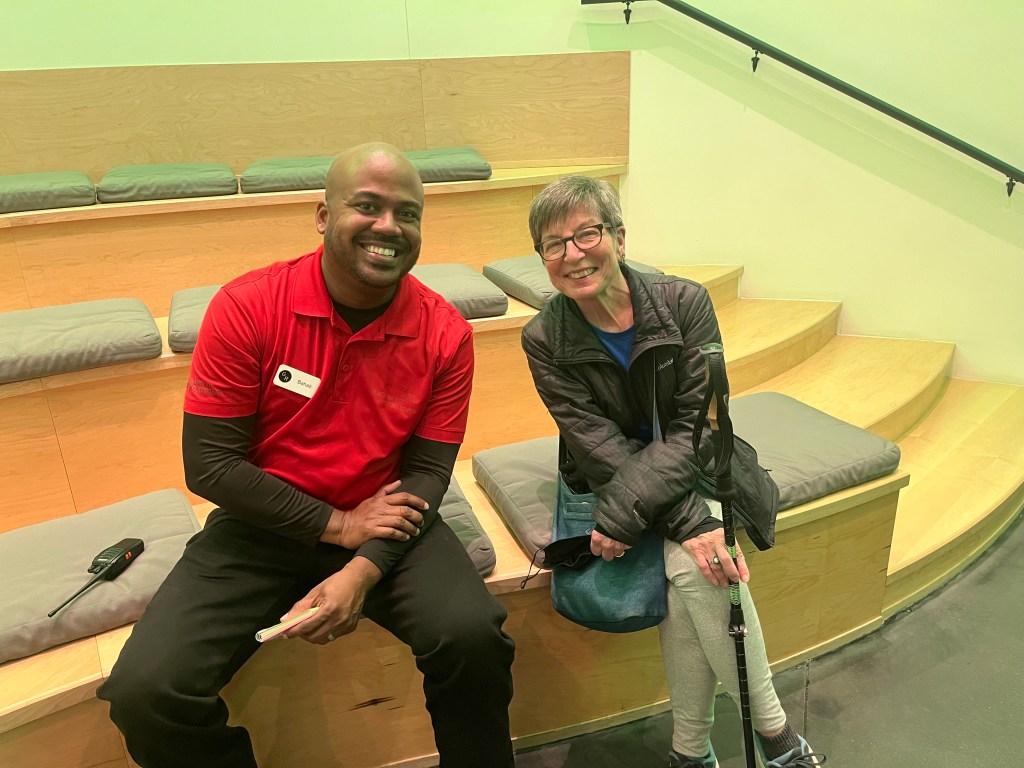
Here is some stuff I do know: We have spent the last few days in Tulsa with Bob Dylan (The Dylan Center*); Woody Guthrie (The Guthrie Center*); Bahati Brown, the awesome interpretive guide at the Greenwood Rising Black Wall Street History Center; and Amy and Chris Cojeen (along with Amy’s sister, Sarah) at the Muscogee Nation’s River Spirit Casino Hotel). We had a gorgeous drive here along the Oklahoma Illinois River, which brought us through Tahlequah, Oklahoma and the Cherokee National History Museum. WHEW!
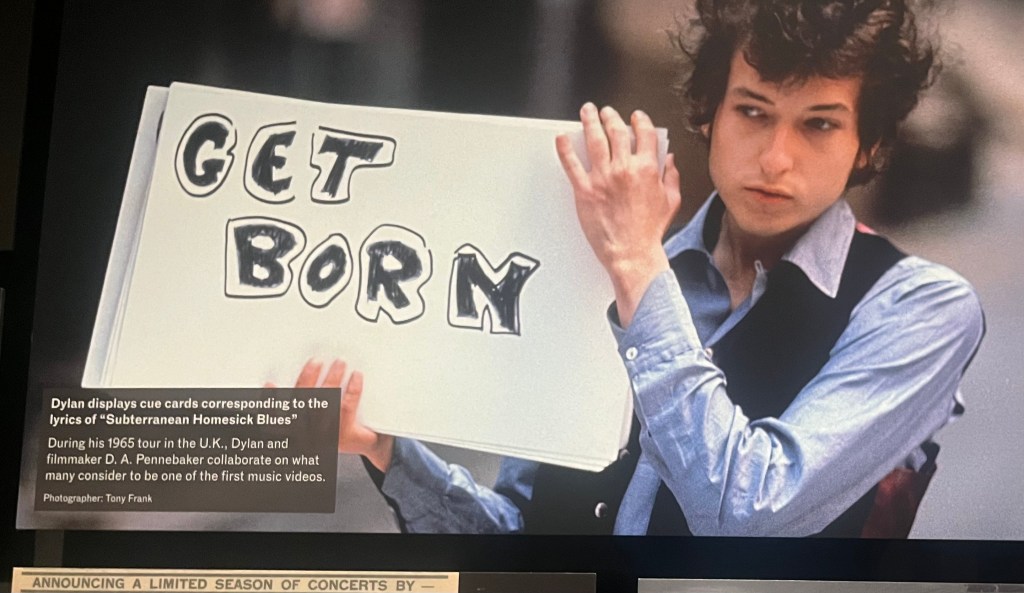
- Yep. The obvious question is what in the world is the Bob Dylan Center doing in Tulsa, Oklahoma. Bobby Zimmerman was born in Duluth, Minnesota and raised in Hibbing. He started becoming Bob Dylan in 1959 and took on that persona for real in 1962 in New York City. After visiting Tulsa, he liked the Guthrie Center (which is indeed Woody Guthrie’s home), so he decided to house his archives in Tulsa under the same roof. It is SO FREAKIN’ Dylan!
Four Days in Tulsa
Our Tulsa planning was pretty good: Greenwood and the Tulsa Massacre, Woody Guthrie, and some sight-seeing. (The presence of the Bob Dylan Center surprised us.) The planning for our lodging proved to be a real waste of time thanks to our good friends Fred and Cindy Clark and their good friends Chris and Amy Cojeen from Norman. (In case you are interested, Fred and Cindy are Tanner’s parents. Tanner was an undergraduate roommate of Allie’s and became one of our adopted kiddos. Tanner now works as a Native American lawyer based in Anchorage. Fred directed the Office of Tribal Relations for the US Forest Service before he retired. Chris is an Oklahoma-based archeologist, so he and Fred became good friends.) Chris also has a bit of an affinity for Oklahoma’s Indian casinos. Thanks to the casino’s generosity toward Chris’s affection for gaming, we have been unbelievably comfortable in our cozy 20th-floor 1,600-square-foot, 2-bathroom, 3-TV suite. It sure beats the Super 8! Amy’s sister Sarah was hanging with them too, so the five of us thoroughly enjoyed Tulsa together.
The Bob Dylan Center

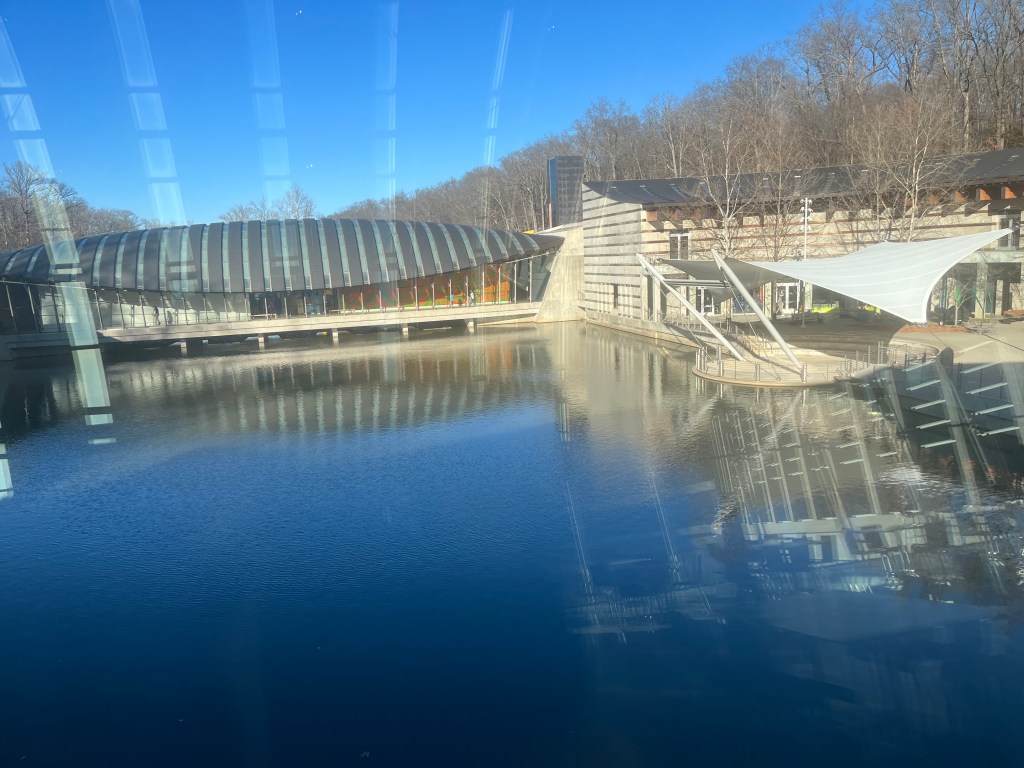
There is something discombobulating about celebrating the work of Bob Dylan in Tulsa. Tulsa is a lot of things, but it ain’t Minnesota and it ain’t New York. Discombobulation notwithstanding, the Center is terrific. It is in the same old one-block-long warehouse building near the Greenwood neighborhood as the Guthrie Center.
Rebecca and I have arrived at a weird age. Museums are places that memorialize the past. A Bob Dylan Museum does not: it memorializes our lifetimes. It’s bizarre how much of our lives are now appearing in museums. I guess we are old. Good for us.
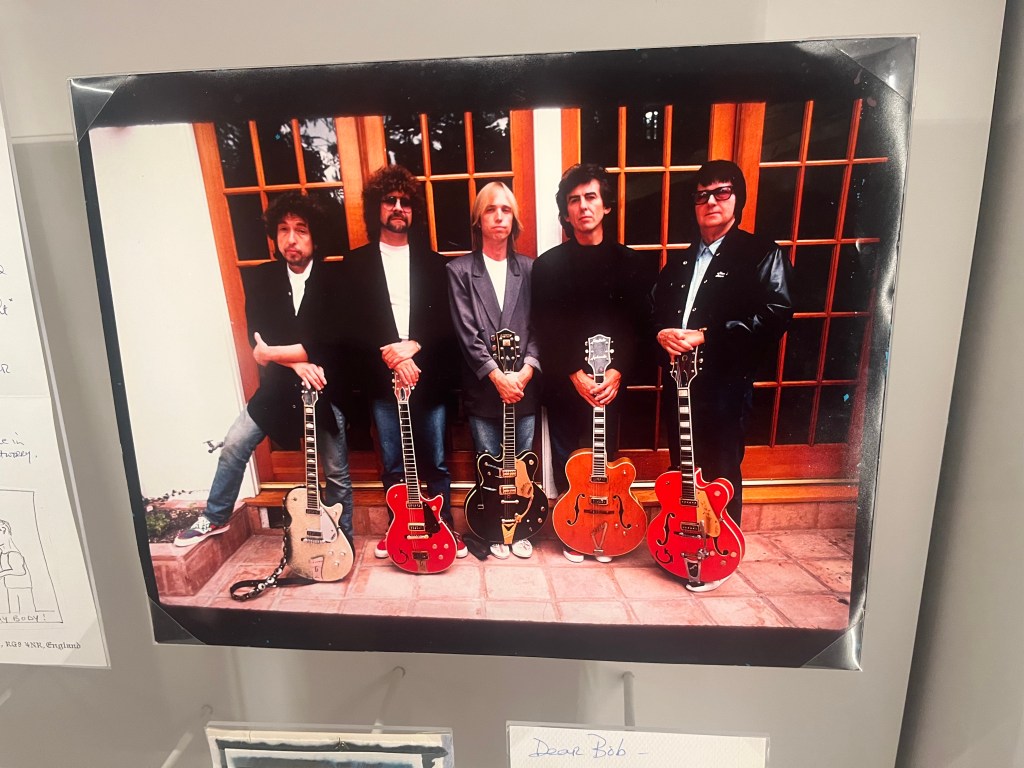
There were great moments at the Center. Seeing Dylan’s guitar. Reading about his friendships. Seeing him perform at the Monterey Jazz Festival. Reading personal notes from George Harrison and re-visiting the brief life of the Traveling Wilburys.
Maybe it is because we lived the history of Dylan’s life along with him, or maybe something else, but after a couple of hours, we were ready for Woody Guthrie.

https://www.youtube.com/watch?v=MGxjIBEZvx0
Spending the afternoon with Woody
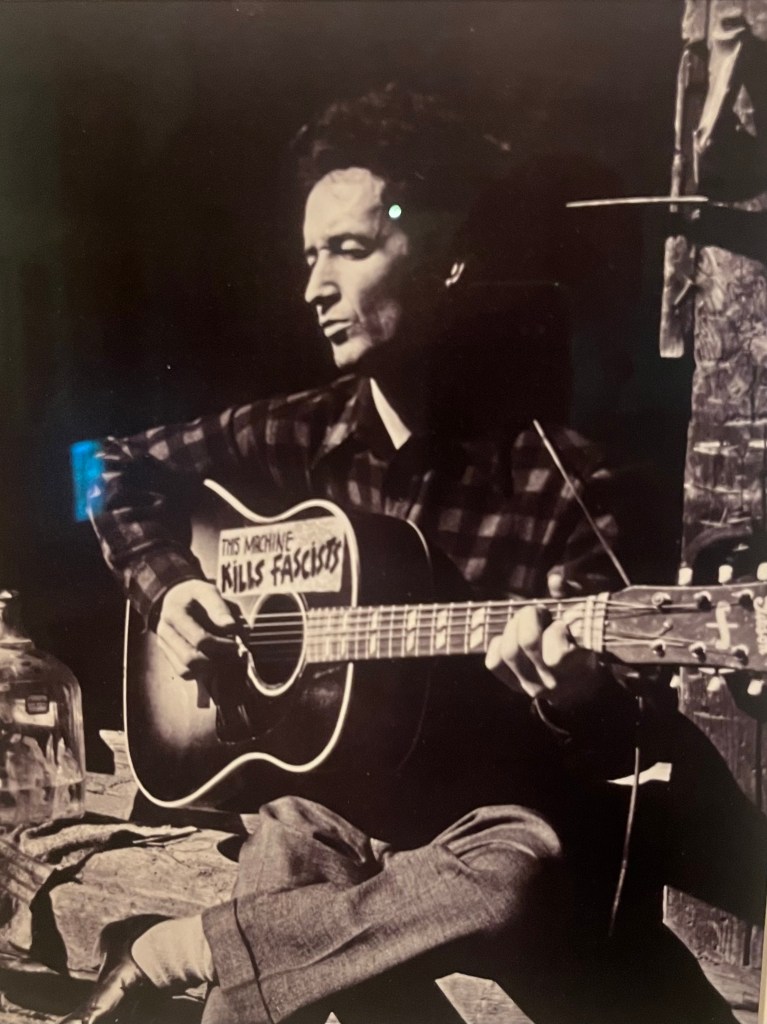
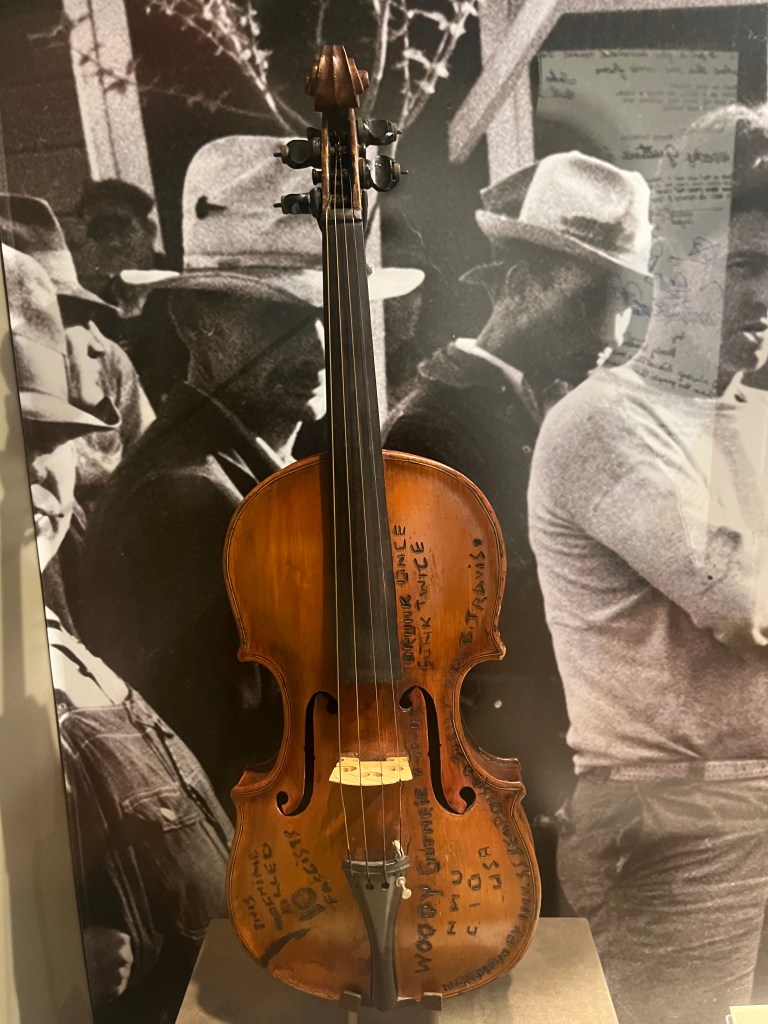
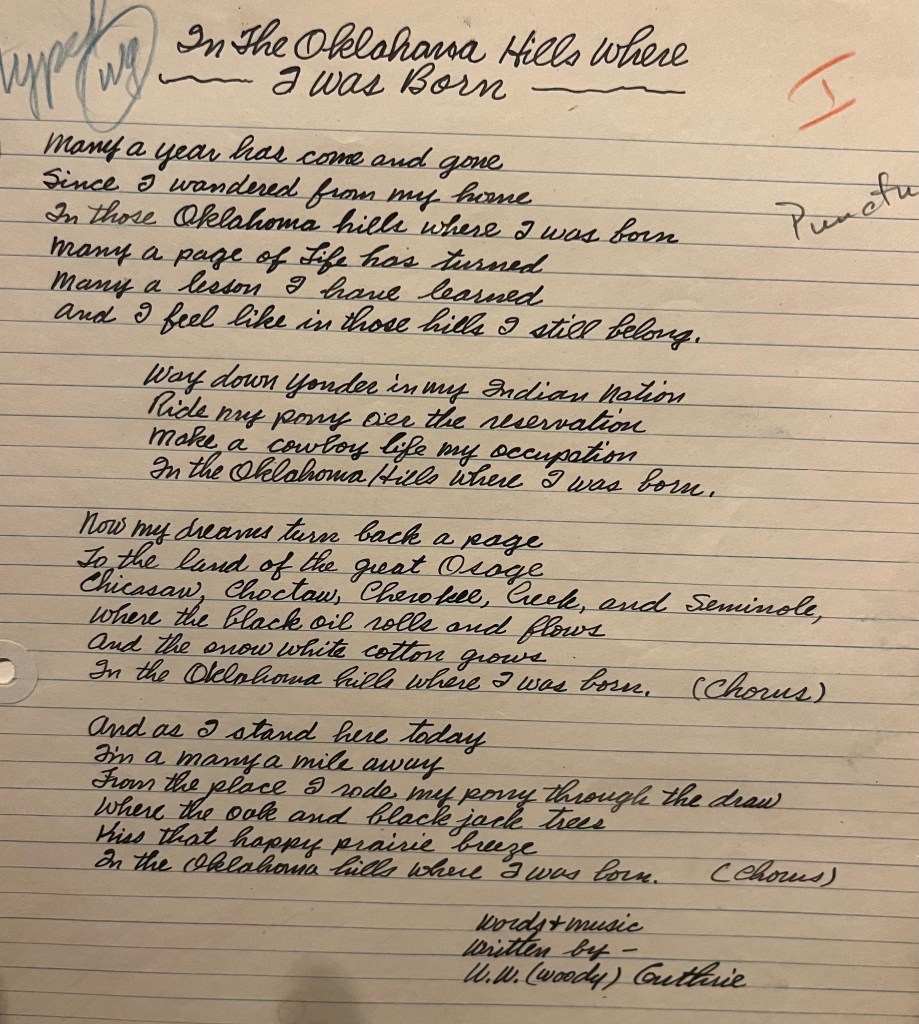
Communing with Woody for the afternoon gave me the chills. He is the music I love. He is the America I love. He is the optimism and love for his fellow humans that I love. Woody’s music resonates with me in every way. Seeing his instruments and the handwritten originals of his lyrics humbled me. Were I Bob Dylan, I would have wanted my archives handled in the same way that the curators of Woody’s center displayed his life and his work. It was a fantastic experience!

Preparing for the Tulsa Massacre of 1921
It’s amazing how much I never learned in school. I never heard of the Tulsa Massacre. I never learned about lynchings. What little I learned about the Trail of Tears, I expect I learned from my own reading and from visiting the Eastern Band of Cherokee in North Carolina when I was a child. I knew virtually nothing about horrors our country has visited upon others.
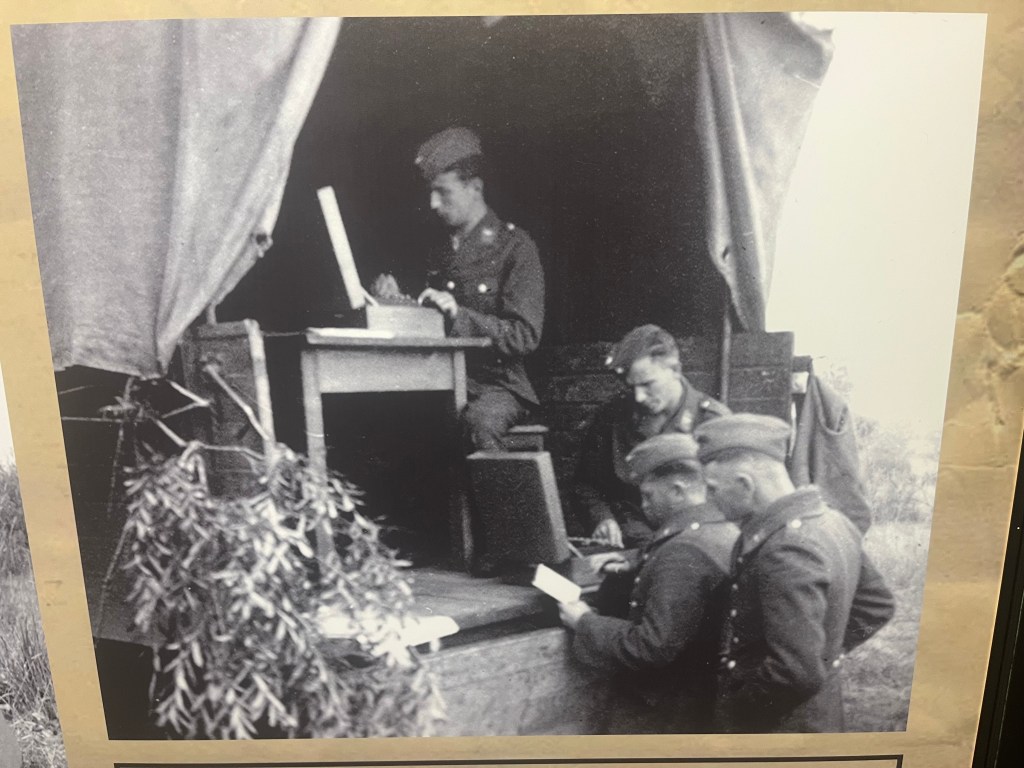
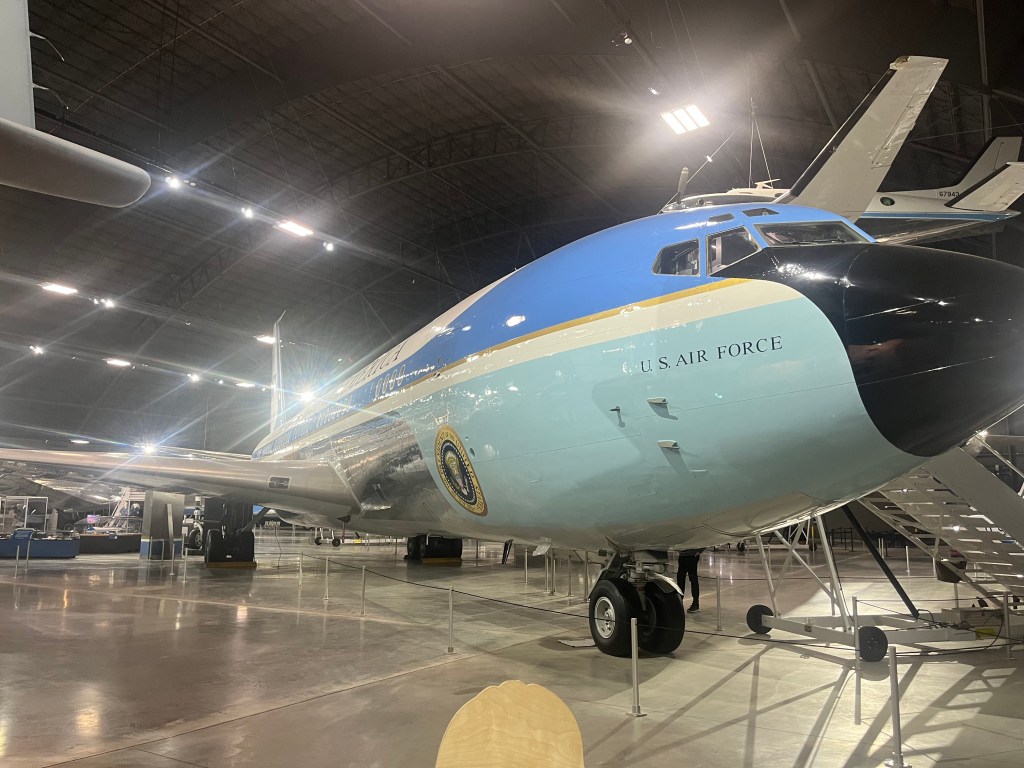
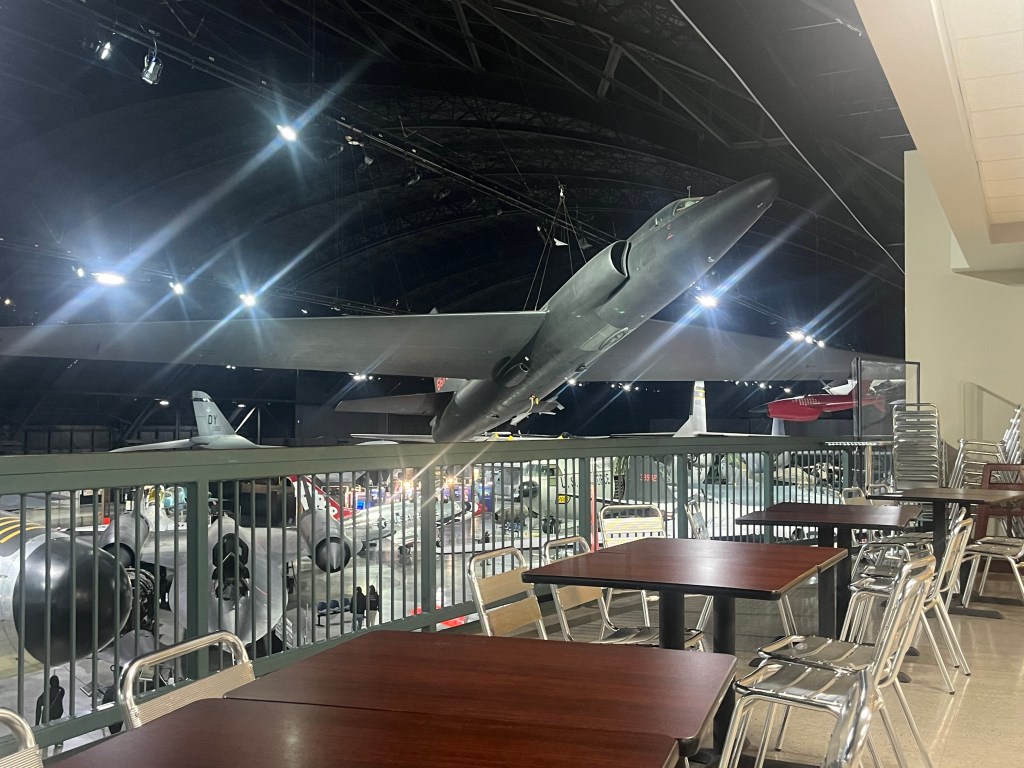
Interestingly, the first museum we visited on this trip was the Air Force Museum in Dayton. The tour of that museum starts with Auschwitz, a journey through the Nazi death camps, and a celebration of the troops who liberated those camps, enabling them to record the history for posterity.
I can relate to the death camps of WWII. My father served in the war. My stepfather fought in the war and lost his entire family to the death camps. I am personally close to the horrors human beings can bestow upon other human beings.
I was not prepared for the stark similarities between the Nazi death camps and the horrors to which we Americans have subjected our own fellow citizens. We had the first inkling of the emotionality at the Mosaic Templar Cultural Center in Little Rock. Sadly, I knew too much about some of the racist horrors in Little Rock. I had studied Jim Crow in college. At Mosaics Templar, I learned about the legalization of segregation in Arkansas through the Tillman Bill of 1891 that called for “the forcible separation of the races into different cars while traveling on the railroads of Arkansas.” Segregation was not a social practice; it was the law. Plessy vs Ferguson in 1896 tried to temper the horror through the bogus concept of “separate but equal.” Not until the courts’ ruling in Brown vs the Topeka Board of Education in 1954 did the systems of America start to make moves toward working for all people. (FYI, the concept of “making America great again” turns my stomach. Was that American greatness?)
The hatefulness of people came very close to home in October 1958 in Atlanta when anti-Semitic racists bombed The Temple – the Hebrew Benevolent Congregation – on a morning when my brothers and I were planning to attend religious school. It is a surreal juxtaposition when I see the images of Little Rock and Tulsa … and Birmingham and Charleston and Buffalo and Pittsburg, etc., etc., etc., etc. … to think that those same lunatics were gunning for me too.
By the time Little Rock’s Central High School was integrated in 1957, I was in fourth grade in Atlanta. I remember Governor Orval Faubus calling out the Arkansas National Guard to prevent students from entering the school. I remember Eisenhower calling out the 101st Airborne Division and activating the Arkansas National Guard to escort the Little Rock students into the school and uphold Brown vs. Board of Education.
Then I vividly remember the next move in that chess game. Instead of breaking federal law, the good people of Little Rock closed Central High for a full year, depriving its young people, both black and white, of any education whatsoever. Private schools sprouted like weeds so those children of families with resources could continue their education. Those without resources got slapped down even harder.

Closing the public schools terrified my parents. We prepared for the worst. My brothers and I tested and interviewed at a private school. Had the Atlanta schools closed to prevent integration, we had the private school in the wings. Fortunately, the Atlanta schools did not close, and I will always remember the first day of school in 1962 when Grady High school became the first public school in Georgia to integrate. Despite a parking lot filled with police and news cameras, we did so peacefully. That memory represents yet another moment of “privilege.” My family had the presence of mind and the resources to prepare for a private-school education. Fortunately, we never had to exercise it, and I have been a committed defender of high-quality public education since.
I remember visiting downtown Atlanta during a Klan convention and encountering any number of white-robed Klansmen. I remember Klan cross burnings at Atlanta’s Stone Mountain. My good friends Bill Travis and Harry Kuniansky and I used to visit Lester Maddox’s Pickrick Restaurant on Saturday afternoons to collect and read the hate literature he distributed there. I vividly remember the embarrassing term of Lester Maddox as Governor of Georgia because I spent the summer of 1970 – my first summer after graduating college – as a Gray Line tour guide. One of the stops on my tour was the Georgia Governor’s mansion. Lester knew me by name. Always the restaurateur, he would greet me with me with a “Howdy Kenny. Howdy Folks. Welcome to Georgia. We are mighty proud to have you here.”
I remember all of those things, but principally as abstractions. Other than receiving a phone call early one morning that the Temple had been bombed and we should not attend religious school that day and being part of the first public school integration in Atlanta, I was a naïve child. Racism and hate did not really touch me. It is through these experiences on trips like this one, way more than half a century later, that the emotion of these moments makes its way into my soul.
The Tulsa Massacre of 1921 and the Greenwood Rising Black Wall Street History Center
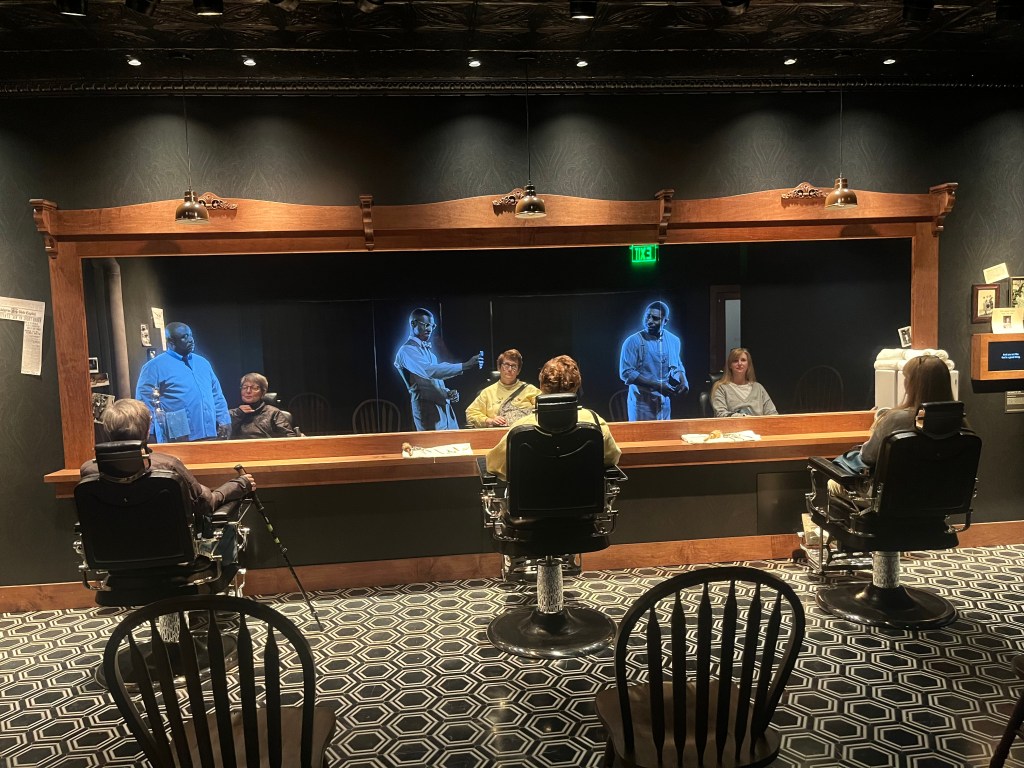
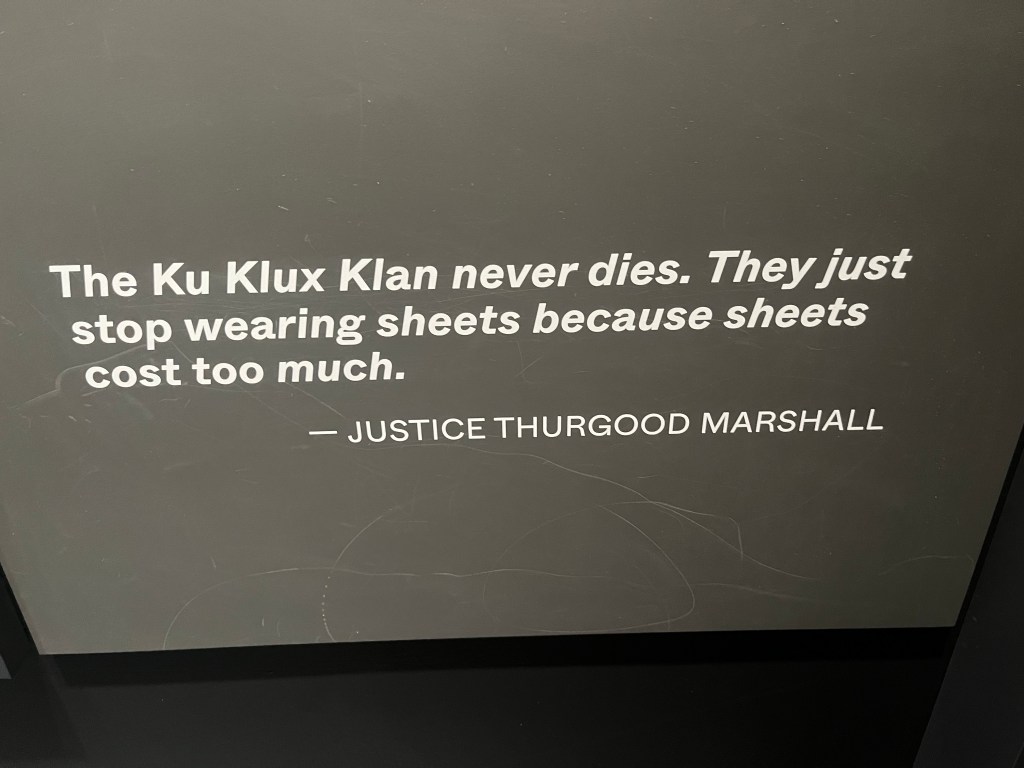
Up until 1901, Tulsa had been a modest western town. In 1901, almost overnight, Tulsa became the “Oil Capital of the World.” As oil flowed, so did money, and Tulsans got rich … both White Tulsans and Black Tulsans. The Greenwood neighborhood of Tulsa because known as Black Wall Street. Businesses thrived, including Black-owned banks. Black Tulsans had a seat at the table … for a fleeting instant. Much like the horrors of Kristallnacht 17 years later, everything changed overnight on May 30, 1921.
On that day, a 19-year-old Black man named Dick Rowland got onto an elevator with a 17-year White girl named Sarah Page. Something startled the young woman, so she screamed. She first said that the young man had assaulted her, but then later changed her story. One day later, on the afternoon of May 31, the Tulsa Tribune ran a story headlined “Nab Negro for Attacking Girl in Elevator.” By 9:00 that night, 400 White men had formed a mob to lynch Dick Rowland. In Greenwood, 100 Black men came together to defend Rowland from the lynching. By that time, the White mob had grown to over 1,000. By 1:00 A.M., fires had been set throughout the Greenwood neighborhood. The mob prevented fire crews from fighting the fires. By 11:00 A.M. on June 1, the governor declared martial law and the Greenwood neighborhood was rubble.


That such a horror could take place is dreadful enough. That virtually none of us learned about it until only a few years ago amplifies the horror. Not even Tulsans learned about it, much less Atlantans, New Yorkers, or Los Angelinos!
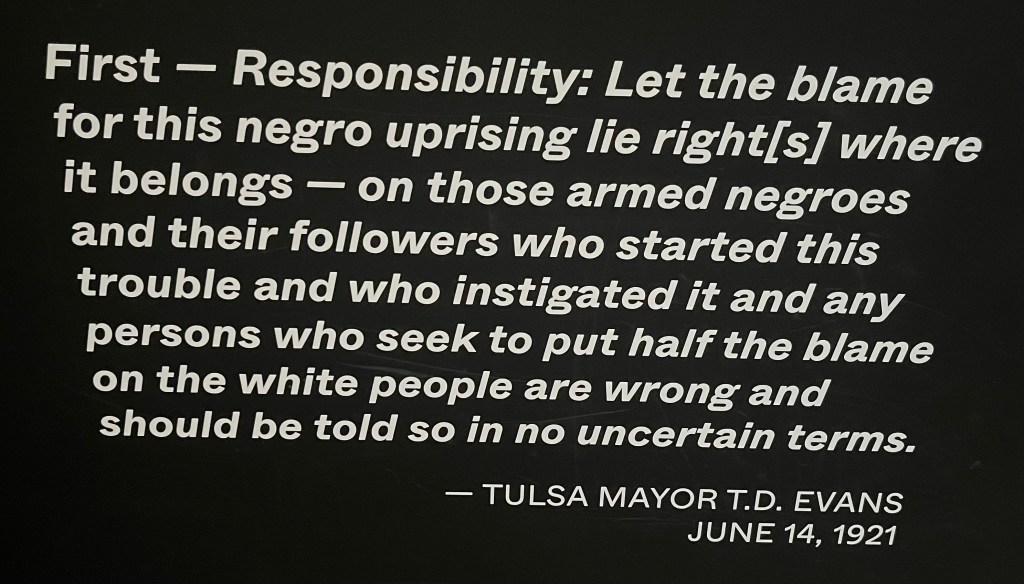
George Santayana wrote “Those who cannot remember the past are doomed to repeat it.” The ubiquitous WWII holocaust phrase is “Never Again.” Regardless, we will never actualize our full humanity until we recognize and reject the ability of humans to exercise unthinkable brutality upon other humans. Any effort of the MAGA right wing to suppress education, no matter how uncomfortable, is an unthinkable disgrace, and none of us can allow it to happen!
PS Gotta get the ‘Cue in..
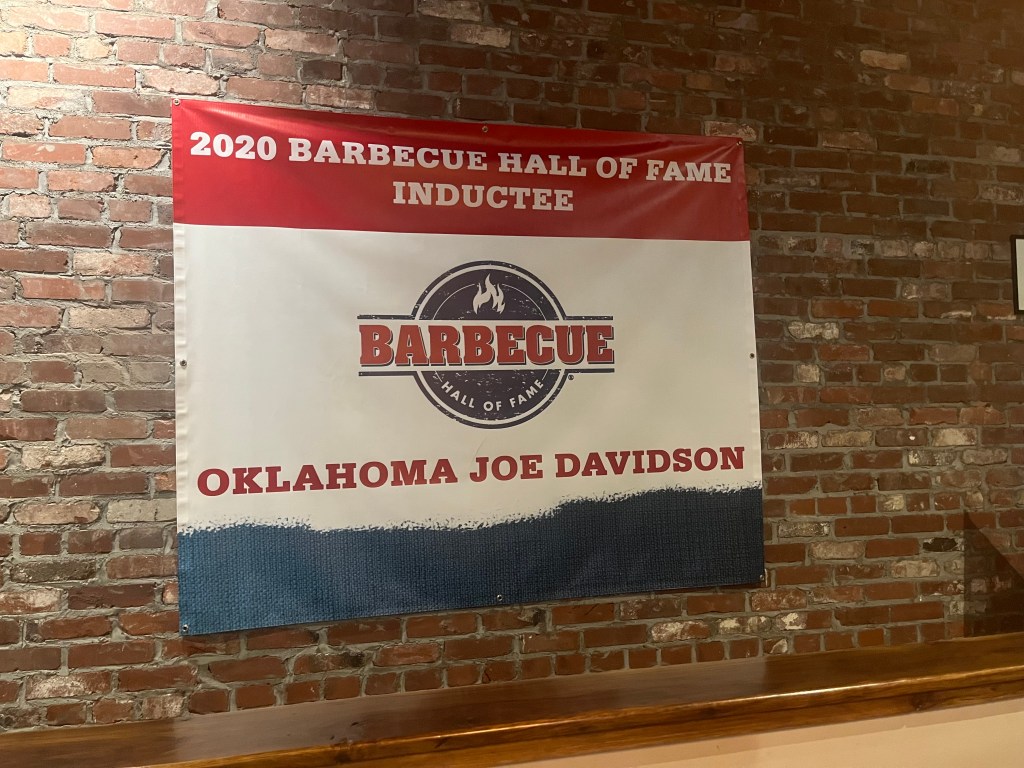
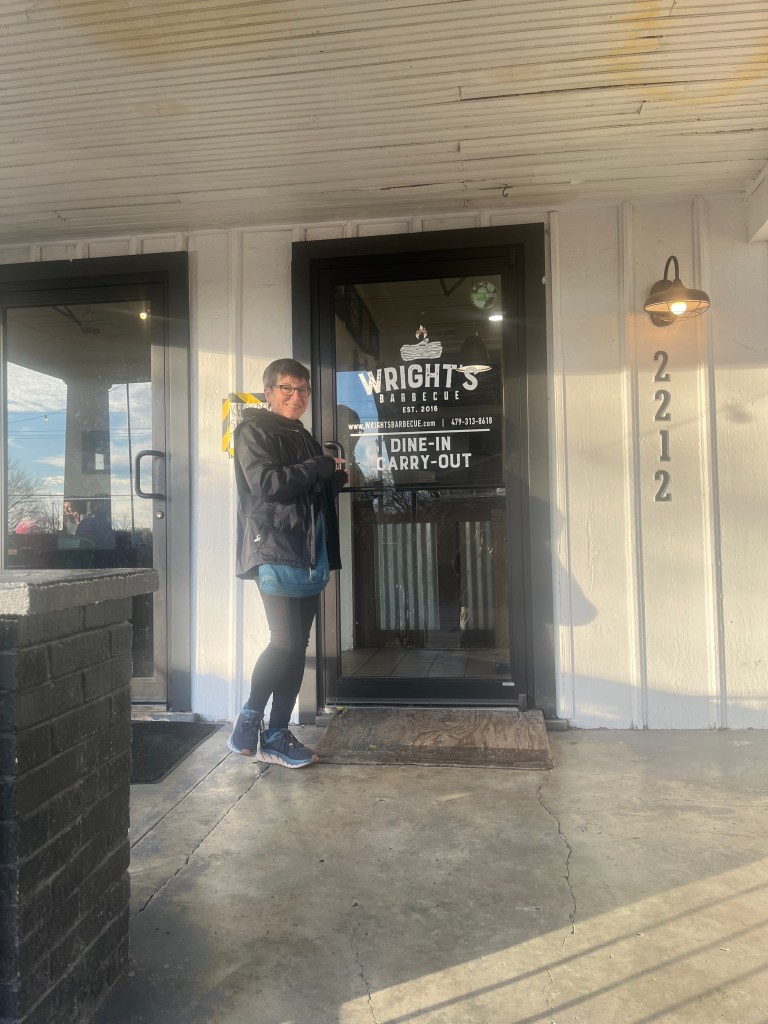
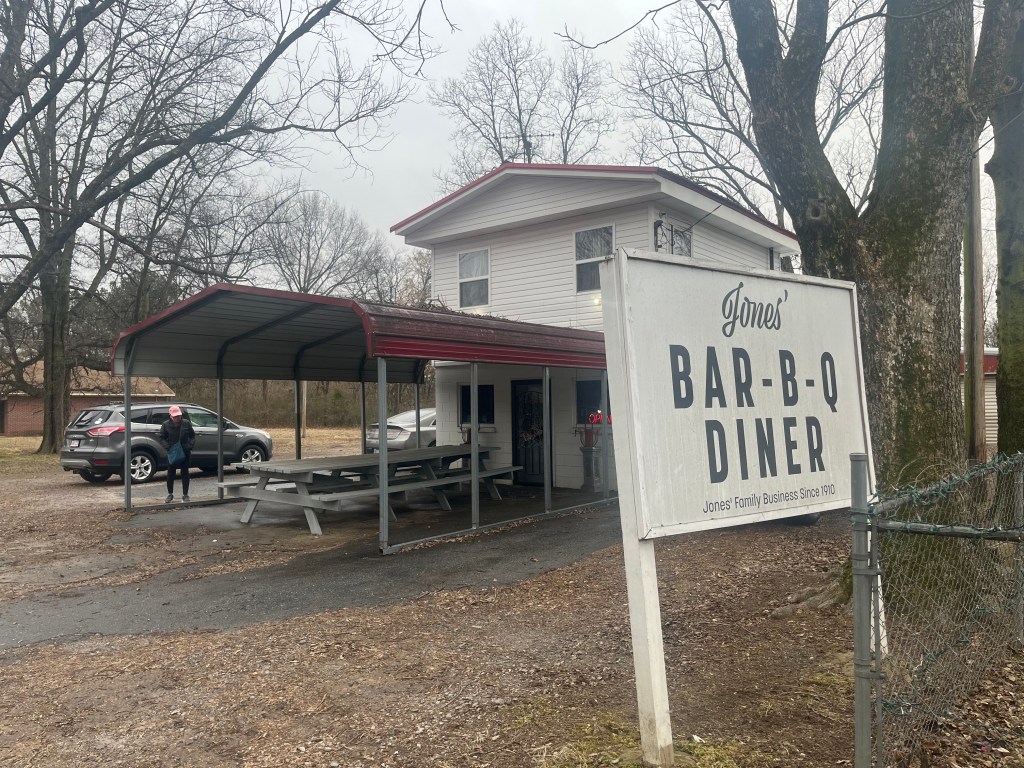
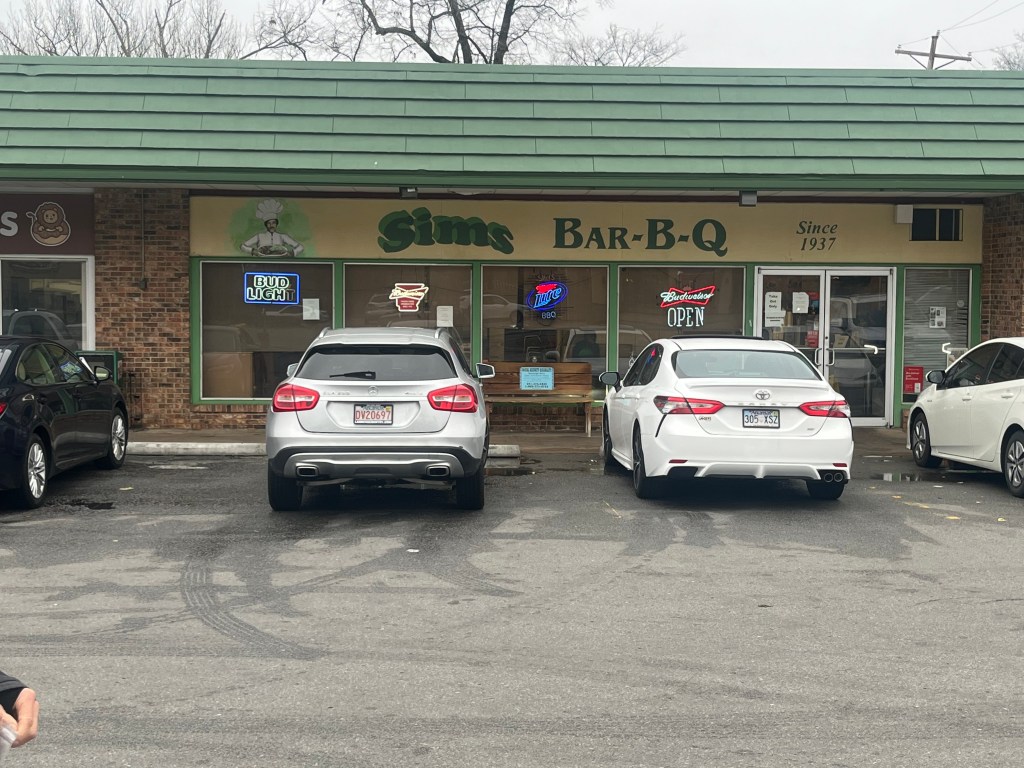
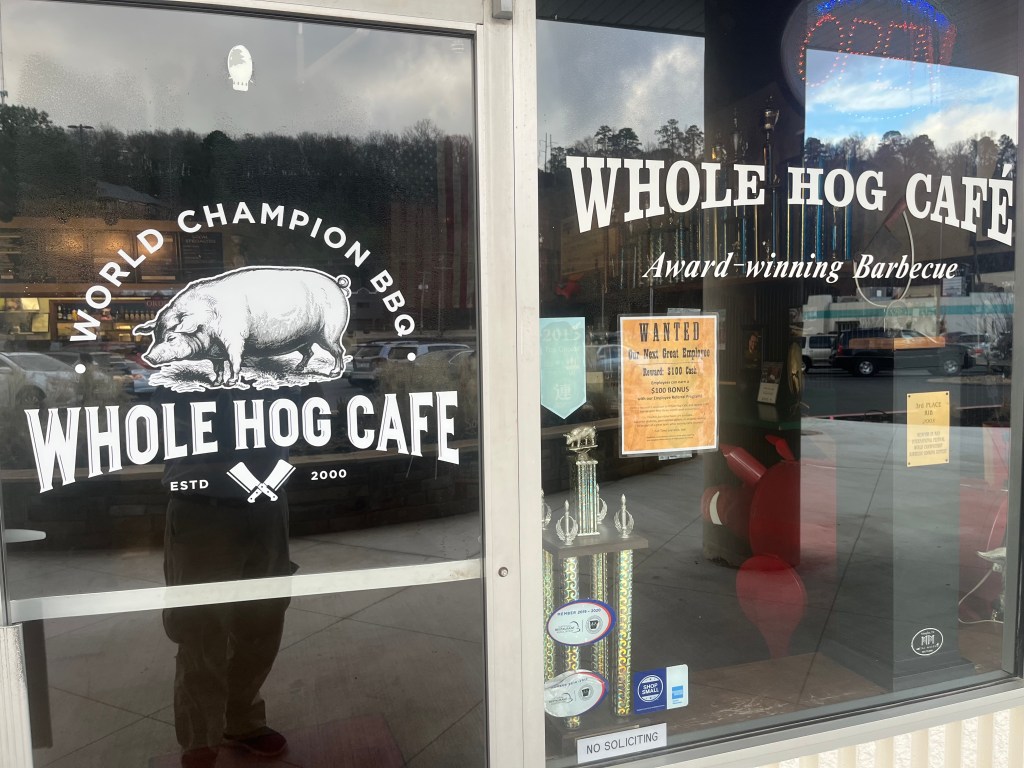
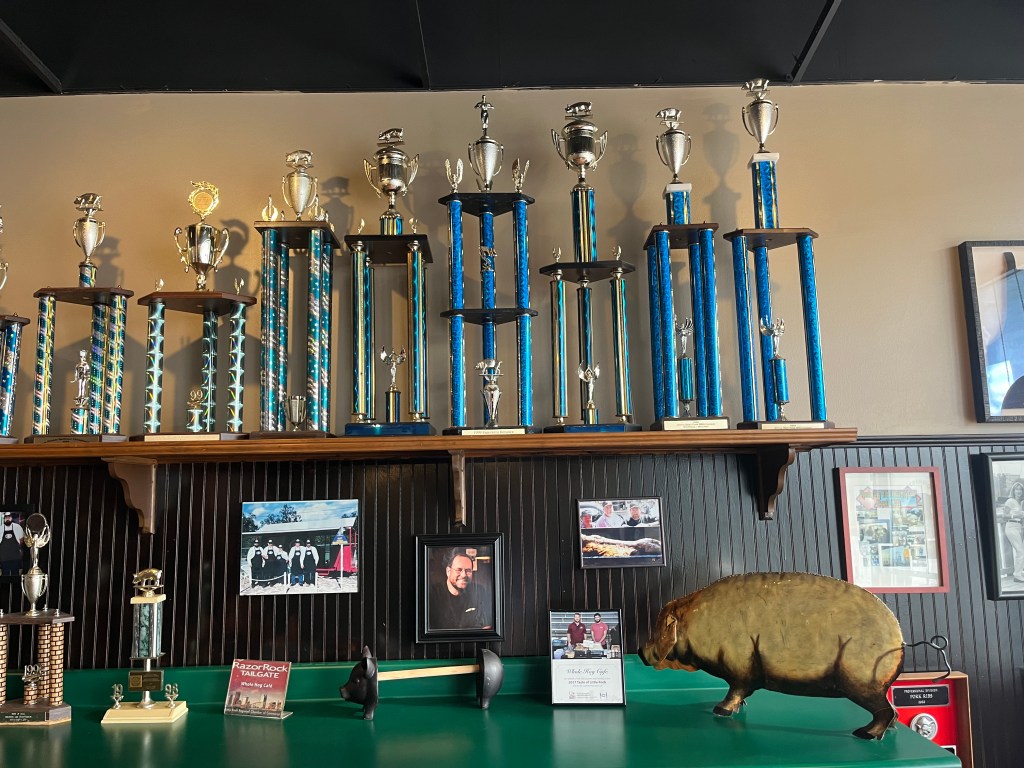
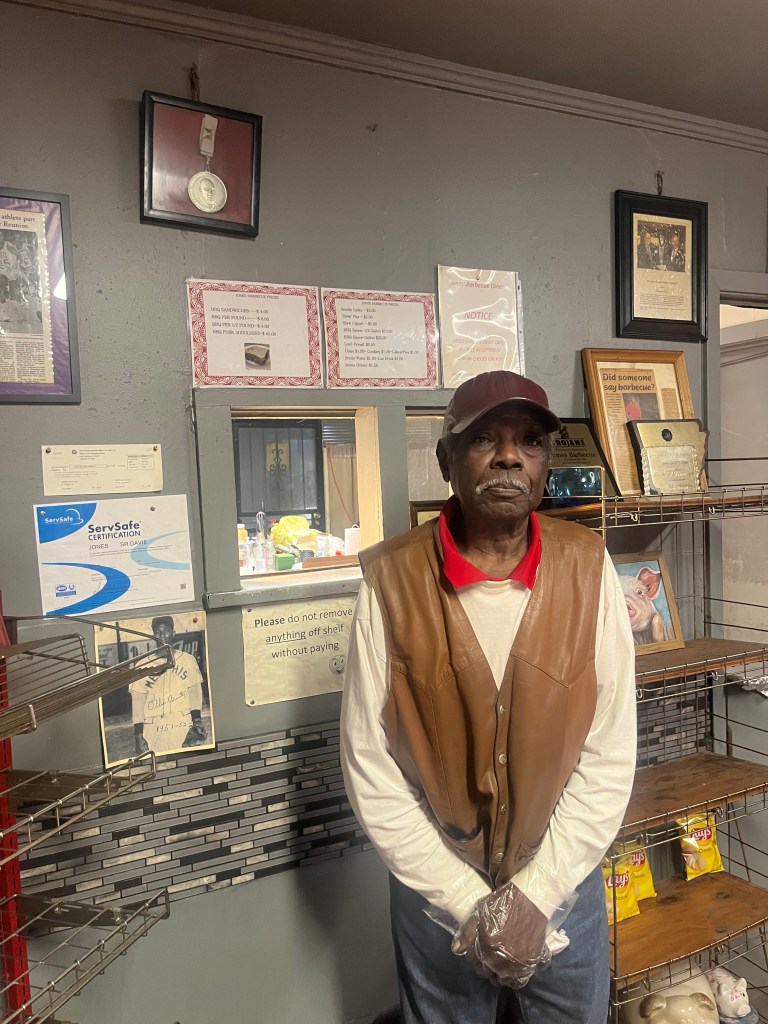
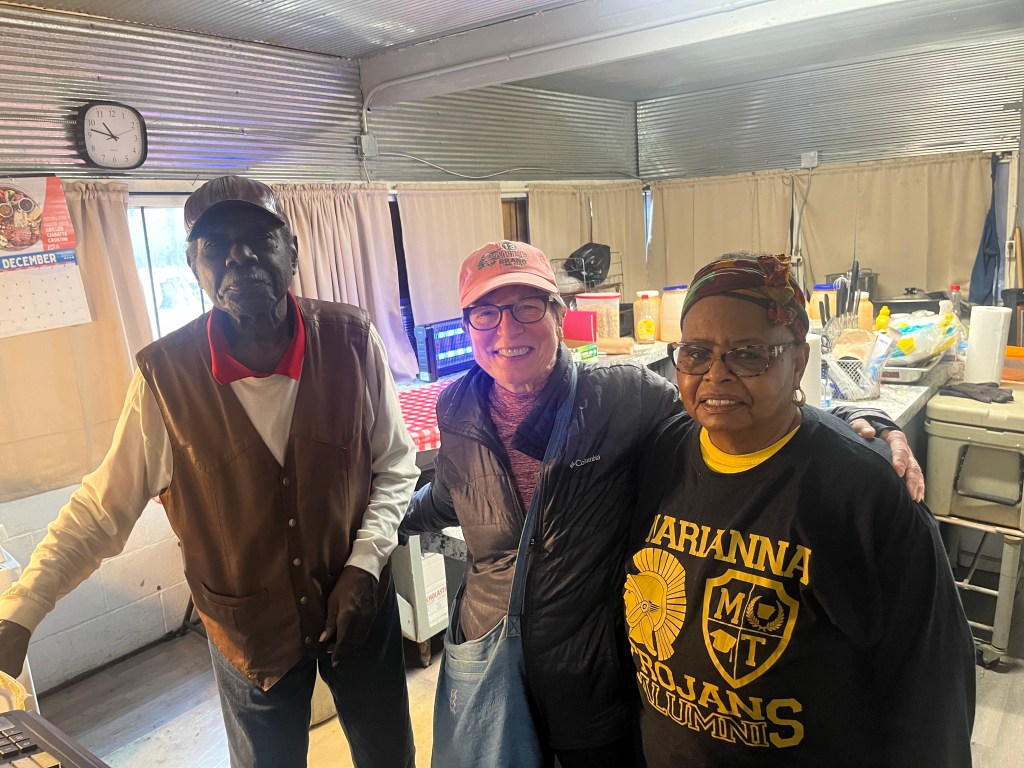
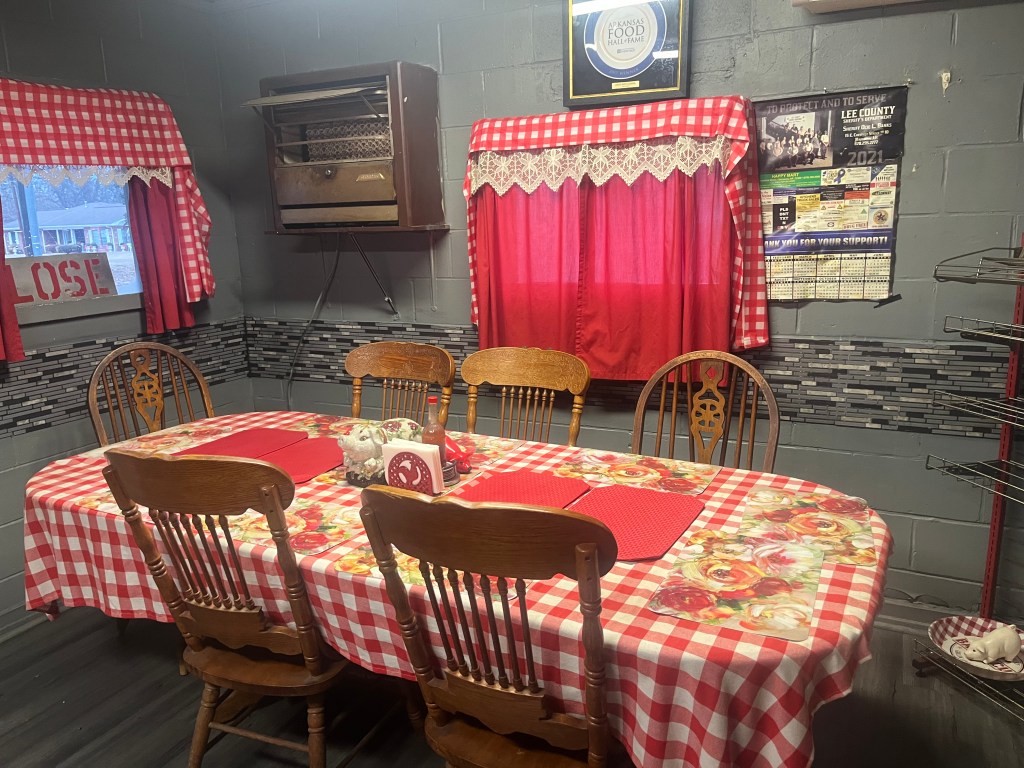
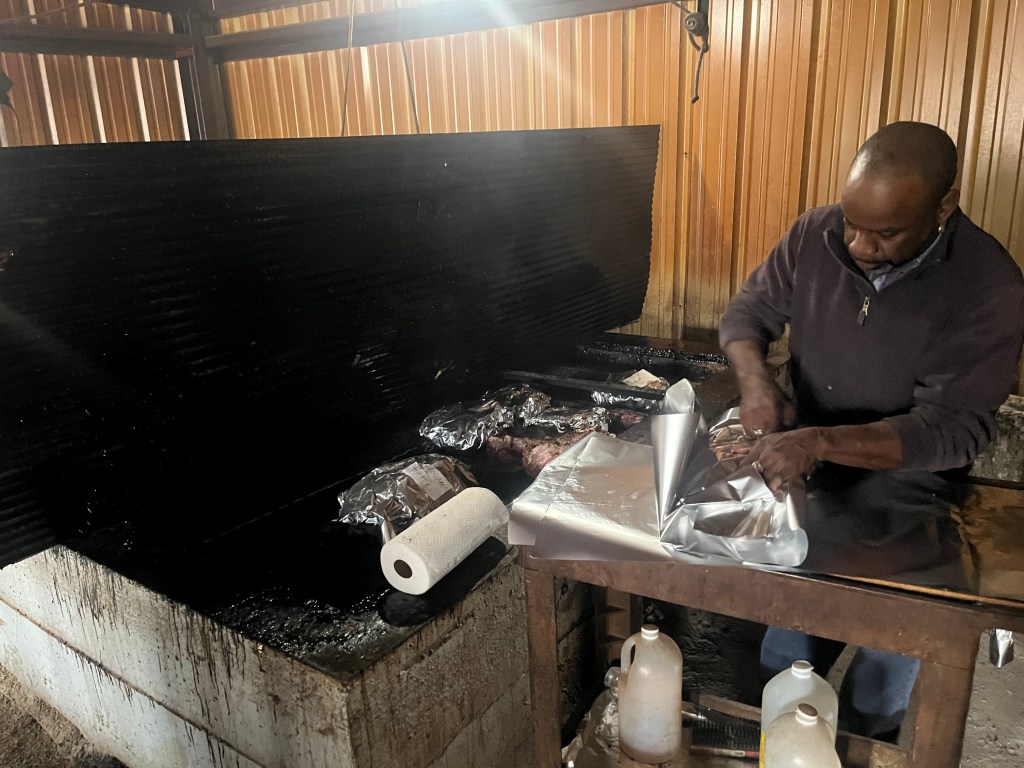
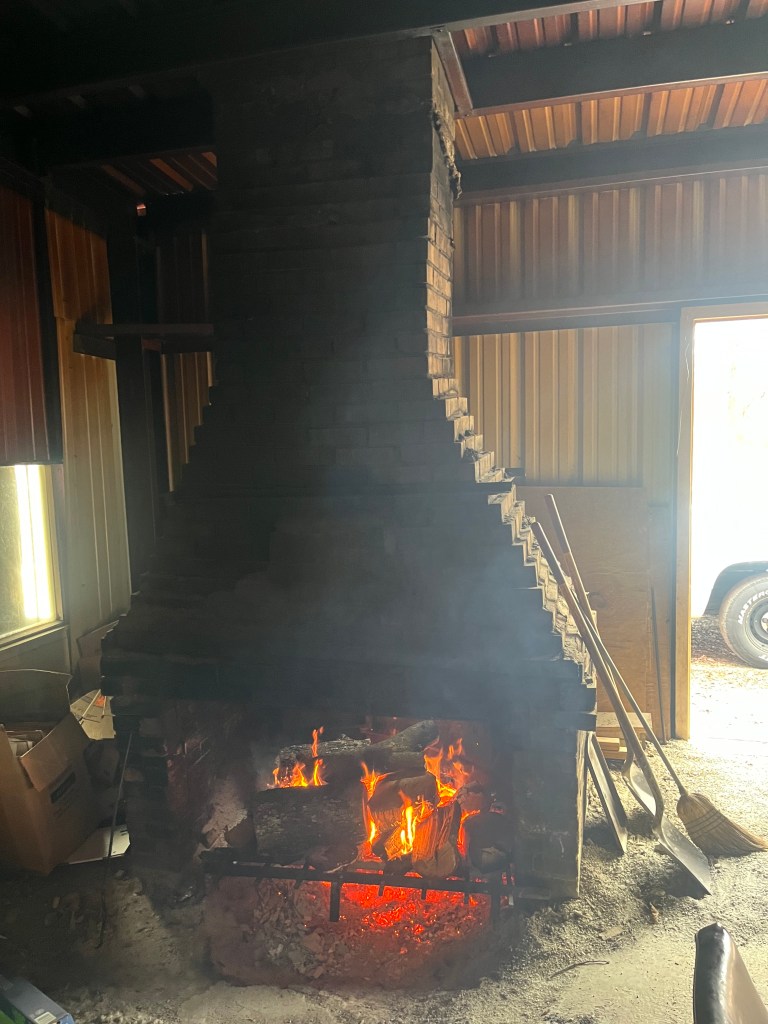
Barbecue at Oklahoma Joe’s. Damn good, especially the brisket. If it seems like overkill, it is, but splitting one BBQ plate per day or less, is manageable. Oklahoma Joe’s has banners, much like the Boston Garden: Poultry and Barbecue Sauce Champions in Memphis; Best Sauce on the Planet Champions in Kansas City; Pork Champions, Brisket Champions, and Grand Champions in Lynchburg. Like I said, damn good!
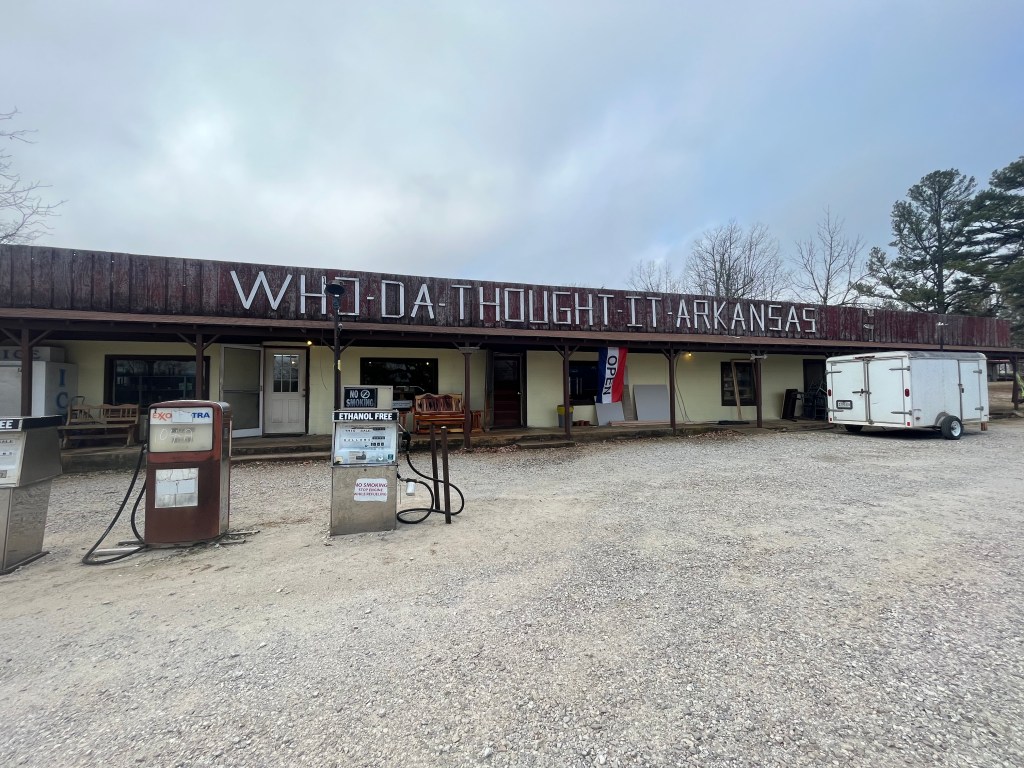
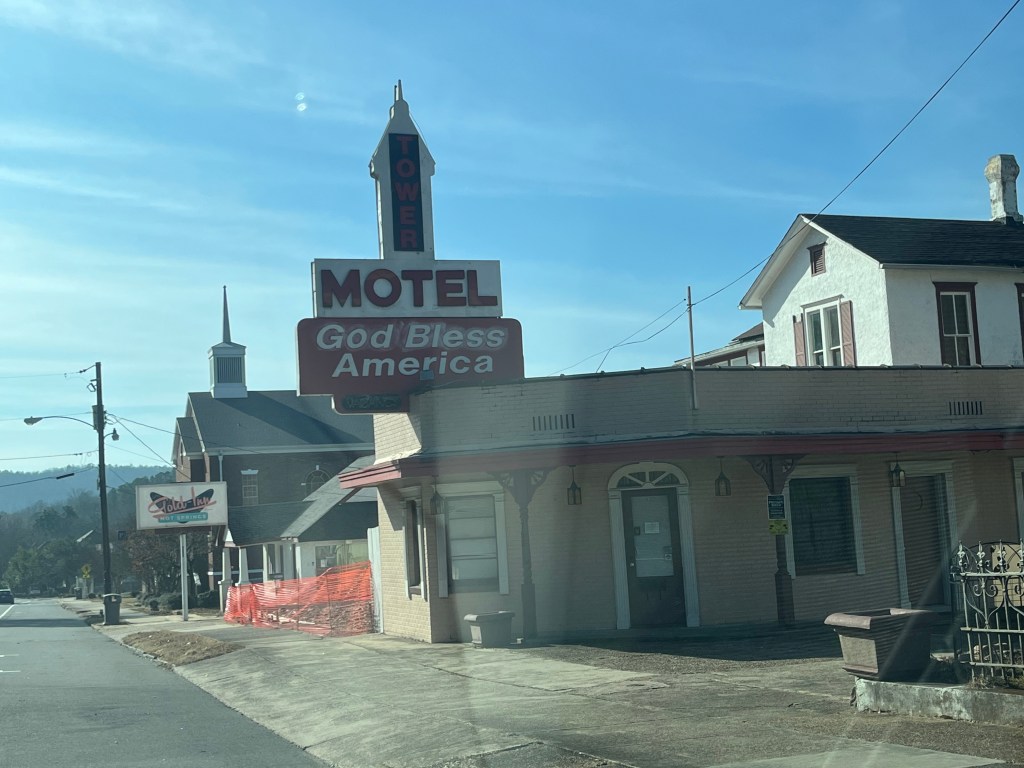







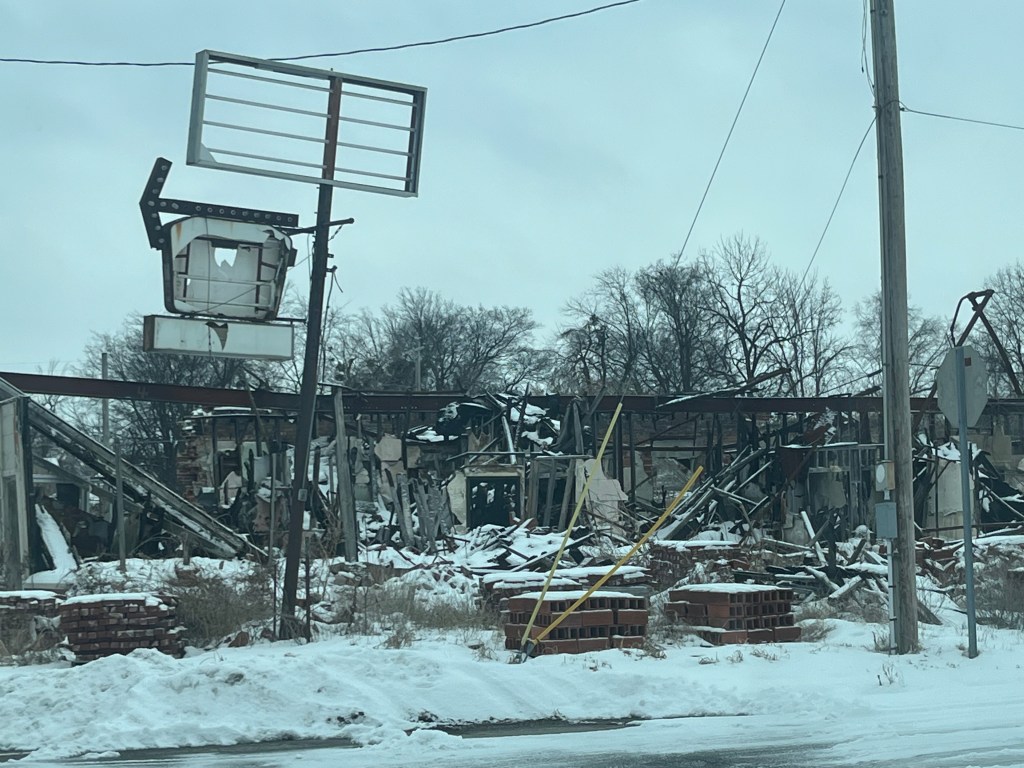
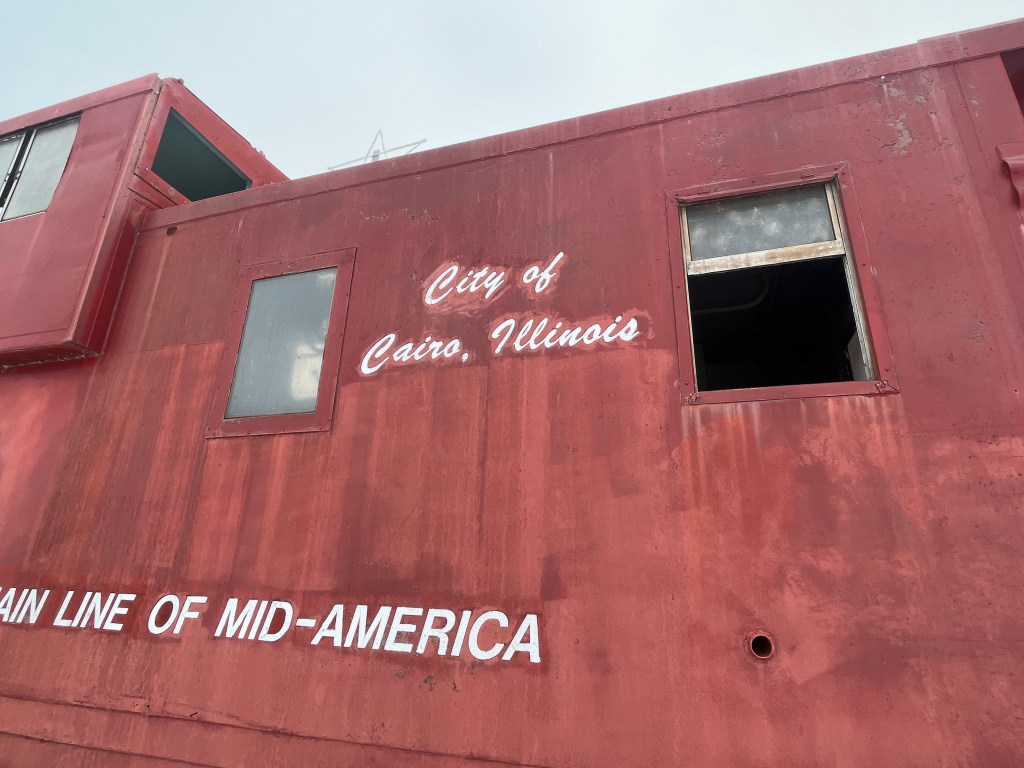

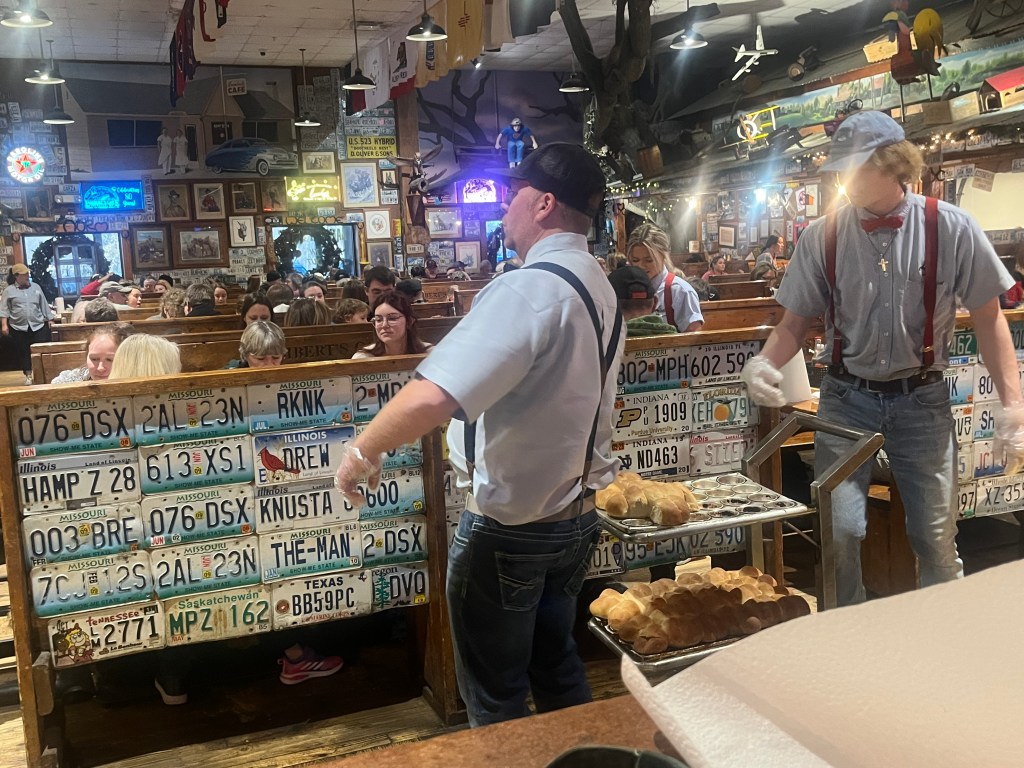
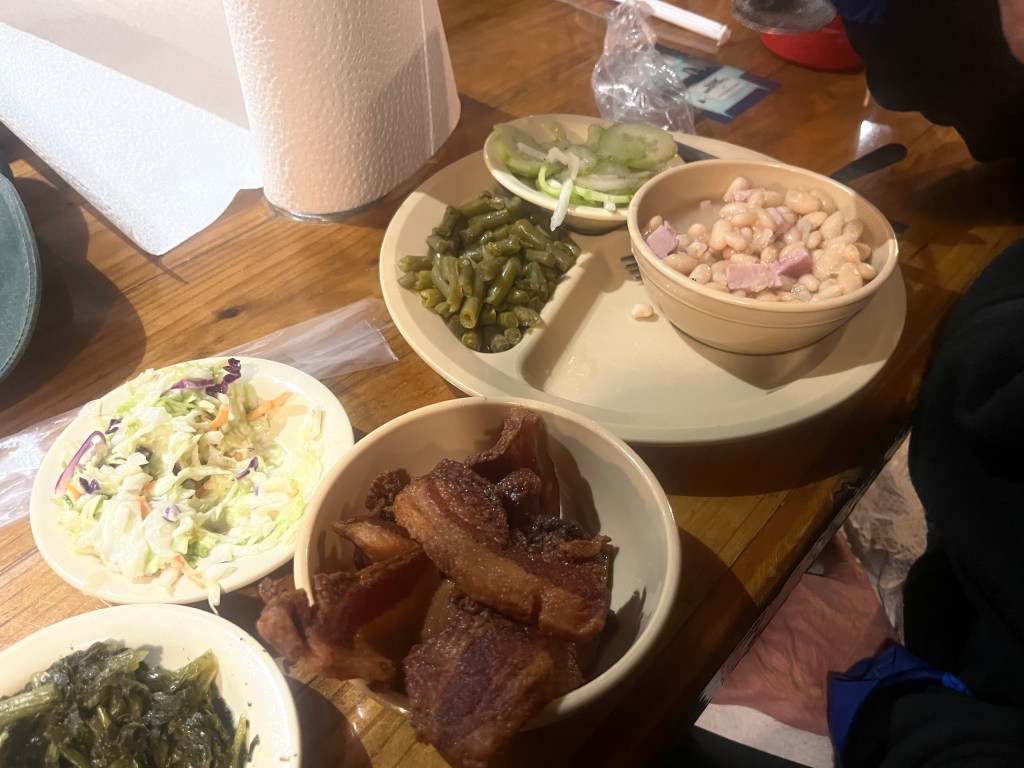
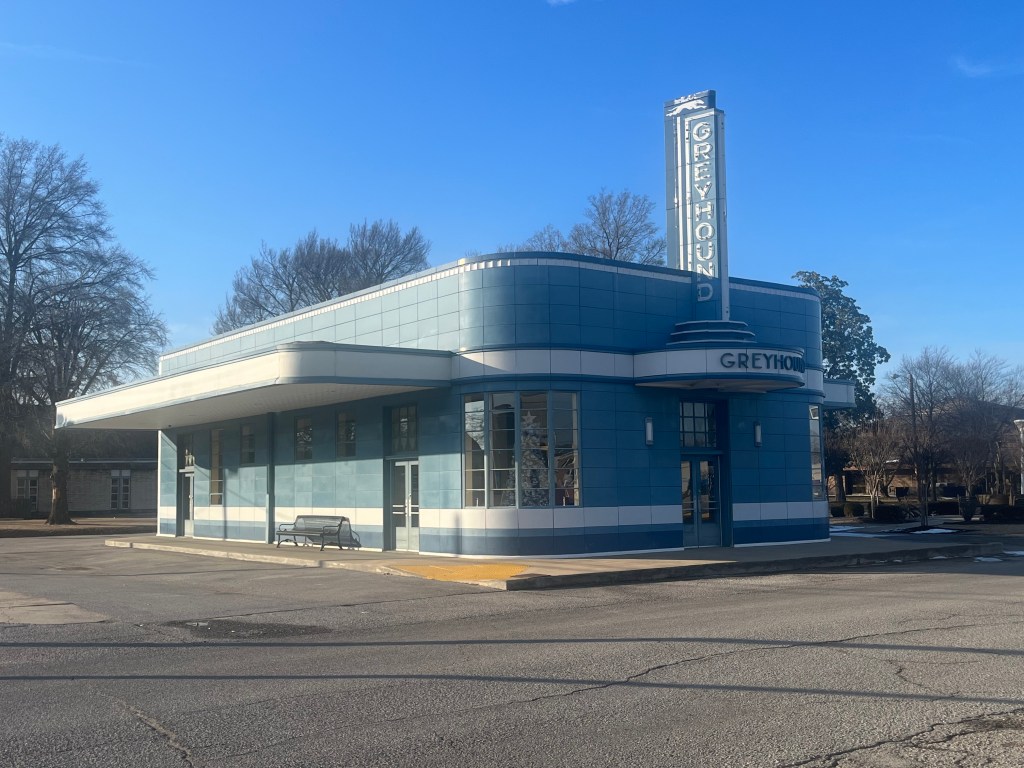
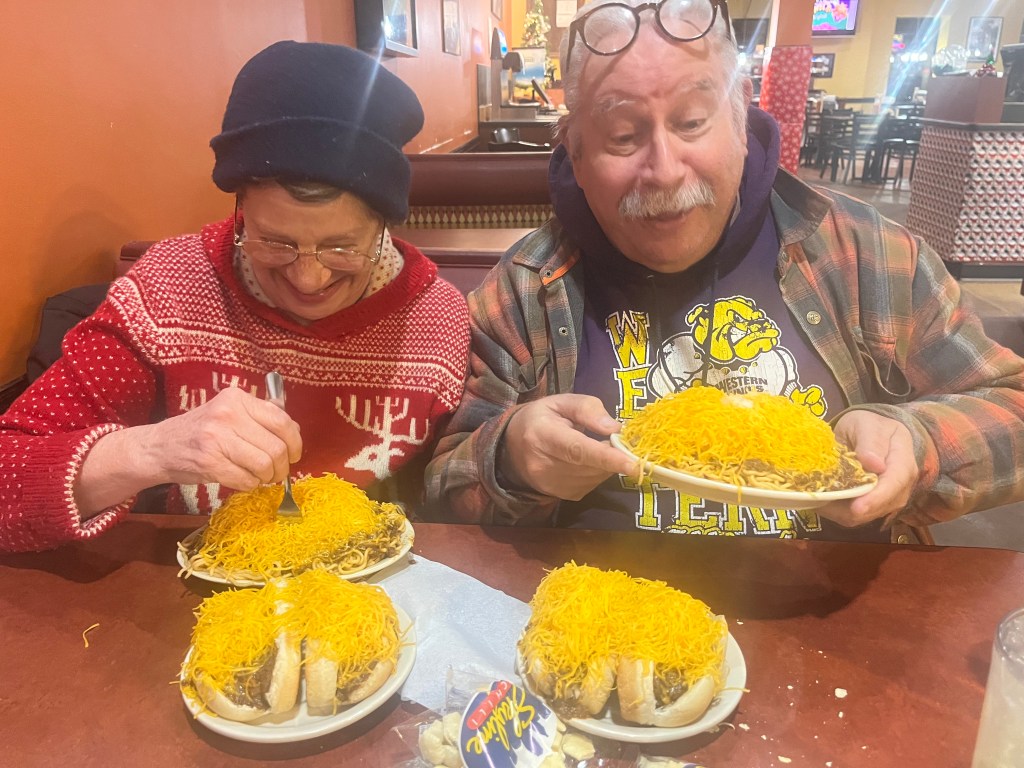



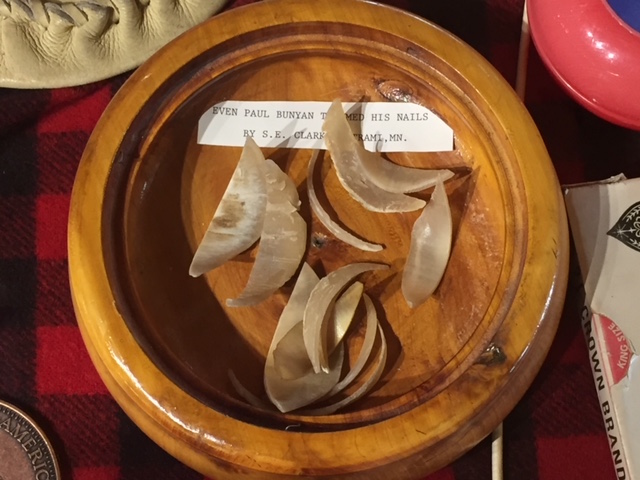
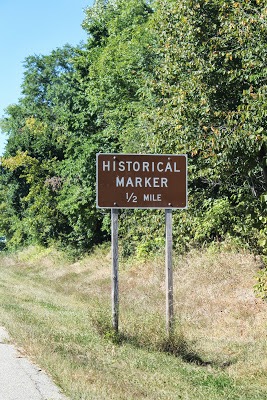 If a road sign pointed out the location of a historical marker, we stopped. A lot of them were just boring, some were vaguely interesting, and most were generally informative. A few were hilarious.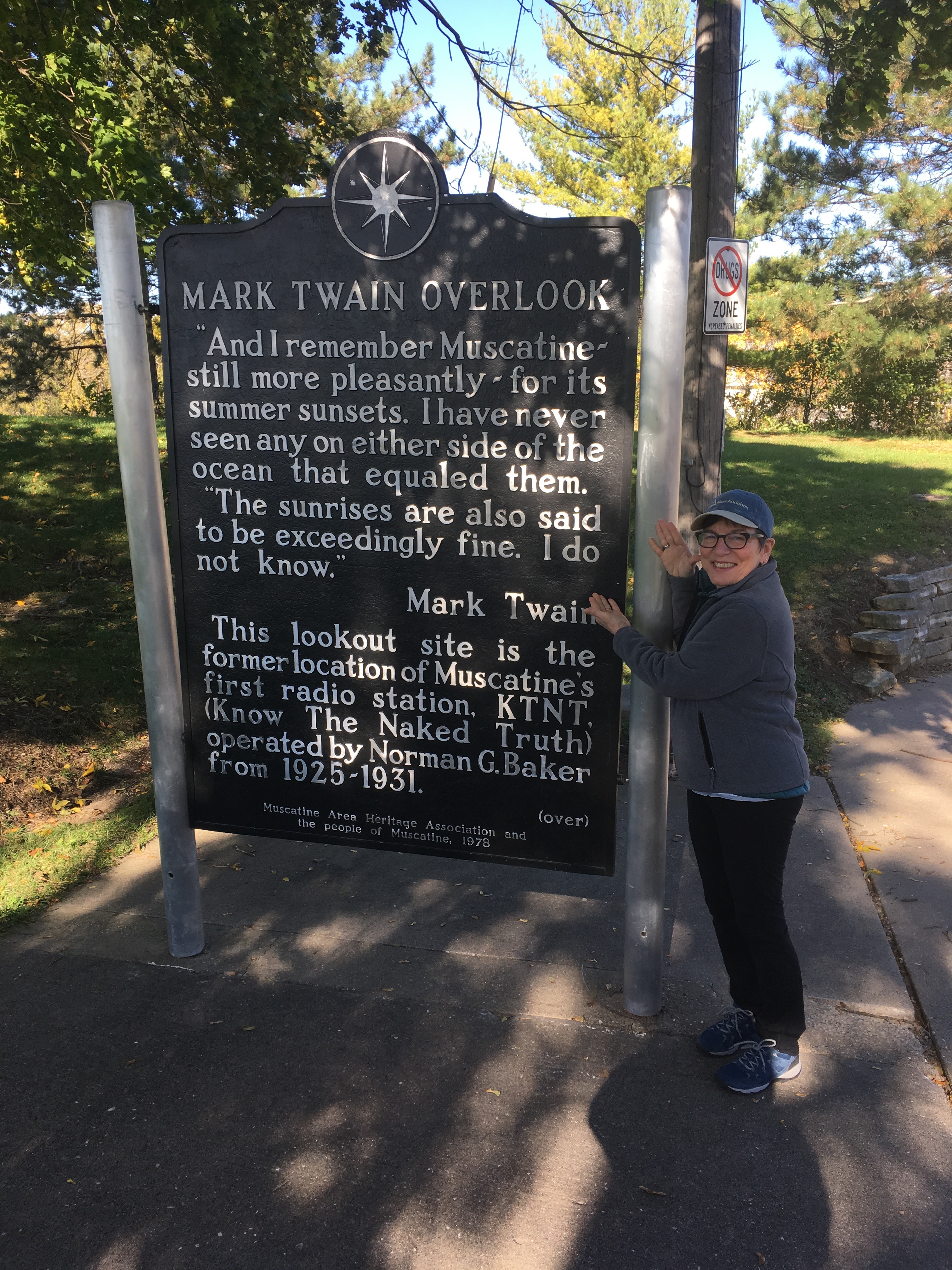
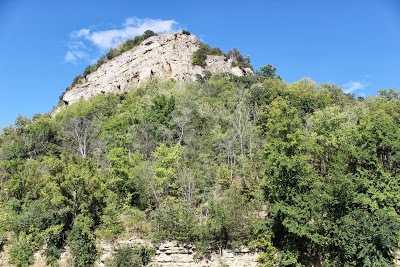 Maiden Rock, a high bluff overlooking scenic Lake Pepin in Wisconsin, south of Minneapolis and north of La Crosse prompted us to draw a distinction between “historical” markers and “hysterical” markers. Imagine the “splat” the “beautiful young Sioux girl” must’ve made upon “precipitating” herself over the precipice. It’s nice to know – in a schadenfreude sort-of way – that even pre-European Native American families were whacko enough to screw with young folks’ minds!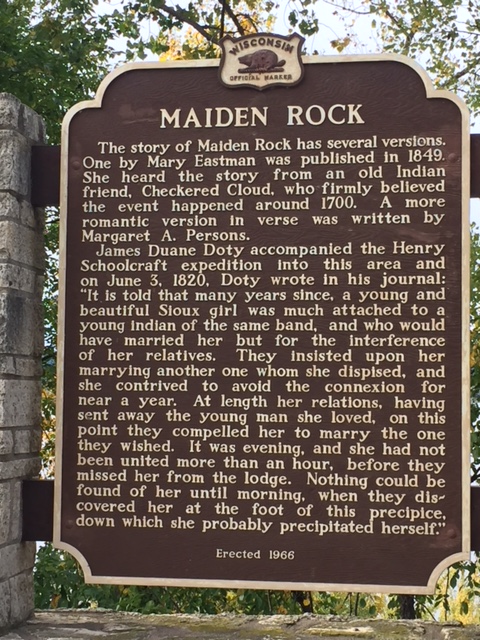




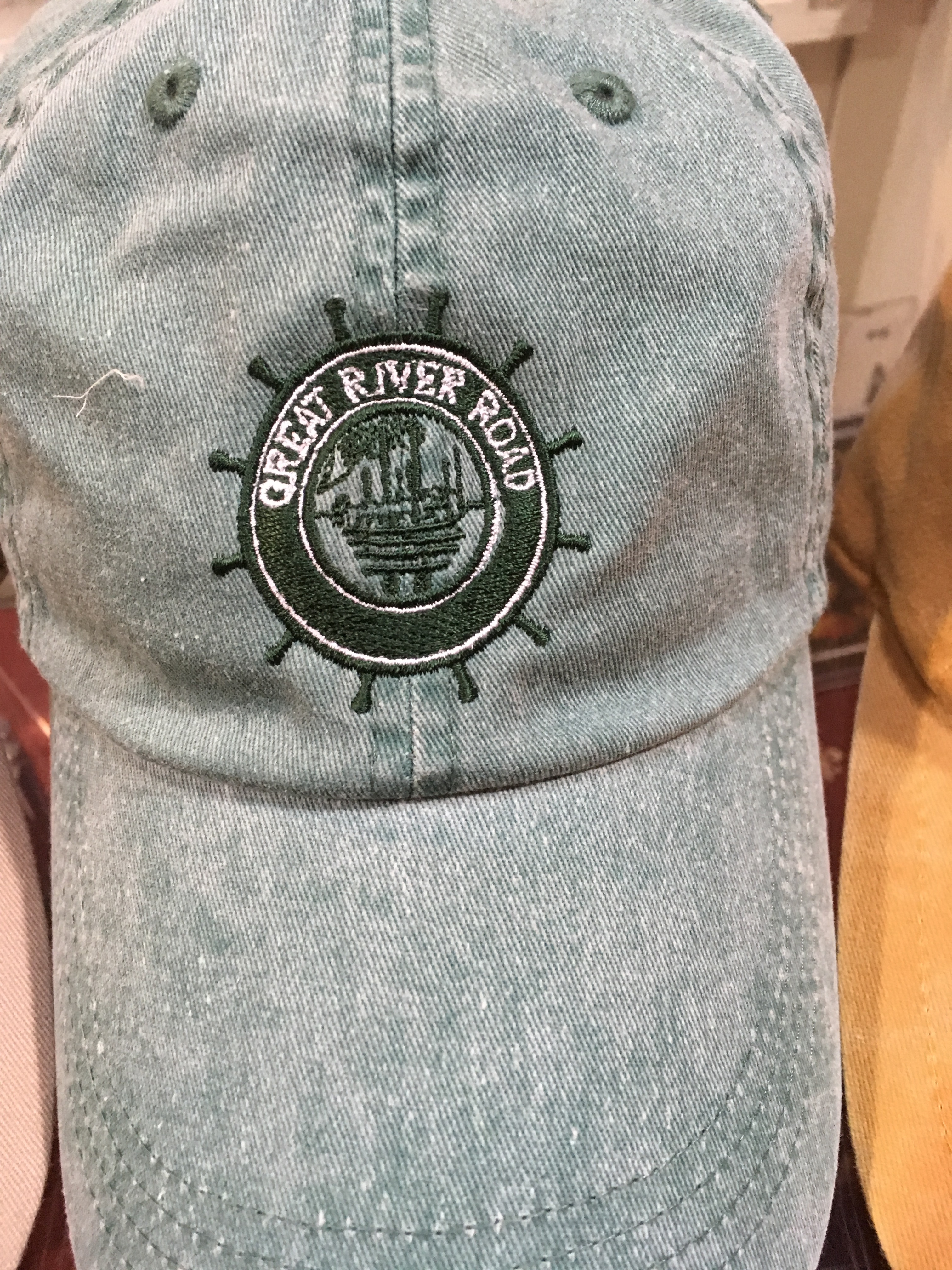 Chapter 1: Planning for a long car trip such as ours requires commitment. Some of the planning is predictable, like how much underwear to bring and how to pack for three climates without over packing. Some of it is unexpectedly challenging, like what hat(s) to bring.
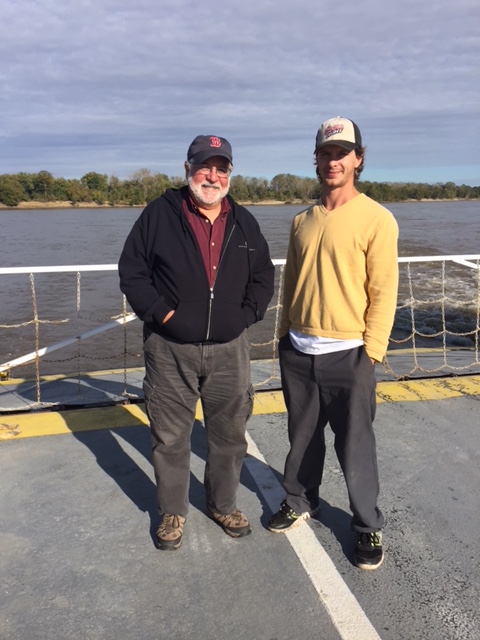 Chapter 2: Ste. Genevieve, Missouri is a ridiculously sweet little river town. We arrived on a free ferry that runs between Modoc, Illinois and Ste. Gen (as the locals call it). The deckhand on the ferry told us about the Inn where we stayed: the Inn St. Gemme Beauvais. It was so nice (and because I had some work to get done), we stayed for three days. Jan and Cathy Brans were grand innkeepers; the breakfasts were astounding; the afternoon wine and hors d’oeuvres provided a touch of elegance.
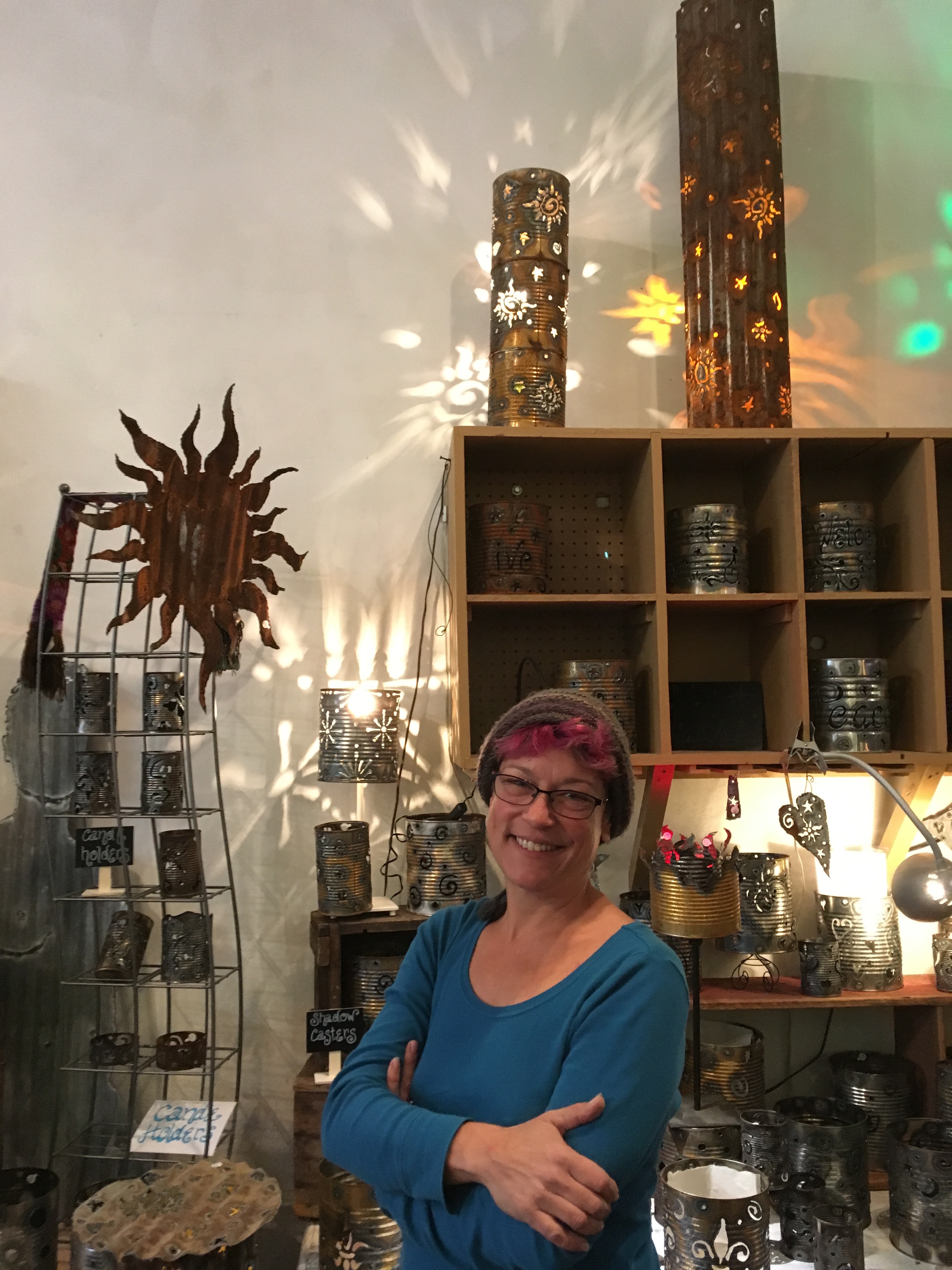
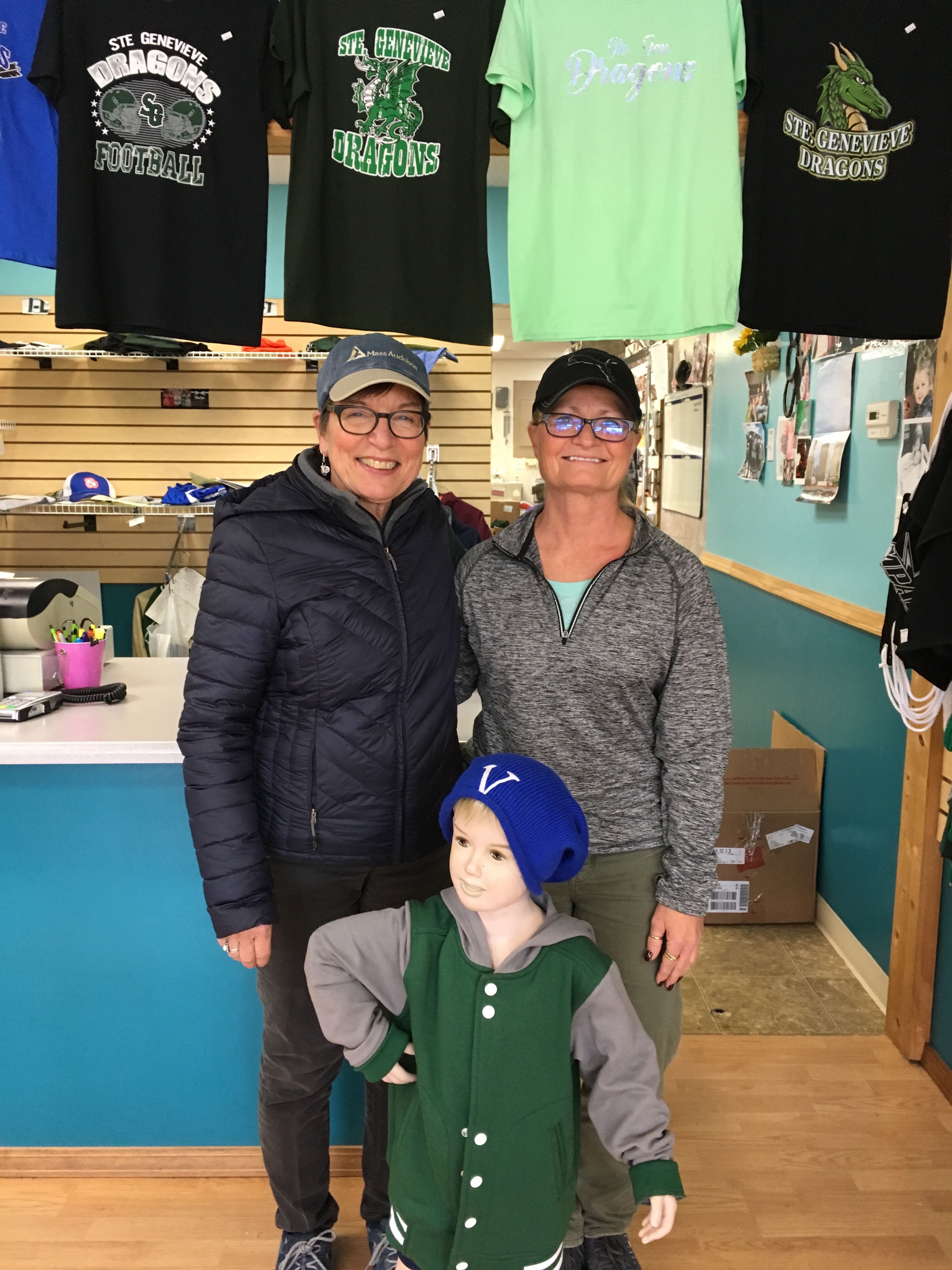 Deb Says Sew is a small shop on the main highway just outside of Ste. Gen, next door to the local McDonald’s. It is a museum of branded wear for local schools, sports teams, clubs, dance studios, etc., etc., etc. Deb Stoltzer greeted us with a smile and fashionably tattered jeans, told us that business was better than she ever would have expected, listened as we told her about our hat search, ratcheted her attention up a notch when we suggested a potential business opportunity, then spent the next 45 minutes or so searching catalogs for the ideal hat blanks. Fortunately, she and Rebecca were on the same page. I wandered through the shop and read some news stories on my phone, knowing that any contribution I tried to offer at that point would be of no avail. Plus, I had no clue that there could be so many different catalogs with so many different styles of baseball caps. It was a bit overwhelming. I felt a lot like “a guy.”
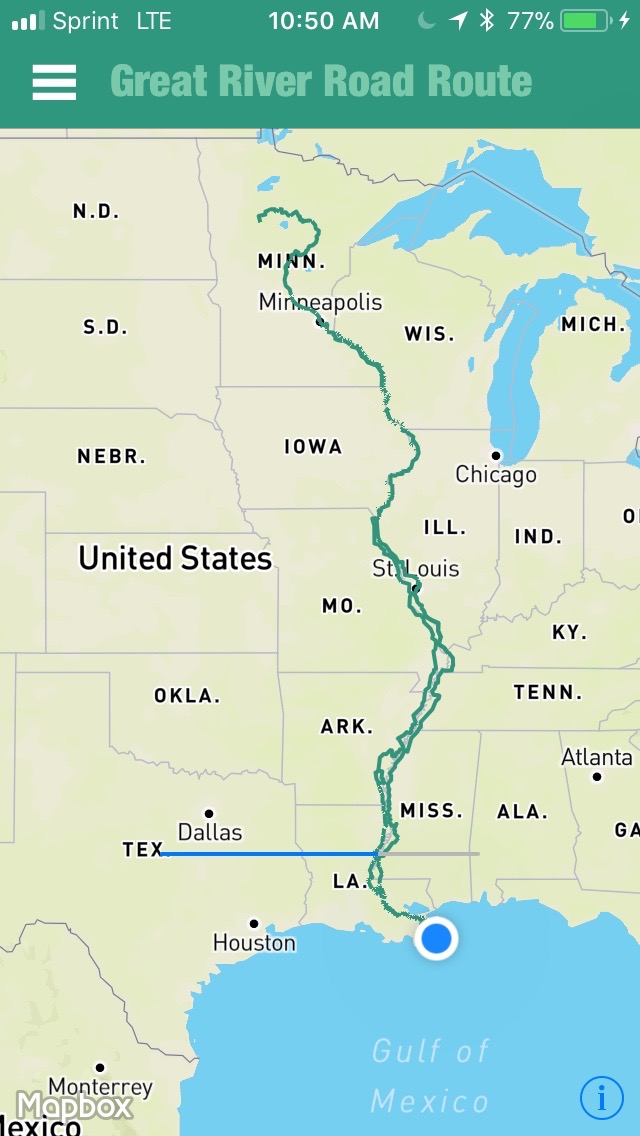
 Chapter 2A: Kaskaskia, Illinois: While the geography of the river is complicated, some parts of it are pretty simple: the Mississippi runs through Minnesota and Louisiana. Other than those two states, the river defines the boundary between states, with Wisconsin, Illinois, Kentucky, Tennessee, and Mississippi to the east, and Iowa, Missouri, and Arkansas to the west. Kaskaskia, Illinois is an exception. Despite being part of Illinois, it is a tiny dot of land on the west side of the river, surrounded on three sides by Missouri. Roughly two hundred years ago, it was the first Illinois State Capital and a thriving center of commerce. I am not sure which moved first, the capital or the river, but they both have. The capital is now in Springfield, and the river flows to the east of Kaskaskia. Kaskaskia appears on the map as a teeny weeny anomaly that consists of a church, a small museum, some farmland, some pecan trees, and 14 people, 2 of whom we can say with confidence are very nice. (We did not meet any of the others.)
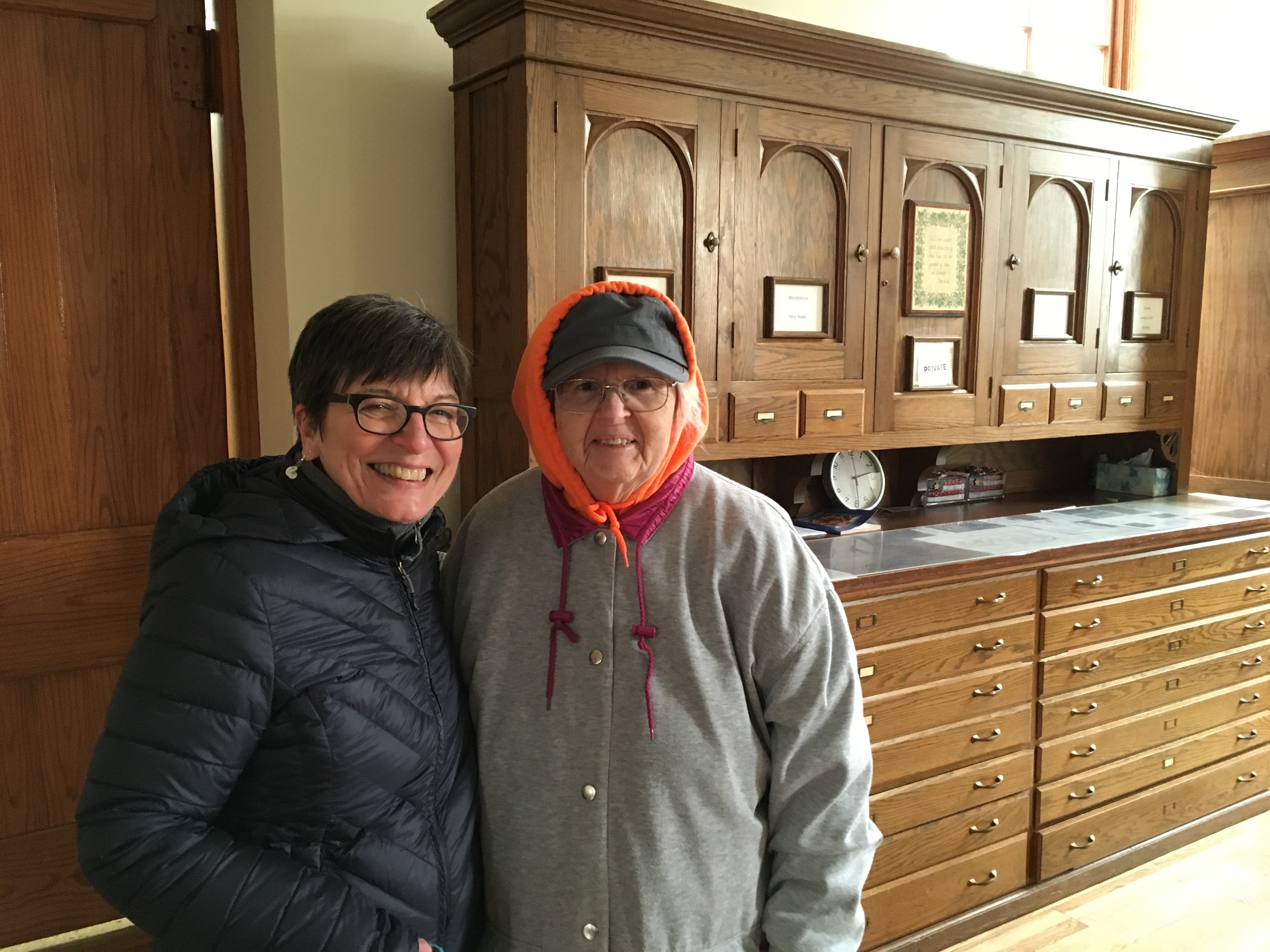 When we arrived, Denise was mowing the grass behind the church, and her mother Viola was gathering pecans. They were thrilled to unlock the old church, and I suspect they would have been pleased if we had stayed all day. They were proud of their little piece of the planet despite its surprising isolation. I also suspect that Kaskaskia is not as much of an anomaly as I think it is. As rivers change course, many communities must become isolated on the “wrong” side. I wonder how many change their geopolitical affiliation and how many become separated from their local seat of government. I seriously doubt that many governors or state officials visit Kaskaskia; the closest bridge (south to Chester) and the closest ferry (north to Modoc) are both about 20 miles away.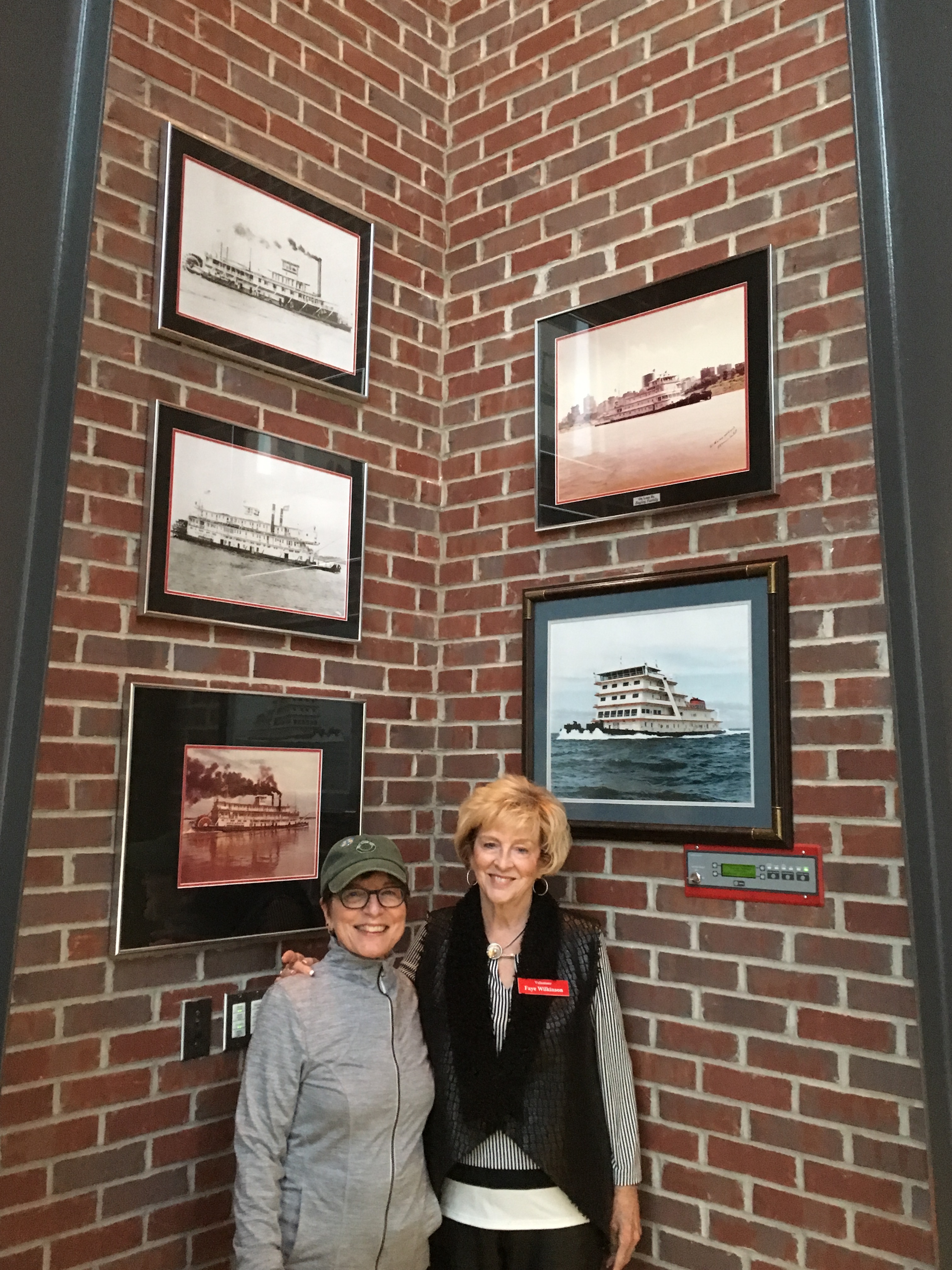




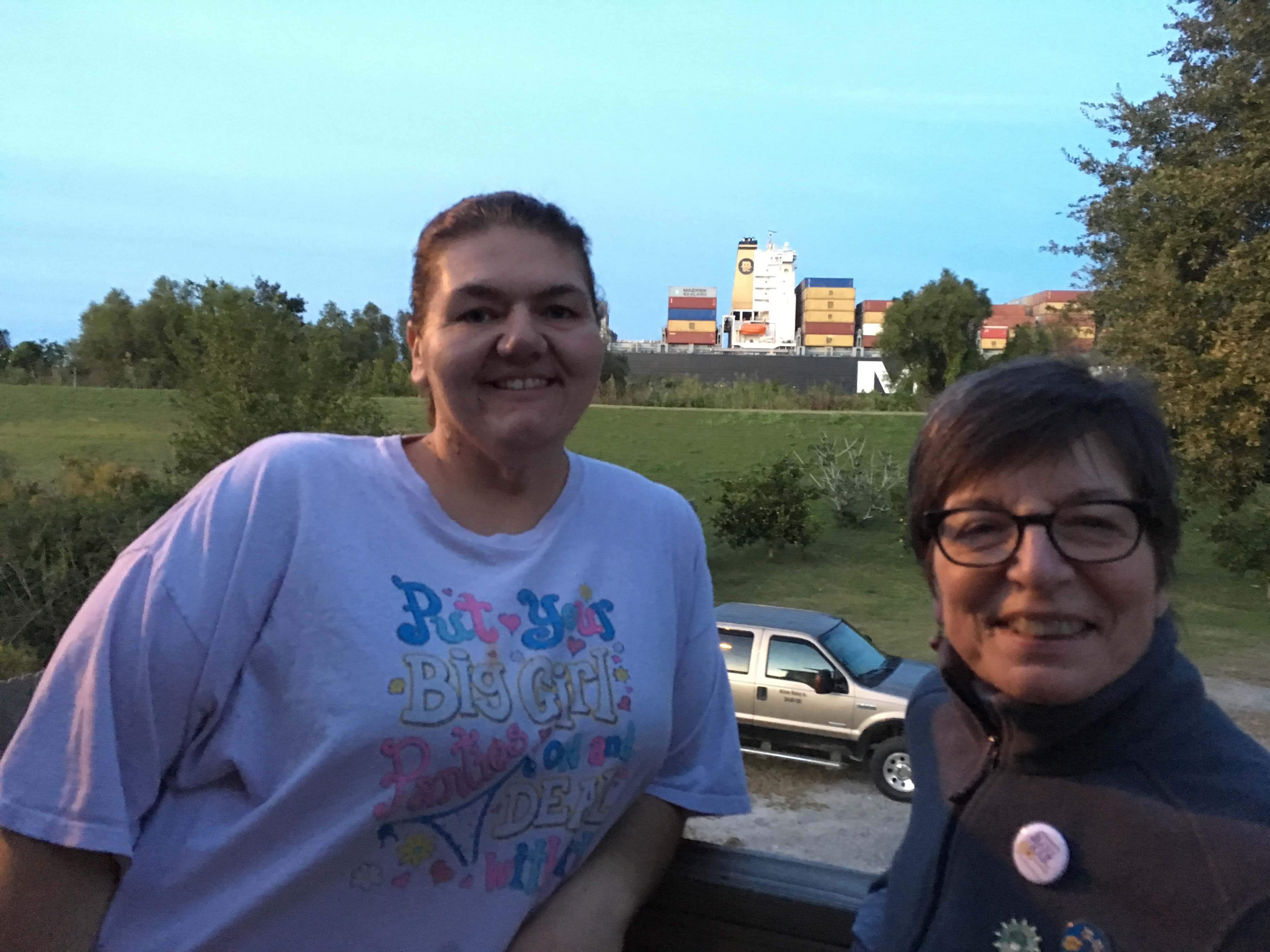 The place, the food, and the company created a storybook ending to a perfect drive. It set the stage for the real work: writing about and making sense of this unbelievable adventure.


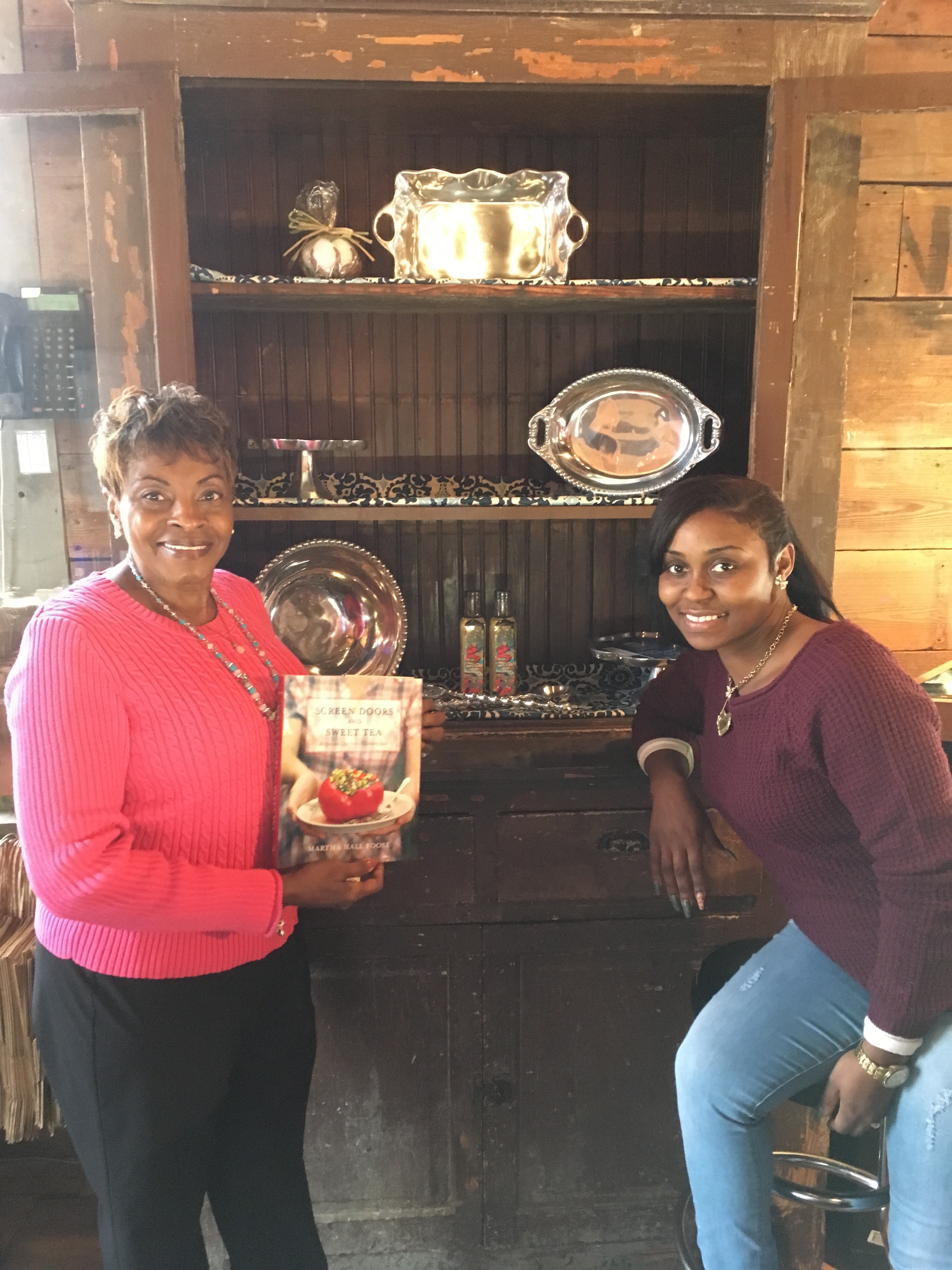


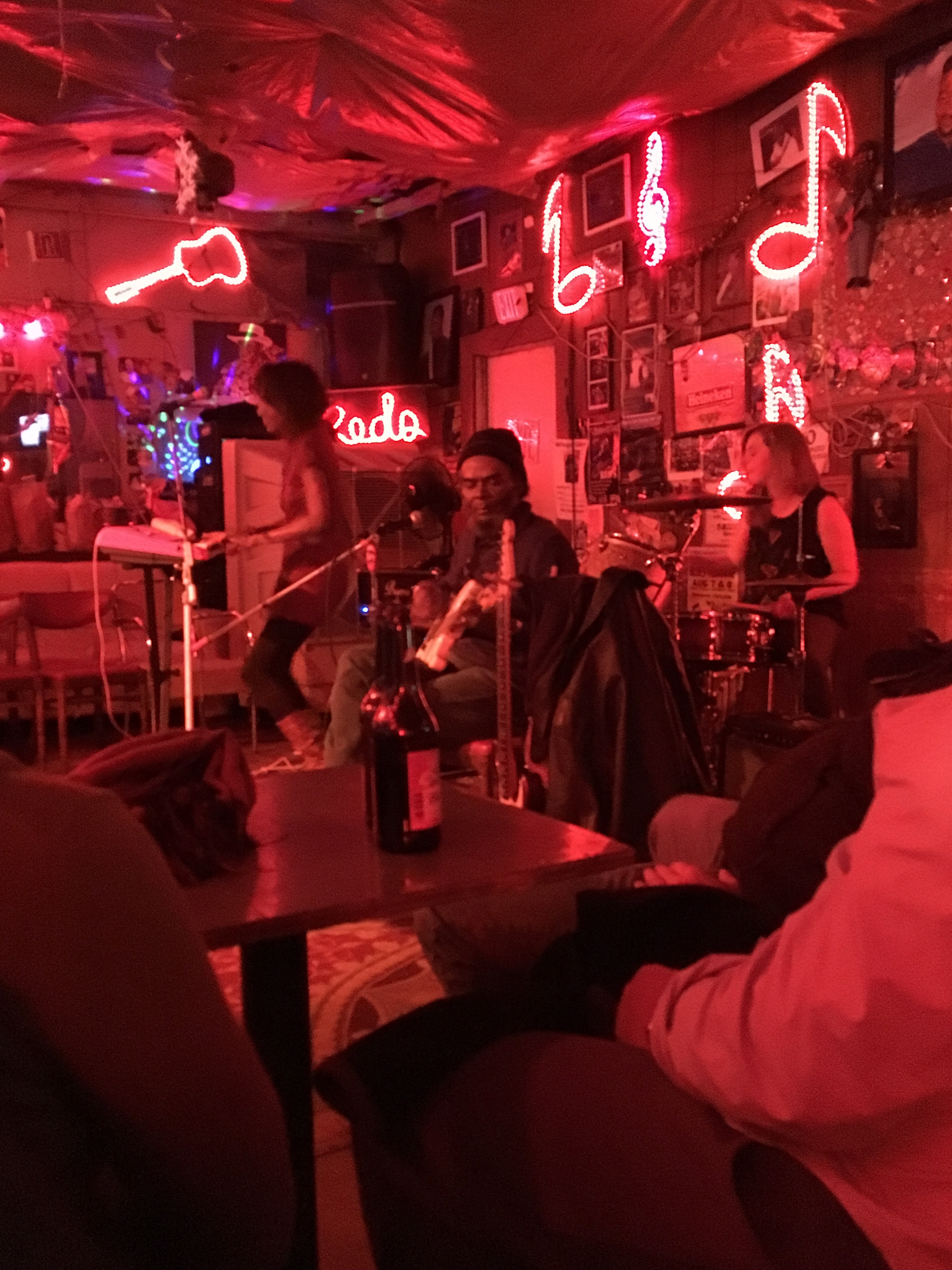 After Super Chikan and a day at the Delta Blues Museum, the muses led us to Red’s, a classic juke joint, where we spent the evening with Bill “Howl N Madd” Perry and a small combo: a phenomenal keyboard player/ vocalist and a drummer from England who started coming to Clarksdale for the blues scene with her father when she was a little girl.

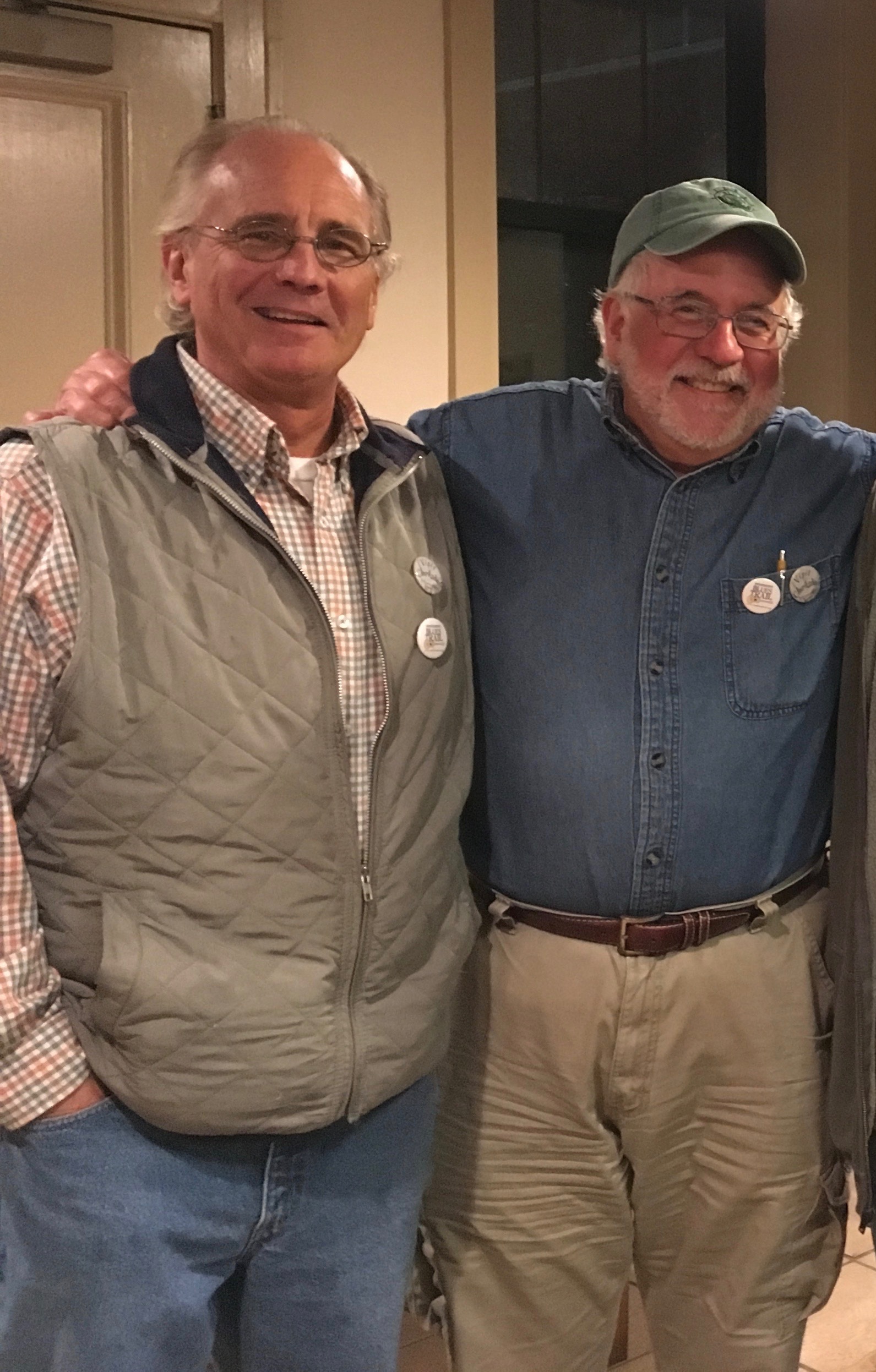
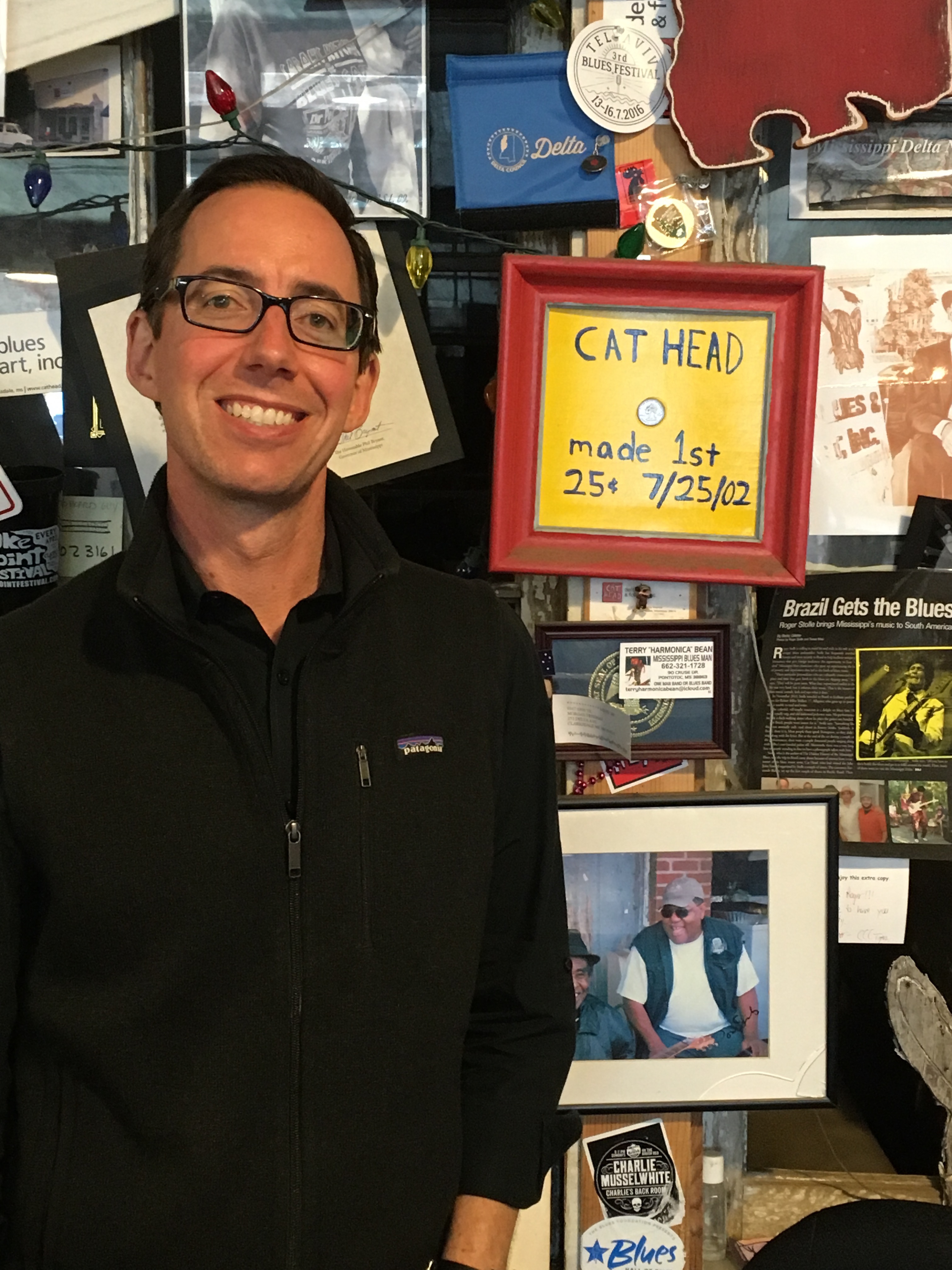 at home, and might be the second-most important reason that Clarksdale has become a destination –– next to Clarksdale native Morgan Freeman, of course. Roger is a transplanted Dayton-ite. Articulate, knowledgeable, kind, creative, and really, really smart, Roger calls himself a promoter, producer, and raconteur. Ahh, but he is so much more … including our source for more great Mississippi music. Folks like Bubba and Roger are the catalysts that can turn a sleepy Delta river town into a really exciting place. I can’t wait to return … hopefully to work with young people trying to carve out a good life in a no-longer sleepy burg.


 myinnersociologist