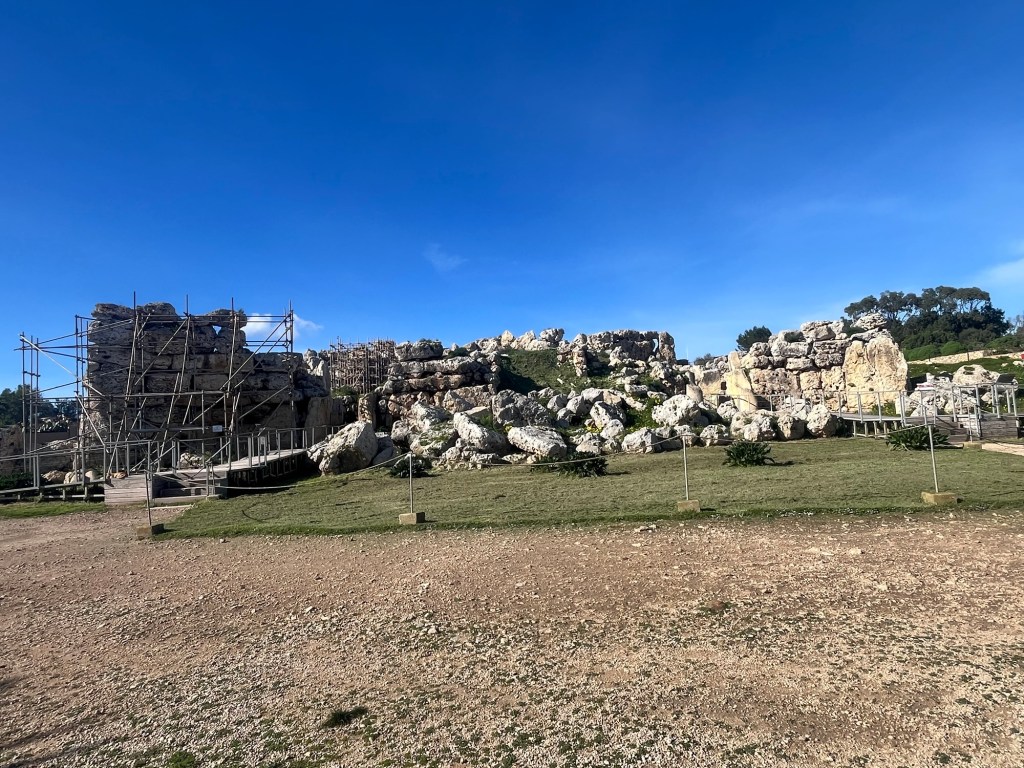
I’ve always wanted to visit the Egyptian pyramids because they are about the oldest human-made things I was aware of. I never thought of visiting the antiquities of Malta — including the Hal Saflieni Hypogeum and Ggantija — because I had never heard of them. They are about 1,000 years older than the pyramids, and about 1,500 years older than the start of construction of the Great Wall of China and the construction of Stonehenge. They are from the Stone Age, specifically the “neolithic period,” when humans had learned to work with pointed tools. The Hypogeum (hypo gee-um) is a ~6,500-7,000-year-old burial chamber, and Ggantija (gee-gan teeya) bills itself as the oldest free-standing structure in the world built with stones that weigh up to 50 tons.
Fortunately for us, we know local peeps in Malta: our friend David’s cousins, Sam and Alan. They gave us two pieces of insanely good advice:
1) Get our “Tallinja Cards” before our trip. We did. With them … at a total cost of $30 each … we have unlimited travel on Malta’s expansive bus system. So far, we have spent about $15 on Ubers — one ride from the airport because our bus did not run for a couple of hours on New Years Day, once to get home from a remote village when Rebecca felt crappy and the evening cold had set in, and once to ensure we got to the Hypogeum on time. Malta’s bus system rocks!
2) Get our tickets for the Hypogeum well before our trip. They go on sale three months ahead of time. We bought ours the day they went on sale. It felt a bit extreme, but it was definitely the right thing to do.
We visited the Hypogeum on January 7 and paid €20 each for tickets. The earliest available last-minute tickets were for January 29, and they cost €50 Euros each.
The Hypogeum is one of the oldest human-made structures on earth, started about 4,500 BCE. To protect the fragile limestone and ensure that the atmosphere does not get acidic from too much carbon dioxide, Heritage Malta allows 10 people per hour into the site 8 times each day. Eighty people a day. That’s it. You lock your cell phone and belongings in a locker before entering. No photos.
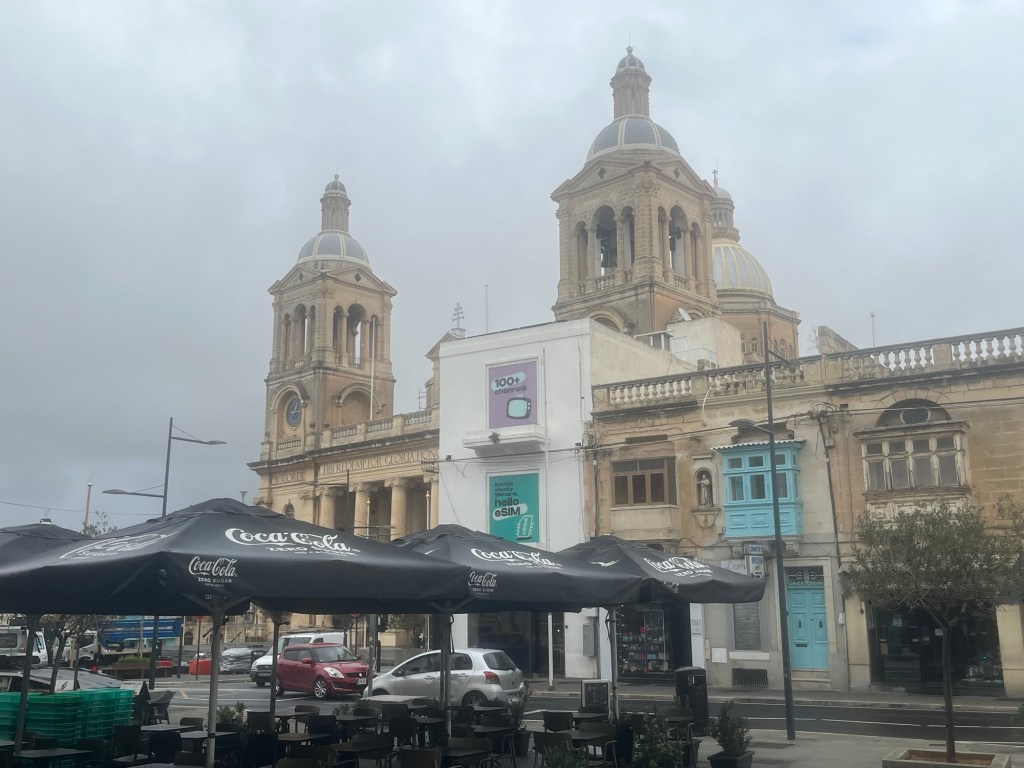
I had expected it to be some sort of “place,” and it sort-of is … but not really. From Marsaxlokk to Malta’s capital city of Valletta, we took the #81 bus. It went through Paola, home of the Hypogeum. There is a Hypogeum stop on the system … Hypogeia … but the #81 does not stop there. I asked 10-or-so different people what stop to get off for the Hypogeum, and I got at least 5 or 6 different answers. Not only did nobody really know, most folks had no clue what I was talking about. Imagine getting a response like that when searching for Stonehenge or the Pyramids! That’s why we took an Uber instead.
The Hypogeum is almost indescribable. Heritage Malta does a much better job than I. Clicking this link will take you to the Heritage Malta website. https://heritagemalta.mt/explore/hal-saflieni-hypogeum/
Here is my take on it. First, it is almost invisible from the outside. It is in a block of traditional Maltese “homes” —- a continuous limestone facade with doors and balconies, but nothing really resembling a free-standing house. The front of the building says “Hypogeum,” but there is no other signage. Once inside, the visitor area is about 20-feet wide with a small shop selling trinkets and a few t-shirts.
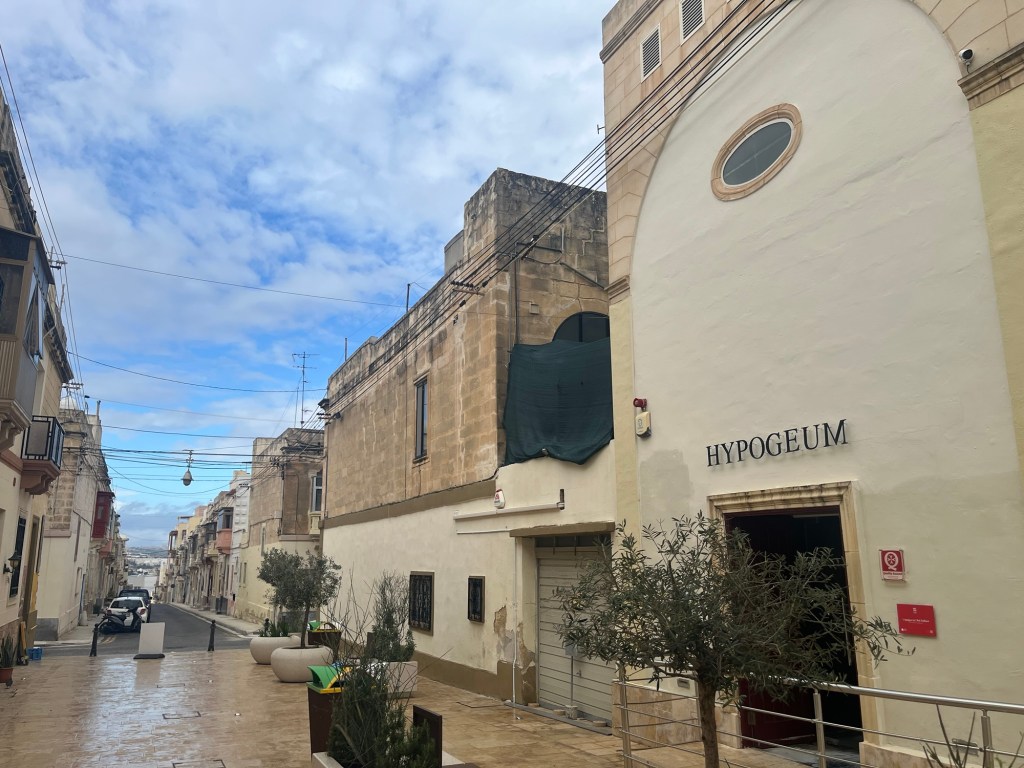
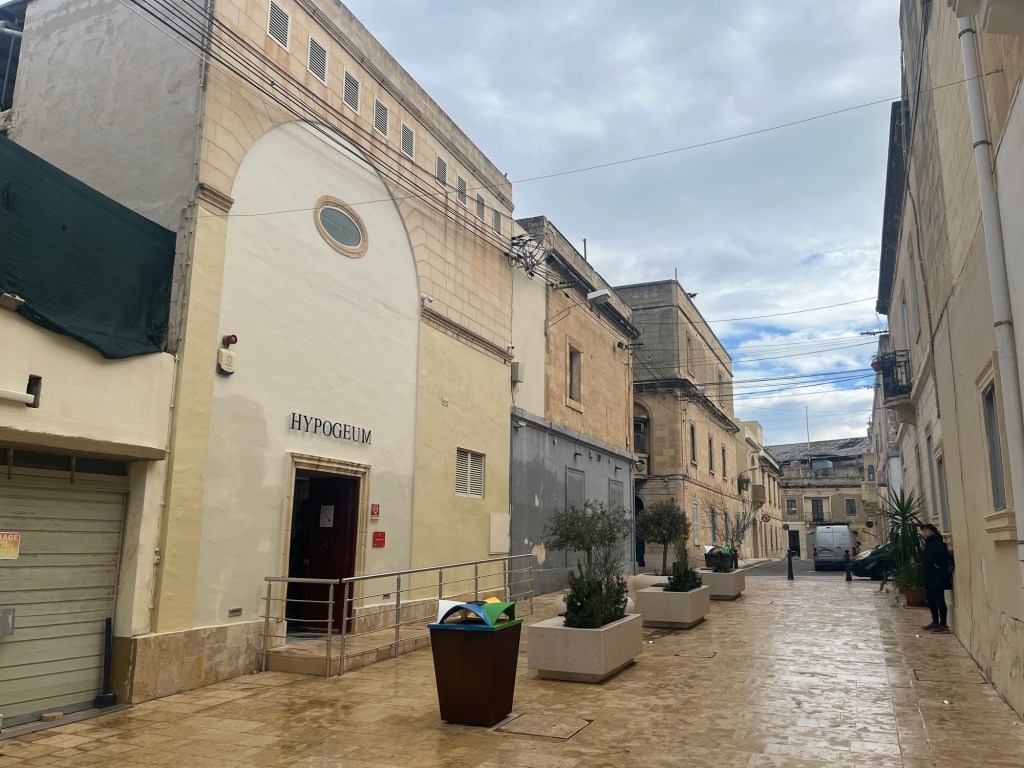
At the top of the hour, a guide calls the ten waiting visitors into a small room where we locked up our possessions, put little plastic bootie protectors over our shoes, and received a box on a necklace set to the language of our choice that narrated the next 45 minutes as we walked down a ramp, through a few “rooms,” and then walked back up. That’s it. Simple but powerfully magical.
No one knew the Hypogeum existed until 1902, when a construction crew building homes broke through into its chamber. When first discovered, the skeletons of an estimated 7,000 people lay inside. But because of the natural moisture and the ravages of time, most of the bones turned to powder when touched. Excavating, exploring, and stabilizing the site took decades of painstaking work.
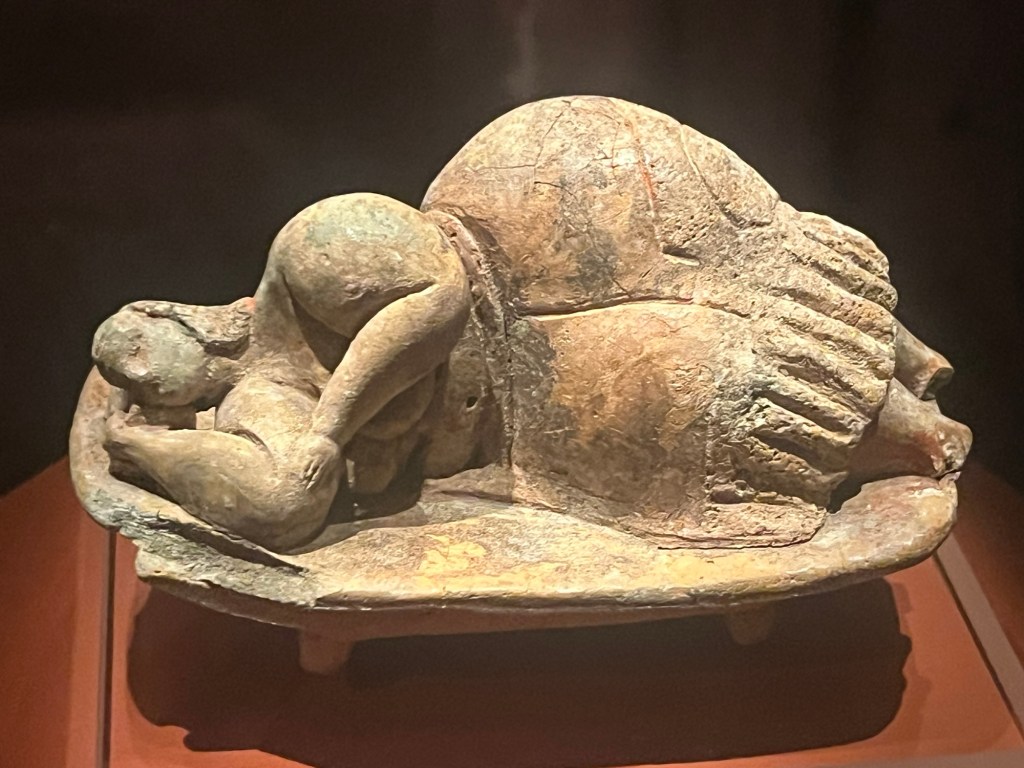
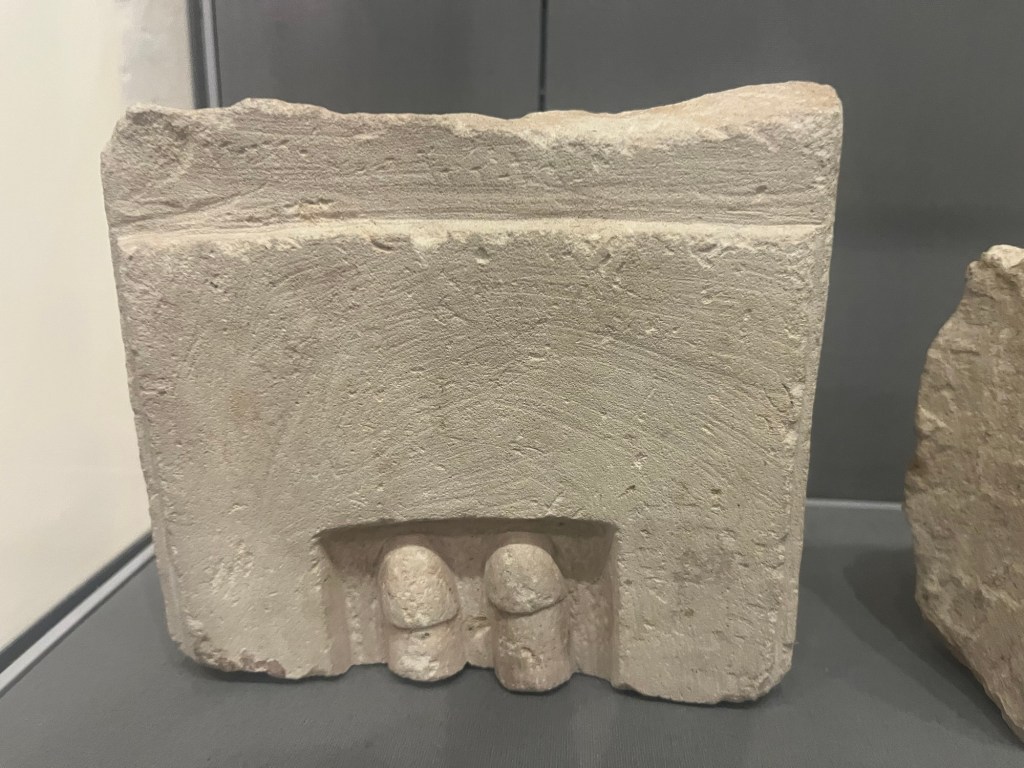
Among its many mysteries, rock caverns underground are pitch dark. There were no tell-tales signs of soot on the ceilings when the Hypogeum was found. How did the ancients negotiate the darkness or create light without smoke or soot? Just one of many imponderables.
As I try to describe the experience, I am at a loss for words. I am not even sure what we saw. Here is what I do know: It viscerally linked past and present. The people who built those chambers were everyday human beings, just like us, born several thousand years earlier. Their patience, perseverance, and skill with tools is indescribable. They carved magnificent pieces of art and room-sized chambers with the most pre-historic of tools. Doing so did not take years or decades or lifetimes. It took centuries of one generation after another fulfilling some sort of dream or mission.
The only other place Rebecca and I experienced something similar was at the Effigy Mounds National Monument near McGregor, Iowa. The builders moved dirt one load at a time until they had constructed mounds in the shape of local animals, like bear and deer. Today, those shapes are visible from the air, but appear only as unidentifiable mounds from ground level. Imagine spending a lifetime working on a task that has no beginning and no end, but that engages an entire community, basically forever.

 myinnersociologist