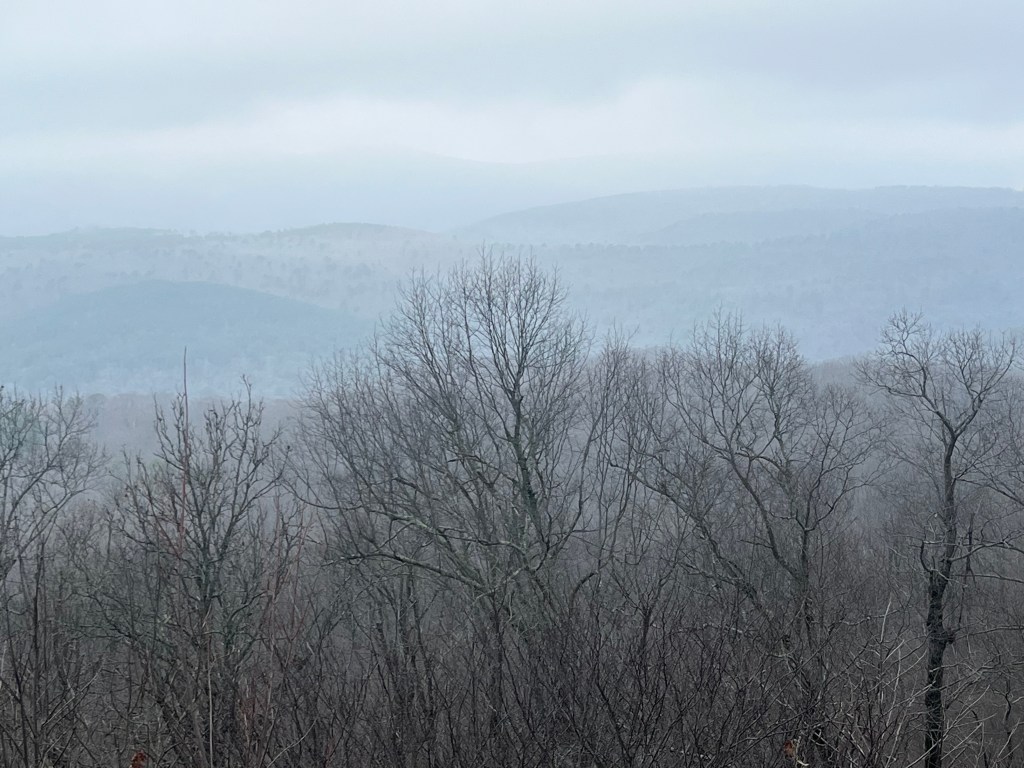
The Ozark Mountains are surprisingly gorgeous. We are having a really good time, just traveling and hanging out. We are engaging extraordinarily nice people … some of whom, it seems, might talk for days if we did not find a way to staunch the flow. Despite our lust for adventure, we could not bring ourselves to visit Branson, Missouri; it just seems like one of the most intensely unpleasant places on the continent.
Northwest Arkansas reminds me of Pigeon Forge, Tennessee if Pigeon Forge were coupled with a cool college town. Pigeon Forge sits in mountainous country just north of the Great Smokey Mountains National Park. It has a deeply unreal quality to it. It is a center of wealth and economic vitality in an otherwise economically bleak region for only one reason: the unbelievable success, business acumen, and community-mindedness of Dolly Parton. But Dolly’s wealth and influence pale alongside the success, wealth, and business acumen of Sam Walton and the Walton family. Northwest Arkansas – the western foothills of the Ozarks – is Walmart Country coupled with Tyson Foods, JB Hunt Trucking, and Fayetteville, a cool college town, the home of the University of Arkansas Razorbacks.
The Ozark Mountains are backwoods: cabins and old homesteads and quilts and jelly and country stores. The cities of northwest Arkansas –– Fayetteville, Bentonville, Springdale, Johnson –– are just the opposite. They offer the best the US has to offer … to those who manage to get their fingers into the largesse pie. New subdivisions sprout as if planted with genetically modified seeds. Brand-new malls and strip malls line the roadways. The Museum of the Ozarks is beautifully curated, new, and totally free, a gift of the city of Springdale. Alice Walton’s Crystal Bridges Museum of American Art is also free and home to a memorable collection of American art. The beautiful walking/biking bath around Lake Fayetteville is not only well maintained, but in our 1.5-hours there, we moved over for a Department of Public Works sweeper and a leaf blower. The maintenance is impeccable, all supported by tax dollars.
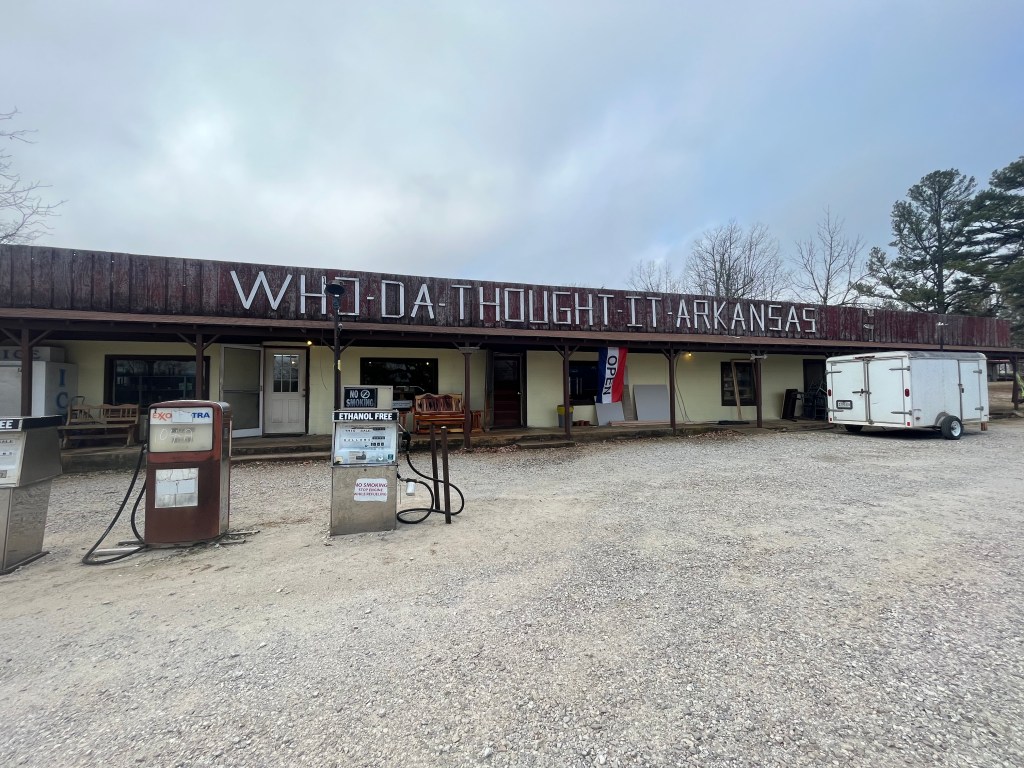
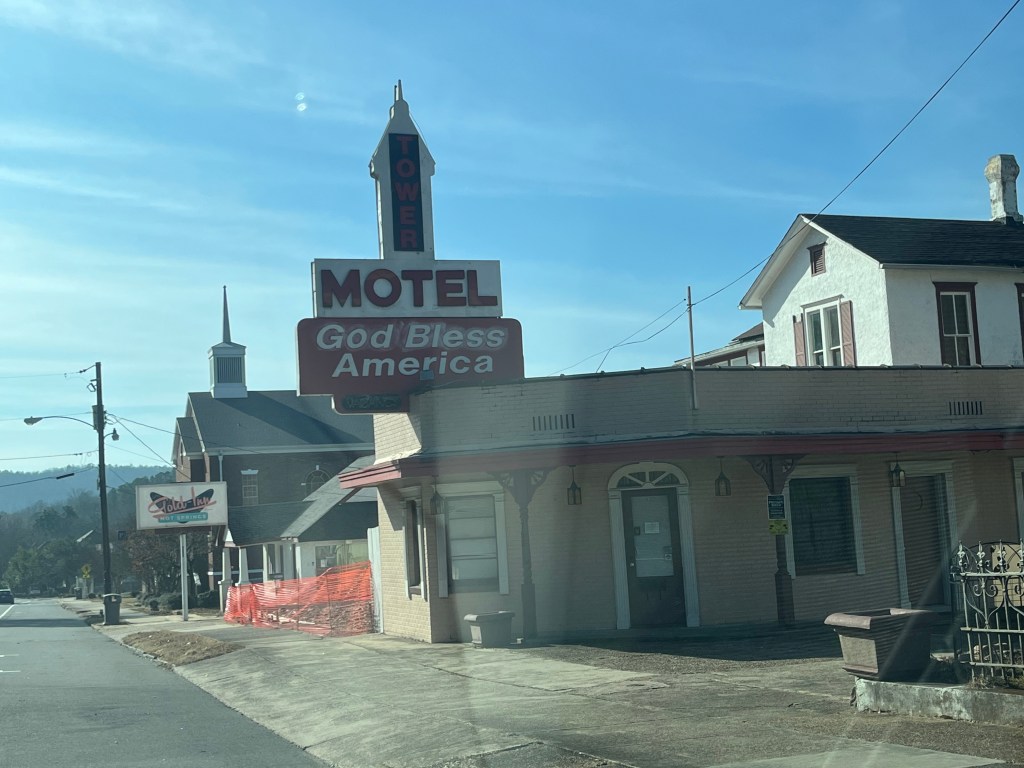
Our time at the University of Arkansas seemed typical of our travel style. We googled “Museums at the University of Arkansas.” The search revealed a cool-looking museum of archeology. Google maps sort-of took us there; it led us to an area in the ag-portion of the university with a bunch of modest newish-looking sign-free buildings connected by empty parking lots. (It was January 3, so school was not yet back in session.) We wandered around a few of the buildings until we encountered a maintenance crew. They directed us to the “museum.”
Once inside, we encountered no one, so we found the rest rooms on our own. Once relieved, a really nice woman appeared and asked if she could help. We explained why we were there. She let us know that the museum was not open to the public, and the collection of artifacts was not accessible. She also offered to see if anyone might be willing to spend some time speaking with us. Since Rebecca had left her phone in the car, and the car was several parking lots away, we said we’d be back in a few minutes, after we retrieved the phone and moved the car.
Five minutes later, we learned that the museum curator would be happy to meet with us … in 45 minutes … and in the meantime, the state archeologist would be happy to meet. We could not possibly have had a better time!
Dr. Mel Zabecki, the state archeologist helped us immensely with our effort to distinguish between antiquity and the modern era: ancient cultures, pre-Columbian Mississippian Mound Cultures, modern native nations indigenous to Arkansas, and modern nations that moved through Arkansas to Oklahoma as part of the Trail of Tears. She also reminded us of the sensitivity required for a non-native professional to stay authentically and mindfully respectful of the indigenous. The really good news is that despite the enormity of the task, she seems genuinely committed to doing the best job she can. Thank you for your time and insights, Mel. We loved our time together and cannot wait to share the book you gave us with our horticulturist grandson!
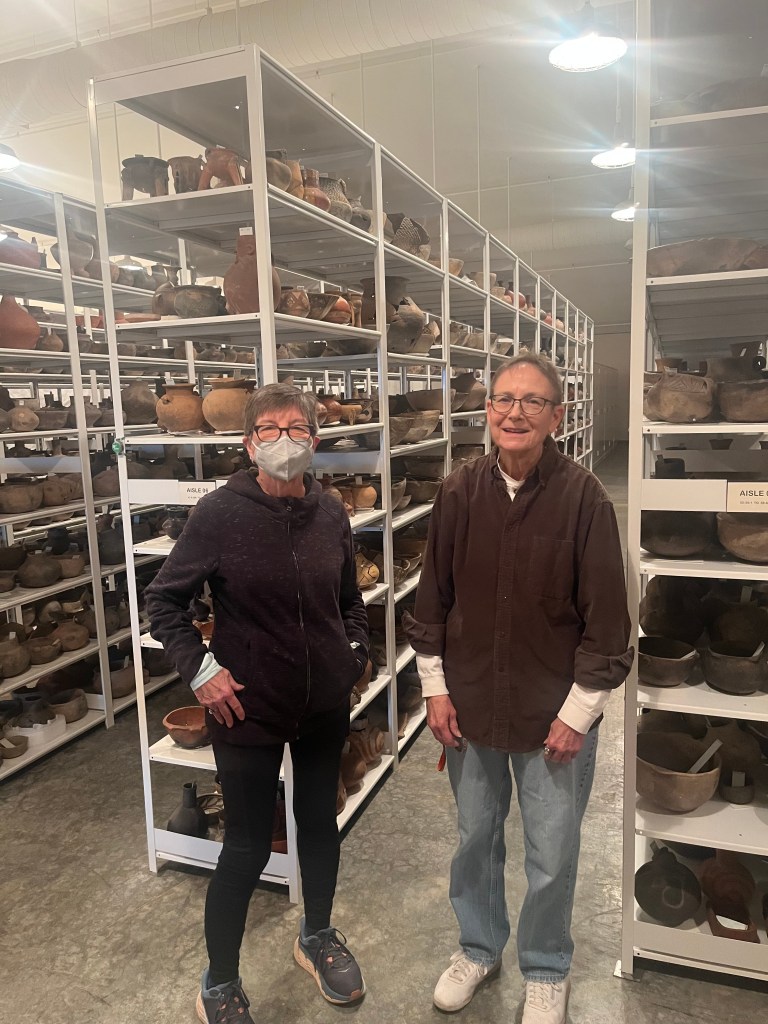
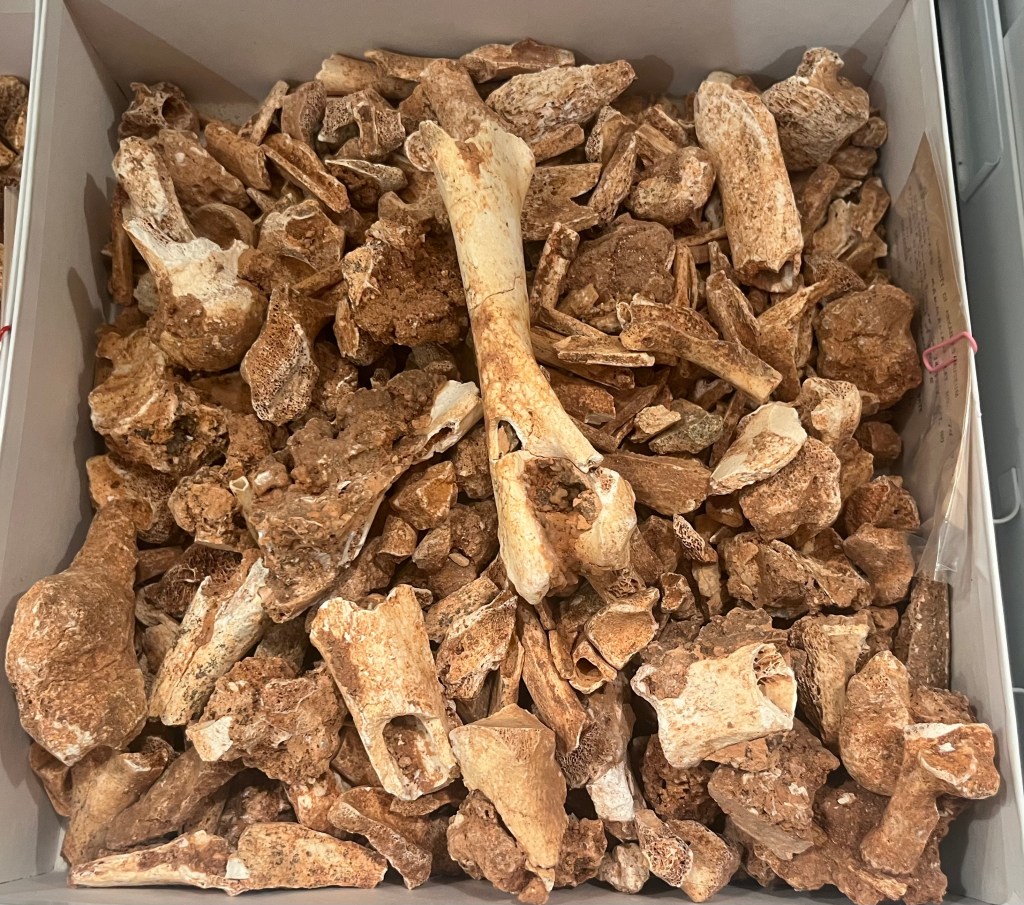
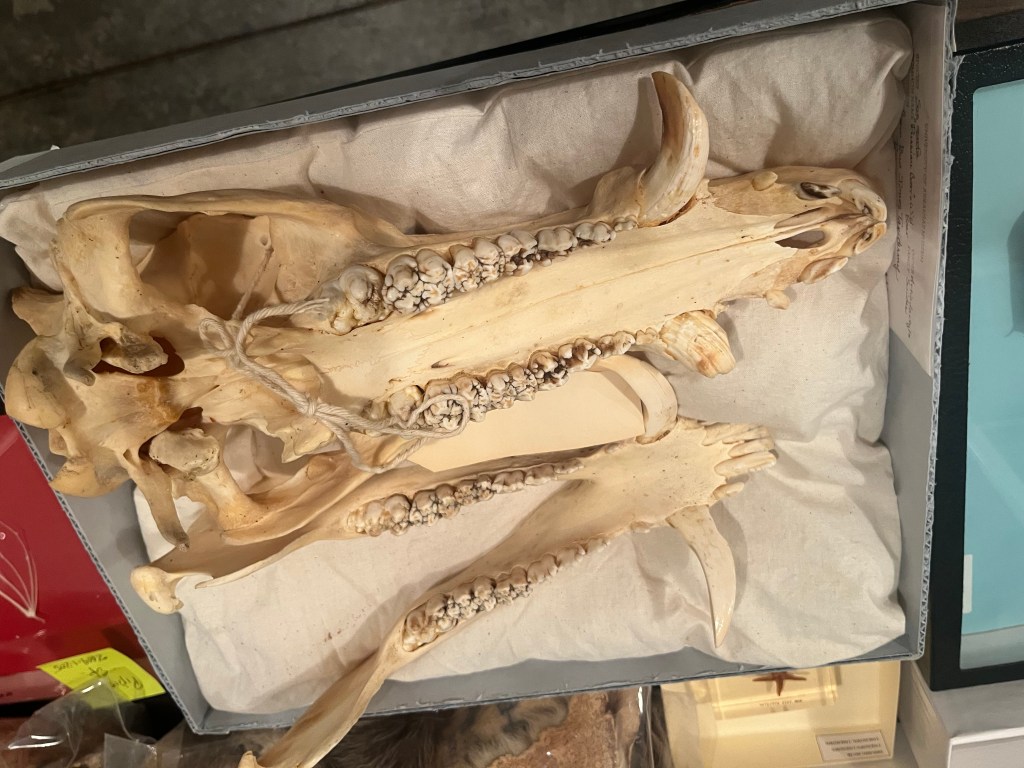
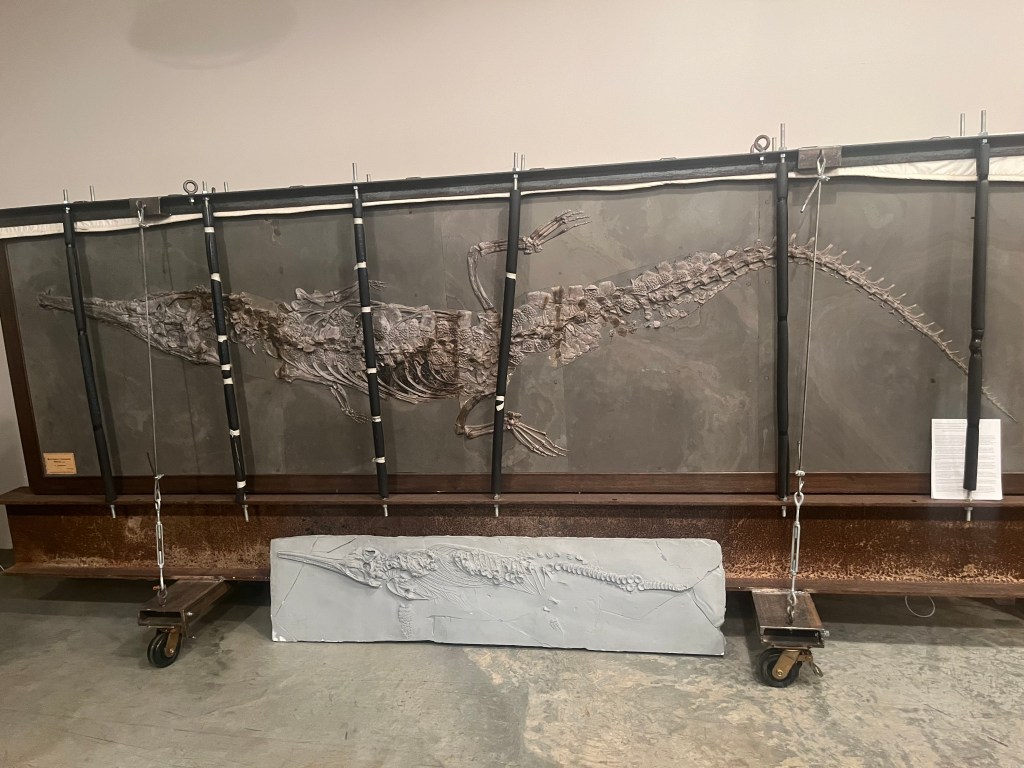
Dr. Mary Suter, the museum’s Curator of Collections, brought us into the heart of the collection. She literally knows every piece … and there are many thousands of them. There are fossils, bones, tools, artwork, iconography, and pots and vessels from throughout the world. When I naively asked if she had any favorite items, she politely assured me she did not … and equated the question to asking a parent if he/she has a favorite child. We could have stayed in that collection for days, but we literally felt guilty about taking up so much of her time … despite her amazing willingness to spend the time with us.
Mel and Mary, you are both fantastic professionals and have filled us with joy!


The following day, Wednesday, we braced for a day with the Waltons: Bentonville and Crystal Bridges Museum of American Art. The similarities between Dolly’s Pigeon Forge and Sam’s Bentonville stayed relevant. The northwest corner of the state is wealthy and unashamed.
Crystal Bridges is a really credible museum, but nothing about it blew my mind. It is great for the region, and the region deserves nothing less.
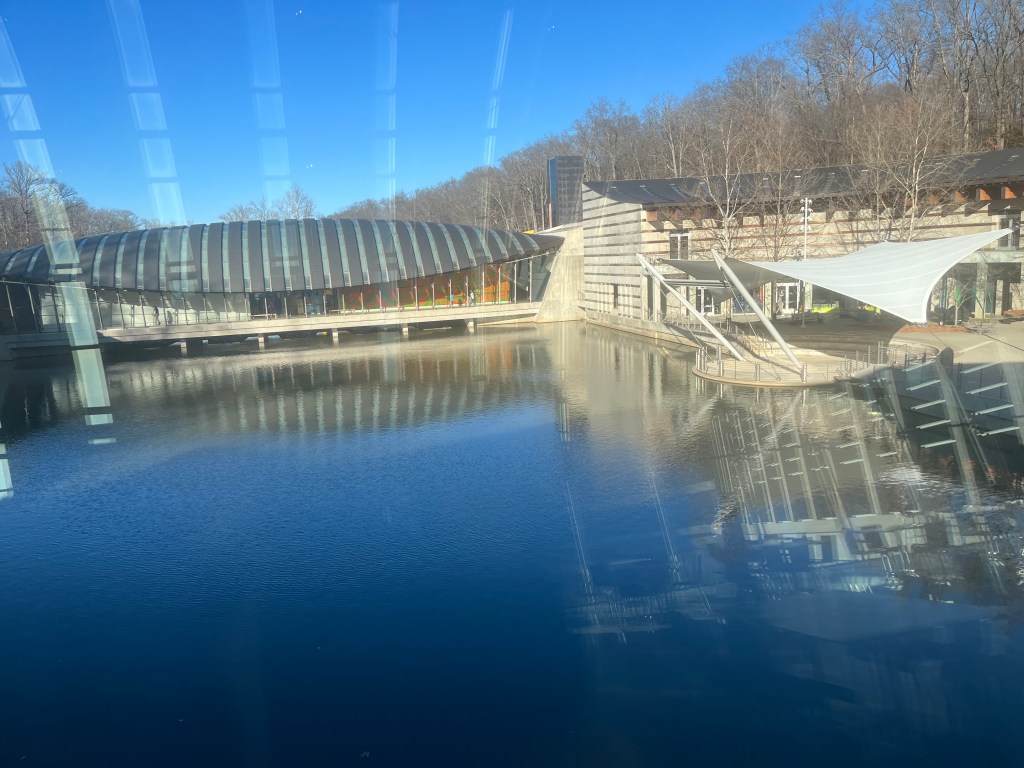

One aspect of Crystal Bridges and Bentonville disturbed me. I do not want to indict or be too woke, and I have a data point of one day: January 4, 2023. Subdivisions, booming construction, and all other signs of prosperity notwithstanding, we have seen no people of color (other than the Hispanic road crews and construction workers). The whiteness feels more like Vermont than Vermont. Are there truly two racial worlds in northwestern Arkansas? I don’t know. I am not sure I have ever seen anything quite like it. I wish I had more knowledge and more wisdom. Something is weird. That is the best I can do.
So be it. Northwest Arkansas is about to be history. We leave on Thursday for Oklahoma and Cherokee Nation.
During our time in Bentonville, we visited the Museum of Native American History, a little gem of a museum. It is the first Native American museum we have visited that drove home the complexity of the history we are about to engage. North American Native American “history” entails the “Paleo” period (14,000 – 10,000 years ago), the “Archaic” period (10,000 – 3,000 years ago, the “Woodland” period (3,000 – 1,100 years ago), the “Mississippian” period (1,100 – 650 years ago, and the “Historic” period (650 – 200 years ago). After that, we are in modern-ish history. The Indian Removal Act under Andrew Jackson that resulted in the Trail of Tears took place in 1830, less than 200 years ago. “Tribes,” “Nations,” and modern US history are all blurring together. We are about to dive into that world. Our naivete is overwhelming. Stay tuned. I’ll bet we learn A LOT of really interesting stuff!
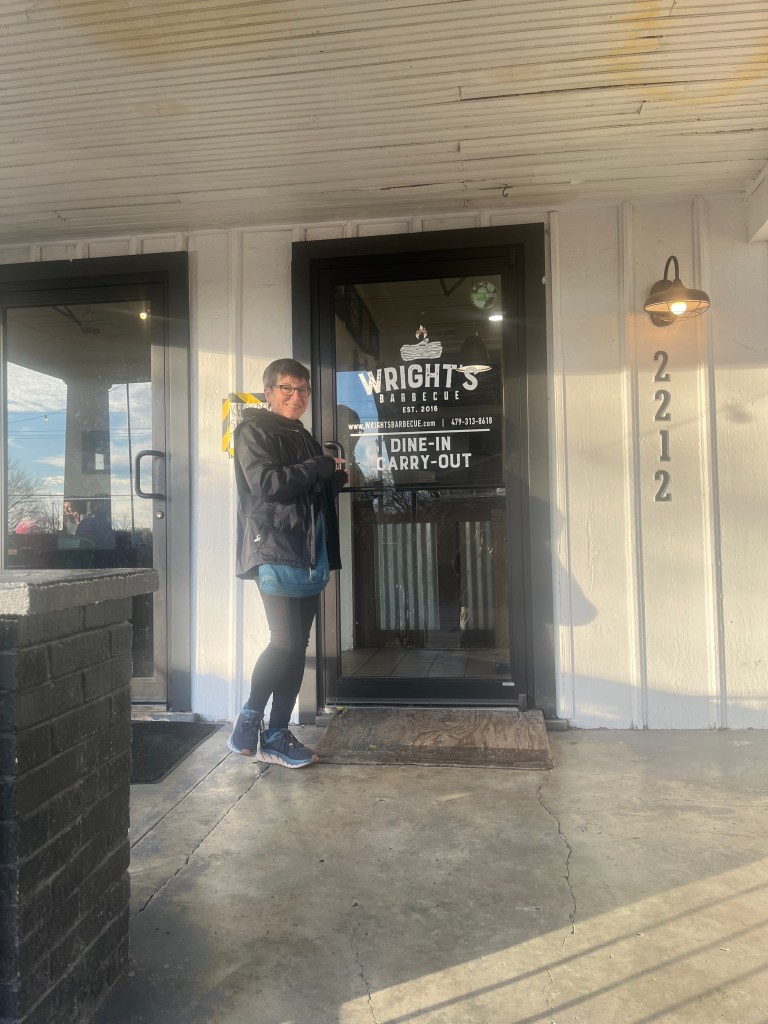
Oh yeah, one last thing, we ate the best ribs of the trip so far at Wright’s BBQ in Johnson and then thoroughly enjoyed sone genuine Arkansas catfish at the Flying Fish in Bentonville. (I have TWO Billy Bass trophies in my basement. If I donate both of them to the Adoption Center, I get two plates of fried catfish. Despite all I have just said, it might be worth another trip.)

 myinnersociologist