
Cairo, Illinois was one of the most memorable places we visited on our drive down the Mississippi five years ago. We visited it again this morning. If it has changed, it is even more dilapidated and sad than it was then, but that may not be possible. It is already dilapidated and sad to the max.
Rebecca and I have been discussing why it is in the shape it is in. She thinks racism is the primary cause. I think racism plays a significant role, but that evolving technology and the vagaries of geography are also key drivers. The cause is one thing; the effect is another: Cairo is a dilapidated ghost town.
The ex-city sits at the confluence of the Mississippi and the Ohio Rivers, right at the tip of the peninsula formed by the confluence. It is the lowest point in Missouri. By my reckoning, it marks the beginning of “The Delta” region of the lower Mississippi. (The Delta does not begin, as legend has it, at the Peabody Hotel in downtown Memphis, 100 miles-or-so to the south.) From Cairo to the Gulf, the countryside is flat as a pancake with countless thousands of acres cultivated in cotton and soybeans. For the Bob Dylan fans among us, US Highway 61… the Blues Highway … runs near the Mississippi all the way to the Gulf; it is good to be revisiting it!
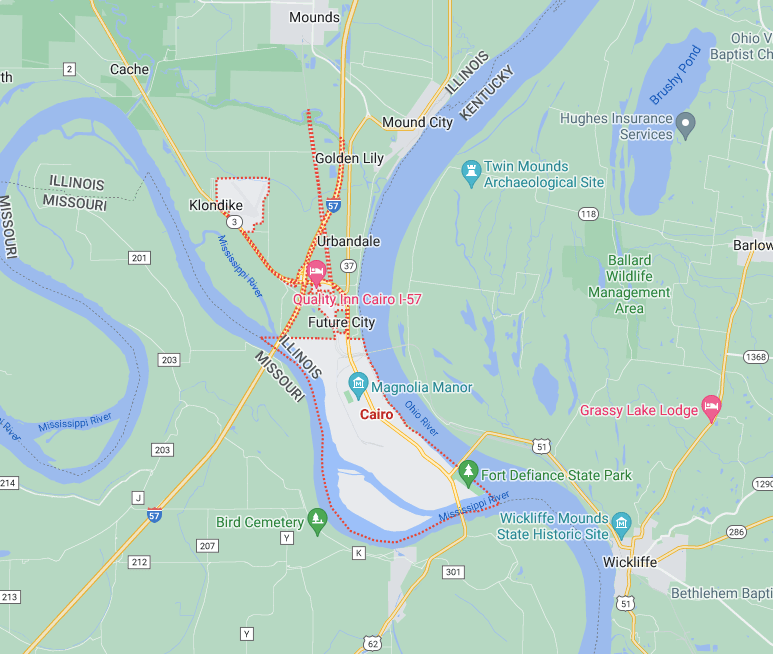
Through much of the 19th and 20th Centuries, Cairo was a hub of riverboat and ferry activity followed by railroad activity. Bridges displaced ferries. Railroads displaced riverboats. In 1927, the Great Flood decimated Cairo. By the 1950s, the economically whiplashed white residents of Cairo would hear nothing of the city becoming integrated: they filled in the city swimming pool rather than allowing Black swimmers alongside White. Today, the city sits almost vacant. The iron sign to the “Historic District” leads to nowhere. The once elegant houses sit derelict, often in ruins.

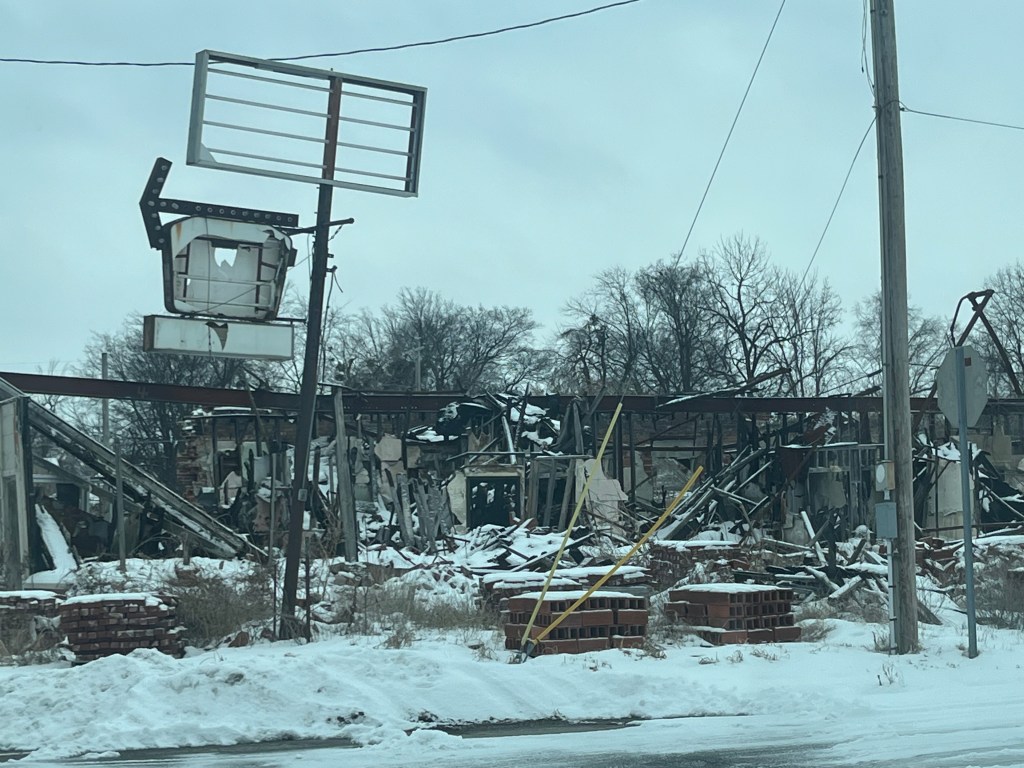
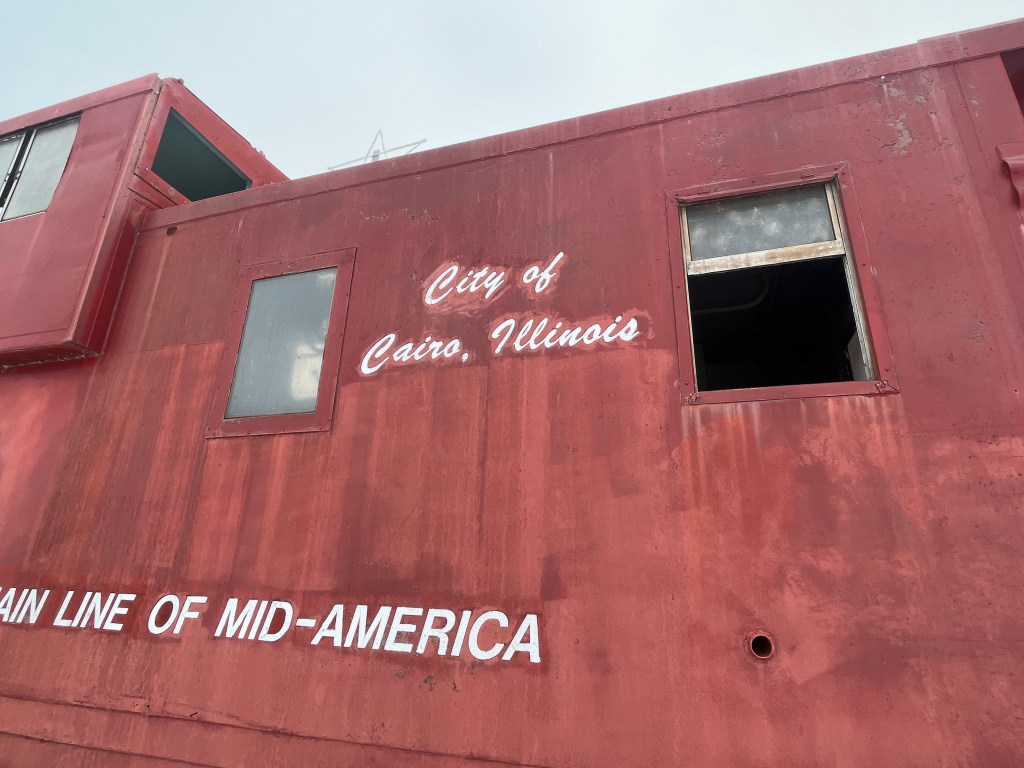
Visiting Cairo feels important. It is a living reminder of what social and economic decay look like. Everything in our world is capable of reaching that level of decline. We need to work together to ensure that our entire society does not crumble like Cairo.
Cardiologist’s dream? Cardiologist’s nightmare?
We had hoped to find someplace to have breakfast in Cairo. There is literally nothing there. So we kept driving along Highway 61.
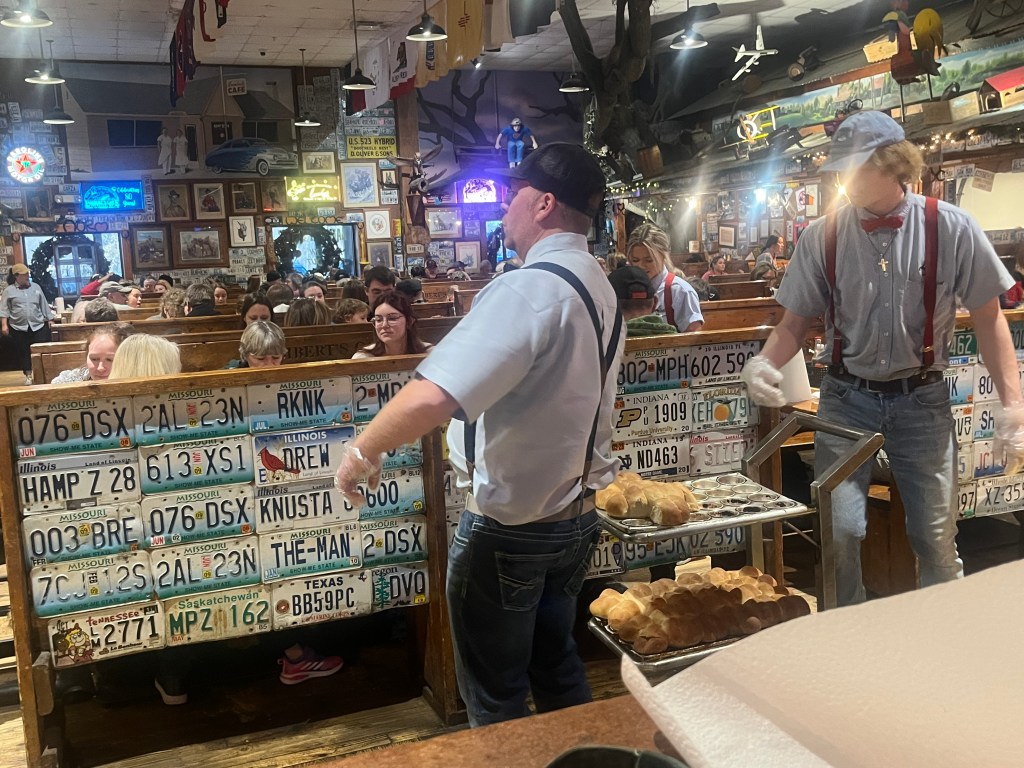
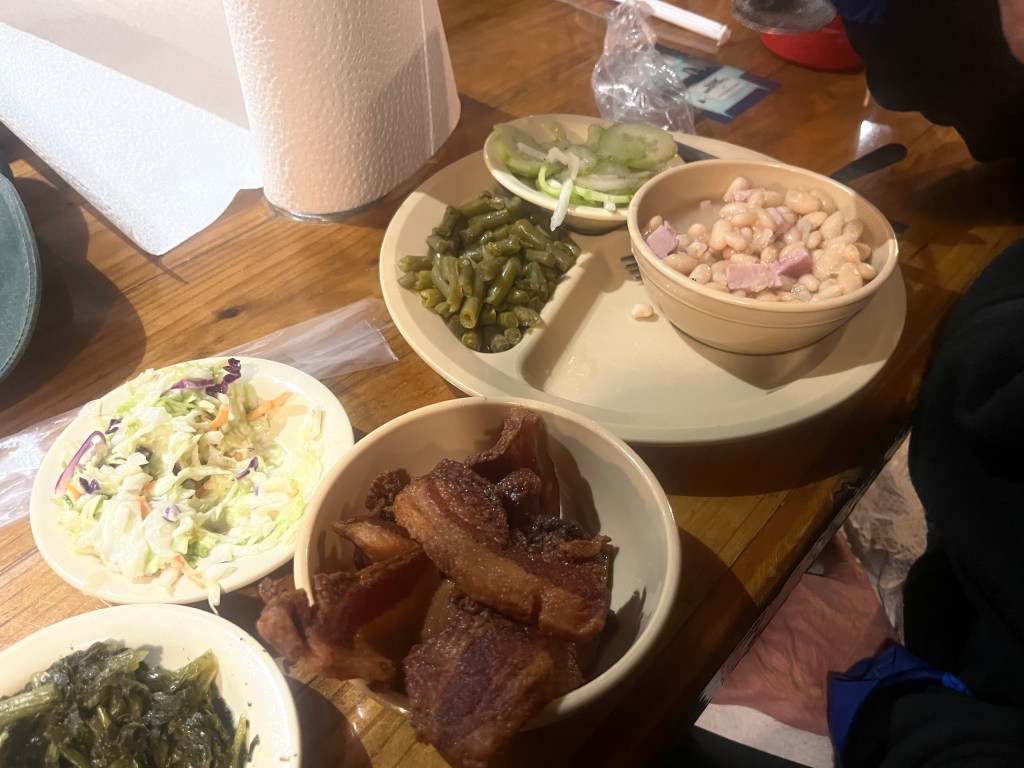
In Sykesville, we hit paydirt: Lambert’s Café. Man, where do places like this come from? It turns out, we learned, Lambert’s has three locations: Sykesville, Missouri, Ozark, Missouri, and Foley, Alabama. They all appear to be identical. It is your basic southern meat-and-three restaurant on heavy-duty steroids. As the signage says, it is also “home of throwed rolls.” WTF? Just as the slogan says, they distribute their yeast rolls (delicious, I might add) by hurling them across the full expanse of a 250-seat room at waving customers eager to get pelted. We ordered a half-slab of ribs with slaw and turnip greens and white beans with hog jowl and cucumber salad. (Hog jowls, it turns out, are thick slabs of crispy bacon.) The food was good; the servings generous. But that’s not all. In addition to the regular barrage of rolls, servers also show up regularly with large bowls of extras: fried okra (for which I have a pathetic weakness), potatoes & onions, macaroni & tomatoes, black-eyed peas, apple butter, and sorghum syrup. I suspect there’s more, but that is all that found their way to our little corner. The servers scoop all you can possibly eat as often as you like for no additional charge. We had salad for supper seven hours later.

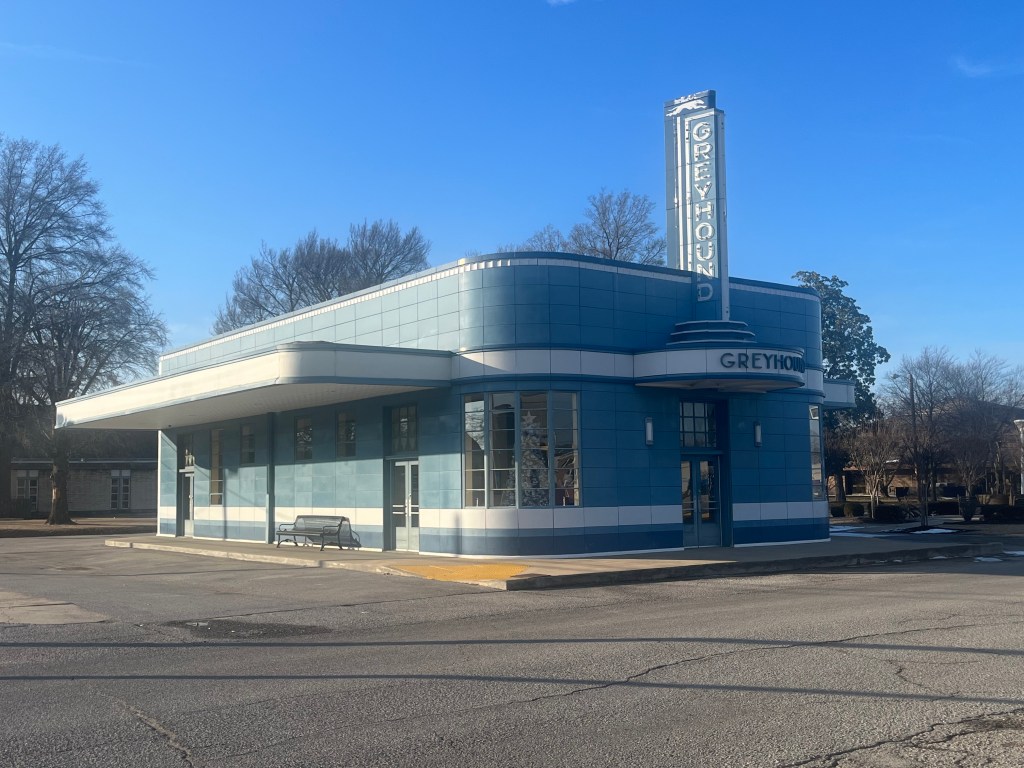
Following Lambert’s, we finally arrived at our first destination: Blytheville, in the northeast corner of Arkansas. There is really nothing I can say to make Blytheville interesting, though there is a nifty well-preserved old Greyhound Bus Station that the Internet says is a visitor center but was locked up tight when we arrived. Other than a few blocks of mostly abandoned downtown buildings along a “historic” strip, a closed Air Force Base, and a bunch of chain restaurants, tire stores, mid-brow motels, and a Walmart at the intersection of Highway 61 and I-55, Blytheville simply isn’t anything. There is, as they say, no “there” there. No biggie that our first stop in Arkansas revealed little of interest to us. Tomorrow is another day. We drive to Marianna, Arkansas for a midday meal at Jones’ BBQ, a James Beard Award-Winning BBQ joint that might be the oldest continuously operating black-owned restaurant in the US. It appears to have two tables. We have to leave Blytheville early because it opens at 7:00 a.m. and closes when it sells out of barbecue, often we read, by 10:00. It’d be a real bummer to get shut out after driving more than 1,500 miles to get there.
 myinnersociologist