Rating Barbecue Joints: I Am Useless

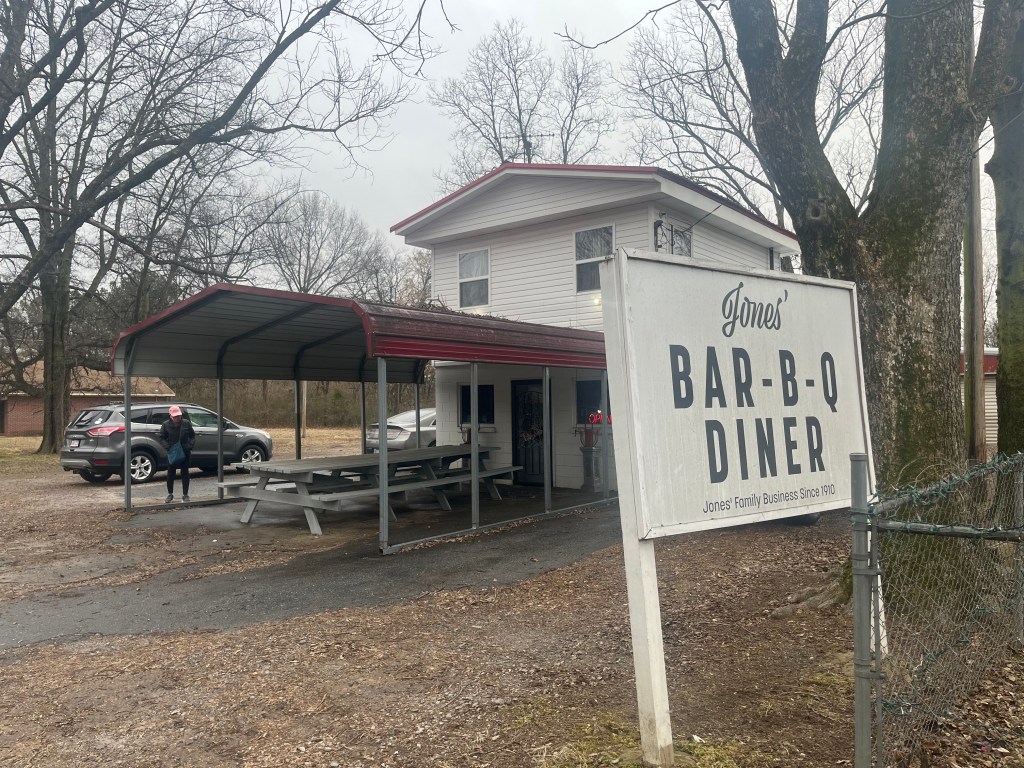
Jones’ Barbecue in Marianna, Arkansas

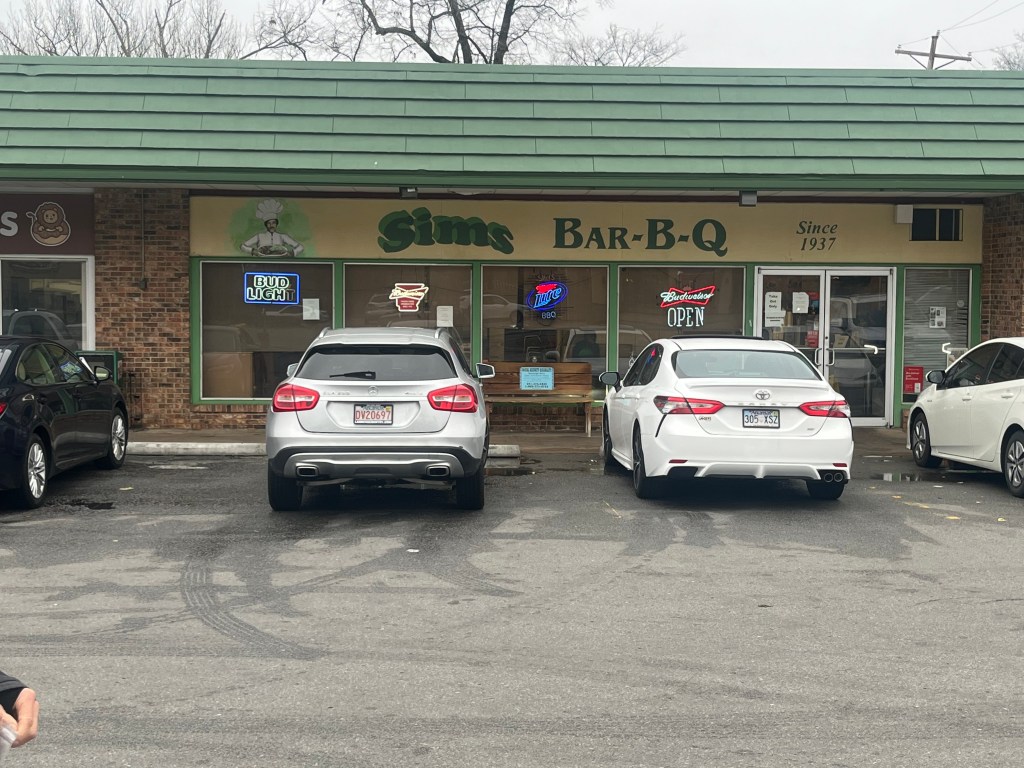
The day before yesterday, we made it to Jones’ BBQ in Marianna, Arkansas.  Yesterday, we ate at Sims BBQ, a classic joint in Little Rock. Today, we feasted at Whole Hog Cafe, another Little Rock classic.

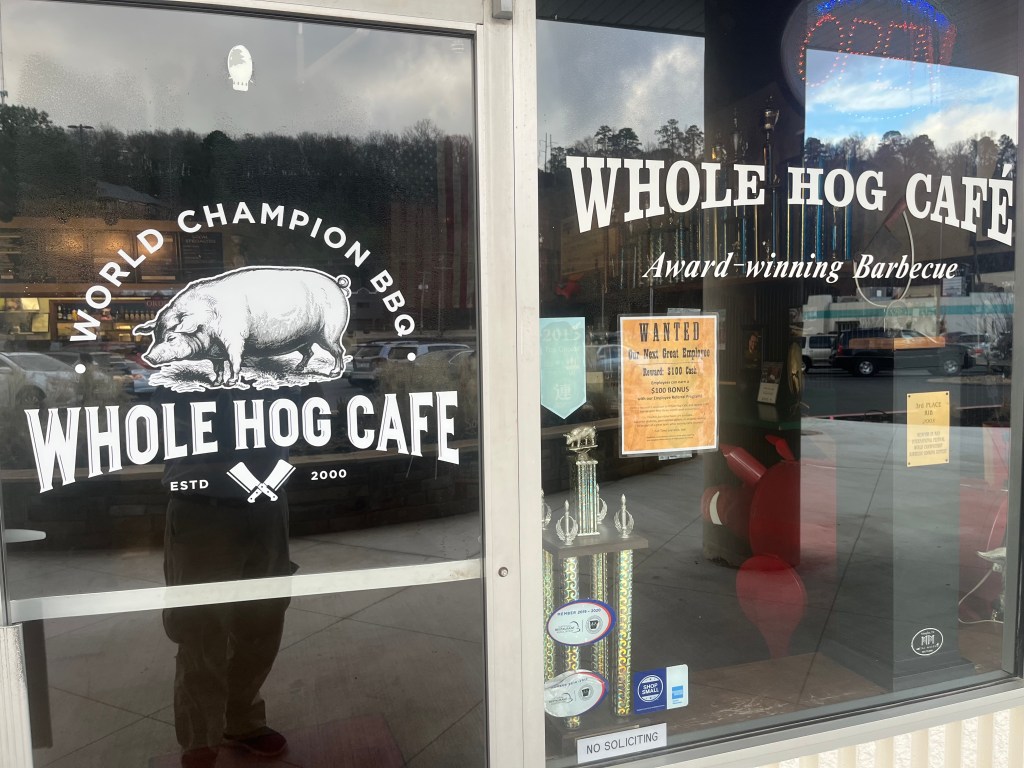
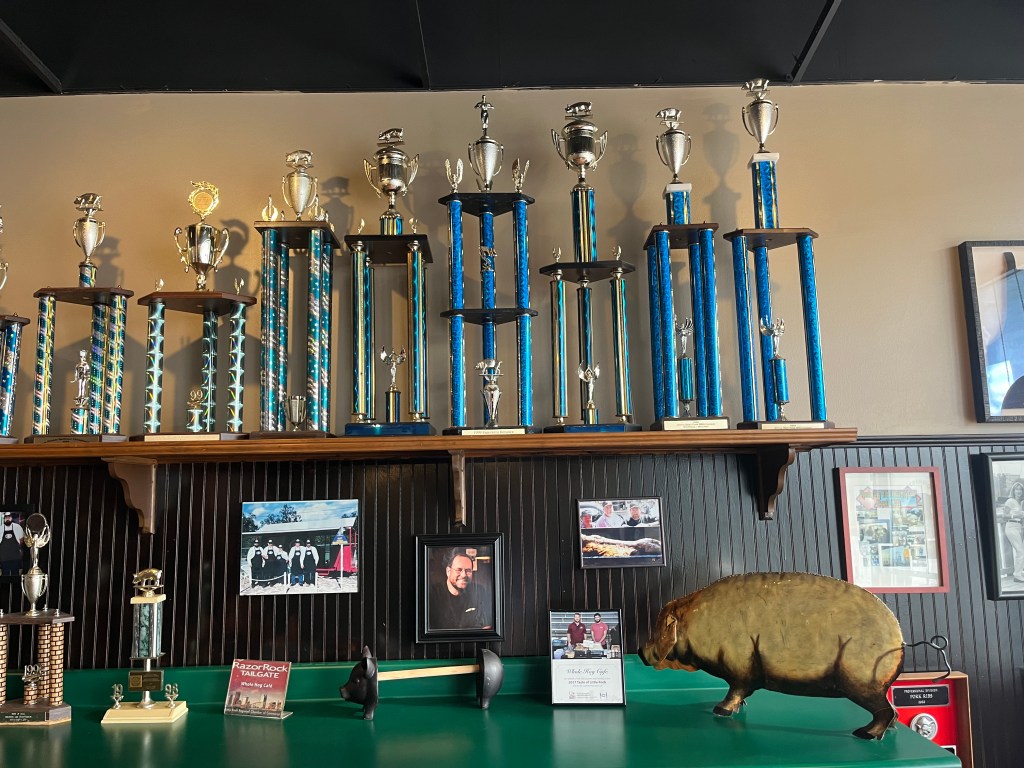
Jones’ was perfect in every way. Sims was scrumptious; the barbecue was saucy and at the perfect spot between chewy and tender; the collard greens had a palate-tingling bite. Whole Hog is surrounded with trophies from various competitions; the beans had a great sweetness, and the green beans burst with flavor. We adored Jones’; we loved Sims; we’d go back to Whole Hog in an instant. 

My takeaway: trying to rank great BBQ joints is an absurd and ridiculous philosophical exercise. I think the appropriate Latin expression is “reductio ad absurdum.” Another common manifestation of the same absurdity has to do with debating the number of angels who can dance on the head of a pin. The Wikipedia explanation describes the exercise as “wasting time debating topics of no practical value, or questions whose answers hold no intellectual consequence, while more urgent concerns accumulate.” (Actually, I am not sure any more urgent concerns are accumulating, but why split hairs?)

Good is good. My old friend Little Jack O’Connor, a North Carolinian and BBQ aficionado, shared this thought: “Why anyone would argue over Q is beyond me as I find each variation delicious and worthy of celebration, but there are some finicky people in this world.” He couldn’t be more right.  It’s like asking which is better: Beethoven’s Ninth, Rhapsody in Blue, or ‘Tis a Gift to be Simple. In fact, they are each perfect.

Between Rebecca and me, we usually get one order of ribs and one of something else: pulled pork, burnt ends, rib ends, brisket, or whatever. We each get a side of slaw. I get greens (either turnips or collards). She gets some sort of beans. Like the barbecue itself, the sides all differ, but I just don’t have the capacity to rank them. They are simply delicious.

Don’t get me wrong, some of the stuff people call “barbecue” really is crappy, like those fall-off-the-bone par-boiled chunks of not-at-all-meaty cardboard you might get at a chain restaurant like Applebee’s or Chili’s. But they are not BBQ joints. They are just mediocre-to-lousy chains. As we travel small-town mid-America, we sometimes (though rarely) have no choice but to eat in one of those mediocre places. When we do, we order salad … usually a simple house salad … and that’s it. 

A barbecue joint is a different beast, loaded with character and overseen by insanely proud pit masters who really care about the quality of the product they serve. Just so you can feel assured, any barbecue we write about on this trip will be from a bona fide joint. We might find a few definable differences, but mostly I expect we will savor the flavor and appreciate the uniqueness.

Jones’ Barbecue

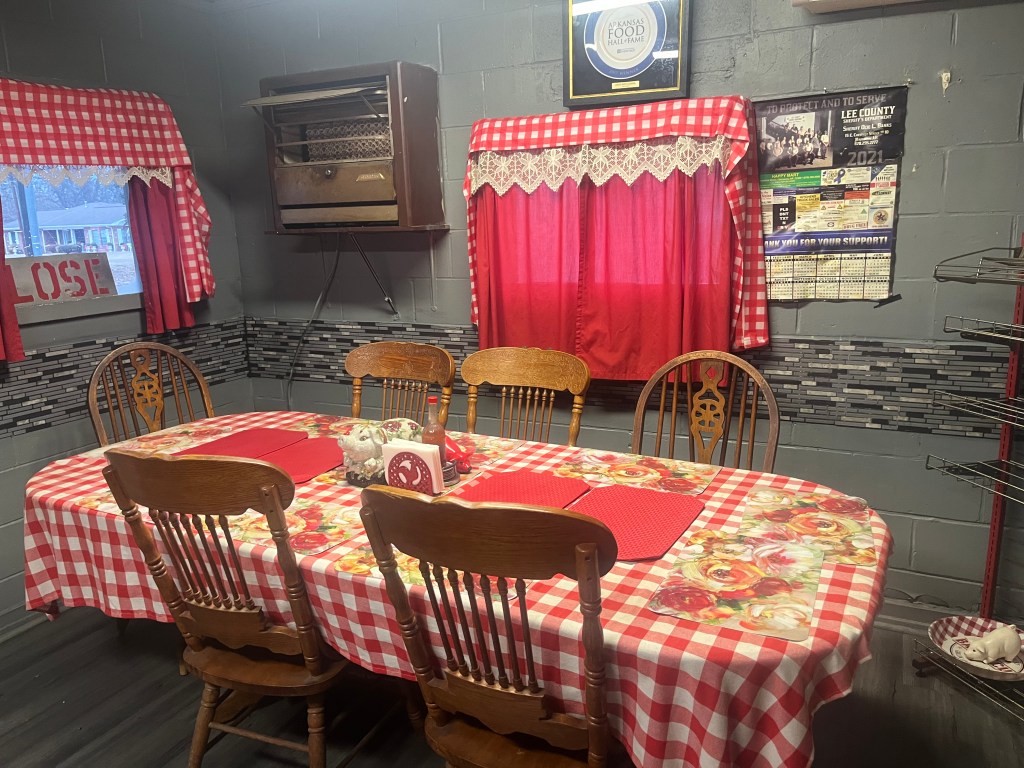
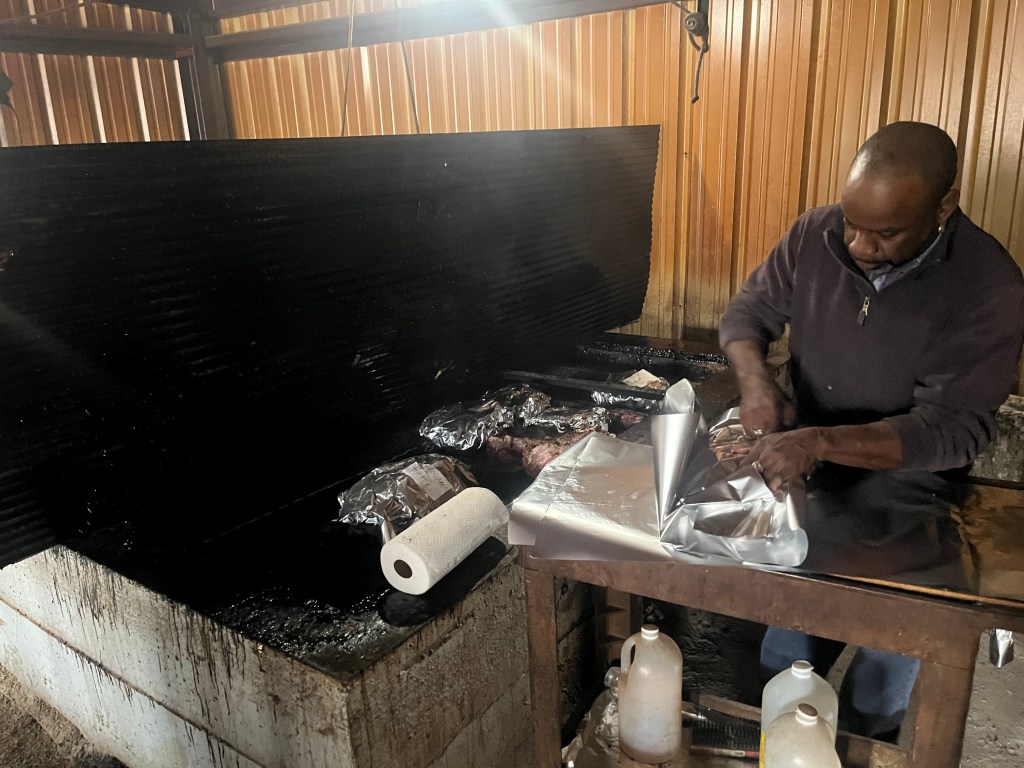
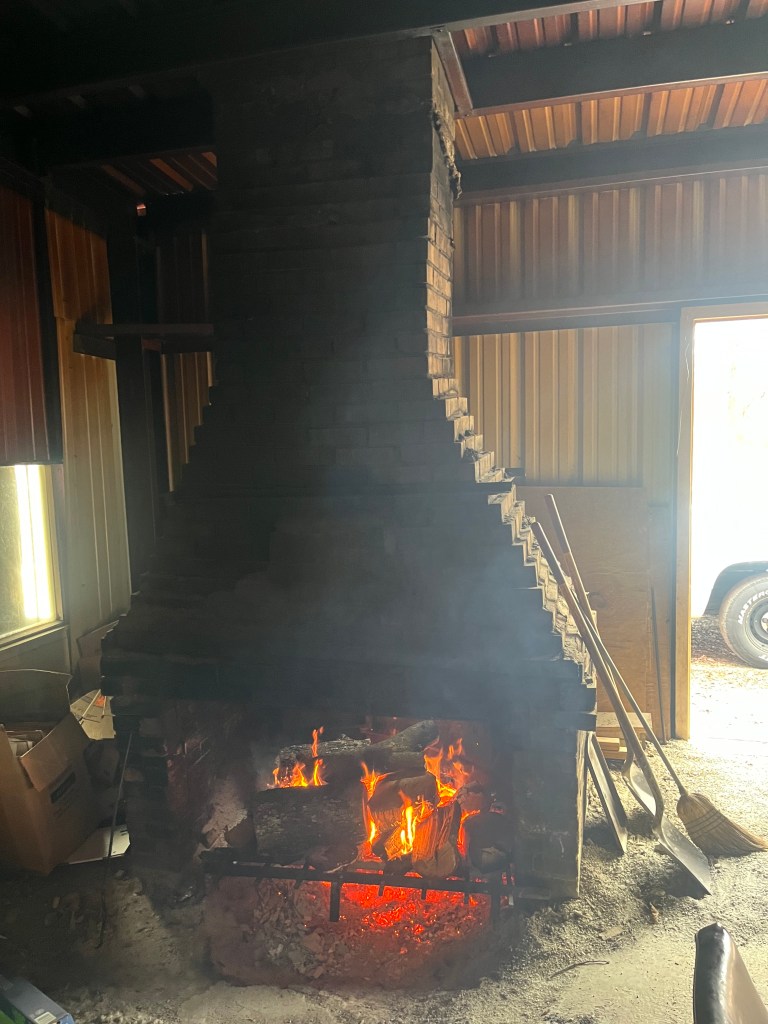
Jones’ Barbecue is purported to be either the oldest continuously operating Black-owned restaurant in the US or west of the Mississippi. (I have no idea how to find out if either is true, but I prefer the “in the US” version.) It was also the first James Beard Award-winning restaurant in Arkansas. It is a joint’s joint: two tables, mostly take-out, and way the hell off the beaten path on a residential road in Marianna, Arkansas in the southeastern part of the state. (GPS rocks!) James Harold Jones Sr’s grandfather started the business in 1910. (He goes by either James or Harold and has no real preference). He is now 77 and fighting a congestive heart condition. He runs the business with his wife BJ. He has a pitmaster who helps him tend the fire and the smoker. James and BJ hope their son will take over the business one day, but he is the basketball coach at a high school in Pine Bluff, so his time at the restaurant is limited, at least for now.

A few years ago, Jones’ smokehouse burned to the ground. In short order, the community came together and rebuilt it. They barely missed a beat.

Jones’ does not have a menu. They hickory smoke 10 or 12 large Boston Butt roasts for about 12 hours every day (100+ pounds) and serve pulled pork in bulk or on white bread sandwiches. We ate ours with a fork instead of white bread. They were out of cole slaw. We didn’t care. The meat was tender and moist, and the flavor was total perfection.  We liked it so much we had seconds!

Marianna is close to practically nothing. It is well worth the trip!
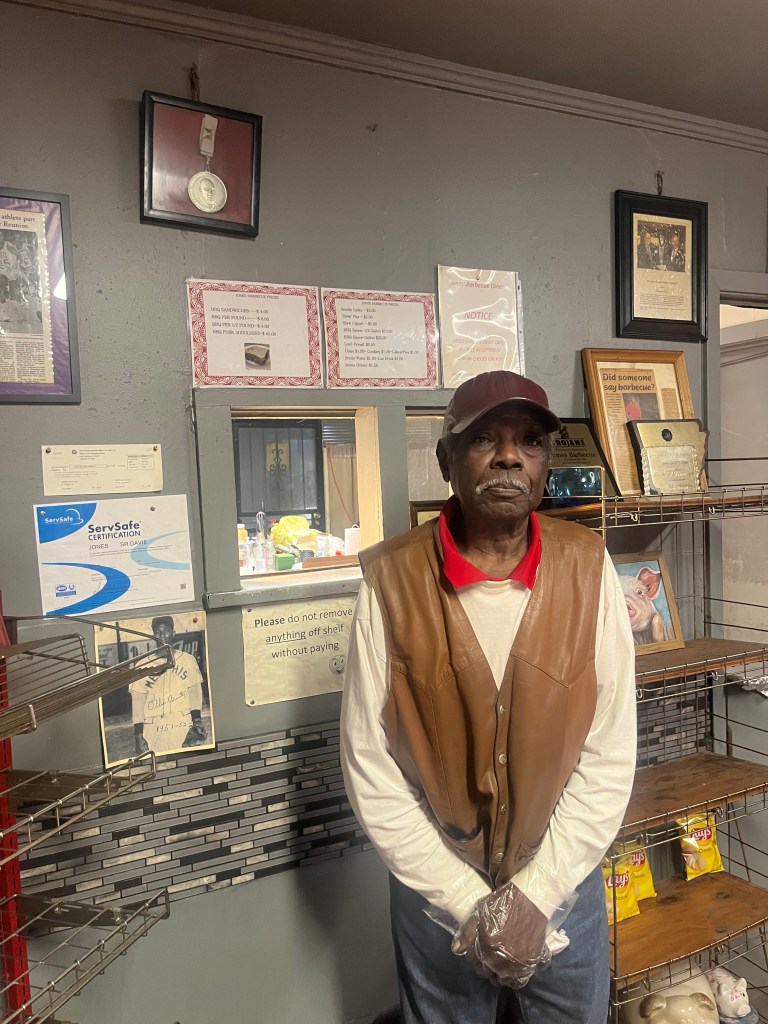
James Harold Jones, Sr. and his James Beard Award
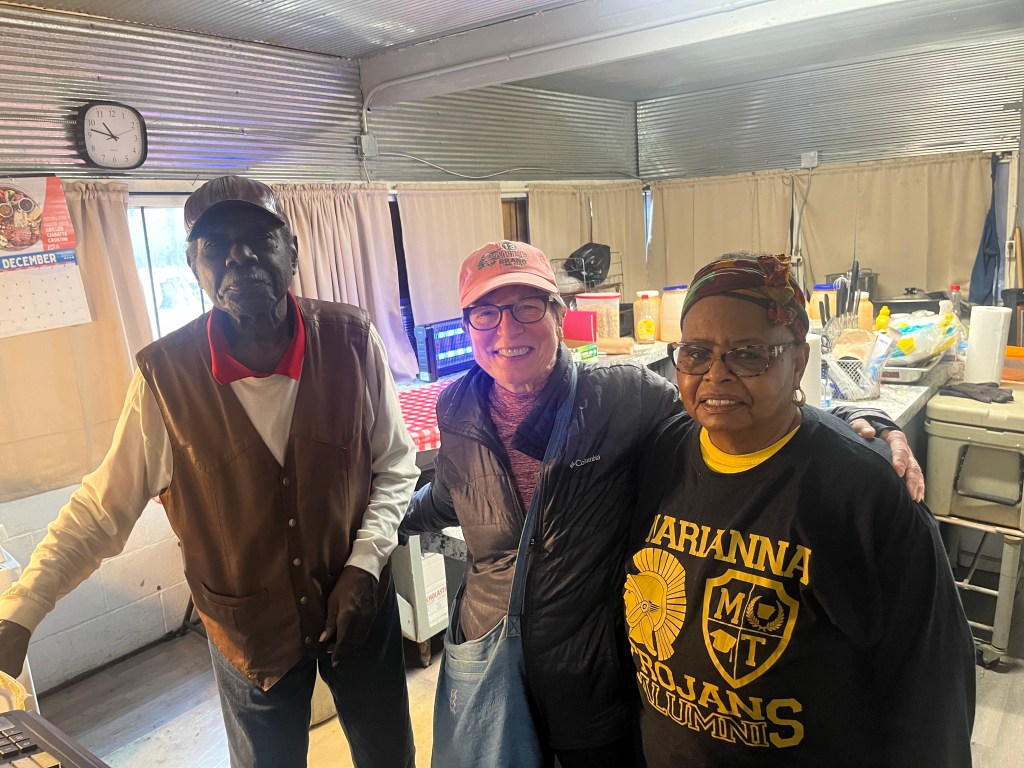
James, Rebecca, and BJ in the kitchen
Preparing the hickory coals

Epilogue: Planning this Road Trip … or Going Whole Hog

When we first conceived of this trip, “pandemic” was not part of our everyday vocabulary, and “Covid 19” did not exist. My really good friend and cooking compadre in New Orleans, Jon Kardon, had sent me an article from the website Eater.com about a guy named Rodney Scott, a Black pitmaster from South Carolina who specializes in “whole hog” barbecue. (At least I think it was Jon who sent it. If it wasn’t, it could have been.) A road-trip theme started to take shape: We were going to tour the southeast in search of Black-owned BBQ joints that specialize in cooking whole hogs.

At about the same time that the pandemic took hold, I came across an article from Bon Appetit about a guy named Howard Conyers. He too is a South Carolinian and Black pitmaster who cooks whole hogs.  Add to that repertoire the fact that he is also a Ph.D. Mechanical Engineer from Duke with a specialty in Bioelasticity who works as a rocket scientist for NASA. The story was getting more and more interesting.

If you want, here are some links.  The 2018 article from Eater.com about Rodney Scott is entitled “Whole Hog Is an American Tradition – So Why Is It Stuck in the South?”  The 2020 article from Bon Appetit is “This Rocket Scientist Is Tracing Black Ingenuity Through Barbecue.” You can get to Howard Conyers’ website by clicking here. At the very least, they inspired me!

For two years, road tripping for the sake of road tripping just wasn’t going to happen. During that hiatus, we got interested in more exploration, specifically learning more about the Mound Builders of the pre-Columbian Mississippian Civilization – how can we know so much about other ancient cultures, but not our own? – and the Tulsa Massacre and the Trail of Tears, two of our country’s most horrific holocausts.  

Combining them made sense, so here we are. Keeping them separate for the sake of a coherent blog, I am realizing, may not be so easy. We hope we have learned enough about writing a blog that it is not a disaster and about managing Covid that we stay healthy!
Cairo to Blytheville: Reliving the Past

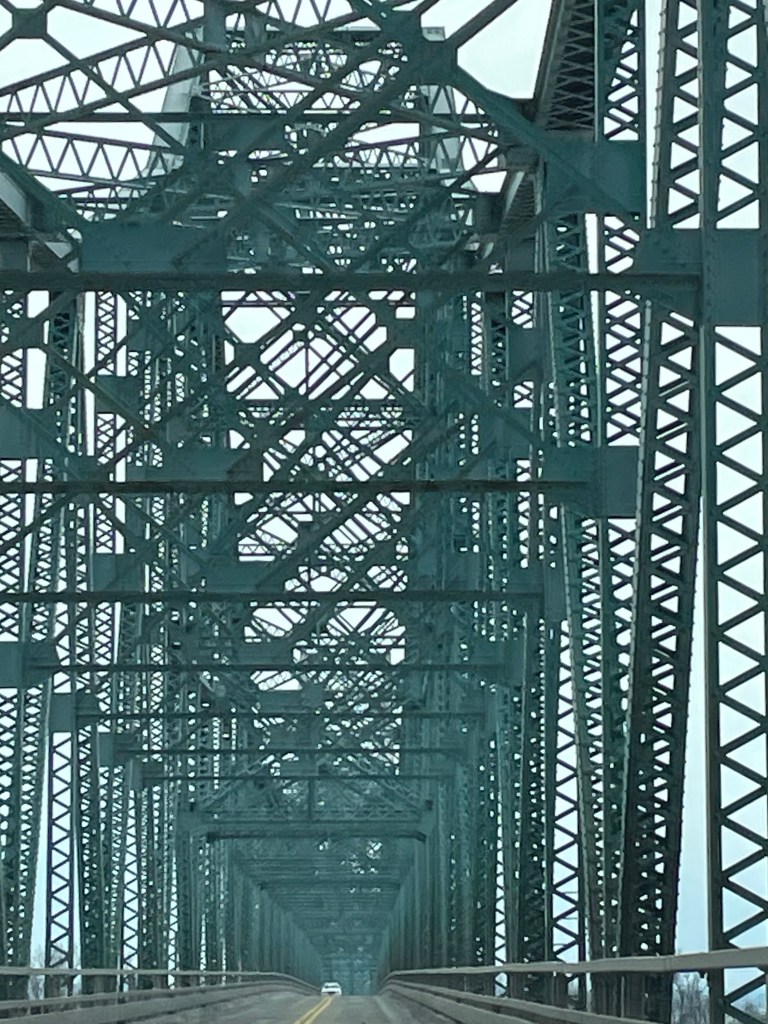
Returning home: The Mississippi River bridge from Cairo, Illinois to Missouri at the confluence of the Ohio.

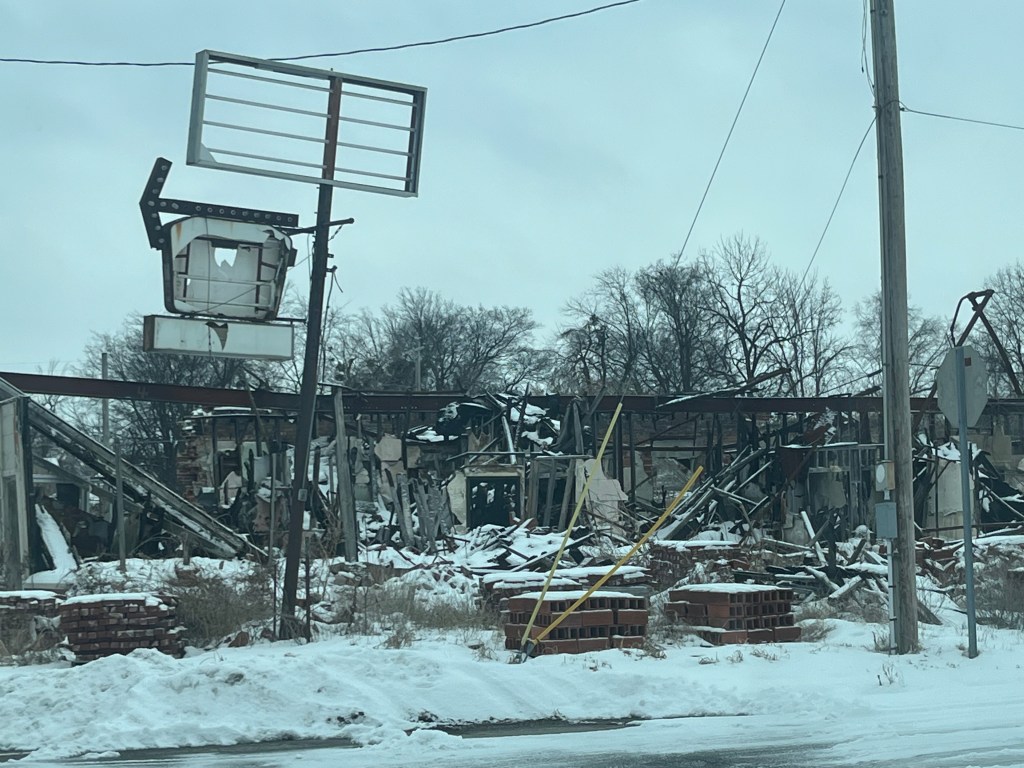
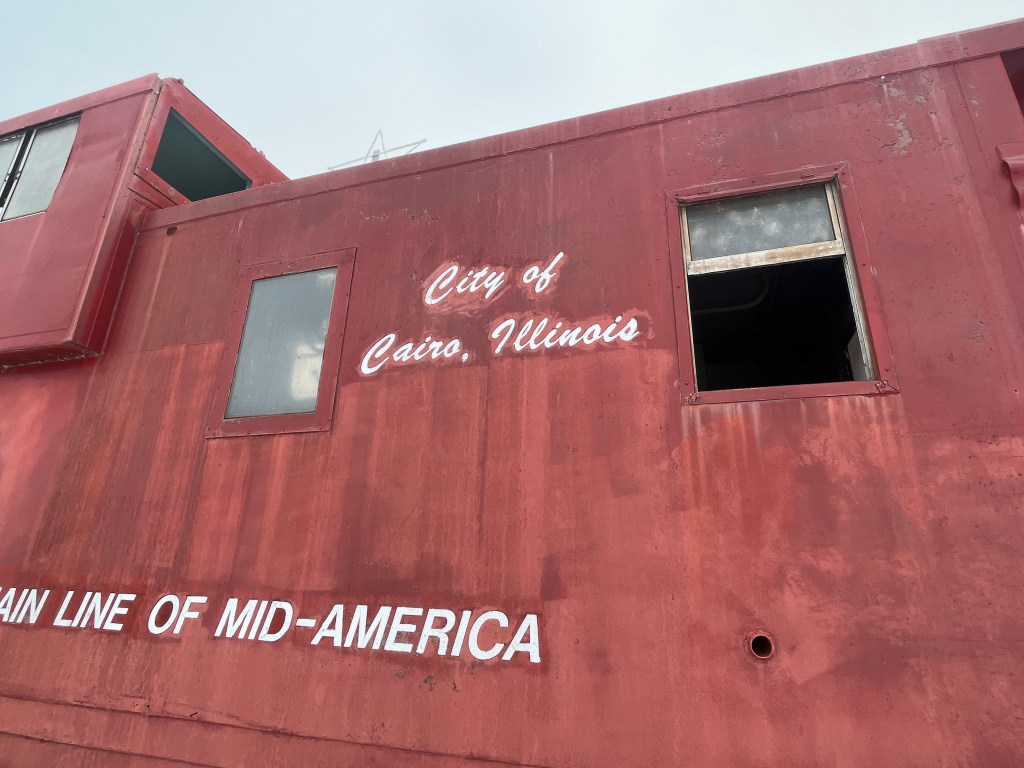
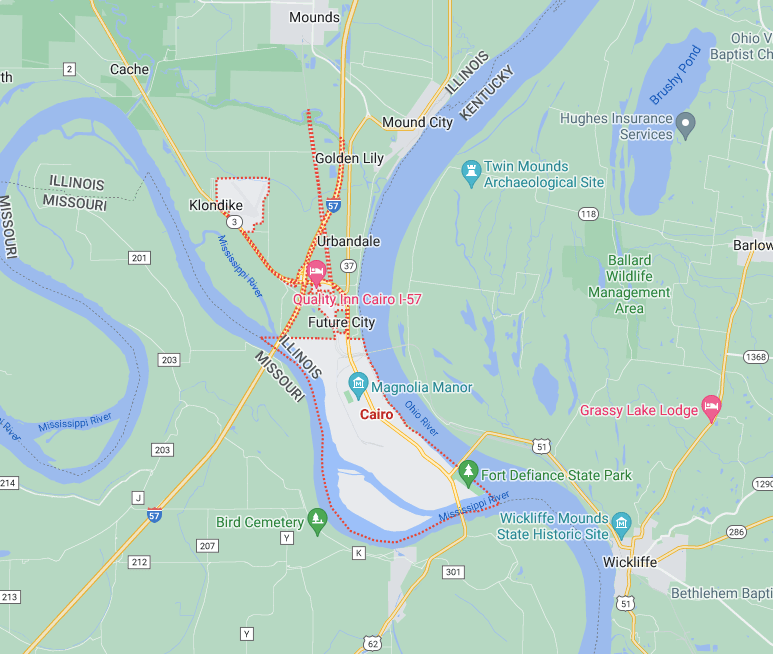
Cairo, Illinois was one of the most memorable places we visited on our drive down the Mississippi five years ago. We visited it again this morning. If it has changed, it is even more dilapidated and sad than it was then, but that may not be possible. It is already dilapidated and sad to the max.

Rebecca and I have been discussing why it is in the shape it is in. She thinks racism is the primary cause. I think racism plays a significant role, but that evolving technology and the vagaries of geography are also key drivers. The cause is one thing; the effect is another: Cairo is a dilapidated ghost town.

The ex-city sits at the confluence of the Mississippi and the Ohio Rivers, right at the tip of the peninsula formed by the confluence. It is the lowest point in Missouri. By my reckoning, it marks the beginning of “The Delta” region of the lower Mississippi. (The Delta does not begin, as legend has it, at the Peabody Hotel in downtown Memphis, 100 miles-or-so to the south.) From Cairo to the Gulf, the countryside is flat as a pancake with countless thousands of acres cultivated in cotton and soybeans. For the Bob Dylan fans among us, US Highway 61… the Blues Highway … runs near the Mississippi all the way to the Gulf; it is good to be revisiting it!

I find it ironic that the village due north of Cairo is “Future City.”

Through much of the 19th and 20th Centuries, Cairo was a hub of riverboat and ferry activity followed by railroad activity. Bridges displaced ferries. Railroads displaced riverboats. In 1927, the Great Flood decimated Cairo. By the 1950s, the economically whiplashed white residents of Cairo would hear nothing of the city becoming integrated: they filled in the city swimming pool rather than allowing Black swimmers alongside White. Today, the city sits almost vacant. The iron sign to the “Historic District” leads to nowhere. The once elegant houses sit derelict, often in ruins.


Visiting Cairo feels important. It is a living reminder of what social and economic decay look like. Everything in our world is capable of reaching that level of decline. We need to work together to ensure that our entire society does not crumble like Cairo.


Cardiologist’s dream? Cardiologist’s nightmare?

We had hoped to find someplace to have breakfast in Cairo. There is literally nothing there. So we kept driving along Highway 61. 

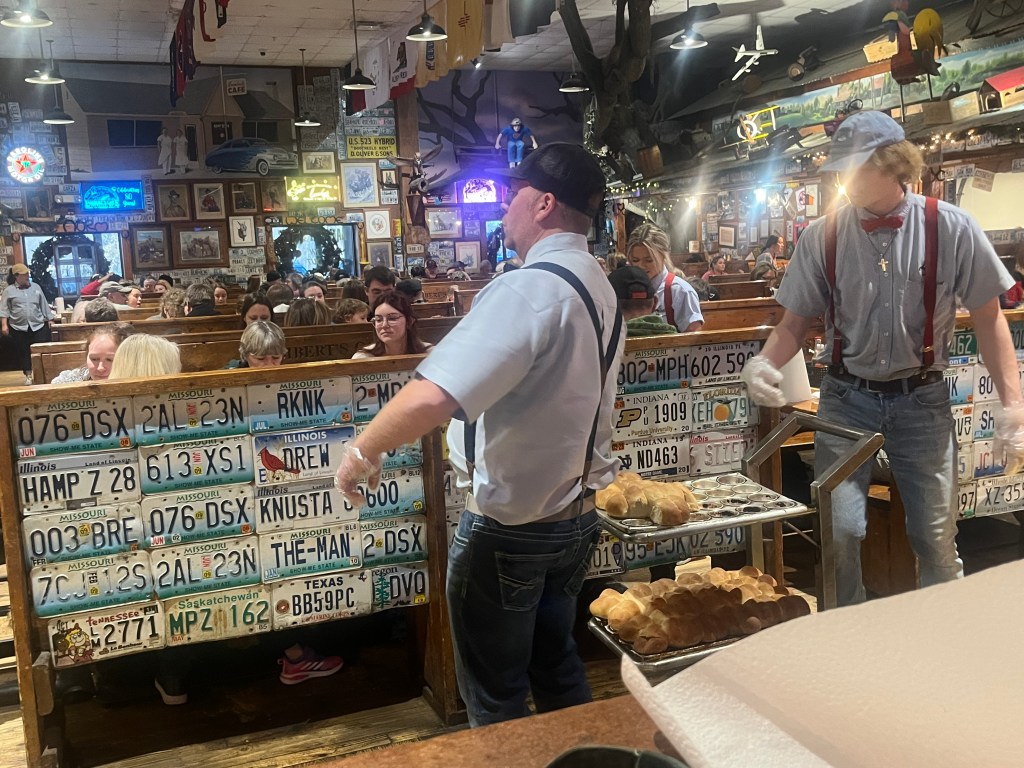
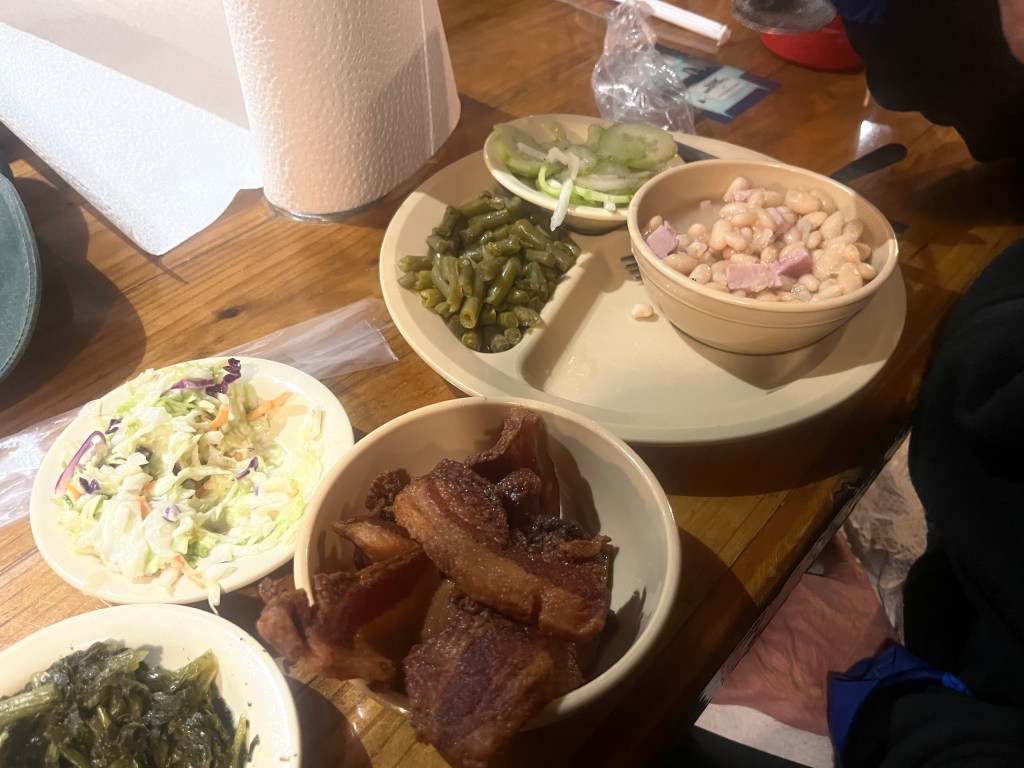
In Sykesville, we hit paydirt: Lambert’s Café. Man, where do places like this come from? It turns out, we learned, Lambert’s has three locations: Sykesville, Missouri, Ozark, Missouri, and Foley, Alabama. They all appear to be identical. It is your basic southern meat-and-three restaurant on heavy-duty steroids. As the signage says, it is also “home of throwed rolls.” WTF? Just as the slogan says, they distribute their yeast rolls (delicious, I might add) by hurling them across the full expanse of a 250-seat room at waving customers eager to get pelted. We ordered a half-slab of ribs with slaw and turnip greens and white beans with hog jowl and cucumber salad. (Hog jowls, it turns out, are thick slabs of crispy bacon.) The food was good; the servings generous. But that’s not all. In addition to the regular barrage of rolls, servers also show up regularly with large bowls of extras: fried okra (for which I have a pathetic weakness), potatoes & onions, macaroni & tomatoes, black-eyed peas, apple butter, and sorghum syrup. I suspect there’s more, but that is all that found their way to our little corner. The servers scoop all you can possibly eat as often as you like for no additional charge. We had salad for supper seven hours later. 


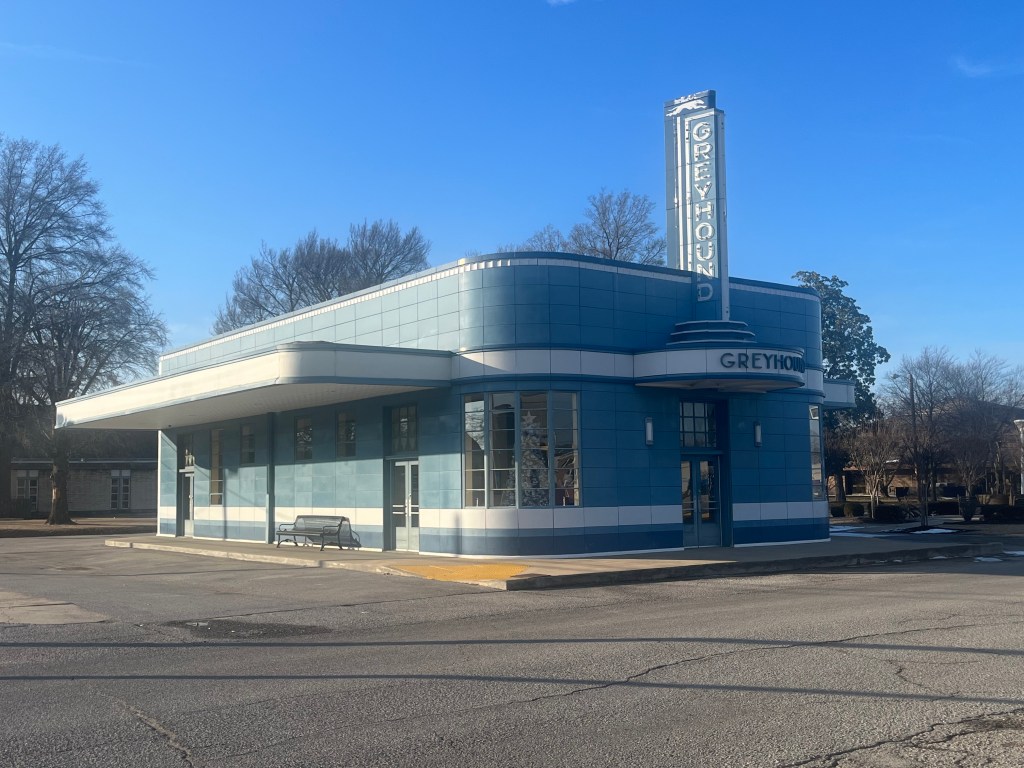
Following Lambert’s, we finally arrived at our first destination: Blytheville, in the northeast corner of Arkansas. There is really nothing I can say to make Blytheville interesting, though there is a nifty well-preserved old Greyhound Bus Station that the Internet says is a visitor center but was locked up tight when we arrived. Other than a few blocks of mostly abandoned downtown buildings along a “historic” strip, a closed Air Force Base, and a bunch of chain restaurants, tire stores, mid-brow motels, and a Walmart at the intersection of Highway 61 and I-55, Blytheville simply isn’t anything. There is, as they say, no “there” there. No biggie that our first stop in Arkansas revealed little of interest to us. Tomorrow is another day. We drive to Marianna, Arkansas for a midday meal at Jones’ BBQ, a James Beard Award-Winning BBQ joint that might be the oldest continuously operating black-owned restaurant in the US. It appears to have two tables. We have to leave Blytheville early because it opens at 7:00 a.m. and closes when it sells out of barbecue, often we read, by 10:00. It’d be a real bummer to get shut out after driving more than 1,500 miles to get there.

Getting There

Please pardon the lack of precision.  I just titled this blog entry “Getting There.” The imprecision lies in the fact that we do not yet know what or where “there” is. We just think that we are sort-of headed in the right direction.

Our goal is to eat lots of BBQ while we explore Native American history (The Trail of Tears) and African American history (The Tulsa Massacre). We plan to start hunting for “there” once we get to northeastern Arkansas, around Blytheville. (Don’t worry, we are not familiar with it either.) “Getting there,” however, is complicated: there are no Mississippi River bridges or crossings for almost 100 miles, from I-155 in southern Missouri to Memphis.

What we do know so far is that there is a Visitor Center in Blytheville at the old Greyhound Bus Station and that the oldest black-owned restaurant in the US is the James Beard Award-winning Jones BBQ in Marianna, Arkansas, about 1.5 hours south of Blytheville. Once we have jawboned the folks at the Visitor Center and filled our tummies with some of Mr. Jones’ Q (the joint has been in his family for 150 years), I expect we will be a little closer to knowing what “there” is and in what direction to go to find it.  At least we hope so!

In the meantime, our trip has taken a few expected and a few unexpected turns. Fortunately for us, Rebecca’s niece lives in Geneva, NY, an easy day’s drive from home, regardless of whether home is Vermont or Massachusetts.  She and her husband are always gracious hosts, so they are our first and our last stop on our driving adventures. Thanks guys. We appreciate the hospitality and kindness a lot!

From Geneva, we had planned to take in the Corning NY Glass Museum and the Curtiss Aviation Museum, but the weather tripped us up. The amazing cold snap of Christmas 2022 was bearing down on us with snow and sub-zero temperatures predicted. We decided to hustle our way out of the Great Lakes Region and get someplace where we could stay snug.  Thus, our two-day relaxing trip to my brother’s home in Columbus, Ohio turned into a one-day trip complete with a few hours of lake-effect snow south of Lake Ontario. Thanks for the nice lunch, Bruce and Whitney. It was good to see you.

From Columbus, we’d planned to spend a couple of days with my old friend Cap and his wife Tay, visiting the Air Force Museum at Wright-Patterson Air Force Base and eating classic Dayton food. We succeeded.

Cap and I worked together in 1973 at the “Legend of Daniel Boone,” an outdoor drama in Harrodsburg, Kentucky. For two months, we sat next to each other at the make-up table. I was his understudy. I played Michael Stoner, Boone’s best friend and sidekick. Cap played Jeremy Jones, the comic lead. Cap was a graduate of the Ringling Brothers Clown College and to this day remains one of the best comic actors and funniest people I have ever known. It’s amazing: two months of working together, and 49 years later we remain really good friends, thrilled to see each other in the rare occasions when that can happen.

Cap planned our dining: Night #1 at the Pine Club, a funky Dayton steakhouse and staple of low-brow beefy cuisine. Cap loves it and insisted that we cannot miss it. Tay almost did not join us because she hates the place so much. As we approached it, she kept repeating, “I hate this place.”  Apparently, she is not alone. When we arrived, other people expressed the same sentiment. In fact, there was a whole sub-element of people there who adored hating the place: “It is too dark”; “It is too loud.” Their sentiments did nothing to counteract the reality that because of a University of Dayton basketball game, the wait for a table was 1.5 hours. Since we were all hungry, we left and found a quiet, uncrowded brew pub instead, where we got to hang out for hours. Too bad Cap got a $68 parking ticket for overstaying his welcome. (I paid for less time than Cap but got off scot-free. Maybe the Massachusetts license plates helped.)

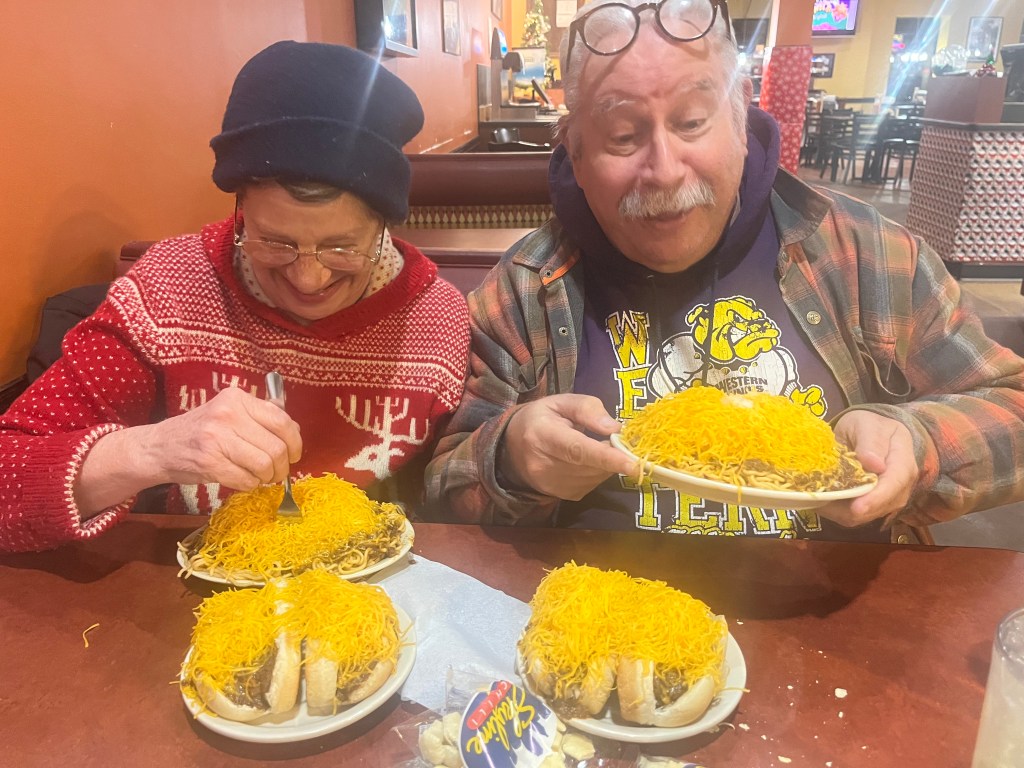
Meal #2 was a southern Ohio must: Skyline Chili. If you know Skyline, you know what I mean. If you don’t, you’ll never understand. A “Coney” is a tiny hot dog smothered in spaghetti, cheese, and their one-of-a-kind chili. How does something like that ever become a regional staple? I’ll never know, but it does.

Tay, Cap, and Coneys at Skyline Chili

When the Cincinnati Bengals played in the Super Bowl last January, Cap helped me find a recipe for Skyline chili. I made a giant pot of it. In addition to the usual chili ingredients, there is also a ton of other stuff, like allspice, cloves, and a heap of unsweetened chocolate. Let me know if you want the recipe. I’ll send it to you. They guard it pretty carefully, so it’s not so easy to find.

Our time with Cap and Tay was energizing and great fun! Our day at the U.S. Air Force Museum was far more somber. We stayed all day, saw about half the museum, and walked three miles. The museum houses many hundreds of aircraft in giant, very well curated hangars.

The very first exhibit pays tribute to the liberation of the German death camps at the end of World War II. You enter the WWII exhibit through a replica of the main gate into Auschwitz with its iron-work slogan, “Arbeit Macht Frei,” or “Work sets you free.” That gut-wrenching initiation stays with you through America’s wars and the remarkable resources we have poured into defending ourselves and killing people. Neither Rebecca nor I could hold back the tears when we unexpectedly encountered the “Bockscar,” the actual B-29 bomber that dropped the atomic bomb on Nagasaki. The emotionality of the moment literally hurt.

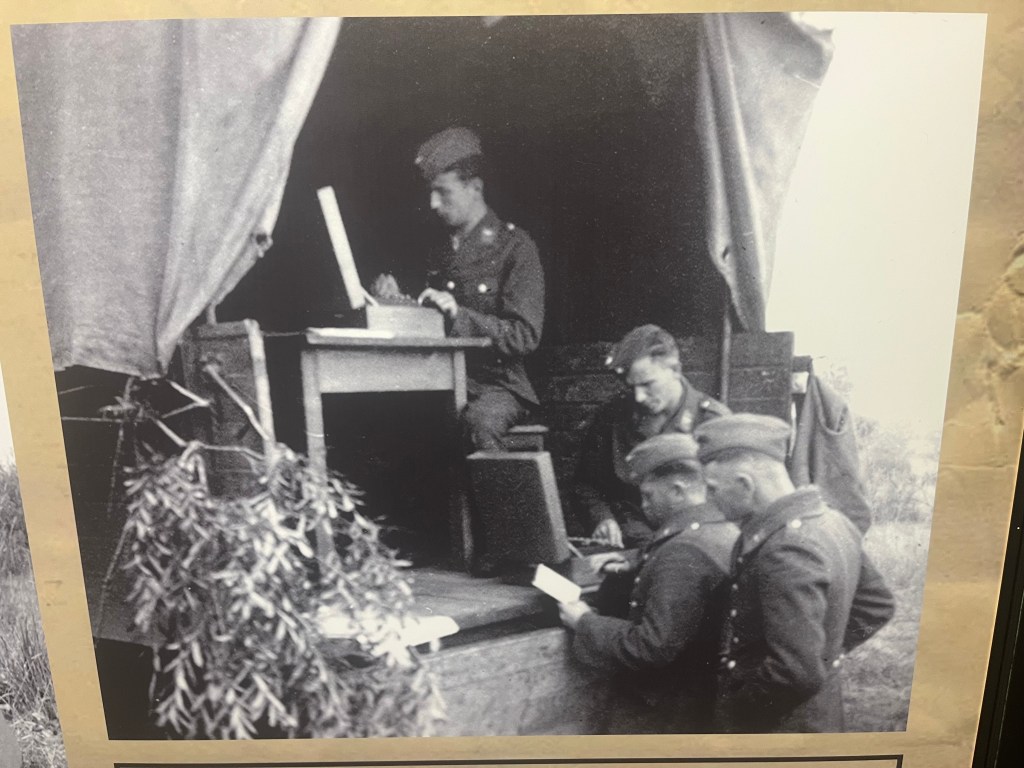
In WWII, my father was a cryptographer in the Army Air Corps. He received the orders for the squadron, decoded them, and passed the information on to the commanding officer. I’ve seen hundreds of variations of this photograph of a cryptographer at work. The big difference is that in my father’s photos, the men wore t-shirts instead of uniforms, smoked cigarettes, and looked like some sort of mischief lurked around the corner.

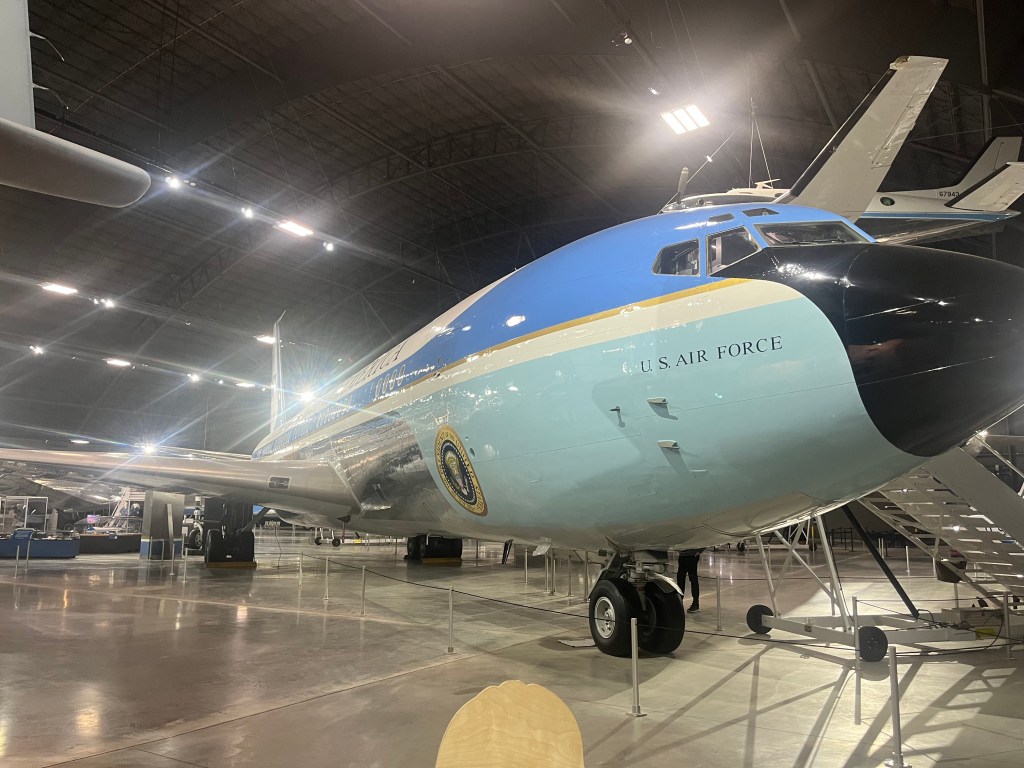
The Air Force One that carried JFK to and from Dallas is there and open to the public. We stood at the spot where LBJ was sworn in as President and at the spot where seats and a partition were removed to make room for JFK’s coffin. I get chills just writing these words.

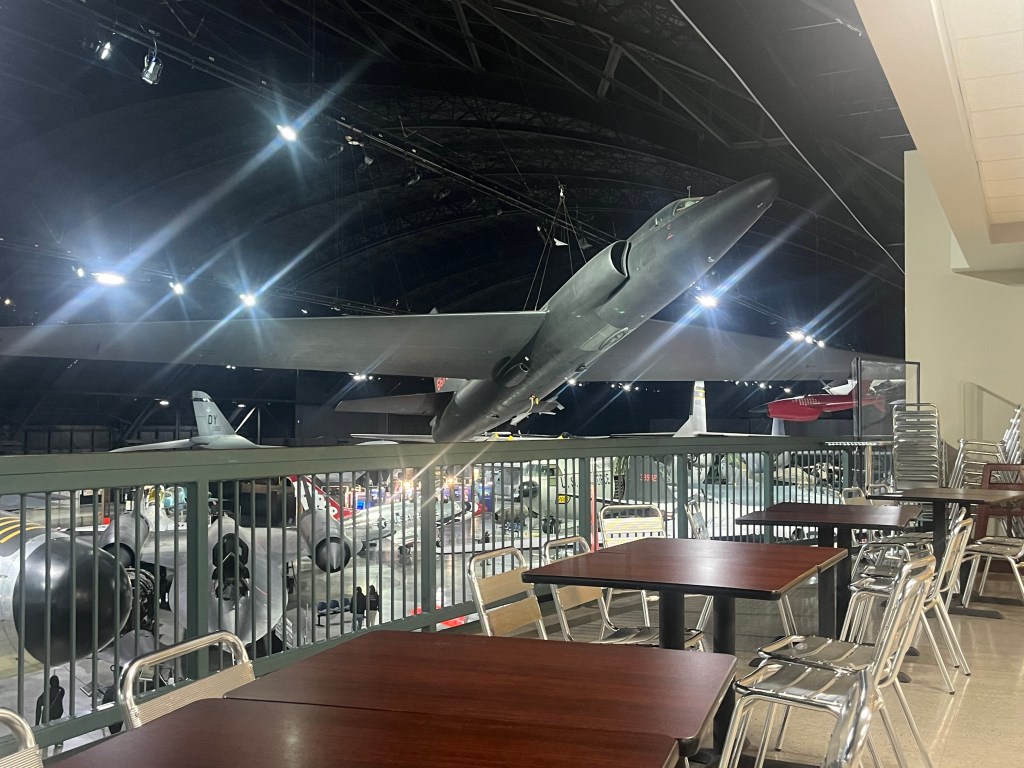
For some inexplicable reason, I wanted to see a U-2 spy plane. I vividly remembered the Cold War moment in 1960 when Francis Gary Powers was shot down while taking high-altitude photographs over Russia. Damn. We couldn’t find it. It was as if the plane itself had made itself invisible. Then, as we sat for a few minutes in an upstairs café, there it was, hanging right next to us. That’s one helluva spy plane! Even in a museum it could make itself disappear.

The Amazing Disappearing U-2

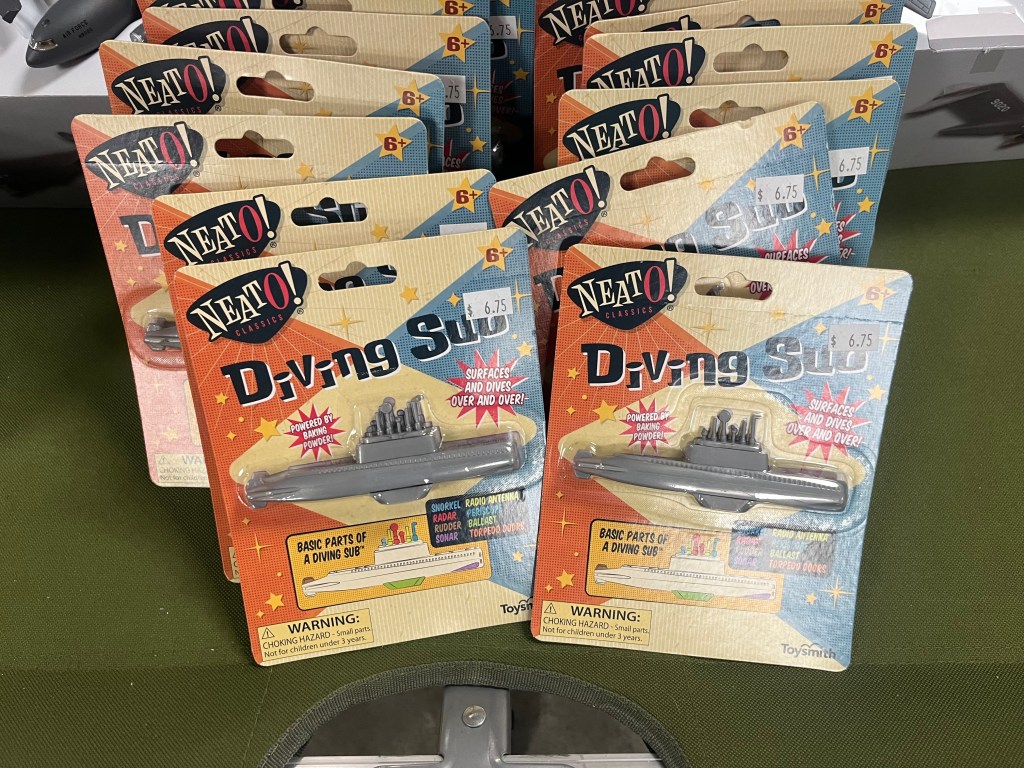
As we left, we made the obligatory gift shop stop. I was proud of us. We bought nothing … which made the day a total financial winner: the museum is free. You definitely get your money’s worth. We bought nothing because there was nothing we needed to buy. There were, however, two things I would have bought had I not already owned them: the classic baking soda-powered diving submarine and the water-pressure-powered rocket. They were essential purchases for the grandboys a few years ago. Nothing else seemed even slightly interesting.

From Dayton, we got a small taste of what “there” might feel like at the “National Underground Railroad Freedom Center” along the Ohio River in Cincinnati. Since “there” has everything to do with BBQ, Native American history, and African American history, we could not pass it up. The Center is a mix of interpretive material and film. Oprah introduces the film experience. She obviously has invested a good deal in the Center with great effectiveness, creating a world-class experience. 

The view from the Center looks south, onto the Ohio River and northern Kentucky. We were standing on one of the spots where escaping slaves, upon crossing the river, could feel their first inkling of freedom as they made their way to Canada. The stations and conductors of the Underground Railroad come to life. The humanity of the slaves sings. Our tears flowed freely as we wondered how human beings can be so cruel and, simultaneously, at how heroic and brave other human beings can be to save the lives of and protect people they will never know.

It is that “there” that we are so looking forward to discovering.

Appetizer: The Road Trip Preceding the Road Trip

Winter break started for us about 10 days ago, on November 30, when we trudged our way by plane, train, and automobile across the US … car to the Burlington airport, airplane to Portland, light rail to the Portland Amtrak station, rail to Eugene where we met up with my brother Joe, then pickup truck to Florence, arriving 20 hours after we left home. We spent the next week with Joe and his partner Marsharee … a major story unto herself. (We have all been friends for over 50 years. She decided to sell everything in Atlanta and head to Oregon to move in with Joe. What the hell. Why not start fresh at 74!!!!)

We did the usual Oregon coast stuff: hiking in the rain, hanging out with friends, and eating really well: salmon, crab, oysters, ribs, etc. After a chill week with Joe and Marsharee, we rented a car in Coos Bay bound for Grass Valley, CA to visit Rebecca’s son and daughter-in-law, Aaron and Lisa, who just bought a house and moved there from Illinois. But a visit was not to happen. Lisa’s father died in Florida at about the same time we arrived in Oregon. We did, however, get to take a spectacular drive, down the southern coast of Oregon and the northern coast of California before heading east at Fort Bragg, named after Braxton Bragg, the same slave-owning Confederate general as Fort Bragg in North Carolina.

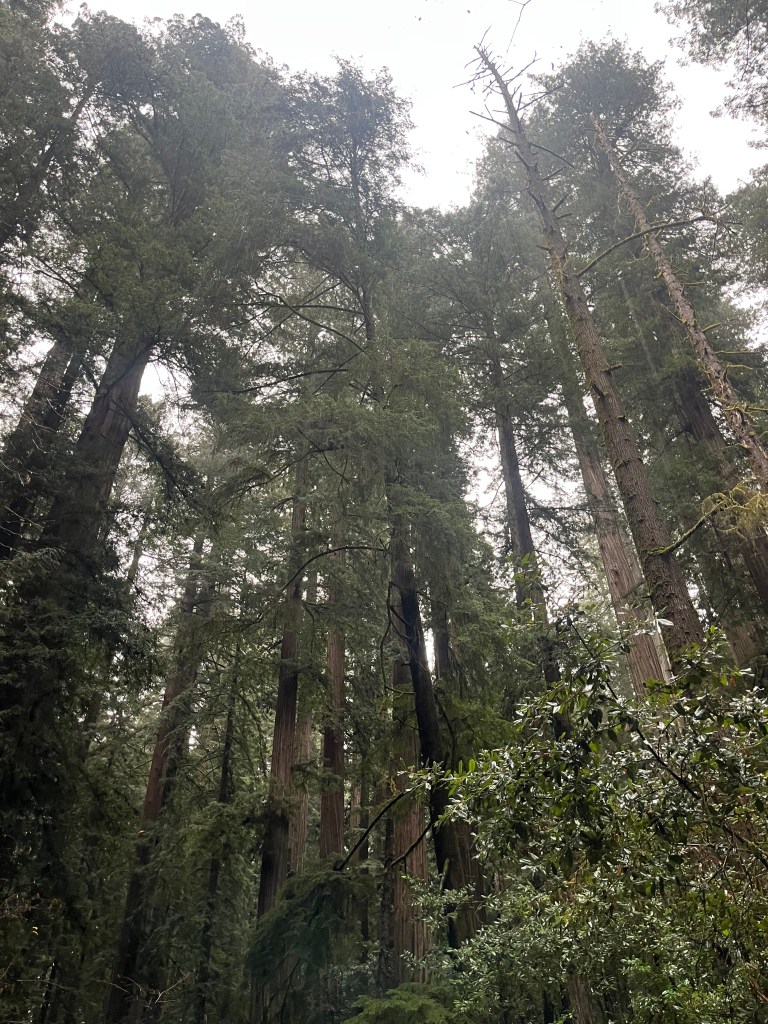
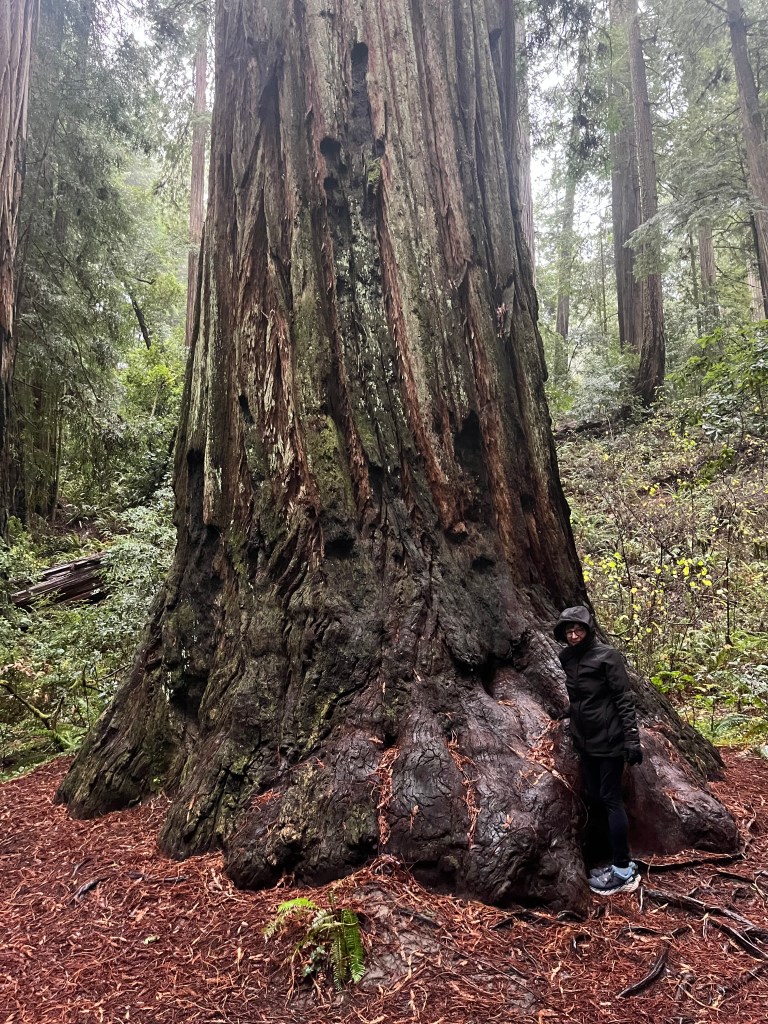
Here are two moments from that drive. One: The redwoods in Jedediah State Park in the northwest corner of California compare well with other astounding redwood groves, such as the Avenue of the Giants and Muir Woods. Thanks to some light rain, we had the Stout Grove totally to ourselves. If everyone had at least one opportunity to experience a redwood grove in solitude, the world would be a better place. Everything about it is humbling: age, scale, beauty, ecology, patterns, natural sculptures. If being in a redwood grove is within your grasp, do it. Period. The biggest tree we saw measured 20-feet at the base, a couple of feet shy of the width of a 2-car garage.

The second moment was a little more thought provoking, or at least it was for My Inner Sociologist.

When we drive, we go slow, pulling over for more time-conscious drivers to pass. We stop when we get tired … but always before dark. In remote areas, we have to be deliberate because lodging is not always nearby. (We love traveling in the off-season because we don’t have to worry about reservations; every motel has room and is happy to see us.) By early afternoon, we realized our destination would be Garberville, an inland town on Highway 101, about 175 miles south of the California-Oregon state line. We had stopped there on earlier trips, so we kinda knew it. There’s not much to it, a few run-down motels, a few over-priced motels, and a couple of places to eat. 

We checked out all of the under-$100 motels, and none of them passed muster. (One clerk would not let us check out a room before renting it, and the other showed us a room with hair remaining on the toilet seat. Our bar is not very high, but those were clearly not going to fly.) One of the pricier options looked a lot like the lower-priced options, so we didn’t even check it out. The new Best Western would work in a pinch, but surely we shouldn’t have to spend $150 for a damn motel room in Garberville. We had one more option: The Northern Inn in Redway, about 2 miles to the north. Homerun!

Damien, the owner/clerk, won our hearts. The room was not only clean and comfy, it also had no carpets … which is a real selling point in our eternal search for cheap but clean motel rooms. Damian was proud of his new floors and even noted that he would mop the room we looked at if we wanted another. Damian may have carried a waft of cherry tobacco wherever he went, and the whole exterior made it pretty obvious that cannabis was fully encouraged around Redway, but the room had no smell whatsoever. Just a good, clean motel room at the right price. We had found a home. Damian noted, by the way, that Redway had been the heart of California pot growing for a very, very long time.

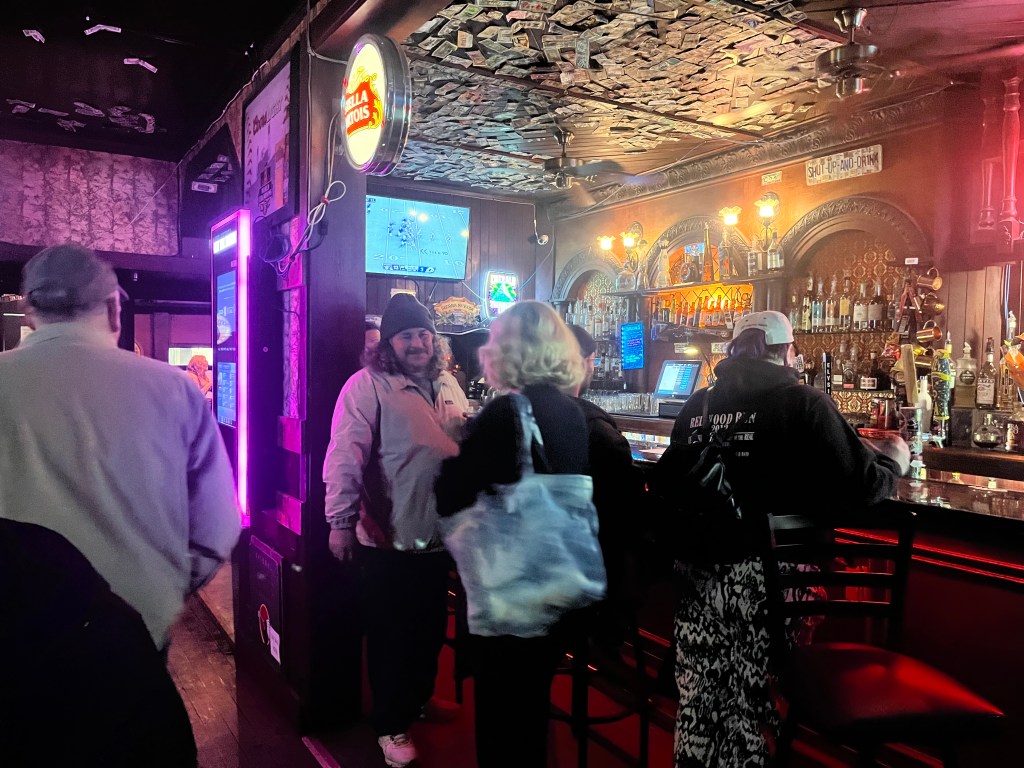
Now that we had a bed, we had to figure out how to fill our bellies. We had three options right in Redway: pizza, burgers, or a tavern. The tavern, the Brass Rail, shared a parking lot with our motel. Choice made.

We arrived as the place opened, at 5:30. Stella the Bartender was getting ready for the evening. The cook, however, did not arrive until 6:30. Oh well, we thought, time for me to have a cocktail and for us to play a game or two  of cribbage, so we waited.

The Brass Rail became a living example of the glory of My Inner Sociologist. From our first moments until the last, the place teemed with stories. I could have stayed for hours if not days. But we were headed south to see Rebecca’s son. There was no time to turn over the sod to reveal some of the gems hiding beneath the surface.

First, we learned a little about Stella. She had grown up in Redway, then moved east to attend boarding school at Phillips Andover Academy in Massachusetts … only one of the most prestigious boarding schools in the US. She’d lived in Boston and New York, then returned home to Redway to tend bar. The trigger for our conversation had been the bouquet of fresh-cut flowers behind the bar. They were a gift for her 30th birthday. What did Stella do with her prep school education? Had she attended one of the Ivies, gotten an MBA, then gone to work for a hedge fund? Was she an “eastern elite” dropout, eager to return to the scrappiness of the western forests? Was she escaping something or running to something? All I learned is that she was smiley and friendly to everyone and she poured an OK drink. Anything is possible.

The Brass Rail

As we played cribbage, the bar started to fill. The patrons were of all ages and all levels of dress and dental care, from gleaming pearlies to jagged browns. We had discovered a real-life Cheers. Everybody knew everybody. Everybody was friendly and in a holiday spirit. Everybody seemed to have a story. 

We felt totally at home and comfy by the time Bruce the Cook arrived. He made suggestions about Rebecca’s gluten intolerance. We had gluten-free chicken wings, a lettuce-wrapped burger, and salad. The food was exceptional, the kind of place I could eat in every day. Bruce had learned to cook somewhere. Something brought him to the Brass Rail every evening at 6:30. I’d love to tip a brew with him. He seemed like a really good guy. I’ll never find out.

The preppy-looking guy at the bar was going back home to Houston for the holidays.  He’d be staying at his parents’ house, which would be OK, but a little constricting. At least he’d have his own room. What in world brought him to Redway? Everyone seemed to enjoy each other’s company without pretense or façade.

By 7:30, the place was almost full of people and chatter. A small group made their way to the pool table. As I might have expected from Brass Rail patrons, they weren’t hustlers or sharks. They weren’t even good pool players. They just wanted to shoot a game together. They appeared to have a great time.

At the end of the game, one of the women – middle-aged and rough at the edges ­– stopped to talk with Rebecca and me … not for any reason or provocation: we were at the Brass Rail, so we were friends.  Within seconds, we learned about her son who had committed suicide a few years earlier. Oddly, we had just been with a good friend in Oregon whose son had also committed suicide years ago. The conversation did not catch us off guard. She was sad and emotional, but not inappropriately so. She just wanted to talk, so we listened. (Such moments bring out the very best in Rebecca!) It was a human moment, but without depth. We listened, and then we left. We never explored. There was so much more to learn.

Fortunately, we did get a small bit of affirmation before the end of the encounter.  She asked where we were staying. We told her we were right next door.  She asked how it was. We said we were very pleased with the cleanliness and the comfort of the room.  She was happy to hear that.  She’d had “some moments” in the past with Damian, she explained, so all’s well that ends well. Maybe our presence helped to mend a damaged bridge.

I loved our evening in Redway. It made me realize how eager I am to resurrect this My Inner Sociologist blog. It has been dormant since we left the Mississippi River, well before the pandemic. There are just so many people to meet and stories to hear.  Stay tuned.