Down the Mississippi #6
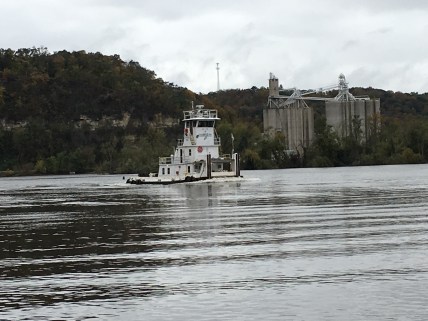 Just maybe there is some really good juju that comes from having a heart attack. One of the redeeming experiences of spending several months in cardiac rehab at the University of Vermont Medical Center was getting to know the staff at the gym. Tony is a Physical Therapist there who would jawbone with me occasionally as I was enduring an hour on the treadmill. (I much prefer an hour or two of hiking bluffs and Indian Mounds along the Mississippi.)
When I told Tony about this upcoming Mississippi River adventure, he sparkled. He has family roots in McGregor, Iowa. He grew up in Dubuque. His full name is Anthony Orr Ellison. Without Tony, I would have bypassed McGregor altogether and never learned about Ellison Orr –– the ancestor from whom Tony gained a middle name –– and the Effigy Indian Mound National Monument.
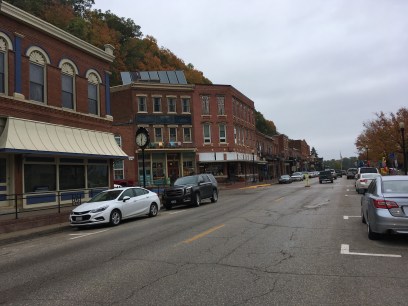 McGregor is a gem! Greater McGregor is a full adventure in and of itself. For starters, downtown McGregor is not really charming. It’s a little too decrepit to be “charming.” Virtually all of the downtown buildings date from the mid-1800s. It is a seriously old river town. The railroad tracks and a good-sized grain elevator separate the town from the river — sort of. The walk from our Inn to the riverbank took about 90 seconds and entailed no stairs or ramps. The town is literally ON the river.
But before I get ahead of myself, we first had to get to McGregor. Of course, the trip had entailed Minneapolis and all of Minnesota and many days of driving since the headwaters, but that is too big a time horizon for this story. Our experience of McGregor began when we crossed the bridge from Wisconsin to Lansing, Iowa, a tiny spit of a town. For much of the drive south from Lansing, the Great River Road hugs the river. The houses between the road and river, mostly single-wide manufactured homes, sit 10 or 12 feet in the air atop very, very tall posts made of wood or stacked block. When the river floods, those homes might be safe.
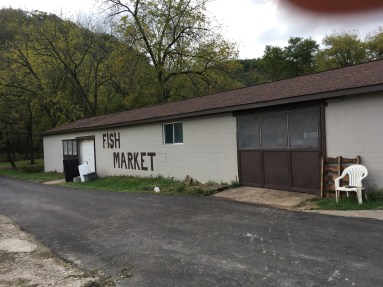 A few miles south, in the hamlet of Harper’s Ferry, we passed Mohn’s Fish Market, a nondescript place if ever there was one. Nondescript, maybe, but any place that sports a “smoked fish for sale” sign catches my eye. A lad of about 10 or 12 stood at the raggedy screen door. I went into a room about 12′ X 12′ with a few refrigerators and a counter. Not much else. The youngster went around me, opened the door to the processing room and yelled, “Hey Grandma, there’s someone here.” Before Diane Mohn made her way out to greet me, I took in a mind-blowing scene that we caught again on the other side of Greater McGregor, in Prairie du Chien — a fish processing operation out of the 1920s: lots of buckets of fish and fish guts, and lots of water hosing the floor. Mohn’s Fish Market, we later learned, is the last commercial fish processor along the river in Iowa.
Diane described their different smoked fish: perch, bullhead, catfish, carp, and a few others. When she said the catfish was the saltiest, I opted for the carp. I picked out a good-sized chunk from the refrigerator. She weighed it and wrapped it. “That’ll be $1.04,” she said. When I gave her $1.05, she quietly gave me a penny in change. When I looked at the sign, I saw that smoked carp cost all of $1.50 per pound.
It was phenomenal. Rebecca and I snacked on it for two days.
From Mohn’s and Harper’s Ferry, we made it to Marquette, yet another non-descript spot along the river. We stopped at a motel to check out a possible room. The room was fine, and in most circumstances, we would have taken it, but we put the guy on hold, explaining that we had to check out McGregor first. I felt I owed it to Tony for the great stories he had told me.
We only made it about 100 feet out of the motel parking lot before we got sidetracked yet again, this time by Pinky the Elephant. You may remember Pinky. She once water-skied on the Mississippi to herald a visit by President Carter.
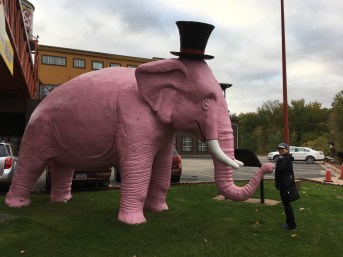 Pinky has a long history of welcoming people to eating establishments in Marquette. In this incarnation, she sits along the highway welcoming folks to the Casino Queen. Oddly, I had been looking forward to meeting Pinky and had read about her in some detail months earlier.
Lest you think I know a lot of shit about really useless stuff, here’s how I first got acquainted with Pinky. My good friend Lynn, with whom we stayed in Minneapolis, sent me some names of people she knew who might be helpful during our travels. Lynn is a serious environmentalist and river advocate, and her friends are too.
While we could have discussed all sorts of heady, important environmental stuff, her friend Lindsay immediately let me know that I would be encountering Pinky in Marquette. I was thrilled, and noted her as a “must see.” (Of course, I neglected to tell Rebecca about Pinky, so when I reacted so boyishly to the sight, she yet once again expressed some doubt about my sanity.)
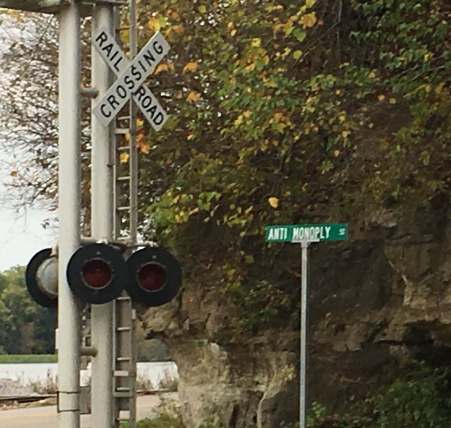 Pinky’s most mysterious attribute is her address … actually the address of the casino: 100 Anti Monopoly Street. How the hell does a town name a street “Anti Monopoly”? The nice lady at the casino tried out an explanation, something about not wanting to be like the game, but it just didn’t resonate. Somehow the town fathers of Marquette Iowa saw fit to name a street Anti Monopoly because it housed a casino. If any of you have a plausible explanation, I am really interested.
(FYI: For what it is worth, the casino’s website spells the street name just like Parker Brothers. The town’s street sign omits the last “o”. Yet another mystery. We’ll never know the correct spelling!)
Finally, maybe a half an hour after having bought smoked fish, we entered McGregor. It was breathtakingly funky: the river to the east and several blocks of mid-19th century buildings lining the main street. We drove through town, stopped at the library, asked two really sweet librarians about lodging options, learned about the recent tornado, and then started our search.
We spent two nights at the Little Switzerland Inn on the north side of town. We would have stayed longer, but they were booked for the weekend. Despite having to negotiate a very long outside flight of stairs, our “room” consisted of three bedrooms (each with its own toilet from the old boarding house days), a full kitchen (with washer and dryer), a living room and dining room (filled with antiques), and a front deck looking over the river. For this showpiece, we paid $75 per night and received a world-class homemade full breakfast – complete with amazing conversation – both mornings. A+ to you two, Becky and Randy. You made it look easy.
Becky did not ask if we’d like to spend $20 each to take a tour boat ride through the backwaters. Instead, she phoned Robert, told him she had two guests who would be with him that morning, and then told us to be on the dock by about 10:30, ready for an 11:00 departure.
Robert Vavra is a master of his craft. He accurately assured us he was full of “yak yak,” and it was all good, from his knowledge of the region’s and town’s history, the economy, the size and capacity of the barges, the river itself, and especially the birdlife and history of clamming and mother-of-pearl button making. Owning a pontoon tour boat was about Robert’s fourth career. His passion was glorious.
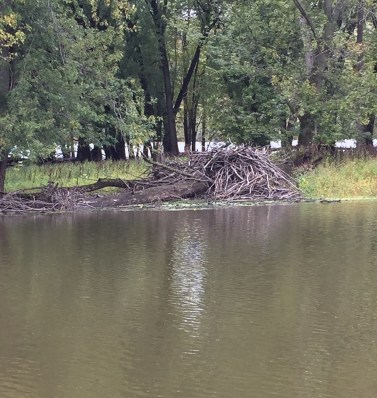 From the boat, we watched bald eagles successfully dive for fish and coot; we watched a mating pair ogle each other from a treetop; we watched pelicans soar overhead; we saw endless signs of beaver and other critters; we learned about button worker strikes in Muscatine and the destruction of the clam beds in the Upper River; we handled his collection of clam shells and the mother-of-pearl orbs used in the cultured pearl trade. We hated for the tour to end and would have spent the afternoon with him if he and his wife had not needed to visit a friend in the hospital.
Instead, he told us about his good friend, Mike Valley, who owns a fish smoking shop across the bridge in Prairie du Chien. He called Mike and told him we’d be over. I would say that Mike was waiting for us, but Mike waits for nothing. He is a whirling dervish of motion.
His shop is one of those places that forces you to pull out your camera and after snapping god-knows-how-many pictures you wonder if you could possibly have gotten everything. Mike was out back in the cleaning room washing big pieces of cut-up carp when we met up with him. He was happy to meet us, but never looked up or broke stride from his work … for a solid minute or two, and then he handed the fish-washing chore off to an assistant and headed to the smoke room next door. Mike has owned the shop for 40 years. He built the smoker himself about 20 years ago. All of his hickory wood comes from a friend who owns a sawmill up the road; Mike gets the scraps. He catches most of the fish himself and smokes 500 pounds every day. He sells to two restaurants, and other than that, everything gets sold from his shop.
The shop is packed with curios, smoked meats of every kind … including smoked alligator, of course. Nothing goes to waste. Mike catches 10 or 20 snapping turtles each week. He smokes the meat, cleans and varnishes the shell, breastplate, and feet, and dries the head with the beak open. Every piece of the turtle gets sold in the shop. (Shells go for $10 to $30 depending on their size.)
Our time in McGregor ended peacefully, first with a fabulous visit to Rivertown Books, a world-class antiquarian bookstore on Main Street, where we bought a print of an early 18th-century map of the Mississippi, and then with a several-mile hike up a bluff and through a portion of the Effigy Mounds National Monument. In other words, we spent the time in a Native American cemetery, paying tribute to the people and the land, while overlooking stunning vistas.
These particular mounds were built over a span of about 650 years, from 1,500 years ago until about 850 years ago. Ellison Orr, Tony’s ancestor and namesake, explored the area, realized its significance and beauty, and lobbied the U.S. government to create an Upper Mississippi Valley National Park. While he failed in that effort, he did succeed in obtaining National Monument status, and the mounds are managed and protected by the U.S. Park Service. They are a holy spot that speak to the complex history of life and conflict in the Mississippi Valley.
Thanks Tony!
© 2017 Kenneth Mirvis
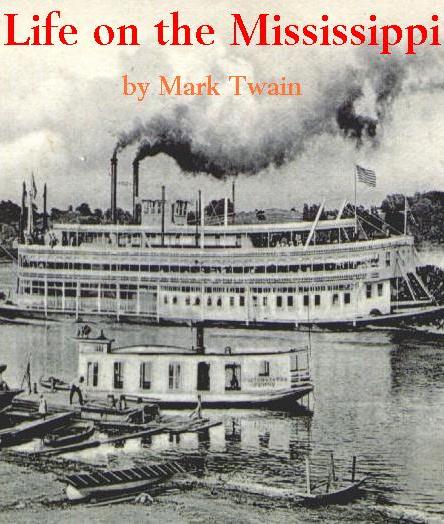 I didn’t read much to prepare for this trip, just a lot of state maps and Mark Twain’s “Life on the Mississippi.” That was all I needed.
 Young Sam Clemens convinced one of the finest pilots on the river, Mr. Horace Bixby, to take him on as a cub. The account, which runs from about Chapter 5 to about Chapter 20, is time very, very well spent. Indulge yourself!


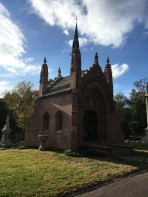 The human Mr. Bixby is now buried in St. Louis’ famed Bellefontaine (pronounced Belle Fountain) Cemetery just north of downtown only one block from the river. He is planted a few feet from Augustus Busch. So much about St. Louis is interesting and worth seeing, but nothing drew me to it more than seeing Mr. Bixby’s grave. It was everything I had hoped for.
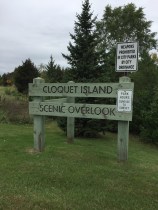 Don’t you get exhausted from all of the driving?


 Why would we be? Fact is, we are having an incredibly good time together! (And when we have our moments, we make sure they only last a few seconds.)


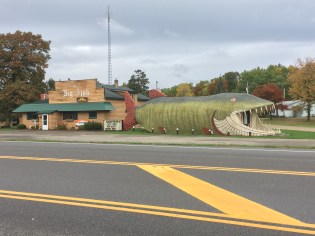 Staying on the byway, however, is at the very least a two-person job. A third would be helpful! While one of us pores over the map and app … when we have enough cell service … the other drives and tries to keep tabs on the few-and-far-between signs. Fortunately, we are able to reserve some capacity for taking in the sights too, which include everything from dams and bucolic parks with walking trails to fearsome toothed fish that double as entrances to rural restaurants.


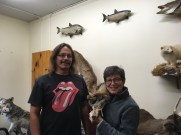 The Ojibwe people have been harvesting wild rice in the waters of Minnesota’s north woods for millennia. Europeans have only been living in the north woods for a couple of centuries. We spent some of Monday with Jeff Harper, a fisheries expert who hosted us for a while on the reservation of the Leech Lake Band of Ojibwe.
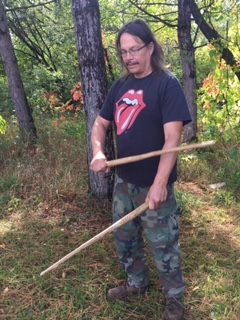 For a few weeks in late summer, Ojibwe canoe to the rice fields with the most primitive – and effective – of tools: “rice knockers.” They are nothing more than two straight, debarked sticks, usually made of white cedar, and often carved with simple hand grips. The rice knockers that Jeff gave to us have no hand grips; they are just simple, tapered, straight, lightweight pieces of wood.


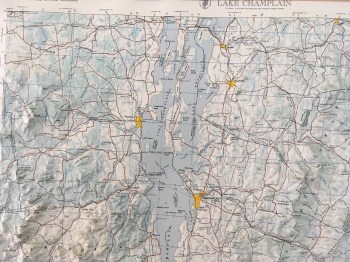 ecca and I live in paradise … in the northwest corner of Vermont on an island in Lake Champlain –– the “sixth Great Lake” according to the US Congress. A poet once referred to Lake Champlain as “that fairest of inland seas.” She was right. We’ll miss it. For now, though, we are on the road again!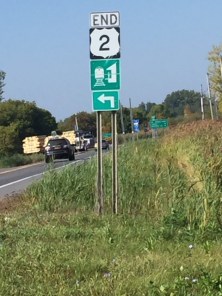
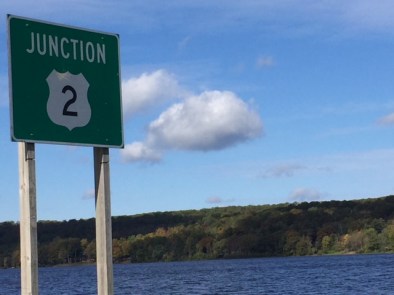
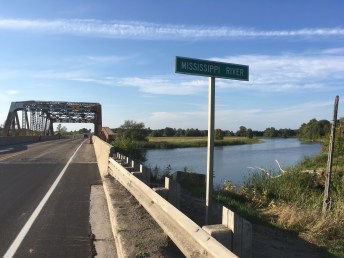 Upon leaving David and Toby’s in Ottawa and before getting to our first motel, we crossed the Mississippi for the first time. That’s correct. While the U.S. Mississippi River may be 1,400 miles from Vermont, the Canadian Mississippi is an easy day’s drive, only an hour west of Ottawa. Crossing the Mississippi River on our first day of a four-day drive to the Mississippi River is yet another stupid thing that I just find ridiculously cool.
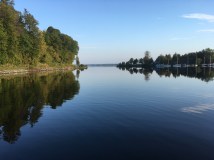 Before leaving Arnprior, we took a fabulous walk up the Mississippi from the mouth. It was gorgeous!
 Anyone who describes Sudbury as “pretty” has some very loose screws. Sudbury is in mineral country. From out of nowhere, the stacks of its smelters appear on the horizon. Its industrial plants are immense. Rail lines and long trains seem to appear out of the ether. One of the stacks is more than 1/4-mile high. Fortunately, once it fades away in the rear view mirror, it is gone.
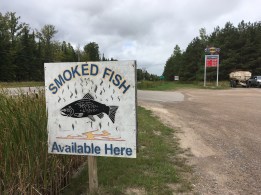 superb smoked whitefish just west of Sault Ste. Marie, met a couple of super nice waitresses, and that was about it. At one point, we went 100 miles between groceries. When we asked the waitress at the “restaurant” we stopped at for breakfast where we could get some fresh fruit, she shrugged. When nothing is in season, fresh fruit is not a U.P. staple. She knew where a grocery was to the east. To the west, she had no idea. Understandably. It’s a long, long way.
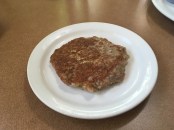 s excellent. While eating the cudighi, I suddenly understood the term “Yooper.” They are folks who live on the Upper Peninsula. U.P. Yooper. Get it! That restaurant was also where we channeled Frances McDormand, catching our first “you betcha” of the trip.
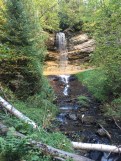 Before leaving Michigan, we hiked gorgeous waterfalls along the eastern edge of Lake Superior, saw stunning rock formations, stayed at the Christmas Motel, ate wonderful fresh fish, and generally had a blast. The Christmas Motel was not so named because of a hokey Christmas theme. It was the only hotel in the hamlet of Christmas, MI, near Munising. The hokey stuff emanated from the shop up the road. The Christmas Motel, on the other hand, sported a photo of a foxy model. The clothing store


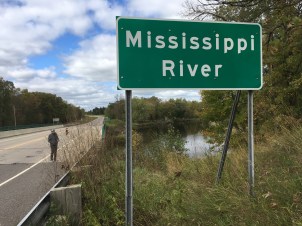 damn-near elegant Super 8 in Bemidji, MN. As we approached the river for the first time, driving on Minnesota Route 200 just west of Jacobson, a mature bald eagle took off from the woods in the south, flew in front of us, and soared off to the north. Nothing could have provided a better welcome to the river. Saturday morning, the real adventure begins. Getting here was only the beginning.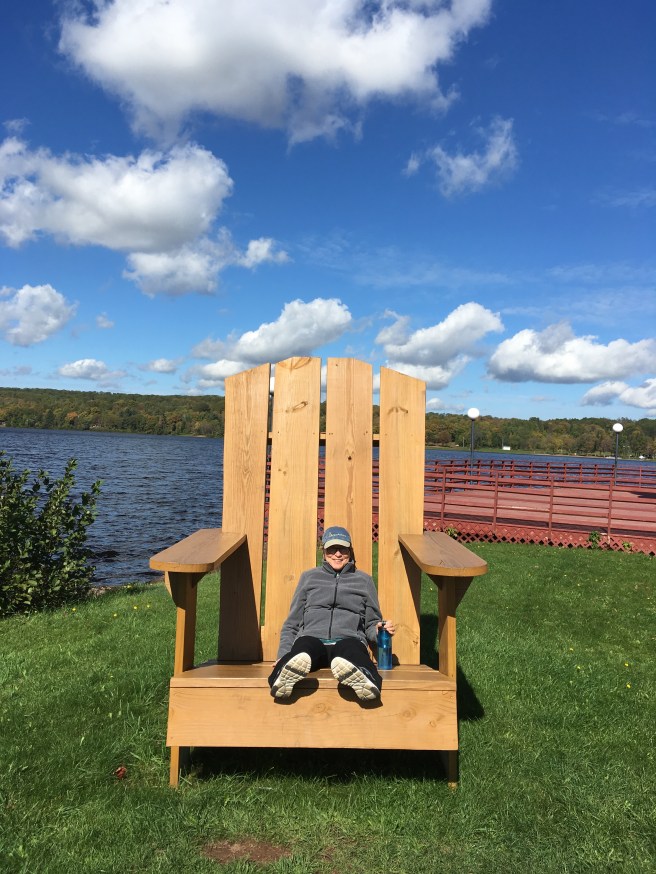
 myinnersociologist