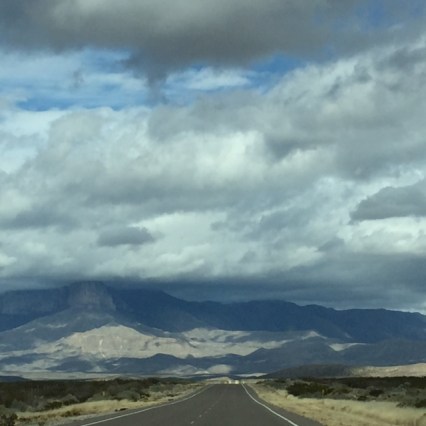
For starters, Texas is a ridiculously big state! We took seven days from Beaumont to El Paso (by which time we had eliminated half of New Mexico because El Paso is so far west), and another three days to cross the rest of New Mexico and arrive in Phoenix … for a chill afternoon of football: Eunice, LA to Houston to Gruene/New Braunfels to Del Rio to Big Bend to Alpine to El Paso to Silver City, NM to Globe, AZ to Phoenix … all on one $20 tank of gas per day!
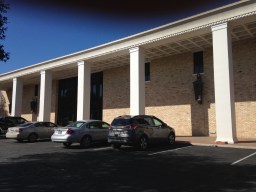 The two most unexpected sights we saw were in Uvalde, TX and Silver City, NM. In Uvalde, we spent about an hour in the First State Bank building. Dolph Briscoe, Jr. served as president of the bank until he served as governor of Texas from 1973-1979, replacing John Connelly. He also happened to be the largest single landowner in the state, and by the time he died in 1980, the Briscoe family had accumulated a net worth of $1.3 billion. The bank constructed its main building in 1979, and Briscoe and his wife, Janey, decorated the space with magnificent period furniture and their personal art collection: mostly western art coupled with a couple of original 500-year-old Rembrandt etchings. The art collection is totally open to the public. One of the officers greeted us, chit-chatted us, and then escorted us as we toured the collection. The bank president simply could not have been more cordial or welcoming. It’s worth making Uvalde a destination just to spend an afternoon in the bank.
Silver City, NM provided the most encouraging moment of the trip … a markedly different moment from those we had in various spots that screamed anti-government, anti-Obama, firearm paranoiac vitriol. There in the middle of Silver City we happened across a “Bernie for President” campaign office (closed of course) and a bunch of “Bernie” lawn signs. We just hadn’t expected that. Our experience was that New Mexico is to Arizona what Vermont is to New Hampshire. It’s amazing how two such apparently similar adjacent states can feel so different. (We cross New Hampshire to get to Vermont for a reason!)
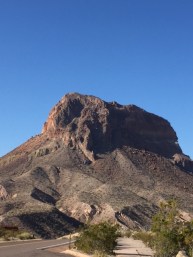
The most beautiful scenery we saw was in Big Bend National Park, especially Santa Elena Canyon on the Rio Grande. Everything about the park is out of the way, and it boasts the largest variety of tarantulas in the U.S. (Winter travel has its benefits: we encountered no tarantulas, scorpions, snakes, bear, or mountain lions. WooHoo.) We forewent a lot of sights for the sake of time, but the hike up the canyon alone was worth the drive.
The Big Bend region of Texas has virtually no light pollution, so it is the darkest single region in the continental United States. For the sake of time, we had to choose between hiking in Santa Elena Canyon and viewing at the McDonald Observatory. Reluctantly, we chose the hike in the canyon. We know it was a superb choice; we don’t know what we missed!
The best innkeeper we found was Sam Acosta in Alpine, TX. The Highland Inn, a run-down family-owned side-of-the-highway motel with $45 room rates, sits directly across U.S. 90 from Sul Ross State University. Trip Advisor reviews gave us a sense of confidence: Sammy confirmed them. He’s a sweetheart. The only drawback was that the train track runs directly behind the motel. I heard nothing all night; Joe and Rebecca heard one train that they thought was so close it was coming through the room; Sammy informed us in the morning that three trains had passed during the night. I guess we were all pretty tired and sleeping well. For what it is worth, the Highland Inn is exactly as far from the tracks as every other building in downtown Alpine.
The greatest hilarity of the trip came from brother Joe and Prada. Joe spent twenty-five years as a prop master in Hollywood, mostly making high-end television commercials. When we looked at the map, he said, “I once staged a rodeo in Marfa, Texas.” Not only that, he had an immense knowledge of the state that fooled him as much as it fooled Rebecca and me. Until we were there, he just didn’t remember. He had propped commercials in Greune at the Music Hall, at Big Bend, in Marfa, in Langtry at the Judge Roy Bean Museum, and who knows were else. He was a regular encyclopedia of stupid Texas minutiae.
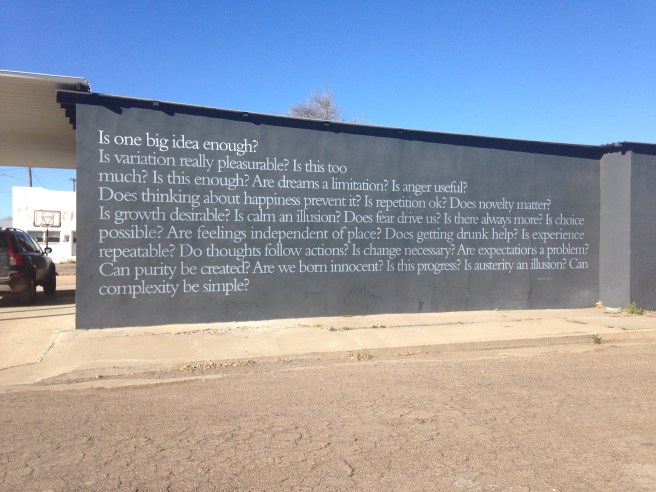
Marfa, by the way, is a minor adventure in an of itself. From what we could find, it has only two hotels: one is an upscale, expensive refurbished boutique hotel; the other consists of tepees and yurts. As we drove into the town, we encountered this inexplicable yet deep mural covering the side of a building. You got any ideas?
Sammy from the Highland Inn had warned us about the Prada installation we would pass in 75 miles or so, but even that did not prepare us for the shock. Twenty-six miles west of Marfa, deep in the middle of the starkness of the Chihuahuan Desert, stood an unstaffed Prada outlet building: just a display booth with very high-end shoes (only one shoe per pair so no one would be tempted to steal them) and purses. Miuccia Prada herself selected the display items. As we stood around, laughed uproariously, and took photos, a family pulled up in a pickup truck. They had driven from Austin, some 460 miles, just to see it and photograph it!
The lore of the place is wicked cool: An independent foundation funded the project that was then designed and installed by artists by the name of Elmgreen and Dragset. The door to the structure is non-functional, so it cannot be opened. The artists’ intent is for the building to never undergo any repair so it slowly degrades back into the landscape. The state almost forced its removal because they deemed it a non-conforming billboard. Instead, they reclassified it as a museum, and as far as I can tell, it will stay there for a few hundred more years before nature reclaims it. Unlike the bank’s art collection in Uvalde, it is assuredly not worth the drive, but if you happen to be in the area, it is indeed memorable.
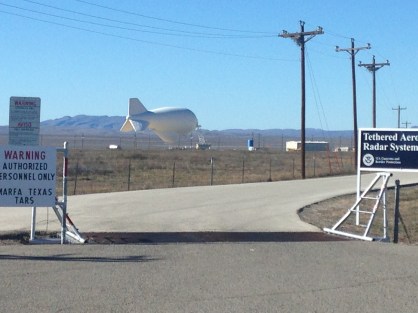
The Prada outlet wasn’t our only surprise. We also happened across a giant radar blimp parked comfortably beside the highway. We must’ve been in eyesight of its stark whiteness for 25 miles as we approached. Amazingly, as we grew closer, our first three guesses were 1) it’s an aircraft of some kind, 2) it’s a blimp, and 3) it’s a radar blimp. I’ll be damned. We nailed it!
As we drove, the trip became a study in subcultures: gulf coast seafood, Texans, Tex-Mex dives, mining, rock hounds, National Park volunteers, folk artists, and incredibly nice people.
As if we had not eaten enough in New Orleans or had enough fun in Mamou, we spent our first night just east of Houston with our good friends Patrick and Julie. Patrick works in sales; Julie was in television production for PBS in Texas (and has a shelf full of Texas Emmys to prove it), and she now directs the “Telling Project” Institute (http://www.TheTellingProject.org). They were amazing hosts who totally got our
adventure and welcomed us with open arms. We had brought a sack full of Cajun boudin sausage from Mamou for supper, but that wasn’t enough. Patrick had to show Joe and me the seafood markets along the Gulf coast near Clear Lake while Julie and Rebecca caught up with each other. Amazing! There had to be 6 or 8 different markets, and each one had hundreds of feet of display counter jammed with every imaginable kind of seafood. We bought a few more shrimp, but mostly marveled at the seafood culture in the eastern suburbs of Houston. We got out of Houston early Sunday morning, successfully avoiding traffic. In fact, we successfully avoided traffic in all of Texas, sliding smoothly through San Antonio and El Paso on Interstates at off hours … and those were our only forays on Interstates as we successfully crossed the state on blue highways.
Texans just love being Texans. In addition to being its capital, Austin does a fine job of trying to be home to that subculture, but I don’t think it really is. Greune (properly pronounced “green,” improperly pronounced by Joe as “grew-in,” and insistently — and obnoxiously — pronounced by me as “groin”) and its immediate neighbor New Braunfels arguably represent the Texas subculture even more than Austin.
We arrived in Greune late-ish afternoon on Sunday. The hamlet was packed, with all of the parking lots were full and cars parked interminably along every side road. We asked what was going on to attract so many people. “Nothing,” we were told. “It’s just a weekend in Greune.” Our first stop was a beer garden with a small bandstand showcasing a kick-butt Texas blues band with a drop-dead good harmonica player. Joe and I drank a beer and we took in the crowd, made up entirely of proud Texans: mountains of cowboy hats, boots, and rhinestones, bikers wearing leather chaps, and no shortage of Kinky Friedman wannabes sporting big, stinky cigars. Our personal favorite was the weekend cowboy with pressed jeans, fancy boots, gaudy belt, cowboy shirt, jean jacket, cigar, beer, and styled gray hair. Our collective assessment was that he was a dermatologist acting out for the weekend.
After checking into our hotel and stuffing ourselves on bona fide Texas barbecue at Coopers (a famous joint for those in the know … albeit way too pricey), we went back to catch the end of the music at the Gruene Music Hall, a 100-year-old wooden dance hall that even I think is just wicked cool. All in all, a perfect dose of “Texas.”
Most U.S. Highways ending in a “0” span the coasts. U.S. 90 is an exception, going only from Jacksonville to Van Horn, Texas. We did not drive its entirety by any matter of means, but we did take great advantage of it: heading east from Jacksonville, then Mobile to New Orleans, and then across much of Texas, mostly from Gruene/New Braunfels clear to Van Horn … with a major detour to Big Bend.
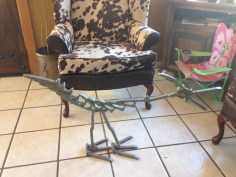 With the exception of the art collection and cordiality of the First State Bank in Uvalde, the best parts of the drive from Greune to Del Rio were the road runners, the company in the car, and the occasional roadside hilarity, like the full-size canoe sculpture in the desert. The Looney Tunes geniuses who created Roadrunner and Wile E. Coyote had obviously paid some dues by spending time on the same route we
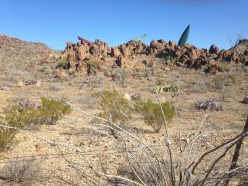 drove. Road runners are hilarious birds, darting across the road and through the cactus. Coyotes stealthily rule the desert. With the endless mesas and buttes, it was easy to envision Wile E. plotting strategies to nab supper by outsmarting one of those ridiculous birds … and imagining the roadrunners looking at him, smiling, and thinking, “You’ve got to be kidding me. I’m outta here. BeepBeep.”
Del Rio is another pass-through town with no redeeming qualities that I can recollect: a perfectly average (though cheap) motel room, a perfectly average (though cheap) Tex-Mex meal, and gone in the morning.
Langtry, Texas, on the other hand, is a hoot. Just west of Del Rio, we crossed the Pecos River and entered the land that had been governed by Judge Roy Bean of Langtry, a man who called himself “The Law West of the Pecos.” The state has preserved his legacy, including the Jersey Lilly Saloon, where he held court and the one law book he flaunted to show that his decisions were indeed based on law. (Whenever newer volumes of the state statutes arrived, he burned them as kindling.) When “Judge” Bean put down roots in the crossroad that is now Langtry, he named the town for the beautiful British actress Lilly Langtry, and he named the saloon/courthouse “Jersey Lilly.” Sadly, despite his deep infatuation, Judge Bean never met Lilly Langtry; she did not get to Langtry until after he died in 1903.
History may also have dealt Judge Bean a bum hand. Although he is known in lore as “the hanging judge,” records show that he actually sentenced only two men to death … and one of them escaped. Not bad for Texas! (The Wikipedia entry on Judge Bean is a great read … and the museum is a great visit.)
From Langtry, we headed southwest for Big Bend National Park. Our big splurge was a room at the lodge and a meal (elk burger and elk chili). A great decision indeed! I would love to write a book sometime about functional, efficient, professional agencies of the U.S. Government. (I bristle at the bad rap that government so often gets!) The U.S. Park Service tops the list. For starters, at age 62 we qualified to buy the Park Service’s “America the Beautiful Senior Pass.” For a lifetime fee of $10, we have access to every US Park Service and Forest Service fee area. What a motivation to experience the dramatic beauty and take in the history of this country! It’s the most cost-effective purchase of my life! What’s more, every single Ranger we’ve encountered has been remarkably nice and knowledgeable. I’d love to hang out at a meeting of Rangers some time. I’m not sure I can imagine a more interesting single group of self-reliant people.
While Park Rangers represent one subculture, park employees represent another … also really cool. A number of private hospitality corporations manage the lodges and gift shops at National Parks and Recreation Areas. Some are full-time residents; many are nomadic retirees enjoying the country. They apply for a position at any number of national sites then plan their travel around available openings. The government provides a stipend and free space for their RV. We learned about the subculture from the nice Midwestern lady who used to own a Dairy Queen franchise and was running the visitor center at the Okefenokee Swamp. We learned a lot more from the gray-bearded guys running the lodge at Big Bend. It sounds like a perfect way for some folks to while away a few years between retirement and old age.
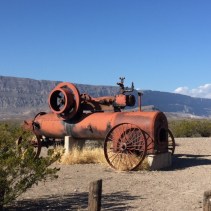 Not only is the Park stunning and majestic, it also embodies the sensitivity and competence of the Park Service. We drove about 25 miles through the desert on a dead-end road from the lodge to Santa Elena Canyon, where we hiked. Just before the Canyon, we arrived at the Castelon Visitor Center. It is an old army barracks from the Mexican Wars with a few pieces of old steam-powered machinery because a nutcase in the early 20th Century tried to establish the area as a cotton growing mecca. (The closest railroad was in Marathon, a treacherous three-day wagon ride away.)
When we arrived, I noticed that the building was fully electrified and wired, but we had not seen a utility pole or a solar panel on the entire trip. The Ranger explained that the Park Service was sensitive to the rugged natural beauty of the landscape and had worked hard to keep the electrical infrastructure out of sight. On the drive out of the canyon, now more aware, I noticed occasional signs of poles and cables. Amazing! Job well done!
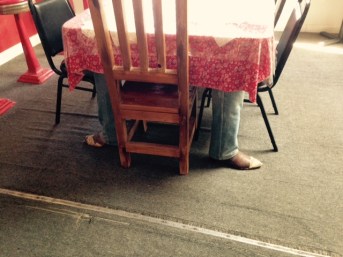 The southwest is all about open land. Its residents have no choice but to be self-reliant, and that includes entertaining themselves, often with hilarious art. Our favorite was the store-restaurant-gift shop “trading post” somewhere northwest of Big Bend and east of El Paso. It had five or six tables with plastic tablecloths. The tables used to have 2X4 legs. Actually, they still do, but the 2X4’s are invisible. The owner explained that she got tired of looking at them, so she dressed them up. Every table leg in the place sported blue jeans and cowboy boots. What’s more, the place sports a sign reading, “Western Town available to rent for special occasions, birthday parties, quincaneras, church groups. For prices, call Mayor May Carson.”
Other trading posts we visited lacked some of that creativity. They just amassed endless amounts of weird shit. Each place was good for a single visit. Anything more might have become tortuous. The one in Duncan, Arizona sold “antiques and oddities.” (That would be the one with the rooster in the back of the truck.) I asked the owner if they might be interested in selling my brother. HaHa. I also offered $25 for a too-big-to-lift case of used horseshoes, but they said the offer was too low. I’m still bummed about that one. There’s no telling what you could do with a case of used horseshoes.
In Marfa, Texas, we stopped to jawbone for a while with a rockhound who owns a shop on the main street. We bought a fossil for our granddaughter’s birthday, and Joe got a few crystals for a friend back in Oregon. Mostly, we spent our time looking at maps of New Mexico and Arizona with the owner. He pointed out 5 or 6 towns with rockhound populations. I’m not sure what it is about southwestern rockhounds, but I freakin’ love them. Every one of them is crusty, smart, and just damned interesting.
The trip took a short-lived turn in El Paso. We had a final supper together then Joe and I dropped Rebecca off at the airport on Friday morning for a flight to Omaha. Joe and Rebecca hugged goodbye until we re-connect someplace between San Francisco and the central Oregon coast in a few weeks. Rebecca’s daughter in Omaha has three children: Aaden is 16, Seff is 15, and Ella just turned 13. Rebecca has never missed a birthday. A driving adventure wasn’t going to affect that record. Plus, it gave Joe and me a few days of spectacular brother time! By the time I picked Rebecca up at the Phoenix airport on Monday, Joe was back in Oregon … and I actually got to spend a day alone.
From El Paso, there we were, toodling our way to Deming, NM on a tiny state highway when we passed a sign for the Rockhound State Park, and a nearby hand-painted sign for the Spanish Stirrup Rock Shop. I was heading south on a rough two-lane road before Joe had a clue what was going on. Five miles later, we walked into the shop.
The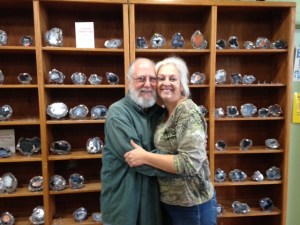 owner, a camo-wearing iron lady with the brightest, most sparkly blue eyes I’ve ever seen, was on the phone getting impatient. “NO! I am not going to send THREE Thunder Eggs to Germany! If he wants Thunder Eggs, he can come to the show in Quartzite (AZ), buy a ton of them, and get them to Germany himself!” Joe and I entertained ourselves looking at her stunning inventory of uncut, cut, and polished rocks. (As with birds, I really wish I knew much, much more about what we were looking at!!)
When she hung up, we started jawboning. An hour or so later, it was all we could do to pull ourselves away and get back on the road … by which time I was the proud possessor of a genuine “sex rock,” a gift from Lori to Rebecca. A small, cracked geode with a few crystals inside, Lori explained that it was, after all, just a plain old F-in rock!
Lori showed us photos of the antelope she had recently shot and field dressed. I showed her pictures of small-mouth bass from Lake Champlain. Joe showed pictures of Chinook salmon from Oregon. We left as fast friends and an expressed desire to all meet up again in Oregon to see if we couldn’t hook some salmon. Lori also tapped into Joe’s sheer hilarity, and we laughed about that encounter for the rest of our time together.
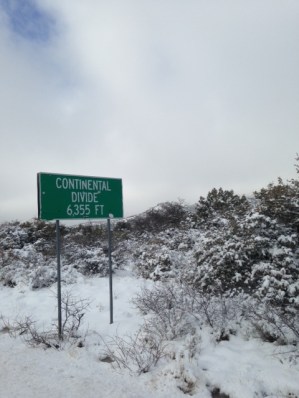 From Deming to Silver City, we climbed about 2,000 feet. The snow starting falling shortly before Silver City. As gorgeous as it was, when night fell, the sheer black ice became treacherous. We slid our way into a bar for a beer and a game of cribbage. Like too many of the bars we visited, it had every indication of being totally cool … and just wasn’t … though the blandness of the bars in Silver City didn’t hold a candle to the blandness and weirdness of the bars we visited at our next stop, Globe, AZ. We made it back safely to our motel (another cheap, but surprisingly clean and quiet dump) and saw no reason to exploit any more of the town’s hospitality. The following morning, we crossed the Continental Divide at 6,355 feet in a magnificent snow-covered desert on our way to Globe.
To my eyes, Southeastern Arizona provides a window into the political opposites that are this country. In general terms … and largely in my experience … Arizona is a politically conservative state with a deep disdain for anything governmental. The idea of an EPA telling business what they can and cannot do engenders visceral passion among conservative Arizonans. Nevertheless, the landscape is defined by hundreds upon hundreds of miles of eyesore: copper mines, silver mines, iron mines surrounded by mountains of tailings that sit untended polluting the horizon and the water.
For my entire life, I have wrestled with society’s need for resources and our habitat’s need for protection. “Sustainability” is a concept that resonates with me, and I define it with what I call the “Boy Scout definition”: Leave the campsite better than we found it. Southern Arizona, like much of the coalfields of central Appalachia and much of the rust belt of the Midwest give testament to human beings’ contempt and disregard for our home. Some people I know wrongheadedly contend that we are destroying the planet. We are not. The planet is in great shape. We are merely destroying our habitat: through climate change and air and water pollution. The planet will continue well after homo sapiens go extinct. The idea that corporations can destroy our land … and our habitat … without restoring their damage and paying the societal costs of their greed simply nauseates me. Enough said!
Globe, Arizona is a poster child for that rant. The mountains are destroyed. The corporations have earned their wealth while snubbing their noses at the rest of us, and through it all, the huge Indian reservations, in this case a vast Apache reservation, exhibit the same state of poverty as found in too many Appalachian hollows. So sad. But you try talking sense into the rabid anti-government conservatives. It can’t be done. Greed, selfishness, and short-sightedness win.
Fortunately, Globe, Arizona was not a totally negative experience, thanks to the manager of Chalos Restaurant. It seemed like it might be a decent place to grab a bite, and Yelp gave us some hope, but we really weren’t sure. We were as interested in watching football as we were in eating, but the lady at the cash register told us they did not have a television …. but she would go check nonetheless. How, you may wonder, would a restaurant employee not know whether or not the restaurant had a television? We learned when she re-approached us, smiled, and said they had a TV for us to watch after all. Then she escorted us to a small banquet room in the back.
A cook wearing an apron watched the Arizona State – USC basketball game on one set, while Joe and I watched the Packers and Redskins on the other. The cook was the son of the owner and the restaurant’s proprietor. No one can eat in the banquet room, which is why the lady in front told us “No television.” He wasn’t even sure that the second television worked since service is intermittent and no one has watched it in months. When he saw that it did work, he invited us in.
The basketball game was fabulous: 4 overtimes. The football game was boring, but at least we got to watch it. The conversation was terrific. We learned about his golf game, his work hours, his four wives, his motorcycle, his children — ranging in age from 8 to 36 — and what it takes to cook for 200 or 300 people a day in small remote-ish restaurant. Best of all, the machaca and green chili were deelish!
And that about did it. Off to Phoenix. A bona fide city. A decent meal, the Seattle-Minnesota arctic bowl, a good night’s sleep, our umpteenth Tex-Mex breakfast burrito, then adios: Joe off to Florence via Eugene and Rebecca in from Omaha later that afternoon. I spent the afternoon in the lobby of the airport Marriott answering emails and getting started on this blog entry.
With Rebecca safely back in the front seat, off we went to Green Valley, south of Tucson, for a few days with Rebecca’s brother and sister-in-law. Here is the honest but abridged version: Rebecca’s kinfolks are gracious hosts who could not possibly have made us feel more welcome or comfortable. We ate well, slept well, and explored the region. I even got in a little Arizona winter golf and made ample time to blog and prepare for the next month of real work up the CA coast. However, this is southern Arizona. We’ve watched more Fox News in the past few days than we have in the past few years. We endured the Republican debate in its entirety. The bumper sticker we saw in the grocery store parking lot says it all: “Hey Obama, YOU’RE FIRED! Trump 2016.” Once in a while, I really miss Watertown and Vermont.
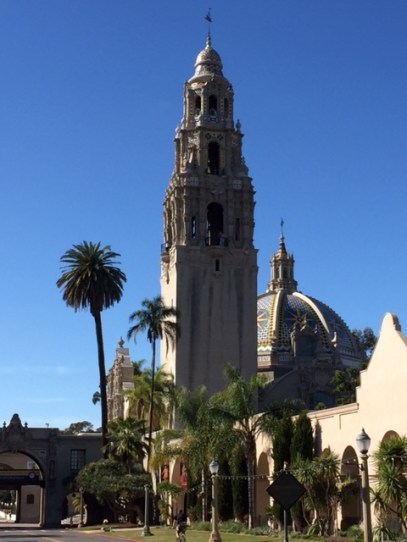


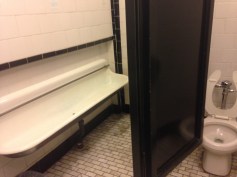 for breakfast at the Hotel Congress, a magnificent relic where in 1934 an employee recognized the face of hotel guest John Dillinger, which led to his capture. What a place! (And for the nostalgic men who remember the good-ole days at the ballpark, the men’s room off the lobby also has a classic trough urinal. You just don’t see enough of those these days.)


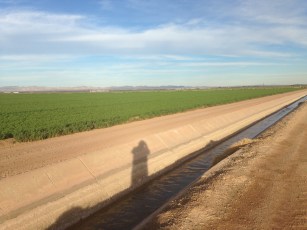 From the dunes, we entered the Imperial Valley. In minutes, we went from scrubby desert to barren dunes to incredibly verdant fields spanning the horizon! The Imperial Valley is one of the world’s richest salad crop producing regions. The juxtaposition of desert and farm is utterly surreal. Oh yeah, the occasional dairy farm also provided a bit of variation to the landscape: thousands of tightly housed cattle doing sad little with their lives except eating, mooing, shitting, and giving milk. Need I mention anything about the stench?


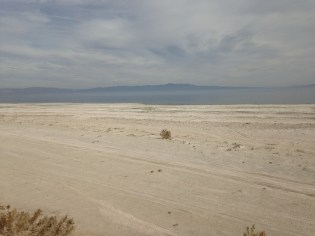 As a result of evaporation, exacerbated by the ongoing California drought, the sea continues to shrink, so the shoreline, where the developers once envisioned vibrant marinas and restaurants, continues for hundreds of feet before water finally appears at an unreachable distance.
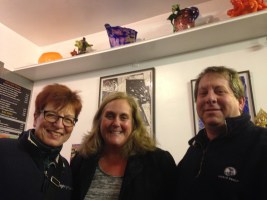 I had been itching to take Rebecca to Saffron’s, a tiny Thai take-out place on India Street near Washington. The actual history of the place is a tad too arcane for my brain, but the abbreviated story goes something like this: Su-Mei Yu immigrated from Thailand and became a successful restaurateur in San Diego, known far and wide for her Thai chicken. In 1992, she became romantically involved with the Italian-born artist Italo Scanga. They lived together thereafter at her home in La Jolla. Scanga
 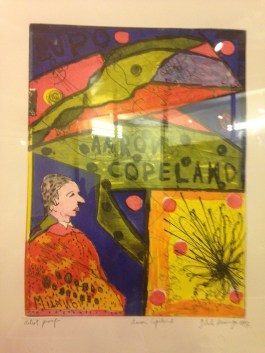 and his friend Dale Chihuly were artistic muses for each other. As a result, not only is the food terrific, and not only are the walls adorned with photographs of Su-Mei Yu and countless celebrities, but they are also adorned with Scanga art and probably 30 or 35 original pieces of Chihuly glass. As good as it is as a hole-in-the-wall restaurant, it is even better as an art gallery. Man, I love finding places like that … and like the First State Bank in Uvalde, Texas.


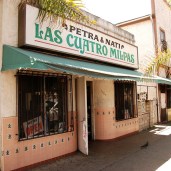 From Balboa Park, we headed south to Logan Heights, an old Hispanic neighborhood just south of downtown. Risa knew of a tamale joint she thought we should try, Las Cuatro Milpas. It’s been in the family for over 80 years, and their business plan is simple: make only a few dishes, including tamales, rolled tacos, carnitas tacos, and rice and beans; charge only $5 cash for each item; and stay open as late in the afternoon as necessary to sell out of everything. The three of us spent $15 total. The food was incredible. The place exuded personality and great vibes, thanks in some part to the palette of white and blue collars, including no shortage of bus drivers and city workers. We each ate lunch. Nothing more. We drank water. We were so full that all three of us skipped supper, and Rebecca and I ate little more until dinner the next day.


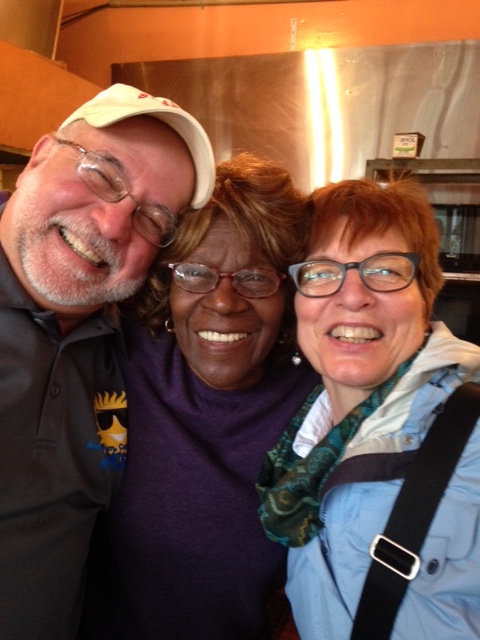
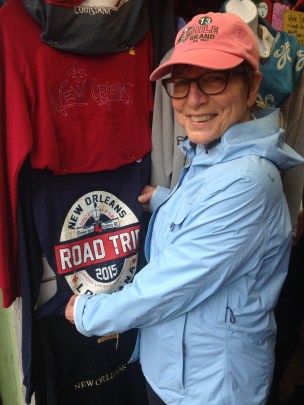 Let’s get things straight: New Orleans is the best city in the world. No place holds a candle to its food, people, humor, or general level of insanity. As the vendor in the French Market said to us during a morning walk, “Playing music is better for you than eating your vegetables.”
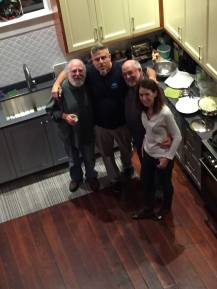 We arrived at our friends Jon and Elisa’s in time for lunch after a leisurely drive along the Gulf Coast from Gulfport. They have recently finished rehabbing an old home in the Marigny, right where Treme, the Marigny, and the French Quarter come together.
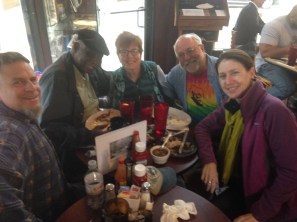 Day 2 tipped the scale. I will be on a weight-loss campaign for the rest of the trip. (In truth, I really hate New Orleans. If I lived there, I would become a full-sized blimp.) Lunch: Lil Dizzie’s in Treme with our dear friend Al “Carnival Time” Johnson. Al is a New Orleans Rhythm and Blues icon. Many of you remember Al because Rebecca, Jon, Elisa, and I hosted a fund-raiser for him in Watertown after Hurricane Katrina. He now lives comfortably in a beautiful home in the Musician’s Village.

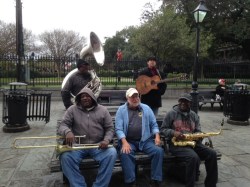 Day 3 started with an effort to walk it off. Joe hasn’t been to New Orleans for almost 40 years. There was so much to show him: Frenchman Street (an amazing music mecca), the Mississippi, and a serpentine weave through the Quarter. Café du Monde might have been fun, but on the day before the Sugar Bowl with Ole Miss playing, the line stretched 2 or 3 blocks. Jackson Square is a reliable winner; we walked past the buskers just as they launched into “Jambalaya” with its opening line of “Goodbye Joe.” “That’s Joe,” I said. “He’s my brother.” With that, the trombone and sax players slid apart, invited me to sit, and played as I clapped time. Joe and Rebecca took pics. Last year, our son-in-law Mike sat in on piano at Preservation Hall. Not only that, we met a woman at Lil Dizzie’s whose father was the first black bartender at Pat O’Briens. We simply had to walk down St. Peter Street since the two icons are next door to each other. When Rebecca and I first met, we realized we shared a favorite bar/restaurant: The Napoleon House on Chartres Street with one of New Orleans’ most classic courtyards. I read Plato’s “Republic” there as an undergraduate. From there to Iberville for a stroll past Acme Oyster House and Felix’s.

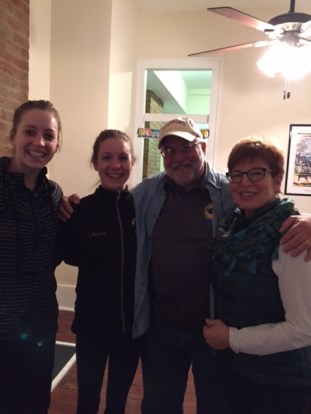 So was our brief afternoon visit with sisters Mandy and Liza, two great friends from Boston, who now teach in New Orleans and live one house from the heart of Frenchman Street. Joe and I became best friends when we lived together from 1974-76. Joanna and Allie’s friendship soared when they lived together in Ann Arbor. What a treat spending a little time in New Orleans with sisters whose lives will be forever improved by virtue of living together … much less one house from Frenchman Street.
 fried chicken, black-eyed peas, cabbage, salad, and hand-made desserts from Tee-Eva’s: sweet potato pie, pecan pie, and the best pralines on earth.


 myinnersociologist